CPT Code 62284: Injection procedure for myelography
CPT Code 62284: official descriptor and procedure overview The American Medical ...

Last Updated: Oct 19, 2026
Billable Code Specific Code
H57.9 is the billable ICD-10-CM code for unspecified disorder of eye and adnexa.
The adnexa of the eye includes the eyelids, lacrimal apparatus, orbit, and conjunctiva. Any disorder affecting these structures or the globe itself, where the record does not specify the condition, falls under H57.9. Practices using claims management software can flag H57.9 encounters for documentation review before submission.
Let Pabau's smart automation suggest the right codes, reduce claim denials, and keep your practice compliant—effortlessly.
Automate repetitive tasks and focus on what matters most—your patients.
Reduce coding errors and ensure compliance with the latest regulations.
Clean claims, fewer denials, and faster reimbursements.
Powerful insights and reporting to help your practice thrive.
HIPAA compliant SOC 2 certified GDPR-compliant Trusted by 4,000+ clinics worldwide

ICD-10 code H57.9 is a billable diagnosis code for unspecified disorder of eye and adnexa, valid for 2026 claims.
Use H57.9 only when documentation genuinely cannot support a more specific code in Chapter 7 (H00-H59).
H57.8 alone became invalid for Medicare in October 2018; the correct expanded code is H57.89 for specified disorders.
Pabau’s claims management software helps ophthalmology and optometry practices track ICD-10 code usage and reduce unspecified-code denial risk.
CMS ICD-10-CM updates and the ICD List reference database confirm H57.9 as billable for the 2026 code year. Claim submission requires no further code subdivision.
Searches for the parent category, h57 icd 10, land on this same page: H57 covers every other disorder of eye and adnexa, and H57.9 is its unspecified, billable terminal code.
| Code level | Code | Description |
|---|---|---|
| Chapter | H00-H59 | Diseases of the eye and adnexa |
| Block | H55-H57 | Other disorders of eye and adnexa |
| Category | H57 | Other disorders of eye and adnexa |
| Subcategory | H57.8 | Other specified disorders of eye and adnexa |
| Code (expanded) | H57.89 | Other specified disorders of eye and adnexa (valid post-Oct 2018) |
| Code (unspecified) | H57.9 | Unspecified disorder of eye and adnexa |
The AAPC Codify ICD-10-CM lookup classifies H57.9 as a “billable/specific” code, which means it satisfies Medicare’s requirement for a terminal-level code. However, “billable” does not guarantee reimbursement. Payers may still deny claims when a more specific code existed and the coder did not use it.
The ICD-10-CM alphabetic index maps several clinical terms to H57.9. Knowing these helps coders locate the right code when the physician’s note uses varied terminology.
Note that some sources also list cataract-related terms as mapping to H57.9, but these are index look-up starting points. If the documentation specifies cataract type or etiology, a code from the H26-H28 range is more appropriate, such as H26.9 (unspecified cataract) or H26.8 (other specified cataract). The guiding principle is consistent: Use the most specific code the documentation supports. Claim accuracy is cheaper to build at entry than to repair in an appeal.
Review every encounter coded H57.9 at the end of each billing cycle. If the same patient returns and the condition is now named, update the code retroactively where payer rules allow. This reduces your ratio of unspecified eye codes and lowers audit exposure over time.
This distinction matters for Medicare billing.
| Code | Description | Medicare validity | When to use |
|---|---|---|---|
| H57.8 | Other specified disorders of eye and adnexa | Invalid post-Oct 2018 | Do not use alone |
| H57.89 | Other specified disorders of eye and adnexa (expanded) | Valid | Condition is known but not covered by a more precise code |
| H57.9 | Unspecified disorder of eye and adnexa | Valid (billable) | Condition cannot be specified from available documentation |
As of October 2018, the American Academy of Ophthalmology confirmed that Medicare no longer accepts H57.8 alone. Practices still submitting H57.8 receive denials. The correct code for a known but imprecisely defined eye disorder is H57.89. Reserve H57.9 for encounters where coders genuinely cannot name the disorder from the record.
Auditing your active code list at least annually catches deprecated codes before they cause denials. Practices that still have H57.8 configured in code libraries or superbills should replace it with H57.89, the current valid code for the same clinical scenario.
Eye and ear complaints flow through busy general practices, where medical practice management software keeps referrals moving.
For practices handling older claims, appeals, or historical data comparisons, H57.9 maps approximately to three ICD-9-CM codes. The crosswalk is directional and context-dependent.
| ICD-9-CM code | Description | Crosswalk note |
|---|---|---|
| 379.40 | Abnormal pupillary function, unspecified | Approximate forward mapping |
| 379.90 | Disorder of eye, unspecified | Approximate forward mapping (most direct) |
| V41.1 | Other eye problems | Approximate forward mapping |
These mappings come from the General Equivalence Mappings (GEMS), which CMS and NCHS maintain. GEMS crosswalks are approximate. A single ICD-9 code may map to multiple ICD-10 codes, and the reverse is also true. For research or payer appeals, always note which mapping direction applies and confirm it against CMS ICD-10-CM resources.
H57.9 has a narrow legitimate use window. ICD-10-CM guidelines require coders to assign the highest level of specificity that the documentation supports. H57.9 is appropriate only when none of the following conditions apply.
Legitimate scenarios for H57.9 include initial emergency encounters where the workup is still underway, referral notes where the referring provider does not name the condition, and historical chart reviews where original records lack specificity. Refer to your payer’s LCD (Local Coverage Determination) policies for specialty-specific guidance.
The same restraint applies to other frequently overused unspecified eye codes, such as H31.9 (unspecified disorder of choroid) and H35.9 (unspecified retinal disorder). Assign them only when the documentation genuinely lacks detail.
The documentation standard is consistent across specialties: The record must actively demonstrate why specificity was unavailable, not simply omit details.

Pabau’s claims management tools help ophthalmology and optometry practices track ICD-10 code patterns, flag unspecified codes before submission, and maintain the documentation trails that support specificity upgrades.

Using H57.9 without adequate documentation is one of the faster ways to attract a payer audit. Medicare Advantage plans and commercial payers increasingly use automated edits that flag encounters with unspecified eye codes, particularly for repeat visits where the provider should have documented more specificity by the second encounter.
The clinical record must actively support the unspecified assignment. A note that simply states “eye problem” does not meet the standard unless it records which diagnostic steps the clinician took, what the workup ruled out, and why a specific code was not possible.
The same documentation standard applies to related unspecified codes, including H11.9 (unspecified disorder of conjunctiva). The clinical records management system the practice uses must capture this reasoning at the point of care, not during a retrospective audit response.
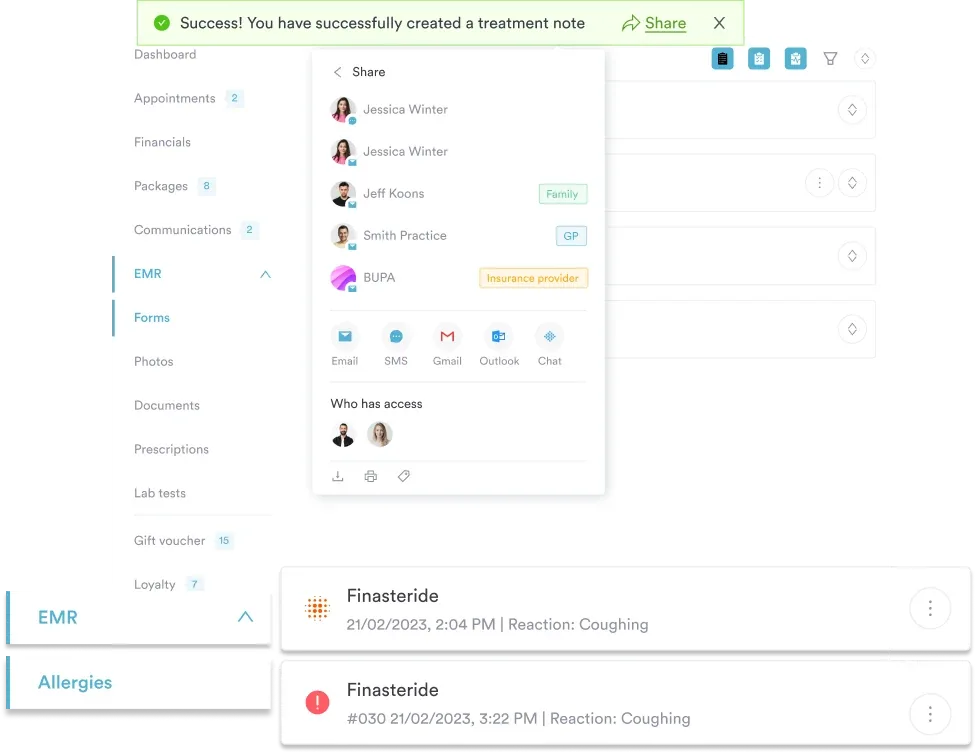
Practices that implement digital intake forms for ophthalmology encounters can standardize symptom capture before the patient reaches the provider, giving the clinician richer data to support or rule out specificity at the time of coding.
Build a practice rule: any encounter coded H57.9 for an established patient gets a documentation review flag within 48 hours. If the prior visit already had an H57.x code assigned, the second visit almost always has enough information to justify a more specific code. Catching this before submission eliminates the denial before it starts.
Before defaulting to H57.9, check whether any of these more specific codes applies. Each one requires less justification than an unspecified code and carries lower denial risk.
| Code | Description | Use instead of H57.9 when… |
|---|---|---|
| H57.10 | Ocular pain, unspecified eye | The presenting complaint is pain without a named structural disorder (use H57.11/H57.12/H57.13 when laterality is documented) |
| H57.89 | Other specified disorders of eye and adnexa | The condition is known but no exact code exists for it |
| H57.00 | Anomaly of pupillary function, unspecified | Pupillary abnormality is present but not further classified |
| H57.8 | (Invalid post-Oct 2018) | Do not use for Medicare or most commercial payers |
| H00-H56 | Specific eye and adnexa conditions | Any named condition within the chapter range |
Several of these alternatives have their own coding guides. Within the broader H00-H56 range, common named conditions include H50.9 (unspecified strabismus), H40.9 (unspecified glaucoma).
ICD-10-CM guidelines are clear: Use the most specific code the documentation supports. H57.9 is a last resort, not a default. When practices maintain HIPAA-aligned practice workflows, documentation at each encounter naturally supports specific coding, reducing the need to use H57.9 for established patients.
H57.9 is technically billable, but payer behavior varies. Medicare generally accepts unspecified codes when documentation supports them, but Advantage plans and commercial payers apply more aggressive automated edits. Several patterns appear consistently in denial data.
Treat unspecified code frequency as a reportable metric. Tracking the ratio of H57.9 to specific H57.x codes over time gives the billing team an early indicator of documentation issues before a payer audit surfaces them.
The same audit logic applies to other frequently overused unspecified codes. Repeat use without escalating specificity draws the same scrutiny.
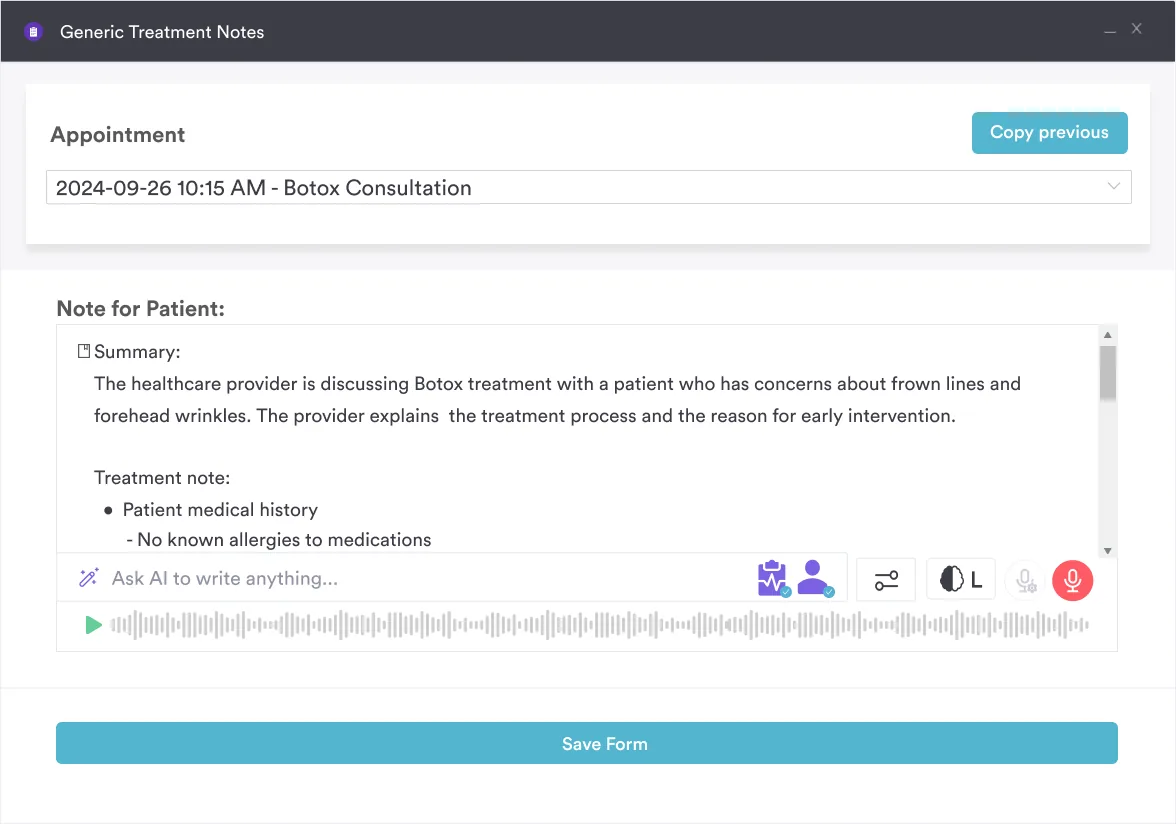
Pabau’s AI-assisted clinical documentation tools support real-time note structuring that makes specificity easier to capture at the time of the encounter rather than reconstructed after the fact.
ICD-10 code H57.9 covers genuine diagnostic uncertainty at the time of an eye and adnexa encounter. It becomes a billing liability when used as a convenience rather than a clinical necessity.
Pabau’s claims management software helps ophthalmology and optometry practices build the documentation workflows that support specific coding from the first encounter, flagging H57.9 assignments for review and giving billing teams the data they need to reduce unspecified-code ratios over time. Book a demo to see how it works in practice.

Managing complex clinical documentation workflows? Digital intake forms standardize symptom capture before the patient reaches the provider, supporting richer clinical coding.
Coding a cataract without a specific type documented? ICD-10 code H26.9 guide covers the code for an unspecified cataract under the H26 category.
Coding a lens disorder that isn’t a cataract? ICD-10 code H27.8 guide covers lens disorders like capsule contraction that don’t fit cataract codes.
ICD-10 code H57.9 is the diagnosis code for “Unspecified disorder of eye and adnexa.” It applies when the available clinical documentation does not support a more specific code for the patient’s ocular or adnexal condition. It falls under Chapter 7 of ICD-10-CM (H00-H59) and is valid and billable for 2026.
Yes, H57.9 is a billable ICD-10-CM code; CMS confirms it valid for the 2026 code year. Billers can submit it on claims without further subdivision. However, billable status does not guarantee reimbursement. Payers may deny H57.9 if documentation shows a more specific code existed and the coder did not use it.
H57.8 designated “Other specified disorders of eye and adnexa” but became invalid for Medicare billing as of October 2018. Its replacement is H57.89, which carries the same clinical meaning but satisfies current payer requirements. H57.9 is a separate code for disorders that are genuinely unspecified, where the documentation does not name the condition.
H57.9 is the code coders reach for when an eye problem doesn’t fit a named diagnosis. It sits within the broader H57 icd 10 category for other disorders of eye and adnexa, and it only applies when the documentation genuinely can’t support a more specific code elsewhere in Chapter 7.
Use H57.9 only when the clinical record does not support assigning a more precise code, such as during an initial emergency encounter or when diagnostic workup is still pending. For established patients, a more specific H57.x or broader Chapter 7 code should almost always apply. If the physician’s note names the condition, ICD-10-CM guidelines require a specific code.
H57.9 maps approximately to three ICD-9-CM codes: 379.90 (Disorder of eye, unspecified), 379.40 (Abnormal pupillary function, unspecified), and V41.1 (Other eye problems). These are General Equivalence Mappings (GEMS), which CMS and NCHS provide. The mappings are approximate and context-dependent, not exact equivalents.
The clinical record must document the presenting complaint, examination findings showing an ocular abnormality, and an active explanation of why a specific code was not possible, such as pending diagnostics or an incomplete referral note. A vague entry like “eye problem” does not meet the standard and may trigger a payer audit.