ICD-10 Code S52.101P: Right radius fracture with malunion
ICD-10 Code S52.101P: definition and code details ICD-10 Code S52.101P is a bill...

Last Updated: Oct 19, 2026
Billable Code Specific Code
M06.4 is the billable ICD-10-CM code for inflammatory polyarthropathy.
Let Pabau's smart automation suggest the right codes, reduce claim denials, and keep your practice compliant—effortlessly.
Automate repetitive tasks and focus on what matters most—your patients.
Reduce coding errors and ensure compliance with the latest regulations.
Clean claims, fewer denials, and faster reimbursements.
Powerful insights and reporting to help your practice thrive.
HIPAA compliant SOC 2 certified GDPR-compliant Trusted by 4,000+ clinics worldwide

ICD-10 Code M06.4 (Inflammatory Polyarthropathy) is a billable, FY2026-valid diagnosis code effective October 1, 2025
Use M06.4 only when no more specific rheumatoid or inflammatory arthritis code applies – it is a residual category
Documentation must include joint count, inflammatory markers (ESR/CRP), and clinical reasoning for selecting M06.4 over more specific codes
Pabau’s claims management software connects ICD-10 diagnosis codes directly to billing, reducing handoffs between clinical and administrative teams
ICD-10 Code M06.4 describes inflammatory polyarthropathy: inflammation affecting multiple joints where no more specific diagnostic code is available. It is a billable, specific ICD-10-CM code, confirmed valid for fiscal year 2026 by the CMS ICD-10-CM update files. It carries an effective date of October 1, 2025.
The critical word is “residual.” M06.4 applies when the clinical picture shows multi-joint inflammation, but the evidence doesn’t yet support a definitive diagnosis. That could be seropositive rheumatoid arthritis (M05) or seronegative rheumatoid arthritis (M06.0). Rheumatologists often assign it during the diagnostic workup phase, before serological results confirm a more precise classification. The Medicare Benefits Schedule sets its own item structure, so a US code has no direct Australian counterpart.
Verified by the CDC/NCHS ICD-10-CM lookup tool, M06.4 is assigned to the American ICD-10-CM version. International versions under the WHO classification may differ in hierarchy or description.
The table below summarises the key administrative and classification facts for ICD-10 Code M06.4 that coders and billing teams need at a glance.
Inflammatory polyarthropathy describes joint inflammation involving multiple joints simultaneously, where the underlying cause has not been classified to a more specific condition. The “poly” prefix indicates four or more joints are affected, and the inflammation is immune-mediated rather than degenerative.
Clinically, it overlaps with early undifferentiated arthritis and seronegative presentations before definitive serological or imaging findings emerge.
Rheumatologists encounter this presentation frequently in early-workup patients. A patient arrives with swollen metacarpophalangeal joints, morning stiffness exceeding one hour, elevated ESR and CRP, but rheumatoid factor and anti-CCP antibodies are negative or inconclusive.
The clinician is treating a confirmed inflammatory process, but the ICD-10-CM hierarchy demands specificity. M06.4 provides the correct residual bucket until the diagnostic picture clears.
Key clinical features that typically support an inflammatory polyarthropathy presentation include:
The condition differs from osteoarthritis (M17-M19), which is degenerative, and from specific inflammatory arthritis subtypes such as psoriatic arthritis (L40.5) or reactive arthritis (M02). Good medical documentation forms that capture these distinguishing clinical findings are what separate a defensible M06.4 claim from one that gets denied on review.
Understanding M06.4’s position in the ICD-10-CM hierarchy matters for sequencing decisions and for identifying sibling codes that might be more appropriate. The full path is:
The parent category M06 covers rheumatoid arthritis presentations that don’t meet the criteria for seropositive RA (M05). M06 includes several sibling codes that coders should evaluate before defaulting to M06.4:
Practices managing physical therapy or sports medicine caseloads often encounter M06.4 alongside M05 and M06.0 in the same patient cohort. Knowing the hierarchy prevents unnecessary downcoding to M06.9, which carries a higher audit risk.
M06.4’s only Excludes1 note comes from its parent category, M06. Understanding it prevents one of the most common coding errors in rheumatology billing.
Excludes1 means the excluded code and M06.4 cannot represent the same condition. Coding both together is incorrect:
Always cross-reference the full Excludes notes in the official CMS tabular list before submitting. The WHO ICD-10 browser provides the international version hierarchy for reference, though US practices should verify against the ICD-10-CM version via the CDC/NCHS tool. Comparing Excludes notes across related codes.
Payers can and do audit M06.4 claims. The code signals “no specific diagnosis yet.” That prompts reviewers to ask whether the coder used a vague code when a more specific one was warranted. Solid documentation preempts that challenge.
According to coding guidance from AAPC’s ICD-10-CM code search resources and consistent with ICD-10-CM Official Guidelines, the clinical record should support M06.4 with:
Structured clinical documentation tools that prompt clinicians for these specific data points reduce the administrative burden of compiling this information retrospectively at billing time. Using digital intake forms configured for rheumatology workflows captures joint counts and symptom duration at the point of care rather than relying on manual chart review.
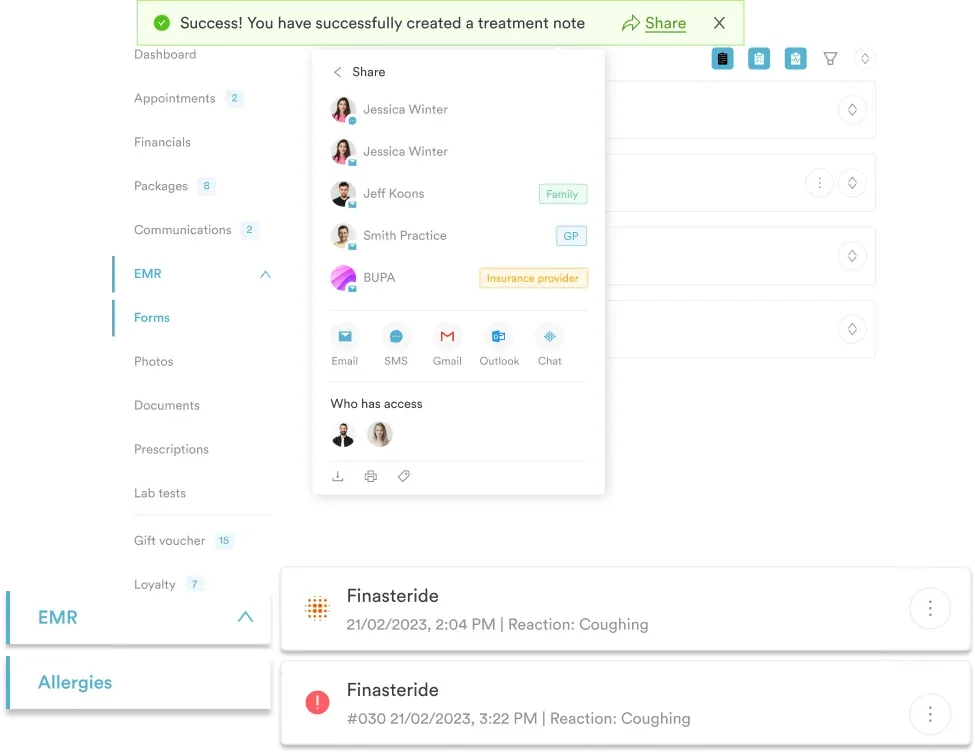
Review every M06.4 claim before submission. Confirm the note explicitly states serology results and lists the specific joints involved. A note that says only ‘multi-joint pain, inflammatory’ without lab values or joint enumeration is a denial waiting to happen.
The most consistent coding error with M06.4 is using it when a more specific code is clinically justified. The ICD-10-CM Official Guidelines instruct coders to assign the most specific code supported by documentation. M06.4 is appropriate only when documentation genuinely cannot support a more specific selection.
Common mistakes rheumatology coders make with this code:
Practices that code across multiple specialties. Building a brief documentation checklist into rheumatology visit templates reduces these errors before claims are submitted rather than catching them in denial management.
Before assigning ICD-10 Code M06.4, coders should systematically evaluate whether any of the following more specific codes better reflects the documented diagnosis. Using a more specific code protects against audit risk and more accurately represents the patient’s condition.
Cross-checking related codes like M16.2 alongside your EHR helps coders quickly rule out the full range of alternatives before locking in a residual code. The ICD-10-CM specificity-first principle applies here: if documentation supports M05 or M06.0, using M06.4 is technically a coding error even if the claim gets paid.
M06.4 is valid for HIPAA-covered transactions in FY2026. Payers generally accept it when documentation is adequate, but several billing realities are worth noting for rheumatology practices:
Systemic vasculitis stays in the M06.4 differential, and polyarteritis nodosa can produce renal ischemia alongside arthralgia. That renal event carries its own code, N28.0, as an additional diagnosis.
Ensuring HIPAA-compliant clinical workflows are in place protects the practice when payers request medical records to support M06.4 claims. Practices using an integrated EHR and billing system reduce the handoff risk between clinical documentation and claim submission.
Reference sites tell coders what documentation M06.4 requires. They don’t help clinicians capture that documentation at the point of care, which is where practices lose time and revenue.
Practice management software like Pabau connects ICD-10 diagnosis codes directly to invoicing through its claims management software. The code selected in the clinical note flows automatically into the billing workflow without manual re-entry.
Rheumatology visit templates can be configured to prompt clinicians for the specific fields that support M06.4: joint count, ESR/CRP values, serology results, and the clinical reasoning note. Using AI-assisted clinical documentation, clinicians can dictate the consultation and have the structured note populated with the relevant fields rather than typing it post-visit.
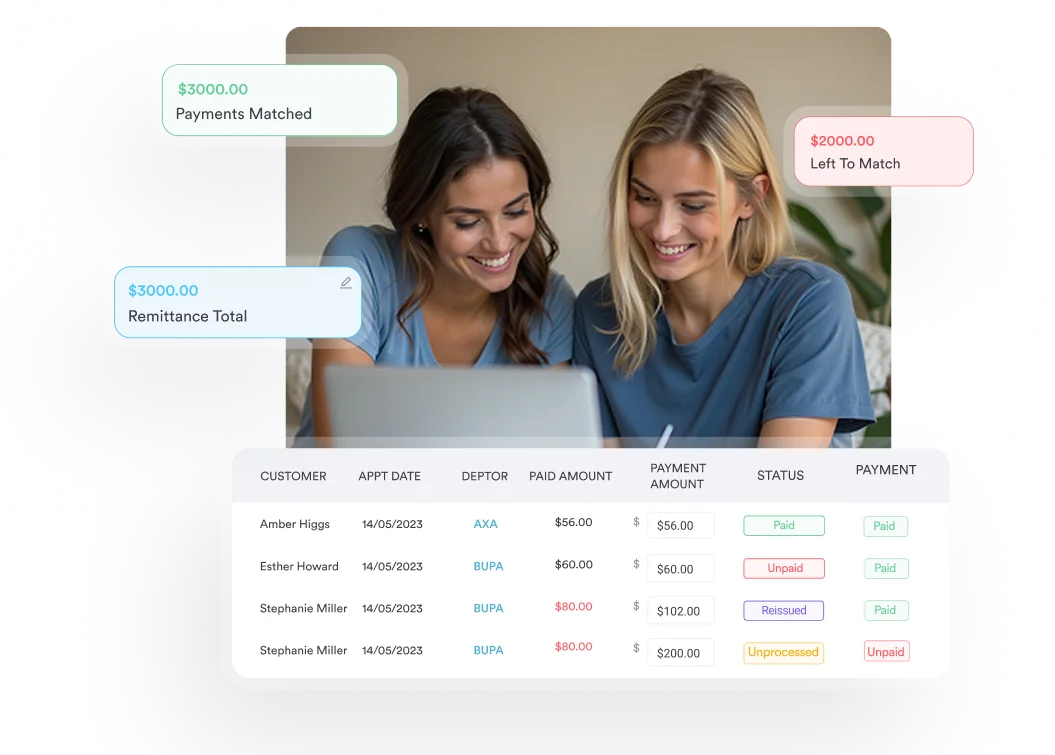
For practices managing multi-specialty workflows. It eliminates the context-switching between a separate coding reference tool, an EHR, and a billing system. The diagnosis is attached, the documentation is captured, and the claim is built from a single workflow. That’s how practices reduce M06.4 denials without adding administrative headcount.
Configure your rheumatology visit note template to include mandatory fields for joint count and serology results. If the clinician doesn’t complete them, the note is flagged before signing. This catches missing documentation before it causes an M06.4 denial, before the claim is ever submitted.

Pabau connects ICD-10 diagnosis codes directly to invoicing and claims, so your clinical team and billing team work from the same record. No context switching, no manual transfer errors.

M06.4 is the right code for multi-joint inflammation that hasn’t yet resolved to a specific diagnosis. Used correctly, it’s fully defensible. Used as a shortcut, it’s an audit flag waiting to surface.
The practices that use it confidently are the ones with rheumatology documentation templates that capture joint counts, inflammatory markers, and clinical reasoning at the point of care. Pabau’s digital forms and integrated claims workflow mean that what the clinician documents automatically supports what the biller submits. To see how that works in a live rheumatology setup, book a demo.

Coding left arm pain without a confirmed structural cause? Pain in Left Arm Coding Guide covers when to apply a more specific code instead.
Coding right hand pain with a clearly documented side? Pain in Right Hand covers why defaulting to the unspecified laterality variant raises audit risk.
Coding aching or tenderness in the left fingers? Pain in Left Finger(s) covers this complaint when no structural cause like a fracture is confirmed.
ICD-10 Code M06.4 is a billable ICD-10-CM diagnosis code for inflammatory polyarthropathy: inflammation of multiple joints where no more specific rheumatoid or inflammatory arthritis code is available. It belongs to the M06 (Other rheumatoid arthritis) category within the musculoskeletal system chapter (M00-M99), and it is valid for FY2026 with an effective date of October 1, 2025.
Yes, M06.4 is a billable and specific ICD-10-CM code valid for HIPAA-covered transactions in fiscal year 2026. It can be used as a standalone diagnosis code on insurance claims when documentation adequately supports the diagnosis of inflammatory polyarthropathy.
M05 covers seropositive rheumatoid arthritis (positive rheumatoid factor or anti-CCP antibodies) and M06.0 covers seronegative rheumatoid arthritis (RA criteria met despite negative serology). M06.4 is used when neither applies: the patient has multi-joint inflammation, but the evidence does not yet support an RA diagnosis under accepted clinical criteria. If RA can be established, M05 or M06.0 is more appropriate and should be used instead.
Documentation should include the specific joints involved (four or more), ESR and CRP values, and serology results (RF, anti-CCP) with notation of negative or inconclusive findings. It also needs explicit clinical reasoning for selecting M06.4 over a more specific code. Without these elements, the claim is vulnerable to denial or audit request for medical records.
The Excludes1 note for M06.4 excludes polyarthritis NOS (M13.0): the two codes cannot represent the same diagnosis. Use M13.0 when polyarticular arthritis is documented without confirmed inflammatory or rheumatoid involvement. Always verify current Excludes notes against the official CMS tabular list, as guidelines are updated each fiscal year.
Use M06.4 when the patient presents with multi-joint inflammation but the evidence does not yet support a specific diagnosis. That could be seropositive RA (M05), seronegative RA (M06.0), psoriatic arthropathy (L40.5), or adult-onset Still’s disease (M06.1). Once a more specific diagnosis is established, update the code on subsequent visits. Continuing to use M06.4 after a definitive diagnosis is a coding error.