

ICD-10 code S61.201A: Open wound of left index finger without nail damage
ICD-10 code S61.201A covers a left index finger wound of unstated type ICD-10 co...

Last Updated: Oct 16, 2026
Billable Code Specific Code
F59 is the billable ICD-10-CM code for unspecified behavioral syndromes associated with physiological disturbances and physical factors.
Let Pabau's smart automation suggest the right codes, reduce claim denials, and keep your practice compliant—effortlessly.
Automate repetitive tasks and focus on what matters most—your patients.
Reduce coding errors and ensure compliance with the latest regulations.
Clean claims, fewer denials, and faster reimbursements.
Powerful insights and reporting to help your practice thrive.
HIPAA compliant SOC 2 certified GDPR-compliant Trusted by 4,000+ clinics worldwide

ICD-10 Code F59 is a billable/specific ICD-10-CM code for unspecified behavioral syndromes associated with physiological disturbances and physical factors, valid for 2026 (effective October 1, 2025.)
The Applicable To note includes psychogenic physiological dysfunction NOS, making F59 a catch-all when no more specific F50-F58 code fits the documented presentation.
F59 crosswalks approximately to ICD-9-CM code 306.8 (other specified psychophysiological malfunction). Payer acceptance varies, so documentation must clearly support medical necessity.
Pabau’s claims management software helps behavioral health practices reduce F59 claim denials by linking diagnosis documentation directly to billing workflows.
F59 sits at the end of the F50-F59 block within Chapter 5 (Mental and Behavioral Disorders, F01-F99) of the ICD-10-CM classification, maintained by the Centers for Medicare and Medicaid Services (CMS) and the National Center for Health Statistics (NCHS).
Its position as the block’s terminal code signals its function: a residual category for presentations that belong in this clinical space but lack the specificity to warrant a more precise code.
The ICD-10-CM tabular list includes an Applicable To note directly under F59:
“Psychogenic” indicates that psychological or behavioral factors are causing or contributing to the physiological disturbance. “NOS” signals that the specific type of dysfunction is not further identified in the documentation.
This Applicable To note is not a synonym for the code itself. It describes the clinical condition that F59 is designed to capture: a physiological dysfunction driven by psychological mechanisms that doesn’t fit a named disorder elsewhere in the F50-F59 range.
F59 has no child codes beneath it. It is a single-level billable code with no further subcategories. Coders working with delusional disorder coding or other adjacent behavioral presentations should review the full F50-F59 range before defaulting to F59.
Understanding where F59 sits requires familiarity with the entire F50-F59 block. The block covers behavioral syndromes associated with physiological disturbances and physical factors. Each code addresses a specific category of behavioral syndrome, leaving F59 as the residual “unspecified” option when none of the specific categories apply.
| Code | Description | Key subcategories |
|---|---|---|
| F50 | Eating disorders | Anorexia nervosa (F50.01, F50.02), bulimia nervosa (F50.2), binge eating disorder (F50.81), avoidant/restrictive food intake disorder (F50.82) |
| F51 | Sleep disorders not due to a substance or known physiological condition | Primary insomnia (F51.01), Primary hypersomnia (F51.11), sleepwalking (F51.3), nightmare disorder (F51.5) |
| F52 | Sexual dysfunction not due to a substance or known physiological condition | Hypoactive sexual desire disorder (F52.0), female sexual arousal disorder (F52.22), vaginismus (F52.5), dyspareunia (F52.6) |
| F53 | Mental and behavioral disorders associated with the puerperium | Postpartum depression (F53.0), puerperal psychosis (F53.1) |
| F54 | Psychological and behavioral factors associated with disorders or diseases classified elsewhere | Single billable code; used with another code for the physical disorder |
| F55 | Abuse of non-psychoactive substances | Abuse of antacids (F55.0), vitamins (F55.4), specific substances (F55.2-F55.8) |
| F59 | Unspecified behavioral syndromes associated with physiological disturbances and physical factors | No subcategories; single billable code |
Note that F56, F57, and F58 are not assigned in the 2026 ICD-10-CM edition. These code numbers are reserved or unused within the current tabular structure.
Coders who encounter these numbers in legacy systems or older documentation should verify against the CDC/NCHS ICD-10-CM web tool for the current year’s valid code list. The same specificity discipline applies elsewhere in Chapter 5: for example.
The most common coding error with F59 is applying it before ruling out a more specific code. Per ICD-10-CM coding guidelines, unspecified codes are appropriate only when documentation genuinely doesn’t support a more precise classification. F59 should be the result of active clinical review, not a shortcut.
Use F59 when all of the following are true:
Do not use F59 as a default or placeholder. If the clinical note describes “psychosomatic complaints” without further specification, the coder should query the treating clinician before applying F59. Vague documentation supporting a vague code is an audit risk. Clear documentation of the behavioral-physiological link is required.
F54 is a common point of confusion. F54 (psychological and behavioral factors associated with disorders or diseases classified elsewhere) is used when psychological factors affect a separately coded physical condition. F59 is used when the behavioral syndrome itself is the primary or presenting issue and is classified within the behavioral syndromes chapter.
These are not interchangeable, and using the wrong one can trigger claim edits from payers applying medical necessity checks. Practices managing mental health EMR workflows should flag this distinction in their coding training materials.
Providers can also consult resources like eating disorder worksheets for recovery to understand the clinical breadth of F50-range presentations before defaulting to F59.
Before applying F59, run a quick check against the F50-F55 codes. If the clinical note mentions any specific behavioral pattern linked to eating, sleep, sexual function, postpartum status, or a concurrent physical condition, a more precise code almost certainly exists. F59 is appropriate only when the documentation explicitly describes a psychogenic physiological presentation that falls outside all named categories.
F59 is clinically defensible only when the medical record supports the diagnosis. Payers applying medical necessity criteria to behavioral health claims look for specific documentation elements, and F59’s “unspecified” designation makes the supporting record especially important.
A SOAP-formatted note is the most defensible way to document F59, because it forces each element a payer looks for into its own section instead of burying them inside one narrative paragraph.
This structure gives an auditor a paper trail from symptom to exclusion to plan in under a minute, rather than making them reconstruct it from a free-text paragraph.
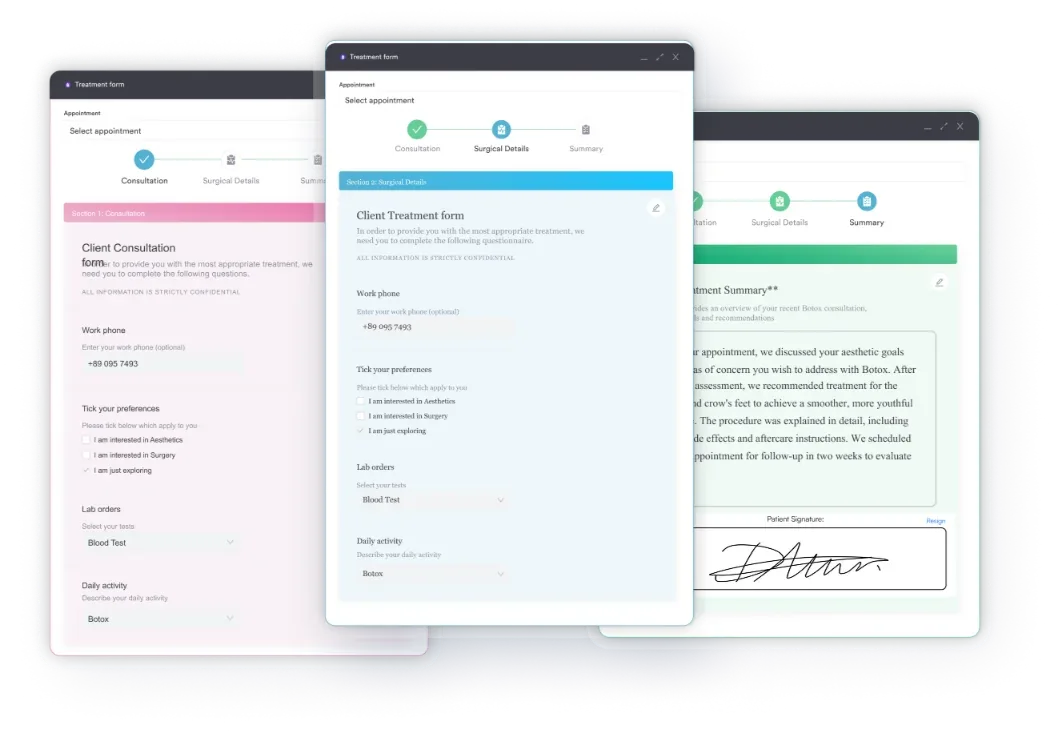
Practices using structured clinical record documentation can build F59 coding prompts directly into behavioral health encounter templates. When a clinician completes a behavioral health assessment, the system can prompt for the physiological element of the presentation, the exclusion rationale, and the duration of symptoms before the code is finalized. This reduces under-documentation without adding consultation time. Secondary payers often allow a shorter window than the primary, so the filing deadline differs by claim.
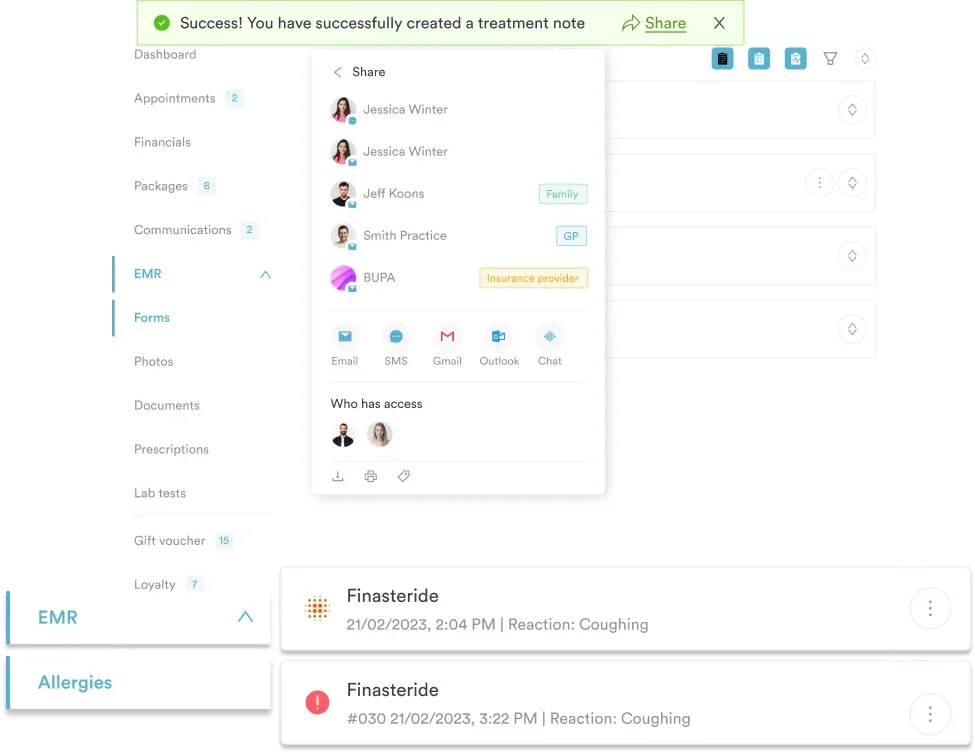
For practices using digital clinical intake forms, pre-visit questionnaires can capture behavioral symptom history, physiological complaints, and prior diagnoses in a structured format that flows directly into the encounter note. This pre-populates the clinical context the coder needs to assign F59 accurately.
Well-structured intake data also supports the HIPAA-compliant practice software requirements that govern behavioral health record retention. Practices billing for behavioral health support services.
For practices maintaining legacy billing records or working with payers who cross-reference historical claims, F59 crosswalks approximately to ICD-9-CM code 306.8 (other specified psychophysiological malfunction), per the CMS General Equivalence Mappings (GEMs) crosswalk tables.
This crosswalk is approximate, not exact. ICD-9-CM 306.8 covered a range of psychophysiological conditions, whereas ICD-10-CM’s F50-F59 block now separates many of those conditions into more specific codes.
| ICD-9-CM Code | Description | ICD-10-CM Approximate Equivalent | Crosswalk Type |
|---|---|---|---|
| 306.8 | Other specified psychophysiological malfunction | F59 | Approximate (GEMs) |
| 306.9 | Unspecified psychophysiological malfunction | F45.9 (approximate; not F59) | Approximate (GEMs) |
The AAPC Codify ICD-10-CM lookup provides a searchable crosswalk interface for verifying current GEMs mappings. Always use the current-year GEMs tables published by CMS, not historical versions, since mappings are updated annually.
Practices engaged in retrospective record review or appeals involving other Chapter 5 codes.
When referencing the ICD-9-to-ICD-10 crosswalk for F59 in payer communications or appeals, always note the crosswalk as approximate and cite the CMS GEMs source. Claiming an exact equivalence between 306.8 and F59 misrepresents the mapping, which can weaken a clinical appeal.

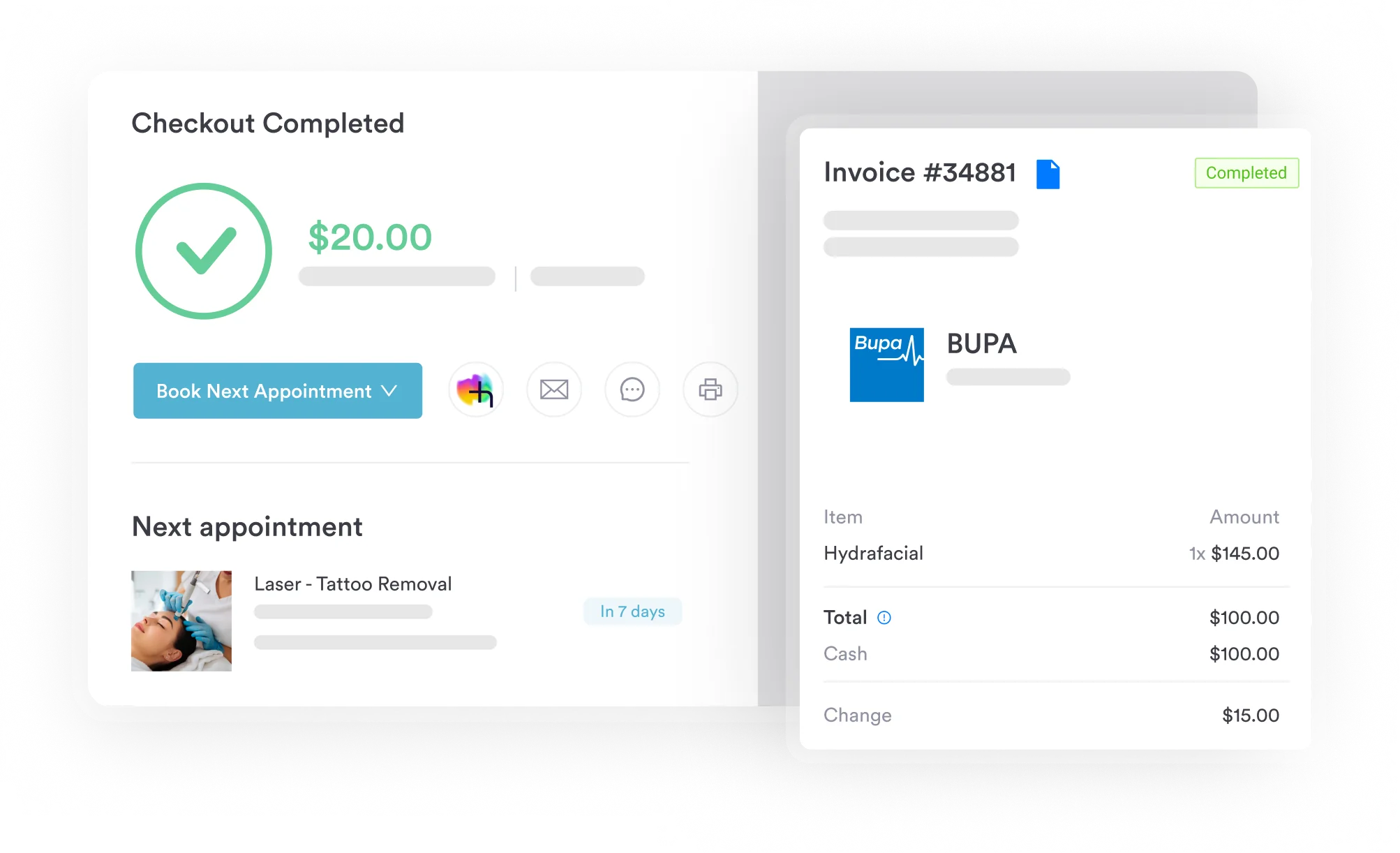
Pabau’s claims management tools link diagnosis documentation directly to billing workflows, helping your team catch coding errors before submission and reduce F59-related denials.

F59 is a valid, billable ICD-10-CM code, but payer acceptance is not uniform. The “unspecified” designation flags the code for additional scrutiny in some payer systems, particularly for commercial insurers applying behavioral health medical necessity criteria. Medicare and Medicaid coverage determinations for F59 will depend on the specific local coverage determination (LCD) that applies to the service billed.
Practices using claims management software with integrated diagnosis-to-procedure validation can catch these mismatches at the point of claim creation rather than at remittance. For psychiatry and psychology practices, this validation layer is especially valuable given behavioral health codes’ higher denial rates relative to other specialties.
The psychiatry EMR software category increasingly includes built-in coding guidance to reduce these patterns. Practices billing behavioral health counseling services.
F59 may appear as a secondary diagnosis when a more specific primary diagnosis exists and a concurrent unspecified behavioral syndrome associated with physiological factors is also present and clinically relevant.
In this scenario, sequencing matters. The principal diagnosis should reflect the condition chiefly responsible for the encounter. F59 supports the clinical picture. Document the secondary behavioral syndrome separately in the clinical note to justify its inclusion on the claim.
Accurate F59 coding depends on documentation quality at the point of care. Treating coding as a downstream administrative task produces the vague notes that generate denials. Integrating coding awareness into clinical workflows produces records that support both the diagnosis and the claim.
Three workflow adjustments improve F59 accuracy consistently:
Practices that use practice management software with integrated coding and documentation tools can automate parts of this review process, flagging encounters where the behavioral health code is unspecified and the visit note lacks structured physiological documentation.
The clinical documentation workflows in modern practice management systems increasingly support this type of rule-based auditing at the point of care rather than retrospectively. Standardized patient-facing templates.
F59 is a billable ICD-10-CM code, but its “unspecified” designation means it carries more documentation risk than the specific F50–F58 codes in the same block. Applied correctly—when the clinical presentation genuinely does not meet any more specific category—it accurately represents the encounter and supports reimbursement. Applied as a default or placeholder, it creates audit exposure and avoidable denial patterns.
Pabau’s psychology practice software helps mental health and behavioral health practices build documentation workflows that support accurate coding from the point of care, so billing teams can defend every claim submitted.
Coders looking for a comparable ICD-10 unspecified-code reference may also find the dissociative and conversion disorder, unspecified (F44.9) billing guide useful, since it faces similar documentation-specificity challenges under audit. To see how Pabau handles behavioral health documentation and claims workflows, book a demo.

Billing a power wheelchair claim? group 2 power wheelchair billing guide covers the weight and seat requirements for HCPCS code K0835.
Billing a sacroiliac orthosis? sacroiliac orthosis billing guide covers the custom fabrication rules for HCPCS code L0622.
Billing a knee orthosis claim? knee orthosis billing guide covers the Medicare coverage rule and prior authorization change for L1833.
ICD-10 Code F59 is a billable ICD-10-CM diagnosis code for unspecified behavioral syndromes associated with physiological disturbances and physical factors. It belongs to the F50-F59 block in Chapter 5 (Mental and Behavioral Disorders) and includes the Applicable To note of “psychogenic physiological dysfunction NOS.” It is valid for the 2026 code year, effective October 1, 2025.
F59 should be used only when the clinical documentation supports a behavioral syndrome linked to physiological disturbances, but the specific syndrome does not meet the criteria for any F50-F55 code. It is a residual code, not a first choice. If the presentation involves eating, sleep, sexual function, postpartum factors, or a concurrent physical condition, a more specific code almost certainly exists.
Yes, F59 is a billable and specific ICD-10-CM code that can be used to indicate a diagnosis for reimbursement purposes. It has no subcategories and is the only code in the F59 subcategory. Payer acceptance varies by insurer and plan, so supporting documentation must clearly establish medical necessity.
F59 crosswalks approximately to ICD-9-CM code 306.8 (other specified psychophysiological malfunction), per the CMS General Equivalence Mappings (GEMs) tables. The crosswalk is approximate, not exact. Always cite the GEMs source when referencing this crosswalk in payer communications or clinical appeals.
The clinical record must document the specific behavioral presentation, the physiological or physical factor contributing to it, and a rationale for why no more specific F50-F58 code applies. Duration, frequency, and DSM-5 differential considerations strengthen the audit trail. Vague documentation of “psychosomatic complaints” without further detail is insufficient to defend F59 at audit.
The F50-F59 block covers behavioral syndromes associated with physiological disturbances and physical factors. Active codes include F50 (eating disorders), F51 (sleep disorders not due to substance or known physiological condition), F52 (sexual dysfunction), F53 (mental disorders associated with the puerperium), F54 (psychological factors affecting physical conditions), F55 (abuse of non-psychoactive substances), and F59 (unspecified). Codes F56, F57, and F58 are not assigned in the current ICD-10-CM edition.



