ICD-10 code S61.201A: Open wound of left index finger without nail damage
ICD-10 code S61.201A covers a left index finger wound of unstated type ICD-10 co...

Last Updated: Oct 16, 2026
Billable Code Specific Code
F28 is the billable ICD-10-CM code for other psychotic disorder not due to a substance or known physiological condition.
Let Pabau's smart automation suggest the right codes, reduce claim denials, and keep your practice compliant—effortlessly.
Automate repetitive tasks and focus on what matters most—your patients.
Reduce coding errors and ensure compliance with the latest regulations.
Clean claims, fewer denials, and faster reimbursements.
Powerful insights and reporting to help your practice thrive.
HIPAA compliant SOC 2 certified GDPR-compliant Trusted by 4,000+ clinics worldwide

ICD-10 code F28 covers other psychotic disorders not caused by substance use or a known physiological condition, including chronic hallucinatory psychosis.
F28 is a billable, specific code valid for FY 2026 reimbursement under CMS ICD-10-CM guidelines.
F28 differs from F29 (unspecified psychosis) because it requires documentation of a specific symptom pattern or clinical presentation that does not meet criteria for other named psychotic disorders.
Pabau’s mental health EHR supports F28 documentation workflows, from structured clinical notes to claims submission, helping reduce denials on psychosis-related claims.
ICD-10 code F28 is classified as Other psychotic disorder not due to a substance or known physiological condition. It falls within the F20-F29 block (Schizophrenia, schizotypal, delusional.
The code is maintained jointly by the Centers for Medicare and Medicaid Services (CMS) and the National Center for Health Statistics (NCHS) under HIPAA-mandated adoption requirements for all covered entities.
Two conditions are formally listed under F28’s “Applicable To” notes in the ICD-10-CM tabular list:
Clinicians who want context on how psychotic symptoms typically progress before assigning a differential code can review Pabau’s guide to the five stages of psychosis.
The code is valid for FY 2026 and remains unchanged from the prior code year. It is confirmed billable and specific, meaning it can be submitted on a claim as the primary or secondary diagnosis for reimbursement purposes.
F28 sits within the broader F20-F29 block, which groups non-mood psychotic disorders together. Understanding where F28 lands in that hierarchy helps coders and clinicians choose the right code.
The key distinction between F28 and F29 is clinical specificity. F28 applies when the clinician has identified what type of psychotic presentation is occurring, even if it does not match a named disorder. F29 is the fallback when no specification is possible at all.
Payers increasingly scrutinize F29 claims, making F28 the stronger choice when documentation supports a more defined clinical picture. Coding teams working in psychiatry EHR software should build review workflows that catch F29 claims where F28 may apply.
Review any F29 claim before submission. If the patient record documents a specific symptom cluster, hallucination pattern, or named clinical reasoning for why the presentation differs from schizophrenia or schizoaffective disorder, F28 is likely the more accurate and defensible code.
The F20-F29 block contains several codes that look similar on the surface. Picking the wrong one triggers denials and, in audits, can signal upcoding or undercoding. Here is how to distinguish F28 from the codes most commonly confused with it. F28 also differs from ICD-10 code F20.9, the standard code for schizophrenia unspecified, which applies once the clinical picture matches a named disorder.
Use F28 when the clinician can describe a specific psychotic presentation that does not fit a named disorder. Use F29 only when no clinical specification is possible, typically in an emergency or first-episode context where evaluation is still underway. This distinction matters for prior authorization: many payers accept F28 without additional review, while F29 may trigger requests for supporting documentation. Medicare billing rules for this code differ from commercial payer rules, including the documentation asked for. Coders working across several specialties keep a coding reference to hand rather than searching the full manual.
Schizoaffective disorder (F25) requires concurrent or sequential mood episodes alongside psychotic symptoms. If the patient’s mood disturbance is mild or episodic and does not rise to the level of a full mood episode, F28 may be the better fit. Document clearly why F25 criteria were not met.
If hallucinations are present alongside delusions but the full picture does not meet schizophrenia criteria, F28 is more appropriate.
Mental health clinicians documenting complex cases should cross-reference their notes against a structured psychiatric evaluation template to ensure the differential is documented defensibly.
When psychosis persists beyond that window and does not meet schizophrenia criteria, F28 becomes the appropriate code. Duration is the deciding factor.
Practitioners assessing patients with overlapping dissociative symptoms, such as those documented under dissociative and conversion disorder, unspecified (F44.9), should pay particular attention to this distinction, since dissociative episodes can complicate duration assessments.
In software built for psychology practices, each F-code sits beside the formulation and treatment plan behind it.
Strong documentation is the foundation of a clean F28 claim. Payers look for evidence that the clinician considered and ruled out more specific diagnoses, and that the presentation is non-organic in origin.
The clinical record should include all of the following:
Clinicians operating in states with mandatory prior authorization for psychosis treatment should confirm payer-specific requirements before submitting, since policies vary by insurer and coverage type.
HIPAA-compliant documentation practices apply to all F28 records, as they do across the entire medical record. Teams standardizing their intake documentation can benefit from reviewing HIPAA-compliant documentation practices for medical offices.

Pabau supports psychiatric and mental health practices with structured clinical notes, automated claims workflows, and ICD-10 code management built into the patient record. See how it reduces denials and saves documentation time.

Practices that transitioned from ICD-9-CM to ICD-10-CM after October 2015 sometimes encounter legacy records coded under the older system. F28 maps approximately to ICD-9-CM 298.9 (Unspecified psychosis). This is an approximate crosswalk, not an exact equivalence: 298.9 was a broader catch-all, while F28 implies a degree of clinical specificity absent from the old code.
When reviewing historical records for quality audits or retrospective billing corrections, note that a 298.9 diagnosis may warrant re-evaluation. Depending on the original documentation, the more accurate current code could be F28, F29, F22, or another member of the F20-F29 block.
ICD-10-CM crosswalk tools, including the AAPC Codify ICD-10-CM lookup, allow bidirectional mapping searches when reviewing legacy records.
Clinicians standardizing documentation during legacy record conversions may also find Pabau’s schizophrenia system disorder template useful for structuring symptom history and differential notes.
When converting legacy ICD-9-CM 298.9 records, pull the original clinical notes before assigning F28 or another F20-F29 code. The ICD-9 code was non-specific by design; the ICD-10 replacement depends entirely on what the documentation actually supports.
F28 is accepted by Medicare, Medicaid, and most commercial payers as a billable primary diagnosis code. Reimbursement rates are not tied to the diagnosis code itself but to the procedure codes billed alongside it, which vary based on service type (evaluation and management, psychotherapy, psychiatric diagnostic evaluation) and setting (outpatient, inpatient, telehealth).
Several factors affect whether F28 claims clear without denial:
The CDC/NCHS ICD-10-CM web tool provides the official annual tabular list, which should be the reference point for any F28 coverage or validity question.
Practices handling high volumes of psychosis-related claims benefit from using claims management software that flags common denial patterns before submission, and from matching the psychotherapy or evaluation and management codes billed.
Mental health coders can also cross-reference how similar specificity requirements arise in mood-disorder-related psychosis, such as bipolar disorder with psychotic features (F31.5), where documentation must likewise justify the more specific code over a catch-all one.
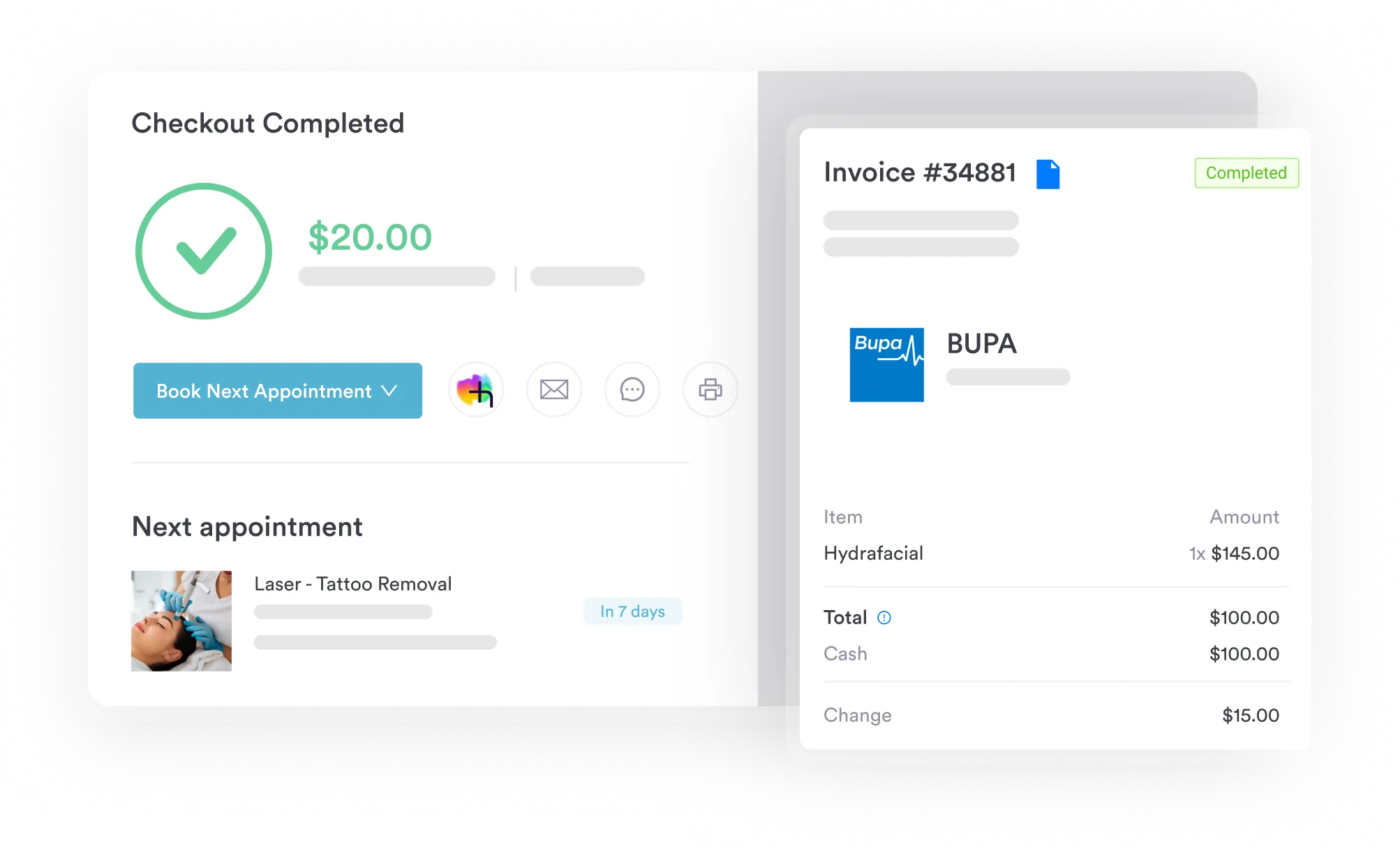
Accurate F28 documentation is as much a workflow problem as a clinical one. When clinicians document in separate systems from billing staff, the nuance that justifies F28 over F29 often gets lost in translation.
Practice management platforms designed for mental health can address that disconnect by embedding diagnostic guidance directly into the clinical note workflow.
Key capabilities that support F28 compliance include structured note templates that prompt for differential reasoning, automatic flags when F29 is selected without a documented clinical rationale, and integrated claims review that matches diagnosis codes to procedure codes before submission.
Teams handling psychosis-related claims alongside other complex presentations benefit from systems that support crisis documentation requirements. Reviewing crisis intervention strategies for clinicians can help practitioners understand the documentation expectations that arise when F28 is assigned in high-acuity contexts.
Standardizing intake workflows through digital intake forms, including a dedicated psychotherapy intake form, ensures that exclusion criteria such as substance use and physiological causes are consistently captured before the first billable encounter.
The same specificity logic applies across other mental health documentation. An eating disorder worksheet or an internet addiction test only supports a specific billing code when the structured questions in the template match what the clinician actually documents in the note.
Using AI-powered clinical documentation tools, covered in Pabau’s roundup of clinical documentation software, can reduce the documentation burden on clinicians, letting them focus on the differential reasoning that makes F28 defensible rather than the mechanics of note writing.
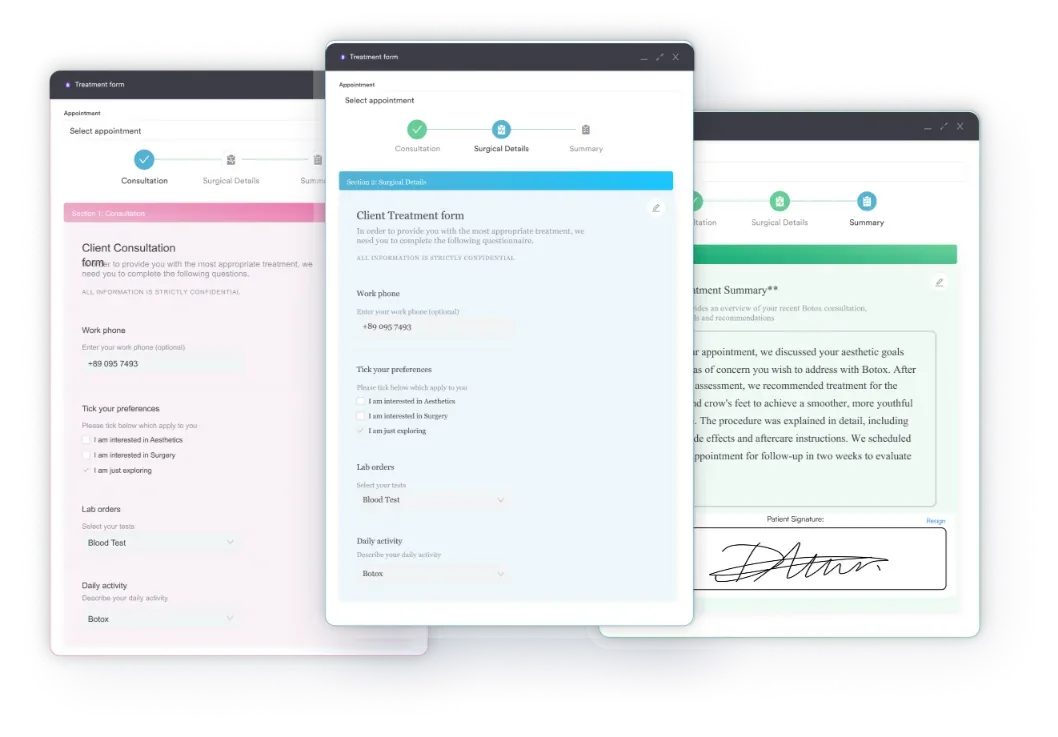
F28 is the right code when the clinical picture is specific enough to identify a distinct psychotic pattern that doesn’t fit any named disorder. Clean claims come from documentation that shows the differential reasoning, not just the diagnosis.
Pabau’s mental health EHR helps psychiatric and psychotherapy practices build that documentation into every encounter, with structured note templates, automated claims review, and compliance tools that keep F28 claims audit-ready from day one. To see how Pabau handles psychosis-related billing workflows, book a demo.

Billing a prevention program service? Prevention alternatives billing guide H0029 covers alcohol and drug prevention alternatives, billed per service rather than 15-minute units, with the state setting the unit.
Billing time-based medication training? Medication training billing guide H0034 covers medication training and support in 15-minute units, and the note needs clock times since the code is time-based.
Billing a partial hospitalization day? Partial hospitalization billing guide H0035 bills a Medicaid partial hospitalization day per diem, while Medicare pays PHP through G-codes instead.
ICD-10 code F28 indicates a psychotic disorder that is not caused by substance use or a known physiological condition and does not meet the criteria for any other specifically named psychotic disorder in the ICD-10-CM classification. It includes chronic hallucinatory psychosis and presentations that map to DSM-5’s “Other Specified Schizophrenia Spectrum and Other Psychotic Disorder.”
Yes, F28 is a billable and specific ICD-10-CM code, valid for FY 2026 reimbursement. It can be submitted as a primary or secondary diagnosis on claims to Medicare, Medicaid, and most commercial payers when supported by appropriate clinical documentation.
F28 requires the clinician to identify and document a specific type of psychotic presentation, even if it does not match a named disorder. F29 is used only when no clinical specification is possible at all. Payers increasingly scrutinize F29 claims, making F28 the stronger choice when the record supports a more defined clinical picture.
F28 maps approximately to ICD-9-CM 298.9 (Unspecified psychosis). This is an approximate crosswalk, not an exact equivalence. The ICD-9 code was broader and less specific, so when converting legacy records, review the original clinical documentation to determine whether F28 or another F20-F29 code is most accurate.
Chronic hallucinatory psychosis is a persistent psychotic state characterized by prominent hallucinations without meeting the full diagnostic criteria for schizophrenia or another named disorder. It is one of two conditions formally listed under F28’s “Applicable To” notes in the ICD-10-CM tabular list.
Supporting documentation should describe the specific psychotic symptoms and their duration, confirm that organic causes (substance use, physiological conditions) were ruled out, explain why more specific codes such as F20 or F25 were not applied, and document the functional impact on the patient. Payer-specific prior authorization requirements should also be checked before submission.
In psychiatry, F28 is the diagnostic code for other psychotic disorder not due to a substance or known physiological condition. Clinicians reach for an F28 diagnosis when a patient shows clear psychosis, such as persistent hallucinations or delusions, that does not meet the criteria for schizophrenia, schizoaffective disorder, delusional disorder, or brief psychotic disorder, and is not caused by a drug or medical condition. Chronic hallucinatory psychosis is the classic example.