

HCPCS code E0198: Water pressure pad billing guide
HCPCS code E0198 is a water pad for a standard mattress HCPCS code E0198 is the ...

Last Updated: Oct 13, 2026
H0004 is the HCPCS Level II code for behavioral health counseling and therapy, per 15 minutes.
Let Pabau's smart automation suggest the right codes, reduce claim denials, and keep your practice compliant—effortlessly.
Automate repetitive tasks and focus on what matters most—your patients.
Reduce coding errors and ensure compliance with the latest regulations.
Clean claims, fewer denials, and faster reimbursements.
Powerful insights and reporting to help your practice thrive.
HIPAA compliant SOC 2 certified GDPR-compliant Trusted by 4,000+ clinics worldwide

HCPCS Code H0004 describes behavioral health counseling and therapy billed in 15-minute increments, primarily used by Medicaid and some managed care payers.
Each unit equals 15 minutes of direct service; accurate time documentation is required to determine the correct number of units per session.
H0004 applies to individual and group counseling for substance use disorder and mental health, with modifiers like HQ, HN, HO, and HP indicating setting and provider credentials.
Pabau’s claims management software helps behavioral health practices track time-based units, attach the right modifiers, and submit clean claims for H0004 sessions.
The code’s short description, as maintained by CMS through the HCPCS Level II system, is “Alcohol and/or drug services.” H0004 was added to HCPCS on January 1, 2001, and remains a valid, billable code in %%currentyear%%.
H0004 sits within the HCPCS Level II H-series, covering codes H0001 through H0030. This range is specifically designated for substance use treatment, mental health counseling, and related behavioral health services. Unlike CPT codes, which are maintained by the American Medical Association, HCPCS Level II codes are maintained by CMS and are primarily used by Medicaid programs and managed care organizations.
| Property | Detail |
|---|---|
| HCPCS Code | H0004 |
| Long description | Behavioral health counseling and therapy, per 15 minutes |
| Short description | Alcohol and/or drug services |
| Code series | HCPCS Level II H-series (H0001-H0030) |
| Billing unit | Per 15 minutes of direct service |
| Date added | January 1, 2001 |
| %%currentyear%% status | Valid and billable |
| Primary payer | Medicaid, Medicaid managed care organizations |
H0004 is used by a wide range of behavioral health providers. Licensed counselors, licensed clinical social workers (LCSWs), licensed professional counselors (LPCs), and certified substance use disorder counselors are the primary billers. Behavioral health technicians (BHTs) may also bill H0004, but with important restrictions that vary by state.
Practices using mental health EMR platforms need to track provider credential level because several modifiers tied to H0004 directly reflect the billing provider’s education level. Billing without accurate credential documentation is one of the most common audit triggers for this code.
In Arizona, the AHCCCS Covered Behavioral Health Services Manual specifies that when a BHT bills H0004, the BHT must work for an Arizona Department of Health Services (ADHS)-licensed behavioral health facility and must operate under the clinical oversight of a licensed supervisor.
This requirement is state-specific: other Medicaid programs have their own supervision rules, and providers should always consult their state’s Medicaid provider manual before billing.
Provider eligibility for H0004 is determined at the payer level. Always verify with your specific Medicaid managed care organization (MCO) or state Medicaid agency before assuming coverage applies to a given credential type. Practices supporting psychiatry practice management workflows often need to manage both H-series and CPT codes across different payers simultaneously.
Time-based codes live and die by documentation. For H0004, auditors look for two things above all: accurate time recording and a clear clinical rationale for each session. Missing either one invites denial or recoupment.
Each unit of H0004 represents 15 minutes of direct service. A 60-minute individual counseling session bills as 4 units. A 45-minute session bills as 3 units. The session time must be documented in the clinical note, and that documented time must match the units billed on the claim. Discrepancies between the note and the claim are a primary audit target.
Clinical notes for H0004 sessions should follow structured formats. Using SOAP note structure for social work and behavioral health helps ensure all required elements are captured consistently. Notes maintained in digital intake forms and session records reduce the risk of incomplete documentation at audit time.
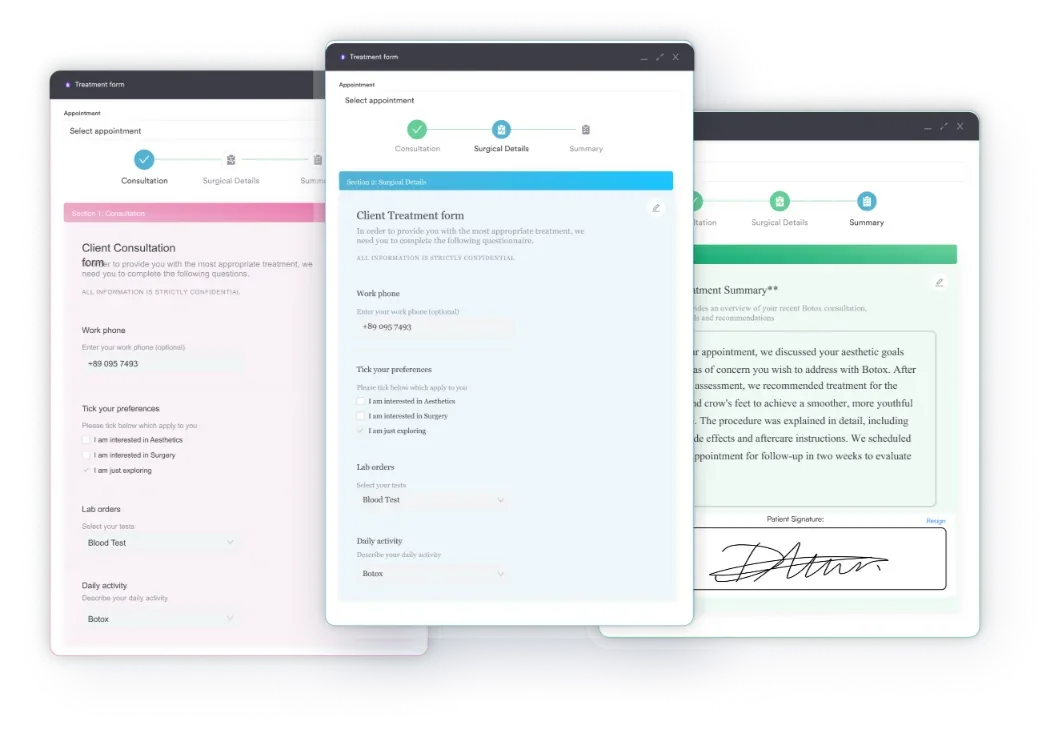
Every H0004 session note should include the following core elements:
HIPAA-compliant documentation practices also require that notes be stored securely and accessible only to authorized staff. Practices that have implemented HIPAA-compliant practice software are better positioned to meet audit requirements because access controls and audit trails are built into the workflow rather than managed manually.
Good therapy practice management software tracks session timestamps and links them directly to the billed units, reducing the risk of incomplete documentation.
Set a documentation standard: require all H0004 session notes to record start and end times, not just session duration. Payers calculate units from actual timestamps during audits. Duration-only documentation creates unnecessary denial risk.
Many payers apply the 8-minute rule to H0004, but unit rounding is ultimately set by each state Medicaid program or MCO, so confirm the method with your payer. Under the 8-minute rule, each 15-minute unit requires a minimum of 8 minutes of direct service. For sessions that fall between unit boundaries, apply the calculation below to determine the correct number of units.
| Session duration | Units to bill | Calculation |
|---|---|---|
| 8-22 minutes | 1 unit | Minimum threshold for 1 unit |
| 23-37 minutes | 2 units | Full first unit + 8+ min for second |
| 38-52 minutes | 3 units | Two full units + 8+ min for third |
| 53-67 minutes | 4 units | Three full units + 8+ min for fourth |
| 68-82 minutes | 5 units | Four full units + 8+ min for fifth |
Payers may impose daily unit caps that override this calculation. CareOregon, for example, implemented a limit effective January 1, 2026, capping H0004 billing at 8 hours per provider per day. Claims exceeding this cap for a single provider on a single day will be denied in full, including sessions that would individually be valid.
Group services are excluded from this daily limit, but individual sessions are not. Other Medicaid MCOs may have different caps, so always review your specific payer contracts.
Modifiers are required or expected for H0004 claims in most Medicaid programs. They signal the setting, the provider credential level, and whether the service was delivered individually or in a group. Submitting H0004 without the appropriate modifier is a common denial cause.
| Modifier | Description | When to use |
|---|---|---|
| HQ | Group setting | H0004 delivered in a group counseling session |
| HN | Bachelor’s level | Service provided by a bachelor’s-level clinician |
| HO | Master’s level | Service provided by a master’s-level clinician |
| HP | Doctoral level | Service provided by a doctoral-level clinician |
| GT | Telehealth (real-time) | Service delivered via interactive audio/video; payer must allow telehealth H0004 |
| U1-U9 | State-specific | Used per state Medicaid program requirements; check your state’s provider manual |
When billing group therapy with H0004, the HQ modifier identifies the group setting. Group consent documentation should accompany these claims. Practices handling group sessions should review group therapy informed consent requirements, as proper consent documentation supports both clinical compliance and audit defense.
The GT modifier applies when H0004 is delivered via telehealth, but payer approval is not universal. Some Medicaid MCOs allow telehealth H0004; others require in-person delivery. Practices that have set up telehealth billing software with payer-specific modifier logic reduce the risk of submitting telehealth claims to payers who do not cover them. Always verify telehealth eligibility with each MCO before billing GT on H0004 claims.
Behavioral health practices submit H0004 on the CMS-1500 claim form. The code goes in Box 24D, with the appropriate modifiers listed in the modifier field. Units calculated from the session time are entered in Box 24G. Below is the standard billing workflow for this code.
Practices using claims management software with behavioral health billing capability can automate unit calculation and modifier selection based on session notes, reducing manual entry errors on H0004 claims. Every claim that ships with the wrong unit count or a missing modifier adds to the denial rate and the administrative burden of appeals.
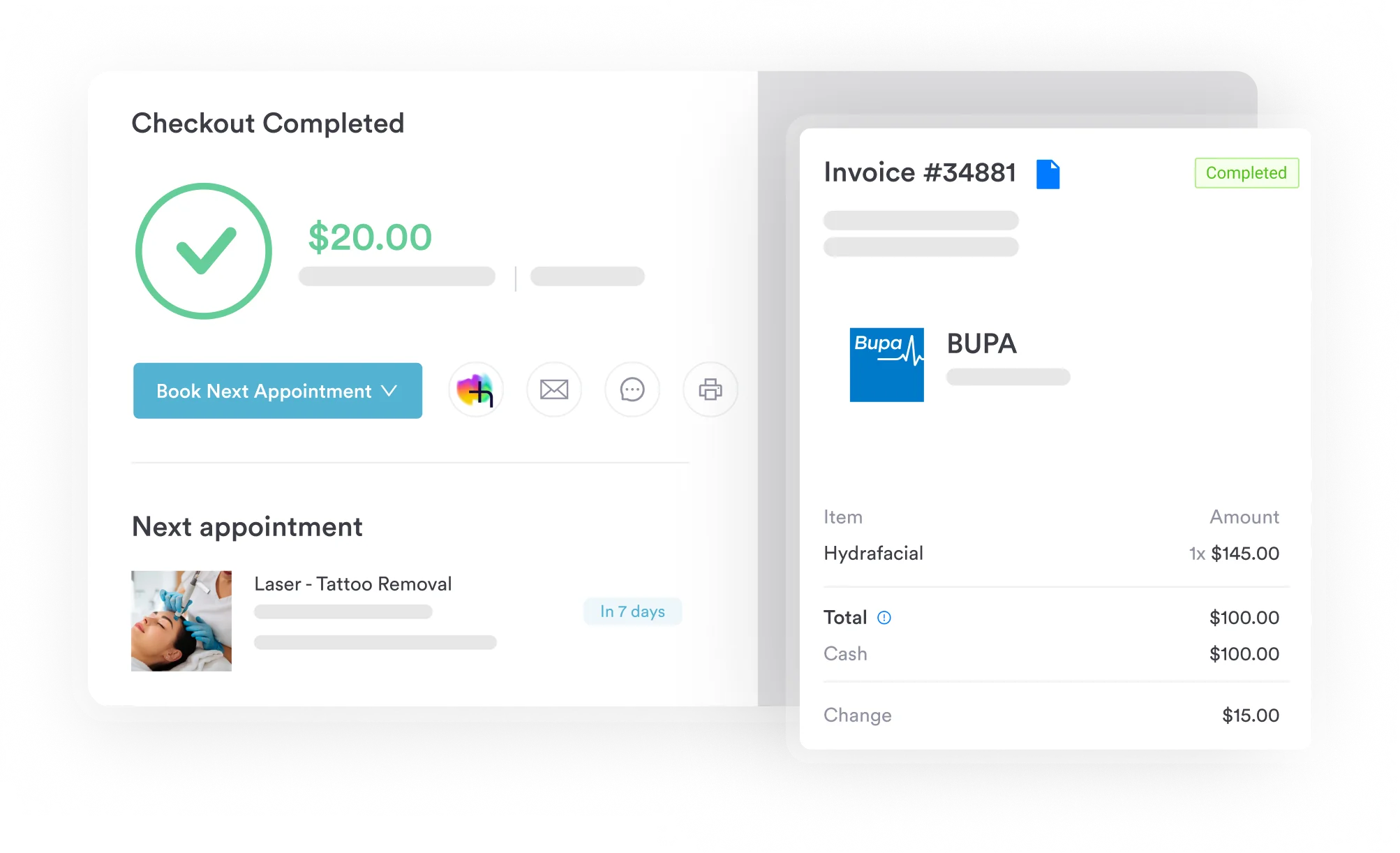

Pabau helps behavioral health and therapy practices track time-based units, attach the right modifiers, and submit cleaner H0004 claims. See how it works for your practice.

Reimbursement for H0004 varies significantly by state Medicaid program, payer contract, and plan year. There is no single national rate for this code because it is not a Medicare-covered code under the standard Medicare Physician Fee Schedule. The CMS Physician Fee Schedule lookup tool provides reference values, but actual Medicaid reimbursement is set at the state level.
Medicare coverage for H0004 is limited. CMS notes that Medicare “may or may not” reimburse this code, and in practice, fee-for-service Medicare typically does not cover H0004 directly. Providers billing Medicare Advantage plans should check their specific plan contracts, as some Medicare Advantage plans include behavioral health H-codes in their covered service list.
For Medicaid, rates are set per unit (15 minutes). Typical Medicaid fee-for-service rates in states where H0004 is actively used range from approximately $8 to $20 per unit, depending on state, but individual managed care contracts may pay higher or lower rates. Verify current rates directly with each payer using the AAPC’s HCPCS code reference and your state Medicaid fee schedule.
Never rely on a general fee schedule for H0004 reimbursement. Pull rates directly from your MCO contract or request a written fee schedule from each payer. Rates listed in third-party tools are estimates only and may not reflect your negotiated rates or current state Medicaid updates.
H0004 and CPT psychotherapy codes serve overlapping clinical purposes but are used in different billing contexts. The key distinction: CPT codes 90832, 90834, and 90837 are time-based psychotherapy codes primarily used for commercial insurance and Medicare billing, while H0004 is the preferred code for Medicaid and many managed behavioral health organizations (MBHOs).
| Code | Description | Billing unit | Primary payer |
|---|---|---|---|
| H0004 | Behavioral health counseling and therapy | Per 15 min | Medicaid, MCOs |
| CPT 90832 | Psychotherapy, 30 min | Per session (30 min) | Commercial, Medicare |
| CPT 90834 | Psychotherapy, 45 min | Per session (45 min) | Commercial, Medicare |
| CPT 90837 | Psychotherapy, 60 min | Per session (60 min) | Commercial, Medicare |
| CPT 90853 | Group psychotherapy | Per session | Commercial, Medicare |
In some state Medicaid programs, H0004 is explicitly required in place of CPT psychotherapy codes for behavioral counseling services. Arizona’s billing crosswalk, for example, directs providers to bill H0004 for all behavioral counseling and therapy services that do not qualify as psychotherapy under the CPT definitions.
Practices serving patients with both commercial and Medicaid coverage need a billing system that can handle both code sets.
One practical difference: CPT psychotherapy codes are fixed-duration codes. CPT 90837 means a 60-minute session, regardless of how many minutes past 53 the session ran. H0004 is a continuous time-based code: every additional 15 minutes (past the 8-minute threshold) adds another billable unit. This makes H0004 more granular but also more audit-sensitive, because the unit count must precisely match the documented session time.
H0004 reimbursement is governed by state Medicaid agencies and their contracted MCOs, not by a single federal policy. This means billing rules, modifier requirements, and coverage criteria can differ substantially from one plan to the next. Two things stand out as consistent compliance risks across most payers.
Daily billing limits. CareOregon’s 8-hour-per-provider-per-day cap (effective January 1, 2026) is a documented example of how MCOs are tightening H0004 billing controls. Other payers have similar caps, but the thresholds and enforcement mechanisms vary. Practices that rely on automated billing workflows can build daily unit checks into their claim submission process before claims reach the payer.
Bundling and unbundling risks. Some payers prohibit billing H0004 and CPT psychotherapy codes on the same date of service for the same patient. Others allow it under specific conditions. Submitting both without understanding the payer’s bundling rules creates denial and potential recoupment exposure. Always check the payer’s clinical policy before billing both code types on the same claim date.
Additional compliance areas to review per payer:
Verify current code properties before each plan year and cross-reference against your state Medicaid provider manual, which outlines program-specific requirements that override general CMS guidance. Practices treating anxiety, depression, and related mental health diagnoses alongside SUD should also confirm that the documented diagnosis codes align with the clinical context recorded in the H0004 session note.
H0004 denials almost always come back to the same three problems: wrong unit count, missing modifier, or session documentation that does not support the time billed. Solving those three problems is mostly a workflow issue, not a coding knowledge issue.
Pabau’s claims management software supports behavioral health practices in building the documentation and claim submission workflows that keep H0004 clean from the moment the session ends. If your practice is spending time chasing H0004 denials, book a demo to see how Pabau handles time-based behavioral health billing.

Coding a tumor spanning esophageal sites? ICD-10 code C15.8 covers a malignant neoplasm spanning overlapping sites of the esophagus with no single primary site.
Coding an unspecified small intestine tumor? ICD-10 code C17.9 applies to a confirmed small intestine malignancy when the specific segment is not documented.
Coding an appendix tumor diagnosis? ICD-10 code C18.1 covers malignant neoplasm of the appendix, excluding carcinoid tumors reported under a separate code.
HCPCS Code H0004 is used to bill behavioral health counseling and therapy services in 15-minute increments. It covers individual and group counseling for substance use disorder and mental health conditions, and is primarily used by Medicaid programs and managed behavioral health organizations (MBHOs) rather than commercial insurance or Medicare.
The number of units depends on total documented service time for that day, subject to payer caps. CareOregon, for example, limits H0004 to 8 hours (32 units) per provider per day effective January 1, 2026, with excess claims denied in full. Other MCOs may have different daily limits. Always verify with your specific payer contract before billing high-volume same-day sessions.
CPT 90837 is a fixed-duration psychotherapy code (60 minutes) used primarily for commercial insurance and Medicare billing. H0004 is a continuous time-based code billed per 15 minutes, used mainly for Medicaid. Some state Medicaid programs require H0004 specifically for behavioral counseling services and do not accept CPT psychotherapy codes as substitutes.
Standard fee-for-service Medicare generally does not reimburse H0004. CMS notes that Medicare “may or may not” cover this code, and most traditional Medicare claims for H0004 are denied. Some Medicare Advantage plans include behavioral health H-codes, so check your specific plan contract if billing a Medicare Advantage enrollee.
Every H0004 session requires a clinical note recording the session start and end time, provider name and credential, patient Medicaid ID, presenting problem, interventions used, patient response, treatment plan alignment, and the number of units billed reconciled to documented time. The note time must match the units billed on the CMS-1500 claim.
Common modifiers include HQ (group setting), HN (bachelor’s level provider), HO (master’s level provider), HP (doctoral level provider), and GT (telehealth, where payer-approved). Some state Medicaid programs also require U1-U9 state-specific modifiers. Submitting H0004 without the required modifier is a frequent cause of claim denial.



