ICD-10 code S61.201A: Open wound of left index finger without nail damage
ICD-10 code S61.201A covers a left index finger wound of unstated type ICD-10 co...

Last Updated: Oct 16, 2026
Billable Code Specific Code
F21 is the billable ICD-10-CM code for schizotypal disorder.
F21 sits within Chapter 5: Mental, Behavioral and Neurodevelopmental disorders (F01-F99), specifically within the subcategory F20-F29 covering schizophrenia, schizotypal, delusional, and other non-mood psychotic disorders.
It is a leaf-level code, meaning no further subdivision exists below F21. Coders should not add additional digits. For initial hospital inpatient admissions involving psychiatric evaluations.
Let Pabau's smart automation suggest the right codes, reduce claim denials, and keep your practice compliant—effortlessly.
Automate repetitive tasks and focus on what matters most—your patients.
Reduce coding errors and ensure compliance with the latest regulations.
Clean claims, fewer denials, and faster reimbursements.
Powerful insights and reporting to help your practice thrive.
HIPAA compliant SOC 2 certified GDPR-compliant Trusted by 4,000+ clinics worldwide

ICD-10 code F21 is the billable ICD-10-CM code for Schizotypal disorder, classified under Chapter 5 (F01-F99), subcategory F20-F29.
F21 carries eight official inclusion terms including borderline schizophrenia, latent schizophrenia, prodromal schizophrenia, and schizotypal personality disorder, each representing historical synonyms rather than separate diagnoses.
Accurate billing requires documenting specific symptoms such as odd beliefs, magical thinking, social anxiety, and perceptual disturbances in the clinical record before submitting claims.
Pabau’s psychiatry EMR software helps mental health practices structure F21 documentation, manage claims, and reduce denials through integrated clinical record tools.
The 2026 ICD-10-CM tabular list includes the following as applicable terms under F21. These are synonyms for documentation purposes, not separate billable diagnoses.
A note on Cluster A personality disorder: some third-party lookup tools list this as a synonym for F21, but coders should verify against the CDC/NCHS ICD-10-CM web tool before applying this term. The official CMS tabular is the authoritative source, and the inclusion terms above are those confirmed in the 2026 edition.
For related personality disorder coding, F60.1 (Schizoid personality disorder) is a separate code with distinct diagnostic criteria.
The WHO ICD-10 classification describes schizotypal disorder as a personality disorder characterized by eccentric thoughts and appearance, inappropriate affect, extreme social anxiety, and limited interpersonal interaction. The condition falls on the schizophrenia spectrum but does not meet the full criteria for a schizophrenia diagnosis under F20.
Common clinical features documented in records supporting F21 include:
This is a known classification divergence that affects coding decisions. In ICD-10, schizotypal disorder (F21) is placed within the psychotic disorders chapter (F20-F29). In the DSM-5, the American Psychiatric Association (APA) classifies the equivalent condition as Schizotypal Personality Disorder, placing it within the personality disorders cluster.
For billing purposes, the code used is determined by the payer’s accepted classification system. Most US payers accept ICD-10-CM as the operative coding framework, which means F21 applies when the clinician’s documented diagnosis aligns with schizotypal disorder regardless of whether the DSM-5 label was used during assessment.
The coding must reflect documented clinical judgment; coders should not independently reclassify a DSM-5 personality disorder diagnosis to F21 without clinician confirmation. A structured psychiatric evaluation template can help standardize the documentation that supports this coding decision.
Document at least four of the ICD-10-described clinical features in the assessment note before assigning F21. Payers reviewing claims for psychotic-spectrum codes typically expect symptom-level specificity in the clinical record, not just a diagnostic label. Generic notes referencing only the DSM-5 personality disorder category without ICD-10-aligned symptom documentation are a common cause of audit flags.
Psychiatric diagnosis codes in the F20-F29 range attract heightened scrutiny during payer reviews. For F21 specifically, documentation needs to establish three things clearly: that the clinical presentation does not meet criteria for schizophrenia (F20), that the symptoms are persistent rather than episodic, and that the pattern significantly impairs social or occupational functioning.
Practices looking to strengthen documentation processes across the full spectrum of mental and behavioral diagnoses may also find value in reviewing HIPAA compliance guidance for medical offices to ensure records are retained and accessible for audit.
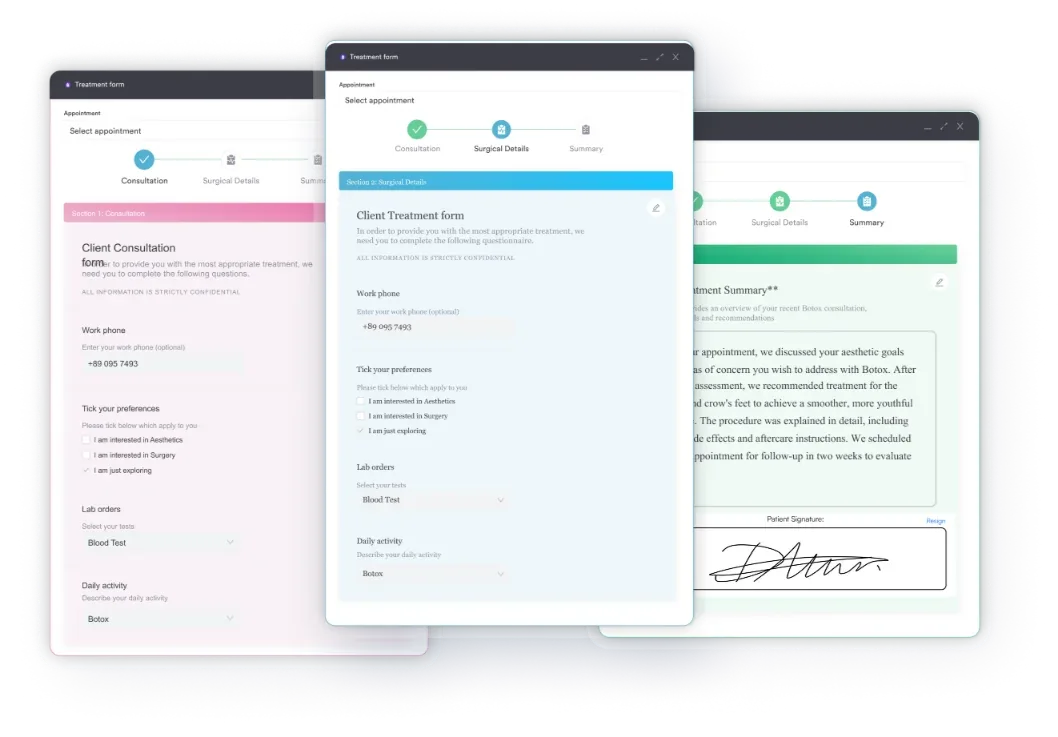
Using digital intake forms to capture symptom history at the point of intake reduces the documentation burden at billing time. When structured assessment data is already in the clinical record, coders have the information they need to support F21 without chasing additional documentation from the clinician.
Practices using SOAP notes for behavioral health documentation often find it easier to meet these requirements because the structure naturally captures subjective symptoms, objective observations, clinical assessment, and the plan in a format auditors can review quickly. HIPAA rules also require that all documented clinical information supporting a billing code be retained and accessible for audit.

Pabau’s psychiatry EMR connects clinical notes, intake forms, and claims management so your billing team has everything they need without chasing records. See how it works for mental health practices.

Selecting F21 accurately requires ruling out adjacent codes in the same chapter and adjacent personality disorder categories. The table below summarizes the most frequently confused codes.
| Code | Description | Key distinction from F21 |
|---|---|---|
| F20 | Schizophrenia | Full psychotic episode(s) with hallucinations or delusions meeting duration and severity criteria; F21 does not |
| F22 | Delusional disorders | Persistent non-bizarre delusions without other psychotic features; schizotypal thinking is odd rather than delusional |
| F23 | Brief psychotic disorder | Acute psychotic episode lasting less than one month; F21 is persistent, not episodic |
| F60.1 | Schizoid personality disorder | Social detachment and restricted affect, but without the magical thinking, perceptual disturbances, or odd speech of F21 |
For comorbidity coding, F21 can appear alongside mood disorder codes (F30-F39), anxiety disorder codes (F40-F48), and substance use disorder codes (F10-F19) when those conditions are separately documented and treated. Coders familiar with anxiety comorbidities will recognize that these are common in schizotypal presentations and should be coded separately when clinically documented.
Risk factor codes can also sit beside F21 on a claim without being comorbid diagnoses. ICD-10 code Z91.B records a documented diethylstilbestrol exposure history, and it is sequenced after the principal diagnosis.
Similarly, providers working across the neurodevelopmental spectrum may encounter overlapping presentations with delusional disorders; the ICD-10 code for delusional disorders is a separate classification with distinct diagnostic criteria and should not be used interchangeably with F21.
ICD-10 code F21 maps directly to ICD-9-CM code 301.22 (Schizotypal personality disorder) via the CMS General Equivalence Mappings (GEMs). This is a one-to-one forward mapping. Practices still handling legacy records or converting historical data should apply this crosswalk when translating ICD-9 claims to ICD-10 format. The AAPC Codify ICD-10-CM lookup provides crosswalk data alongside the code entry if verification is needed. Payment posting from a remittance file is faster than manual entry and keeps the adjustment reasons attached.
When pulling historical patient records coded under ICD-9 301.22, verify that the documented clinical presentation still aligns with F21 under ICD-10 criteria before updating the record. The terminological shift from ‘schizotypal personality disorder’ (ICD-9) to ‘schizotypal disorder’ (ICD-10) reflects a classification change, not just a label update. Confirm clinical alignment before coding continuity of care visits.
Psychiatrists managing these diagnoses alongside medication rely on psychiatry EMR software for structured, auditable records.
Inpatient claims: As a principal diagnosis, F21 groups to MS-DRG 885 (Psychoses) under MDC 19, Mental Diseases and Disorders (MS-DRG grouper v43.0).
Outpatient/office visits: F21 is typically billed with either:
Payers reviewing psychiatric claims commonly look for medical necessity documentation, so the clinical notes supporting F21 must be available in the record at the time of claim submission.
Mental health practices billing for schizotypal disorder encounter a consistent set of claim rejection patterns. Understanding these in advance reduces administrative rework.
Practices using psychiatry EMR software that integrates clinical notes with the billing workflow reduce the documentation shortfalls that cause most of the rejections above. When the note is complete and the code is selected from within the same system, coders do not need to cross-reference separate platforms to verify that the clinical record supports the claim.
Staff managing documentation for neurodevelopmental or psychiatric comorbidities may also find structured coding references useful; for example, reviewing the ICD-10 code Y09 (assault by unspecified means) documentation framework illustrates how symptom-level specificity is required across very different code families.
F21 can be billed for telehealth-delivered psychiatric services when the service meets the applicable CMS or payer criteria for virtual delivery. The diagnosis code itself does not change for telehealth claims; modifier and place-of-service code requirements determine eligibility.
Practices should confirm individual payer telehealth policies for psychotic-spectrum diagnoses before submitting F21 claims for virtual sessions. CMS telehealth guidance is updated annually alongside the physician fee schedule.
Accurate use of ICD-10 code F21 comes down to symptom-level documentation, correct differential exclusion, and pairing the code with the right CPT service. Most claim denials for schizotypal disorder are preventable with structured clinical notes that name specific features from the ICD-10 description and establish functional impairment.
Pabau’s mental health EMR connects intake forms, clinical notes, and claims in one workflow, giving billing teams the documentation they need without additional steps. If your practice is managing psychiatric coding across multiple providers or locations, book a demo to see how the platform handles F21 and related psychotic-spectrum codes end to end.

Managing psychiatric billing across your practice? Psychiatry EMR software from Pabau integrates clinical documentation and claims management for mental health providers.
ICD-10 code F21 is the billable ICD-10-CM diagnosis code for Schizotypal disorder, a condition characterized by eccentric behavior, odd beliefs, magical thinking, extreme social anxiety, and perceptual disturbances that do not meet the full criteria for schizophrenia. It sits within Chapter 5 of the ICD-10-CM under subcategory F20-F29 and maps to ICD-9-CM code 301.22.
In ICD-10, schizotypal disorder (F21) is classified as a psychotic-spectrum condition, not a personality disorder. In the DSM-5, the equivalent condition appears as Schizotypal Personality Disorder within the Cluster A personality disorders group. For billing purposes in the United States, ICD-10-CM governs the code selection, so F21 is the correct code when the documented diagnosis is schizotypal disorder regardless of which manual the clinician used during assessment.
CPT 90791 (psychiatric diagnostic evaluation without medical services) and CPT 90792 (with medical services) are the most common codes paired with F21 for initial assessments. Ongoing psychotherapy sessions use CPT codes 90832, 90834, or 90837 depending on session duration. E/M codes may apply when a physician conducts medication management visits.
ICD-10 code F21 maps directly to ICD-9-CM code 301.22 (Schizotypal personality disorder) via the CMS General Equivalence Mappings. This is a one-to-one forward mapping, meaning each ICD-9 code converts to a single ICD-10 code with no additional specificity required.
Yes, F21 can be used as the diagnosis code for telehealth-delivered psychiatric services when the visit meets applicable CMS or commercial payer criteria for virtual care. The diagnosis code does not change for telehealth; the place-of-service code and any required telehealth modifiers handle the delivery method designation. Payer-specific prior authorisation requirements for psychotic-spectrum diagnoses delivered via telehealth should be verified before the first claim is submitted.
No. F21 is a leaf-level, billable ICD-10-CM code with no decimal subdivisions, so it is reported as F21 with no additional digits. A lookup for F21.0 resolves back to the same schizotypal disorder code, F21.
F20 is the ICD-10 code for schizophrenia, while F21 covers schizotypal disorder. Both sit in the F20-F29 block, but F21 involves eccentric behavior, odd beliefs, and perceptual distortions that fall short of the sustained psychotic episodes required for an F20 schizophrenia diagnosis.