ICD-10 Code Y76.0: Diagnostic obstetric and gynecological devices
ICD-10 Code Y76.0: Definition and billable status ICD-10 Code Y76.0 is a valid, ...

Last Updated: Oct 23, 2026
Billable Code Specific Code
C04.9 is the billable ICD-10-CM code for malignant neoplasm of floor of mouth, unspecified.
Let Pabau's smart automation suggest the right codes, reduce claim denials, and keep your practice compliant—effortlessly.
Automate repetitive tasks and focus on what matters most—your patients.
Reduce coding errors and ensure compliance with the latest regulations.
Clean claims, fewer denials, and faster reimbursements.
Powerful insights and reporting to help your practice thrive.
HIPAA compliant SOC 2 certified GDPR-compliant Trusted by 4,000+ clinics worldwide

ICD-10 Code C04.9 is the billable diagnosis code for malignant neoplasm of floor of mouth, unspecified, valid for all HIPAA-covered transactions in the 2026 ICD-10-CM edition (effective October 1, 2025).
Use C04.9 only when clinical documentation does not specify whether the lesion is anterior (C04.0) or lateral (C04.1); a site-specific code is always preferred when the pathology report or operative note confirms the exact location.
Z85.819 (personal history of malignant neoplasm of other site) is the most common companion code for follow-up encounters after floor of mouth malignancy; staging and treatment codes are required for active-treatment claims.
Pabau’s claims management and structured clinical documentation tools help oncology billing teams select the most precise C04 subcode at the point of care, reducing unspecified code usage and supporting cleaner claim submission.
Most oral cavity malignancy claims that return with documentation edits share one common thread: the coder reached for C04.9 when a more specific subcode was available. Understanding exactly when C04.9 is correct, and when it is not, prevents those edits before the claim leaves the practice.
C04.9 is a billable, specific ICD-10-CM diagnosis code representing malignant neoplasm of the floor of mouth where the exact intraoral site is unspecified. It is valid for use in all HIPAA-covered transactions under the 2026 ICD-10-CM edition, which became effective October 1, 2025. The code has remained billable without revision since the initial ICD-10-CM implementation in FY2016.
C04.9 sits four levels deep in the ICD-10 classification hierarchy. Understanding each level helps coders navigate the neoplasm table accurately and avoid selecting a parent category code rather than a billable leaf code. This same hierarchy issue surfaces elsewhere in oncology coding.
C04 itself is not billable. Coders must select one of the four subcategory codes. C04.9 is the correct choice only when documentation genuinely omits the specific intraoral site.
The C04 category contains four site-specific subcodes. Selecting the wrong one is the most common documentation-driven denial pattern for floor of mouth malignancy claims. The table below shows each code, its billable status, and the clinical scenario where it applies, as verified against the CMS code files.
Key distinction: C04.8 (overlapping lesion) requires documentation that the tumor spans multiple subsites. It is not a synonym for “unspecified.” If the operative or pathology report describes tumor extension across the anterior and lateral floor of mouth, C04.8 is correct, not C04.9. The same overlapping-versus-unspecified logic applies to C15.8 in esophageal cancer coding.
EHR systems and coding references may display C04.9 under several alternate clinical terms. Recognizing these synonyms helps coders confirm they have the right code when navigating an alphabetic index or EHR search field.
Note: squamous cell carcinoma is the most common histological type associated with floor of mouth malignancy, based on SEER training data for oral cavity sites. In cancer registry contexts, morphology codes (ICD-O-3) are assigned separately. C04.9 codes the topographic site only, not the histological type.
Claims using C04.9 are not inherently incorrect, but they draw scrutiny from payers when the clinical record suggests a more specific subcode was available. The same standard applies elsewhere in coding.
The C04 category carries no Excludes1 or Excludes2 notes at the category level, per the 2026 ICD-10-CM tabular list. However, coders should note:
Floor of mouth malignancy claims rarely submit with C04.9 alone. Payers expect diagnosis coding to reflect the full clinical picture, particularly for oncology encounters. The table below covers the most frequently co-submitted codes, per AAPC coding references.
The same secondary-coding discipline applies in dermatology EMR software workflows, where accurate coding for excised lesions directly affects reimbursement.
Check whether the operative or pathology note specifies anterior vs. lateral floor of mouth before assigning C04.9. A one-line documentation query sent back to the surgeon before the claim drops can upgrade the code to C04.0 or C04.1, reducing the chance of a payer medical necessity edit on a high-cost oncology claim.
Billing teams submitting claims for floor of mouth malignancy encounters typically pair C04.9 with CPT procedure codes covering biopsy, surgical excision, radiation oncology, and chemotherapy administration. The table below lists the most common pairings. Confirm medical necessity documentation supports each CPT-ICD pairing before submission.
Postoperative wound dehiscence sometimes follows extensive floor of mouth excisions and is billed separately under CPT 12020. Reconstructive cases like these often run through plastic surgery EMR systems that keep operative notes and billing aligned.

Pabau’s clinical documentation and billing workflows help teams capture site-specific detail at the point of care, supporting accurate ICD-10 code selection and cleaner claim submission.

Practices migrating legacy records or working with older payer systems sometimes need the ICD-9-CM predecessor for C04.9. The General Equivalence Mapping (GEM) files maintained by CMS provide the official bidirectional crosswalk.
ICD-9-CM 144.9 is the direct approximate predecessor to C04.9. GEM mappings are approximate, not exact; always review the ICD-10-CM 2026 tabular list for the authoritative code description before applying a crosswalk result to a live claim.
C04.9 has been valid and billable since ICD-10-CM replaced ICD-9-CM for US covered transactions on October 1, 2015. No revisions, description changes, or validity interruptions have occurred across fiscal years FY2016 through FY2026, per CMS annual update files.
This stability is less common than coders might expect: many adjacent head and neck codes have undergone editorial revisions since FY2016, making it worth verifying each year even for codes that appear stable. Coding teams tracking annual changes across multiple cancer site codes – from oral cavity codes to gynecologic neoplasms such as C51.0 (malignant neoplasm of labium majus) – benefit from a systematic annual review process. A payer audit samples claims and extrapolates, so one repeated error becomes a large repayment.
Standalone code lookup tools help coders verify a code after the fact, but they can’t fix documentation that was never captured. Site specificity gets decided at the point of care, when the clinician documents (or doesn’t document) the exact intraoral location.
Pabau’s claims management workflows connect the ICD-10 diagnosis code selection step directly to claim creation, reducing the manual re-entry that introduces coding errors.

Pabau’s structured patient records allow clinical teams to document anatomical site at the encounter level, giving coders the documentation they need to assign C04.0 or C04.1 rather than defaulting to C04.9. The platform’s digital intake forms can be configured to prompt for site specificity in oncology workflows, improving first-pass specificity without adding chart review time.

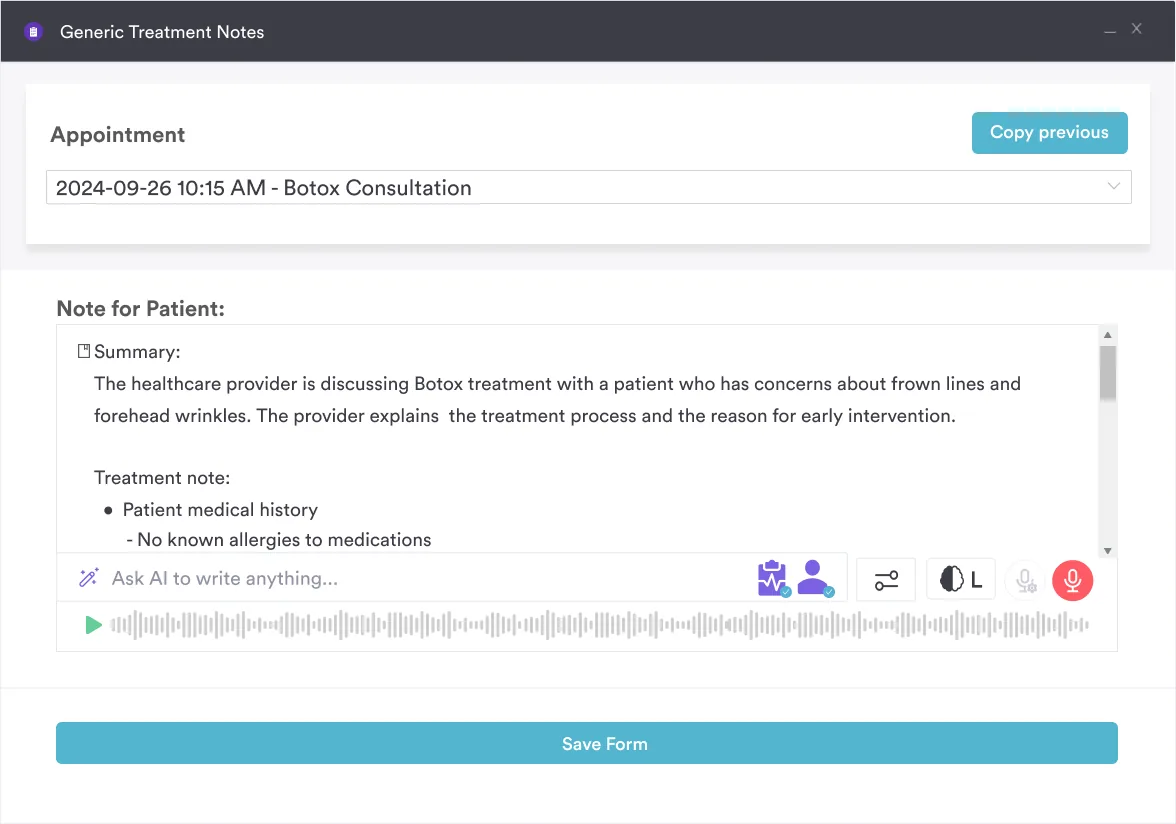
For practices using AI-powered clinical documentation, Pabau Scribe, our AI scribe, captures consultation notes and structures them for coding review. It helps billing teams confirm whether anterior or lateral site language is present in the record before the claim is submitted.
Combined with practice management software that integrates scheduling, documentation, and billing in one place, this closes the loop from site documentation to accurate code selection.
Run a monthly audit on claims submitted with C04.9. Pull all encounters where the associated surgical or pathology note was available at coding time. If any note specifies anterior or lateral floor of mouth, the claim was coded at a lower specificity than required. This audit typically surfaces 10-20% of C04.9 claims that could have been coded to C04.0 or C04.1, reducing payer query risk on future submissions.
C04.9 is a valid, billable ICD-10-CM code for malignant neoplasm of floor of mouth, unspecified, and it is appropriate precisely when documentation does not identify the specific intraoral site.
The practical challenge is that C04.9 is frequently assigned when C04.0, C04.1, or C04.8 was available in the clinical record. Structured documentation workflows that prompt for site specificity at the encounter level are the most reliable way to reduce unnecessary unspecified code usage on oral cavity malignancy claims.
To see how Pabau supports accurate ICD-10 code capture within your clinical and billing workflows.

Need another example of an unspecified-code decision? M30.2 covers the same specificity question for juvenile polyarteritis claims.
Billing anesthesia time separately from the surgical CPT code? CPT 00220 breaks down anesthesia time documentation and reimbursement rules.
Need a refresher on durable equipment coding requirements? E0185 explains the physician order and modifier rules payers expect.
ICD-10 Code C04.9 is the billable ICD-10-CM diagnosis code for malignant neoplasm of floor of mouth, unspecified. It falls within the C04 category (malignant neoplasm of floor of mouth) and the C00-C14 block (malignant neoplasms of lip, oral cavity and pharynx). The code is valid for all HIPAA-covered transactions in the 2026 ICD-10-CM edition, effective October 1, 2025.
Yes, C04.9 is a billable, specific ICD-10-CM code and can be used to indicate a diagnosis for reimbursement purposes on all HIPAA-covered transactions. The category code C04 is not billable; C04.9 is the specific subcode used when the site within the floor of mouth is unspecified.
Use C04.9 only when clinical documentation does not specify whether the lesion is anterior (C04.0) or lateral (C04.1). If the pathology report or operative note identifies the exact location, assign the site-specific code. C04.9 is appropriate when documentation genuinely lacks anatomical detail, not as a default when querying would take effort.
C04.8 applies when a tumor spans two or more subsites of the floor of mouth and no single subsite predominates; it requires documentation of overlap. C04.9 applies when the specific site within the floor of mouth is simply not documented. The two are not interchangeable: C04.8 is not a synonym for unspecified.
Yes, C04.9 is valid for the 2026 ICD-10-CM edition, which became effective October 1, 2025. The code has remained billable without revision or description change since its initial implementation in FY2016.
Z85.819 (personal history of malignant neoplasm of other site) is the most commonly used companion code for follow-up encounters after completed treatment for floor of mouth malignancy. During active treatment, C04.9 is typically the principal diagnosis with secondary codes reflecting staging, nodal involvement, and treatment-related conditions.