ICD-10 Code Y76.0: Diagnostic obstetric and gynecological devices
ICD-10 Code Y76.0: Definition and billable status ICD-10 Code Y76.0 is a valid, ...

Last Updated: Oct 23, 2026
Billable Code Specific Code
S42.442K is the billable ICD-10-CM code for displaced fracture (avulsion) of medial epicondyle of left humerus, subsequent encounter for fracture with nonunion.
Using the wrong 7th character on a subsequent encounter claim is one of the most common reasons an S42.44x claim is flagged on audit.
Assign K only when the record states the fracture has failed to unite. If the note says healing is slow but union is still possible, the code is S42.442G.
Let Pabau's smart automation suggest the right codes, reduce claim denials, and keep your practice compliant—effortlessly.
Automate repetitive tasks and focus on what matters most—your patients.
Reduce coding errors and ensure compliance with the latest regulations.
Clean claims, fewer denials, and faster reimbursements.
Powerful insights and reporting to help your practice thrive.
HIPAA compliant SOC 2 certified GDPR-compliant Trusted by 4,000+ clinics worldwide

ICD-10 code S42.442K covers a displaced avulsion fracture of the medial epicondyle of the left humerus at a subsequent encounter with nonunion.
The 7th character K is only correct once the clinician has documented fracture nonunion, not routine or delayed healing.
Laterality sets the fifth digit. S42.441 is the right humerus, S42.442 is the left, and S42.443 is unspecified.
Practice management software like Pabau ties the code to structured note data, so laterality and nonunion status reach the claim intact.
S42.442K is a billable, specific ICD-10-CM diagnostic code valid for HIPAA-covered transactions from October 1, 2025 through September 30, 2026 (FY2026). Its full official description is: Displaced fracture (avulsion) of medial epicondyle of left humerus, subsequent encounter for fracture with nonunion.
K signals a subsequent encounter where the fracture has failed to unite. It means more than a follow-up visit, which is why the 7th character is where most S42.44x coding errors happen. Confusing routine healing follow-up (7th character D) with nonunion (K) is a documentation and billing error.
Category S42 uses those seven characters and no others. The same set runs across the whole S42.4 subcategory, so a transcondylar fracture with delayed healing reads as healing reads as S42.475G. Unlike several lower-limb fracture categories, it carries no separate Gustilo type designators, so any open fracture at the initial encounter takes B.
Key distinction: K (nonunion) and G (delayed healing) describe different clinical states. Delayed healing means union is still possible. Nonunion means imaging has confirmed the fracture line will not close without intervention.
According to CMS ICD-10-CM guidance, the 7th character must reflect the status documented by the treating clinician at that specific encounter.
The medial epicondyle is the bony prominence on the inner side of the elbow where the flexor-pronator muscle group and the ulnar collateral ligament attach. An avulsion fracture occurs when these structures pull a fragment of bone away from the humerus, typically during a valgus stress event.
In physical therapy practices handling rehabilitation after nonunion repair, accurate coding keeps the clinical progression visible in the billing record.
Reading the parent chain is the fastest way to confirm you have reached the billable level. S42.442 already fills every character position, so it needs no X placeholder. It is still not billable until the 7th character is attached. Neighboring codes in the same subcategory, such as S42.409P and S42.489P, follow the same pattern. Electronic claims leave the practice as an 837 file, so a coding error becomes a rejection at the clearinghouse. Where a payer still requires a paper claim, the practice needs the current revision of the form.
ICD-10 code S42.442K belongs to the S42.44x subsection covering fractures (avulsion) of the medial epicondyle of the humerus. Coders have to get three dimensions right, and those are laterality, displacement status, and the 7th character.
The table below covers the most frequently referenced codes in the family. The same K designator carries over to shaft fractures such as S42.343K.
The fifth digit carries laterality inside each displacement series, and the two series run in the same order. Displaced is S42.441 right, S42.442 left, S42.443 unspecified. Nondisplaced is S42.444 right, S42.445 left, S42.446 unspecified, and a left-side visit for delayed healing is ICD-10 code S42.445G. So a nondisplaced right-side fracture seen at follow-up with malunion is coded to ICD-10 code S42.444P.
Avulsion fractures of the lateral epicondyle sit in a separate S42.43x series. Within that series, a displaced fracture coded at the sequela stage without a documented side is ICD-10 code S42.433S.
Check your EHR for laterality capture at the point of documentation. If the surgeon notes ‘left elbow’ in the operative report, the coder may still default to the unspecified-side code S42.443K. That claim can process and then fail a targeted audit. Structured intake and clinical note fields that prompt for left or right reduce this error at the source.
Legacy systems and historical claim reviews still reference ICD-9-CM codes. The approximate ICD-9-CM equivalent for S42.442K is 733.82, nonunion of fracture.
That mapping is approximate rather than one to one, because ICD-9-CM never captured this level of anatomical detail or laterality. The WHO ICD-10 browser sets out the structural differences between the two code architectures.
For practices converting historical records, or answering a payer request for legacy equivalents, 733.82 is the standard reference. Do not use ICD-9-CM codes for current FY2026 billing.
The choice between S42.442A, D, G, K, and P turns on two things. Those are the phase of care and the status of the fracture. ICD-10-CM coding guidelines require the 7th character to match the status documented at each encounter. A status carried forward from the original injury visit will not do.
Some practices capture fracture healing status at every visit through structured clinical documentation. Those practices rarely apply the wrong 7th character at submission.
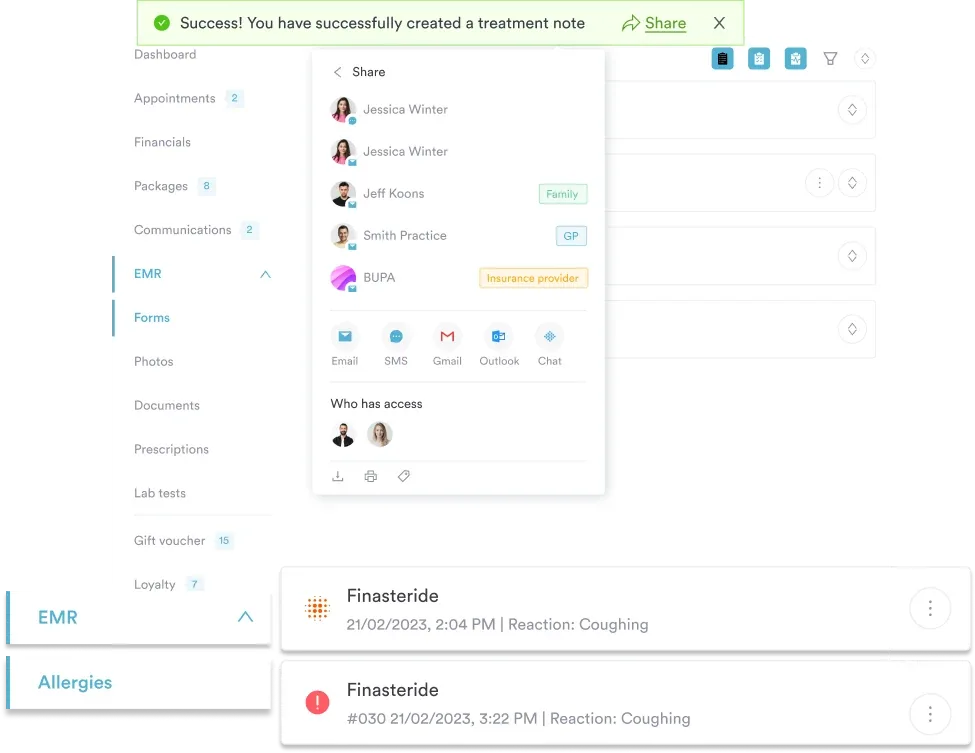
An S42.442K claim only survives a medical chart audit when the record supports every element of the code. Four documentation elements are non-negotiable.
Good medical forms and documentation processes remove the omissions that lead to claim denials.
The ICD-10-CM Official Guidelines (Chapter 20) require external cause codes when the injury resulted from an external event. Two categories usually apply to S42.442K, the mechanism of injury and the activity at the time of injury.
These codes do not change reimbursement directly, but they are required for complete claim coding and population health data.
External cause codes in the W series also take a 7th character. Because S42.442K is always a subsequent encounter, the paired W code takes character D instead of the initial-encounter option. The CMS ICD code lists confirm the pairing requirements for injury claims.
S42.442K has been part of ICD-10-CM since the classification replaced ICD-9-CM in the United States on October 1, 2015. The code has stayed structurally stable across annual updates, with no description changes or validity interruptions in recent fiscal years.
Practices billing fracture complication codes should still check each October, because 7th character applicability can shift with guideline revisions.
Verify against the CDC/NCHS ICD-10-CM web tool at the start of each fiscal year. That check confirms no reclassification has occurred.
Coding errors on fracture complication claims like S42.442K usually start in the documentation rather than the coding step. When the clinical note is vague about laterality, encounter type, or imaging-confirmed nonunion, the coder is left guessing.
Pabau’s claims management software works directly from clinical records, so diagnosis codes are applied from structured note data instead of being reconstructed from free text.
That data is then available for coding at every later encounter.
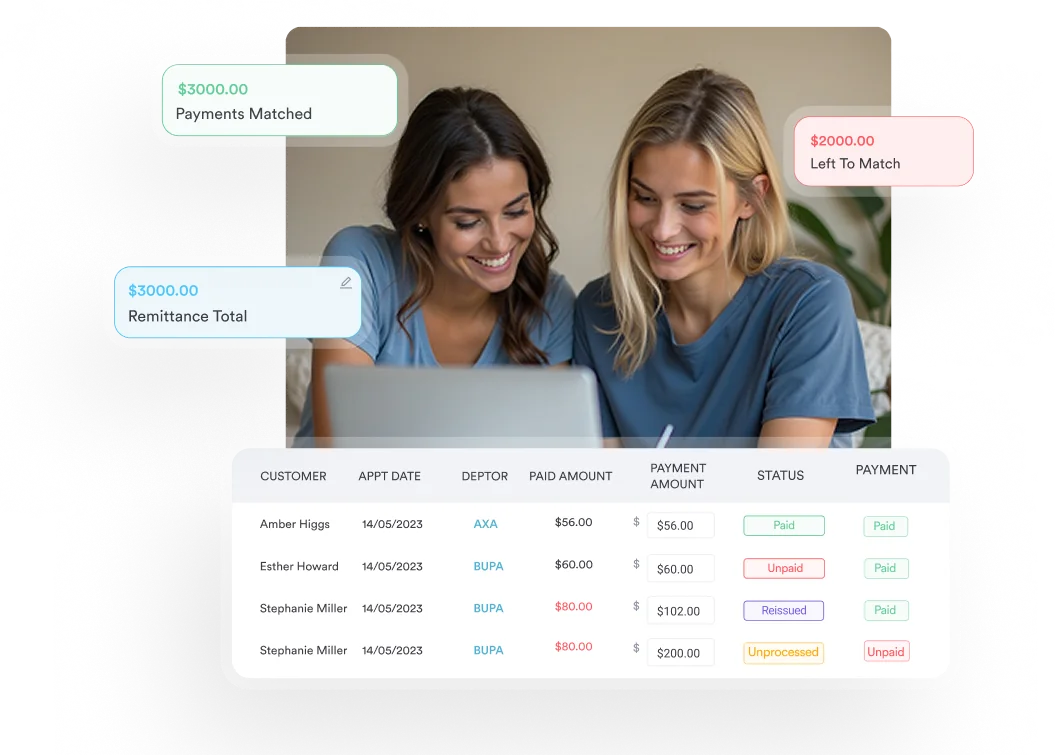
Orthopedic and musculoskeletal practices managing nonunion cases need documentation and billing to line up. Structured notes and practice management software keep what the clinician observed aligned with what reaches the claim.

Pabau’s clinical documentation tools help practices capture laterality, encounter type, and fracture status accurately. The right code reaches the claim first time.

Run a targeted audit on your S42.44x claims quarterly. Pull every claim submitted with 7th character K and confirm the matching note documents nonunion on imaging. Any claim where the note says delayed healing but the code says K is a correction opportunity before a payer audit finds it first.
The risk on an S42.442K claim sits in the note rather than the code. A coder can only reach for K when the record says the fracture failed to unite. Where the note describes slow healing without saying nonunion, S42.442G is the safer submission.
Correcting this at the coding desk never holds for long. The durable fix is a documentation template that forces laterality and healing status at every follow-up visit. Practices that do that stop rewriting notes after a denial, and stop guessing between G and K.
Pabau gives orthopedic and musculoskeletal practices that structure at the point of care. Book a demo to see how it keeps laterality and fracture status on the claim.

Coding a surgical neck fracture instead? ICD-10 code S42.242K applies the same nonunion logic further up the left humerus.
Did the bone heal in the wrong position? ICD-10 code S42.242P shows how the P designator changes a subsequent encounter claim.
Fracture healing normally at follow-up? ICD-10 code S42.212D covers the routine-healing 7th character on a left humerus fracture.
Coding a late effect rather than active care? ICD-10 code S42.032S walks through the sequela designator on a clavicle fracture.
Shaving a lesion between 1.1 and 2.0 cm? CPT code 11302 shave removal guide covers a single trunk, arm, or leg lesion measuring 1.1 to 2.0 cm.
ICD-10 code S42.442K is the billable ICD-10-CM code for a displaced avulsion fracture of the medial epicondyle of the left humerus. It is used at a subsequent encounter where nonunion has been confirmed. Every element is specific. It is displaced rather than nondisplaced, left rather than right or unspecified, and nonunion rather than routine or delayed healing.
Yes. S42.442K is a billable, specific ICD-10-CM code valid for HIPAA-covered transactions from October 1, 2025 through September 30, 2026 (FY2026). It can be submitted on a claim without a more specific code being required.
S42.442A is used at the initial encounter for a closed displaced avulsion fracture of the left medial epicondyle, while active treatment is beginning. S42.442K is used at a subsequent encounter, once the fracture has been confirmed as a nonunion. Only the 7th character changes.
Use S42.441K for the right humerus and S42.443K when the side is not documented. S42.442K is the left-side code. The nondisplaced series runs in the same order, with S42.444 right, S42.445 left, and S42.446 unspecified.
A subsequent encounter for fracture with nonunion is a follow-up visit for a known fracture that has failed to unite. Imaging or clinical assessment has to confirm it. It differs from delayed healing, where union is still possible, and from malunion, where the bone healed in a poor position.
Report a W-series fall code or a Y93 activity code alongside S42.442K when the mechanism is documented. For a subsequent encounter, the external cause code takes a D 7th character to match. Common pairings include W19.XXXD for an unspecified fall and Y93.64 for baseball and softball.
S42.442K is valid on HIPAA-covered transactions during fiscal year 2026, which runs from October 1, 2025 through September 30, 2026. Verify the current fiscal year validity in the CDC/NCHS ICD-10-CM web tool before each annual October transition.