ICD-10 Code S46.999A: Other injury, unspecified shoulder muscle
ICD-10 code S46.999A: Quick reference card ICD-10 code S46.999A is the billable ...

Last Updated: Oct 27, 2026
Billable Code Specific Code
M30.2 is the billable ICD-10-CM code for juvenile polyarteritis.
ICD-10 Code M30.2 represents juvenile polyarteritis, a form of necrotizing vasculitis that mainly affects small and medium-sized arteries in children. The condition is clinically distinct from adult polyarteritis nodosa (M30.0), even though both share the M30 parent category.
Juvenile polyarteritis causes transmural inflammation of arterial walls, leading to fibrinoid necrosis and potential aneurysm formation. Organ involvement varies but commonly includes the skin, kidneys, peripheral nerves, and musculoskeletal system. Because onset is usually in childhood or adolescence, ICD-10-CM assigns it a separate subcategory from the adult form.
In practice, the presentation can overlap with other pediatric vasculitides, so precise coding is essential. A coder documenting a diagnosis of "polyarteritis" without age specification should query the treating clinician, because the default parent M30 is non-billable.
The AAPC's ICD-10-CM code lookup confirms M30.2 as the valid, specific, billable juvenile polyarteritis ICD-10 code within the M30 group.
Let Pabau's smart automation suggest the right codes, reduce claim denials, and keep your practice compliant—effortlessly.
Automate repetitive tasks and focus on what matters most—your patients.
Reduce coding errors and ensure compliance with the latest regulations.
Clean claims, fewer denials, and faster reimbursements.
Powerful insights and reporting to help your practice thrive.
HIPAA compliant SOC 2 certified GDPR-compliant Trusted by 4,000+ clinics worldwide

M30.2 is the billable ICD-10-CM code for juvenile polyarteritis, valid for the 2026 code set.
M30.2 falls under Chapter 13 (Diseases of the musculoskeletal system and connective tissue), block M30-M36.
The parent code M30 is non-billable; always select a specific subcategory such as M30.2 for claim submission.
Pabau’s claims management software supports accurate ICD-10-CM code submission and structured clinical documentation for rheumatology and specialty practices.
M30.2 sits within a well-defined hierarchy. In short, understanding the full code group prevents the most common error with this code: using the non-billable parent M30 instead of the correct subcategory.
The block M30-M36 covers systemic connective tissue disorders within Chapter 13 (Diseases of the musculoskeletal system and connective tissue, codes M00-M99). Per the CMS ICD-10 codes page, the National Center for Health Statistics (NCHS) maintains ICD-10-CM for U.S. use, with annual updates effective each October.
M30.2 is unchanged and valid for fiscal year 2026. It has no exact ICD-9 predecessor, though 446.0 serves as the approximate crosswalk for historical records. A coder looking up a polyarteritis nodosa ICD-10 code for an adult patient should land on M30.0, not M30.2.
The same specificity principle applies to neighboring codes in the group, such as M30.8, where documentation must support the specific subtype rather than a vague vasculitis diagnosis.
M30.2 is a valid, billable ICD-10-CM diagnosis code for fiscal year 2026. For example, it can appear on a claim as a principal or secondary diagnosis code, depending on the clinical context of the encounter. The CDC/NCHS ICD-10-CM web tool confirms its status as an active, specific code with no pending deletions or revisions for 2026.
Several coding rules govern proper use of M30.2. These derive from the ICD-10-CM Official Guidelines for Coding and Reporting, maintained jointly by NCHS and CMS:
Using compliance management tools in clinical settings helps practices track coding rule changes across annual ICD-10-CM updates and reduces the risk of submitting non-specific parent codes.

Before submitting a claim with M30.2, confirm the attending physician documented “juvenile polyarteritis” explicitly in the clinical note or discharge summary. A diagnosis of “polyarteritis” or “vasculitis” alone does not support M30.2 and leaves the coder exposed to a specificity query or denial.
Juvenile polyarteritis does not have a single, widely adopted diagnostic criterion set like the ACR/EULAR criteria used for rheumatoid arthritis. Instead, a juvenile polyarteritis diagnosis is usually clinical, supported by biopsy, angiography, or imaging findings. Understanding the clinical picture helps coders confirm that M30.2 is the right code rather than a related vasculitis code. Front-desk data entry and back-office coding both feed cash collection, so errors compound downstream.
Myalgia and arthralgia often persist after the acute vasculitis is brought under control, so many pediatric patients need musculoskeletal rehabilitation well beyond the initial diagnosis. Coordinating that follow-up with a physical therapy practice keeps joint and muscle symptoms from being lost between specialties.
At the M30 category level, the ICD-10-CM tabular carries an Excludes1 note for microscopic polyarteritis (M31.7), so M31.7 is never reported alongside an M30 code. The M30.2 subcategory itself adds no further Type 1 Excludes notes, but several adjacent conditions are clinically excluded by correct diagnosis:
When documentation is ambiguous, query the physician rather than defaulting to M30.2. As a result.
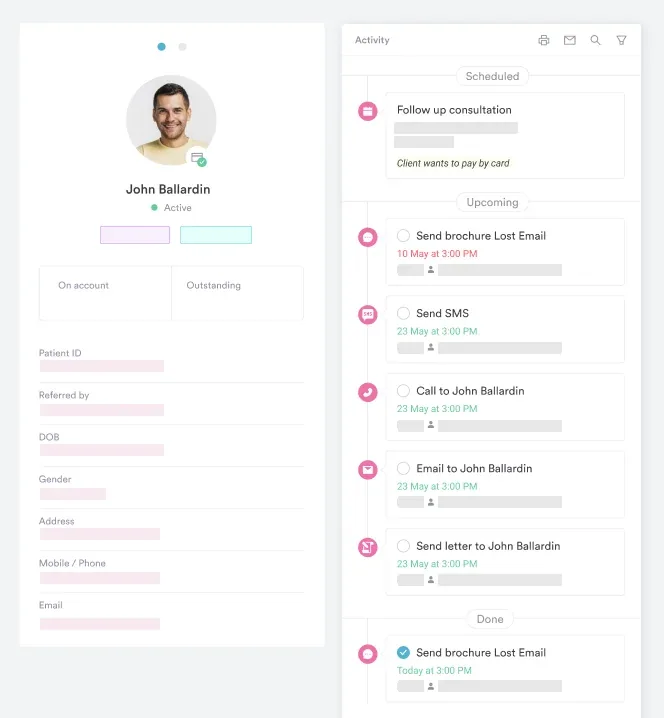

Pabau helps rheumatology and specialty practices submit accurate ICD-10-CM codes, maintain structured clinical documentation, and reduce claim denials. See how it works for your practice.

The M30 group is compact but clinically varied. Getting the right code depends on reading the physician’s diagnosis closely and understanding what each subcategory captures. Below is a practical differential coding reference for the codes most commonly confused with M30.2, including the Kawasaki disease ICD 10 code (M30.3) and the Churg-Strauss ICD 10 code (M30.1).
Coders handling M31.2 face a similar challenge: matching the documented clinical picture to the most precise code available, rather than defaulting to a broader parent or adjacent code.
Importantly, M30.0 (adult polyarteritis nodosa) and M30.2 (juvenile polyarteritis) are separate billable subcategories, and the distinction rests on the documented clinical picture rather than the patient’s age alone. If a physician documents “polyarteritis nodosa” in a 14-year-old without specifying juvenile form, query before assigning M30.2.
When a patient has both juvenile polyarteritis (M30.2) and a documented renal manifestation, check whether the encounter is primarily for the renal complication. If it is, sequence the renal code first and M30.2 as the underlying etiology. The ICD-10-CM coding guidelines require sequencing based on the reason for the encounter, not the severity of the underlying disease.
Clean claims for M30.2 depend on documentation that specifically names juvenile polyarteritis and ties it to clinical findings. In fact, vague documentation is the most common reason claims with this code face audits or payer queries.
The treating physician’s note, discharge summary, or specialist consultation must contain each of these elements to support M30.2:
Practices that use digital clinical documentation tools can build structured note templates that prompt clinicians to include all elements required for high-specificity ICD-10-CM coding. As a result, this reduces the back-and-forth between coders and clinicians at the billing stage.

Juvenile polyarteritis is a rare diagnosis. For instance, payers may require prior authorization for specialty visits, advanced imaging (MRI angiography, CT angiography), or biologics used in hard-to-treat cases. When submitting a prior authorization request, M30.2 should appear on the request along with supporting laboratory or biopsy documentation.
Some payers apply Local Coverage Determinations (LCDs) or National Coverage Determinations (NCDs) for specific diagnostic tests ordered in the workup of vasculitis. The CMS ICD-10 codes page provides access to coverage policies tied to specific diagnosis codes. Therefore, always cross-reference M30.2 with the relevant LCD before submitting claims for high-cost workup procedures.
For practices managing pediatric rheumatology billing.

As a diagnosis code, M30.2 often appears alongside CPT codes for the diagnostic workup and ongoing care of juvenile polyarteritis. Common associated procedures include:
Pairing M30.2 with medically necessary CPT codes and thorough documentation reduces the risk of medical necessity denials. In addition.
The WHO ICD-10 browser provides the international classification context for M30.2, which is useful when treating patients whose prior records use the WHO ICD-10 version rather than the U.S. ICD-10-CM adaptation. The two versions overlap largely at the M30.2 level. However, the ICD-10-CM tabular carries extra U.S.-specific notes and guidelines that the WHO version does not include.
Supporting patient care documentation standards ensures that every encounter note is actionable for both the treating team and the coding and billing staff. In pediatric rheumatology, where the patient group is small and diagnoses are rare, documentation quality directly affects payment outcomes.
The same principle holds for M30.1: the clinical note drives the code, and the code drives the claim. Ambiguity at the documentation level always costs more to resolve after submission than before it.
Juvenile polyarteritis is rare, but the coding errors it generates are common. The most frequent mistakes are:
Getting M30.2 right comes down to three things: confirm the physician’s documented diagnosis, match the clinical features to the correct subcategory, and back every claim with a complete clinical record.
Pabau’s claims management software helps specialty practices build the documentation workflows and coding review processes that prevent these errors at the source. To see how Pabau supports rheumatology and specialty billing, book a demo with the team.

Coding other Chapter 13 conditions? M15.9 covers polyosteoarthritis, unspecified, including the documentation a clean claim needs.
Need another musculoskeletal code reference? M17.0 breaks down bilateral primary osteoarthritis of the knee and its billing rules.
Looking at less common connective tissue diagnoses? M27.1 covers central giant cell granuloma coding and documentation requirements.
M30.2 is the billable diagnosis code for juvenile polyarteritis, a childhood necrotizing vasculitis of small and medium arteries. It sits in the M30-M36 block under Chapter 13.
Yes. M30.2 is a valid, billable code. The parent code M30 is non-billable, so you must pick a specific subcategory like M30.2 for a clean claim.
M30.0 is adult-onset polyarteritis nodosa, while M30.2 is juvenile polyarteritis with childhood or teenage onset. The age of onset and care differ, so code choice follows the documented diagnosis, not the patient’s age.
M30.2 falls under Chapter 13, diseases of the musculoskeletal system and connective tissue (M00-M99), within the M30-M36 block. It is a subcategory of M30, polyarteritis nodosa and related conditions.
The closest codes are M30.0 (adult polyarteritis nodosa), M30.1 (Churg-Strauss), M30.3 (Kawasaki disease), and M30.8 (other related conditions). Beyond the M30 group, the M31 range covers other necrotizing vasculopathies.
It depends on the payer and procedures ordered. Specialty imaging, biologics, and some lab panels may need authorization. So check the payer’s Local Coverage Determination (LCD) before submitting claims for high-cost procedures linked to M30.2.
Coders can confirm M30.2 when the record shows childhood or teenage onset plus the disease’s features: fever, weight loss, muscle pain, and joint pain, often with kidney, skin, nerve, or gut involvement. Biopsy or angiography confirms the arterial inflammation.