ICD-10 code S61.201A: Open wound of left index finger without nail damage
ICD-10 code S61.201A covers a left index finger wound of unstated type ICD-10 co...

Last Updated: Oct 16, 2026
Billable Code Specific Code
B80 is the billable ICD-10-CM code for enterobiasis.
Let Pabau's smart automation suggest the right codes, reduce claim denials, and keep your practice compliant—effortlessly.
Automate repetitive tasks and focus on what matters most—your patients.
Reduce coding errors and ensure compliance with the latest regulations.
Clean claims, fewer denials, and faster reimbursements.
Powerful insights and reporting to help your practice thrive.
HIPAA compliant SOC 2 certified GDPR-compliant Trusted by 4,000+ clinics worldwide

ICD-10 code B80 is the billable ICD-10-CM code for enterobiasis, a parasitic intestinal infection caused by Enterobius vermicularis (pinworm).
B80 covers oxyuriasis, pinworm infection, and threadworm infection as official synonyms per ICD-10-CM includes notes.
B80 maps to ICD-9-CM code 127.4 and groups under MS-DRG v43.0: 391 (with MCC) and 392 (without MCC).
Accurate documentation must specify the parasitic organism and clinical presentation to support B80 and reduce claim denials. Pabau’s claims management software streamlines this workflow.
Using B80 instead of a symptom-only code like L29.0 (pruritus ani) is clinically accurate and payer-preferred: coding the confirmed etiology rather than the symptom avoids claim denials and reduces audit exposure.
Enterobiasis is among the most common helminthic infections globally, with school-age children representing the highest-burden population. The WHO’s ICD-10 browser classifies B80 under Chapter 1 (Certain infectious and parasitic diseases, A00-B99), within the Helminthiases block B65-B83.
The infection spreads via the fecal-oral route, with characteristic nocturnal perianal pruritus arising from female worms migrating to deposit eggs around the anus. Because nocturnal itching often disrupts sleep, a sleep log can help parents document symptom timing before the visit.
This reference covers billable status, MS-DRG groupings, the ICD-9-CM crosswalk, synonyms, related codes, and documentation requirements for accurate B80 coding in 2026.
Understanding where the enterobiasis ICD-10 code sits in the ICD-10-CM hierarchy prevents misclassification and supports accurate chart abstraction. B80 is a single, non-subdivided code with no child codes beneath it.
| Level | Code / Range | Description |
|---|---|---|
| Chapter | A00-B99 | Certain infectious and parasitic diseases |
| Block | B65-B83 | Helminthiases |
| Code | B80 | Enterobiasis |
B80 is a billable/specific code, meaning it can be used directly on a claim without further subdivision. According to the CDC/NCHS ICD-10-CM web tool, B80 has been valid and billable continuously since ICD-10-CM adoption in October 2015, with no planned retirement in the 2026 fiscal year update. Coders should confirm validity annually against the CMS update files.
The Helminthiases block (B65-B83) groups worm-caused infections including schistosomiasis, hookworm, tapeworm, and roundworm conditions. B80 occupies its own discrete position within this block, distinct from the broader intestinal helminthiasis code B82, which applies only when the specific worm cannot be identified.
When the organism is confirmed as Enterobius vermicularis, B80 is always preferred over B82. Coders referencing other infectious disease codes can also compare ICD-10 code B91 (sequelae of poliomyelitis) and ICD-10 code B86 (scabies), another parasitic infection frequently confused with pinworm-related perianal irritation.
Front-desk teams that also want to grow patient volume can review tactics in how to get more patients, particularly the scheduling and outreach approaches suited to pediatric practices that manage frequent enterobiasis cases.
ICD-10-CM includes notes list alternative clinical terms that are also captured by B80. Using any of these terms in the diagnostic statement will map correctly to B80 during billing submission.
All five terms map to the same B80 code, and no modifier or additional specificity code is required when using any of these designations. Clinicians documenting “pinworm infection confirmed on perianal tape test” are providing sufficient specificity to support B80 assignment.
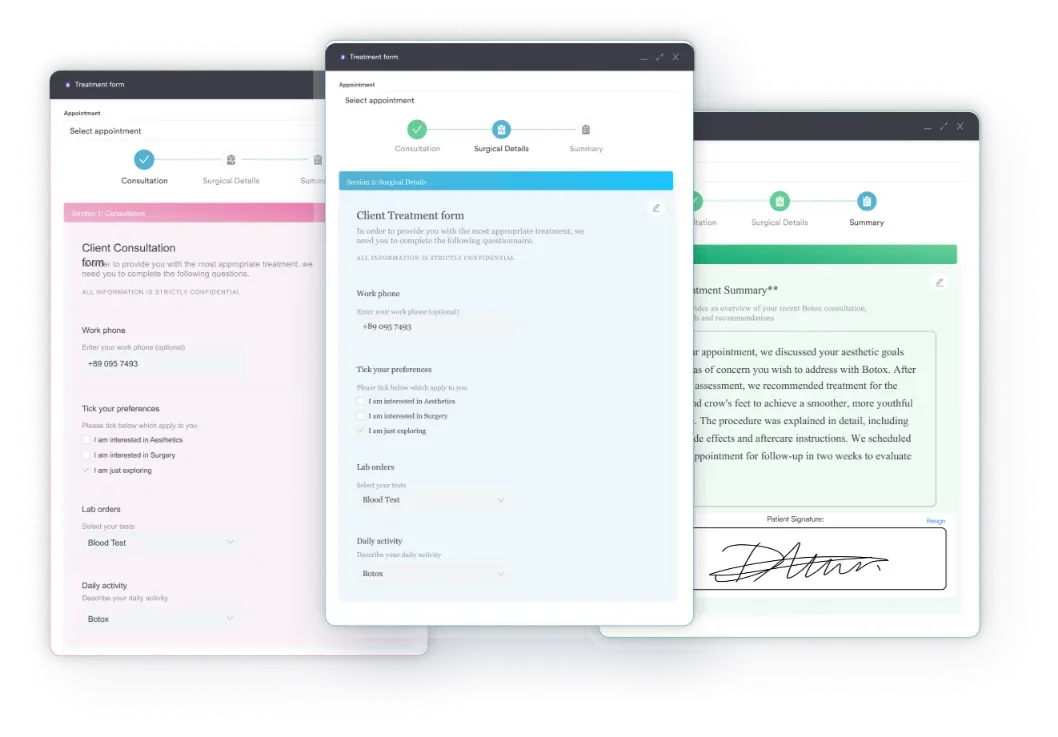
Primary care and pediatric practices managing these presentations benefit from digital intake forms that capture patient-reported symptoms, including nocturnal pruritus and household contacts, systematically before the encounter.
Document the specific synonym used in the encounter note precisely as the provider wrote it. If the chart says ‘pinworm infection confirmed by tape test,’ use B80 directly. Do not upcode to a broader intestinal parasitosis code. Specificity at code assignment reduces payer audit exposure.
The right software for primary care practices handles the surge of infection-related visits without documentation falling behind.
For inpatient hospital claims, B80 groups under two MS-DRGs in version 43.0. The grouping depends on whether a major complication or comorbidity (MCC) is present on the same claim.
| MS-DRG | Title | Condition |
|---|---|---|
| 391 | Esophagitis, gastroenteritis and miscellaneous digestive disorders | With MCC |
| 392 | Esophagitis, gastroenteritis and miscellaneous digestive disorders | Without MCC |
In clinical practice, enterobiasis rarely drives inpatient admission on its own. Most B80 encounters occur in outpatient or ambulatory settings, where MS-DRG assignment does not apply.
When B80 does appear on an inpatient claim, it is typically as a secondary diagnosis alongside a primary gastrointestinal or infectious condition. In those cases, verify whether the enterobiasis diagnosis qualifies as an MCC relative to the principal diagnosis before assigning MS-DRG 391 vs. 392.
For outpatient claims, B80 submits under the standard facility or professional fee schedule. No additional CPT code is required solely for the B80 diagnosis; the procedure codes for office visit evaluation, laboratory (tape test or microscopy), and any prescribed treatment are billed separately.
For example, a complete abdominal ultrasound ordered to rule out other parasitic conditions would be billed under CPT code 76700.
Practices that understand how medical billing workflows function can flag B80 encounters for pharmacy or lab add-ons at the point of claim creation, reducing billing lag. The CMS ICD-10 codes page provides the authoritative annual update files confirming B80’s continued validity and any associated coverage edits.

Pabau’s claims management and clinical documentation tools help practices submit accurate ICD-10 coded claims, track lab results, and maintain audit-ready records for infectious disease encounters.

Practices transitioning historical records, performing retrospective audits, or working with payers still referencing legacy data need the ICD-9-CM equivalent for B80.
| ICD-10-CM Code | ICD-9-CM Code | Description | Mapping Type |
|---|---|---|---|
| B80 | 127.4 | Enterobiasis | Direct (one-to-one) |
The crosswalk between B80 and ICD-9-CM 127.4 is a direct, one-to-one mapping documented in the CMS General Equivalence Mappings (GEMs), last published for FY2018. No forward or backward mapping ambiguity exists for this code pair.
This simplifies retrospective chart reviews and payer correspondence involving claims filed before October 2015. Researchers and compliance teams working with Medicare data files can verify this crosswalk and access historical billing data using standard ICD-10-CM lookup references.
For practices with mixed-year billing histories, note that ICD-9-CM 127.4 (Enterobiasis) also carried the synonym terms oxyuriasis and pinworm infection, so the clinical scope is identical between the two code systems. Legacy audit flags triggered under 127.4 translate cleanly to the B80 population when reviewing ICD-10 claims.
GP and primary care practices can streamline this kind of retrospective review with GP clinic software that indexes clinical codes across patient records. Teams managing medical conferences or multidisciplinary infectious disease reviews may also bill under CPT code 99366 (medical team conference) when coordinating care across providers.

Several ICD-10-CM codes sit near B80 either in the same block or because they describe overlapping clinical presentations. The codes below are the most frequent sources of coding error for parasitic gastrointestinal conditions.
Coders working in pediatric or family medicine settings should build a quick-reference table of these differential codes and their distinguishing criteria. Standard ICD-10-CM code browsers with DRG grouper support can assist with real-time differential verification.
Practices handling complex infectious disease documentation across multiple patients benefit from structured clinical record tools that support searchable diagnostic code fields. Coders working across multiple infectious disease categories can also cross-reference ICD-10 code A70 (Chlamydia psittaci infections) and ICD-10 code A78 (Q fever) for comparison.
Run a quarterly audit on claims coded with L29.0 (pruritus ani). If the corresponding encounter note documents a tape test, microscopy result, or provider-confirmed diagnosis of pinworm, those claims should have been coded B80. Rework eligible claims within the payer’s timely filing window.
B80 requires physician or qualified clinician documentation of a confirmed enterobiasis diagnosis. The level of specificity expected by CMS and commercial payers for this code is relatively straightforward compared to many infectious disease codes, but several documentation elements reduce audit and denial risk.
The encounter note should document how the diagnosis was established. Accepted confirmation methods include the perianal tape test (cellulose acetate tape test), direct visualization of adult worms or eggs on microscopy, or a provider’s clinical diagnosis based on characteristic presentation when testing is deferred.
Payers rarely require laboratory confirmation for B80 in ambulatory settings, but documentation of the confirmation method strengthens the record in the event of audit.
Include at minimum: symptom onset and duration, the affected patient’s age (relevant for pediatric vs. adult treatment protocols), household contact status, and whether treatment was initiated at this encounter. For re-presentation cases, document prior treatment and any indication of treatment failure or reinfection.
Practices conducting well-child visits, such as those billed under CPT code 99391 (infant preventive medicine re-evaluation), can use the visit to screen household contacts for pinworm exposure and document it alongside the primary diagnosis.
B80 stands alone in most outpatient encounters. However, consider adding a secondary code when a comorbid condition was assessed and managed in the same encounter.
Practices that also manage patients with familial or hereditary blood conditions may reference ICD-10 code D75.0 (Familial erythrocytosis) as an example of how secondary diagnoses are layered onto a primary infectious disease code.
The CMS ICD-10-CM Official Guidelines for Coding and Reporting govern sequencing rules for B80. As a confirmed etiology code, B80 takes principal diagnosis precedence over any symptom codes arising from the infection.
Practices building documentation templates for parasitic infection encounters should ensure intake workflows capture household exposure history and prior treatment, since both are commonly missing from audited B80 records. Using compliance management tools that embed documentation checklists at the point of care reduces these omissions.
Accurate coding also depends on maintaining tamper-evident. Practices managing pediatric populations can also benefit from a structured baby teeth eruption chart as an example of how patient education templates are integrated into clinical documentation workflows.
The AI-assisted clinical documentation in Pabau can also help clinicians capture the required diagnostic elements from dictated notes in real time.
Enterobiasis treatment is straightforward: a single oral dose of mebendazole, albendazole, or pyrantel pamoate, repeated at two weeks to address newly hatched larvae. Practices using CPT code 99232 for subsequent hospital inpatient or observation care should ensure the follow-up documentation reflects treatment response when enterobiasis is a secondary inpatient diagnosis.
The treatment choice does not change the ICD-10 code B80 assignment. However, the prescribed medication does affect the claim in two ways: the pharmacy benefit claim requires an NDC-linked diagnosis, and practices billing an extended evaluation and management service (99213 or 99214) should ensure the documentation supports the level of complexity billed, not just the B80 diagnosis. Keeping a code lookup current matters more than keeping it comprehensive.
Purdue University’s Clinical Drug-Encounter Knowledge (CDEK) database notes three drugs with indications for enterobiasis (B80): two with approved indications and one experimental. Mebendazole and albendazole are FDA-approved for this indication; pyrantel pamoate is available OTC with FDA-approved labeling for pinworm treatment in children.
Coders do not need to document the specific drug to support B80, but if the encounter note references treatment, the drug named should align with standard-of-care options to avoid payer scrutiny. Prescription workflows can be coordinated through prescription management tools that link diagnosis codes to the prescribing record.
Practices dealing with high volumes of pediatric infectious disease coding can also refer to guidance on ICD-10 code F82 (developmental disorder of motor function) for parallel documentation strategies in pediatric settings.
Enterobiasis coding is straightforward once the diagnosis is confirmed: B80 is the only billable ICD-10-CM code for this condition, with a direct crosswalk from ICD-9-CM 127.4 and no sub-codes or modifiers required.
The most common errors are using the symptom code L29.0 instead of B80 after confirmation, or defaulting to the non-billable B82 category when the organism is already identified. Both are avoidable with clear documentation protocols.
Pabau’s claims management software helps practices build ICD-10-aligned billing workflows, flag missing documentation before claim submission, and reduce denial rates for infectious disease encounters. To see how Pabau handles diagnostic coding workflows in your practice, book a demo with our team.

Coding an ulna fracture that healed with malunion? ulna fracture malunion coding guide notes that only the 7th character R confirms this fracture type healed with malunion.
Looking for broader ICD-10 coding references? ICD-10 code C18.1 (Malignant neoplasm of appendix) illustrates how specificity-first coding applies across complex diagnosis categories.
Coding an ulnohumeral joint dislocation? ulnohumeral dislocation coding guide notes the parent code is not billable alone, so the 7th character is required.
ICD-10 code B80 is the billable ICD-10-CM diagnosis code for enterobiasis, a parasitic intestinal infection caused by the pinworm Enterobius vermicularis. It is classified under Chapter 1 (Certain infectious and parasitic diseases) within the Helminthiases block B65-B83 and has been valid since ICD-10-CM was adopted in October 2015.
Yes, B80 is a billable/specific code that can be used directly on a claim without any additional sub-codes or modifiers. It applies to all confirmed enterobiasis diagnoses regardless of the clinical synonym used by the provider (pinworm infection, oxyuriasis, or threadworm infection).
The ICD-9-CM equivalent of B80 is code 127.4 (Enterobiasis). The crosswalk is direct and one-to-one, documented in the CMS General Equivalence Mappings (last published FY2018) with no ambiguity between the two code systems.
B80 groups under MS-DRG v43.0: 391 (Esophagitis, gastroenteritis and miscellaneous digestive disorders with MCC) or 392 (without MCC). Most B80 encounters occur in outpatient settings, where MS-DRG groupings do not apply.
B82 (Unspecified intestinal parasitism) is a non-billable, three-character ICD-10-CM category; it cannot be submitted alone on a claim. When the causative organism cannot be identified after investigation, use the billable subcode B82.0 (Intestinal helminthiasis, unspecified) or B82.9 (Intestinal parasitism, unspecified) instead. Once the organism is confirmed as Enterobius vermicularis, B80 is always the correct code.
B80 covers infections caused by Enterobius vermicularis exclusively. The code’s includes notes list oxyuriasis, pinworm infection, and threadworm infection as synonymous clinical terms, all of which map to the same organism and the same code.
It depends on the organism. When pinworm (Enterobius vermicularis) is confirmed, use B80. When the specific worm cannot be identified after investigation, use the billable subcode B82.0 (Intestinal helminthiasis, unspecified) or B82.9 (Intestinal parasitism, unspecified) rather than the non-billable B82 header. A finding of worms in stool with no named species stays on the unspecified B82 subcodes until the organism is identified.
Infection with Enterobius vermicularis is coded B80. The pinworm is the only organism the code covers, so a documented threadworm or oxyuriasis diagnosis maps to the same billable code with no additional specificity digit required.