



CCSD code G5100: Bypass of duodenum billing guide
CCSD code G5100 bills a bypass that leaves the duodenum in place CCSD code G5100...

Last Updated: Oct 16, 2026

CPT code 99366 is reported by nonphysician qualified health care professionals for face-to-face medical team conferences lasting 30 minutes or more.
Only one provider from the same clinical specialty may bill CPT 99366 at a single encounter, regardless of team size.
Many commercial payers, including Medica, follow CMS policy and do not separately reimburse CPT 99366, making payer verification essential before billing.
Pabau’s claims management software helps nonphysician practices document team conference services accurately and reduce claim denials.
CPT code 99366 covers participation by a nonphysician qualified health care professional in a medical team conference with an interdisciplinary team, conducted face-to-face with the patient and/or family, lasting 30 minutes or more. Maintained by the American Medical Association (AMA) as part of the CPT code set, this code belongs to the Case Management Services range (99366-99368) and replaced the deleted predecessor codes 99361 and 99362, effective January 1, 2008.
The conference must be medical or clinical in nature. Administrative or non-clinical team meetings do not qualify for CPT 99366 billing, per guidance from the American Speech-Language-Hearing Association (ASHA). The patient or a family member must be physically present for the duration that counts toward the 30-minute threshold.
Understanding this code is particularly important for speech-language pathologists, occupational therapists, physical therapists, social workers, and other nonphysician clinicians who participate in coordinated care settings.
CPT code 99366 is specifically reserved for nonphysician qualified health care professionals. Physicians who participate in the same conference bill the physician counterpart: CPT 99367 (non-face-to-face) or another applicable code depending on their participation type. When the physician attends face-to-face with the patient present, Medicaid and commercial plans that list S-codes look for HCPCS code S0220 instead.
The following provider types are commonly eligible to report CPT 99366, provided their state scope of practice and payer contract permits billing for case management services:
One critical restriction applies across all eligible providers: no more than one individual from the same specialty may report CPT 99366 at the same encounter, per OHSU coding and billing guidance. Two occupational therapists from the same practice cannot both bill 99366 for the same conference.
Two further eligibility criteria apply to every reporting participant. The interdisciplinary team must include at least three qualified professionals from different specialties or disciplines, and each reporting clinician must have performed a face-to-face evaluation or treatment of the patient within the previous 60 days, independent of the conference itself.
CPT codes 99366 through 99368 form a single family covering medical team conferences. The key distinctions are provider type and face-to-face participation. Confusing these codes is one of the most common billing errors in interdisciplinary care settings.
CPT 99367 is the physician counterpart to 99366 but applies to team conferences where the physician participates without the patient or family present. CPT 99368 mirrors 99366 but for nonphysician participation without the patient present. Clinicians working in speech therapy or rehabilitation settings frequently use both 99366 and 99368 across different conference formats, so selecting the correct code depends entirely on whether the patient or family attended.
Membership practices skip most E/M claims entirely — a direct primary care EHR is built around that model.
Documentation failures cause the majority of CPT 99366 claim denials. Payers expect the medical record to clearly establish that all billing criteria were met at the time of the conference.
Required documentation elements include:
Practices using digital intake forms and structured clinical notes can build a conference documentation template that captures all six elements automatically, reducing the risk of missing fields at billing time. Combining structured notes with HIPAA-compliant documentation practices is especially important when the team conference includes external providers from outside your organization.
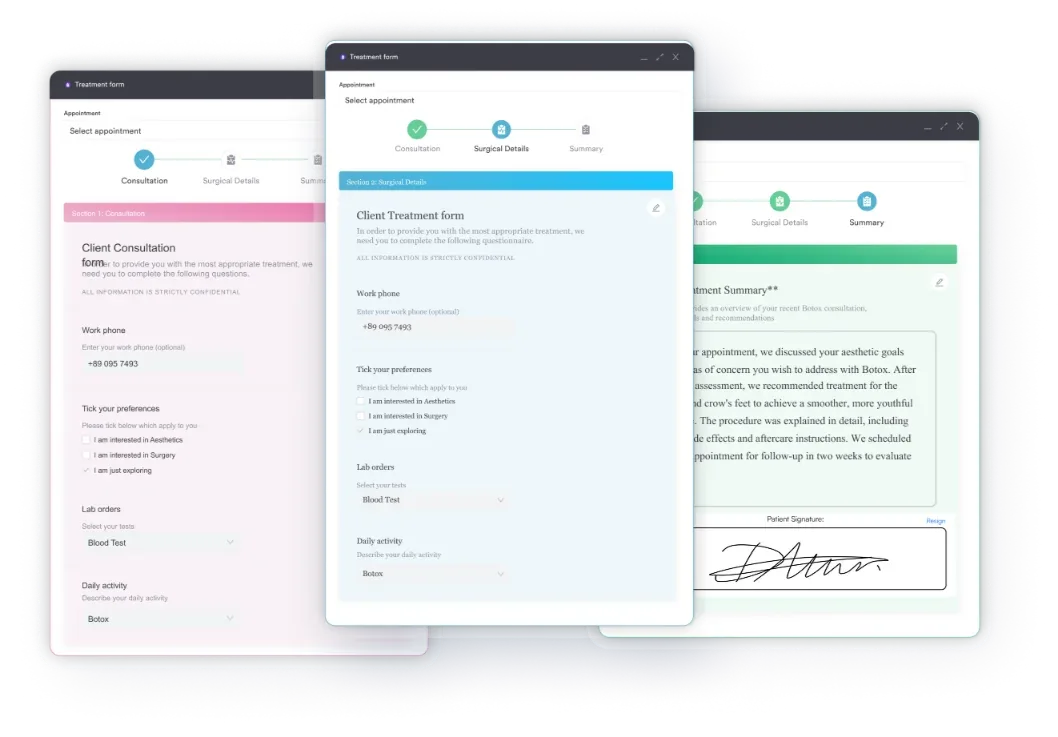
Build a dedicated team conference note template in your practice management system that includes mandatory fields for start time, end time, attendee list with specialties, patient/family presence confirmation, and care plan updates. Completing these fields before closing the encounter prevents the documentation gaps that trigger CPT 99366 denials.
This is where CPT code 99366 billing gets complicated. CMS does not separately reimburse CPT 99366 under the Medicare Physician Fee Schedule (MPFS) for most provider types. The CMS Physician Fee Schedule lookup reflects a non-covered or bundled status for these codes in many circumstances, meaning the work performed during a medical team conference is considered included in the associated evaluation and management (E/M) services billed for the same patient encounter.
State Medicaid programs vary considerably. Medi-Cal (California’s Medicaid program) does cover CPT 99366 and 99368, with a specific frequency limit: one billing per day, from a different provider. This means two different clinicians at the same practice cannot both bill 99366 for the same patient on the same day. Check your state Medicaid provider manual for the applicable frequency rules before submitting claims.
The practical billing landscape for CPT 99366 looks like this:
Before submitting any CPT 99366 claim, verify the specific payer’s coverage policy. A reimbursement lookup through the FastRVU 2026 RVU tool can help identify Medicare fee schedule values and RVU data for this code set.

Pabau’s claims management software helps nonphysician practices document team conference services accurately, track payer-specific rules, and catch errors before submission.

Commercial payer coverage for CPT code 99366 is fragmented. Several major payers have published explicit non-coverage policies aligned with the CMS position that team conference services are bundled into related E/M codes.
Medica’s published reimbursement policy states that CPT 99366 is not considered eligible for reimbursement, consistent with CMS policy. Optum has similarly restricted coverage for these codes in certain market segments. Payers that do cover CPT 99366 often impose additional requirements beyond the AMA’s code descriptor, including:
Practices that bill CPT 99366 across multiple payers benefit from maintaining a payer-specific billing rules matrix. This reference document should note each payer’s coverage status, frequency limits, and any documentation add-ons required. Practices using claims management software can store payer rules at the insurance level and surface them automatically when a team conference claim is created.
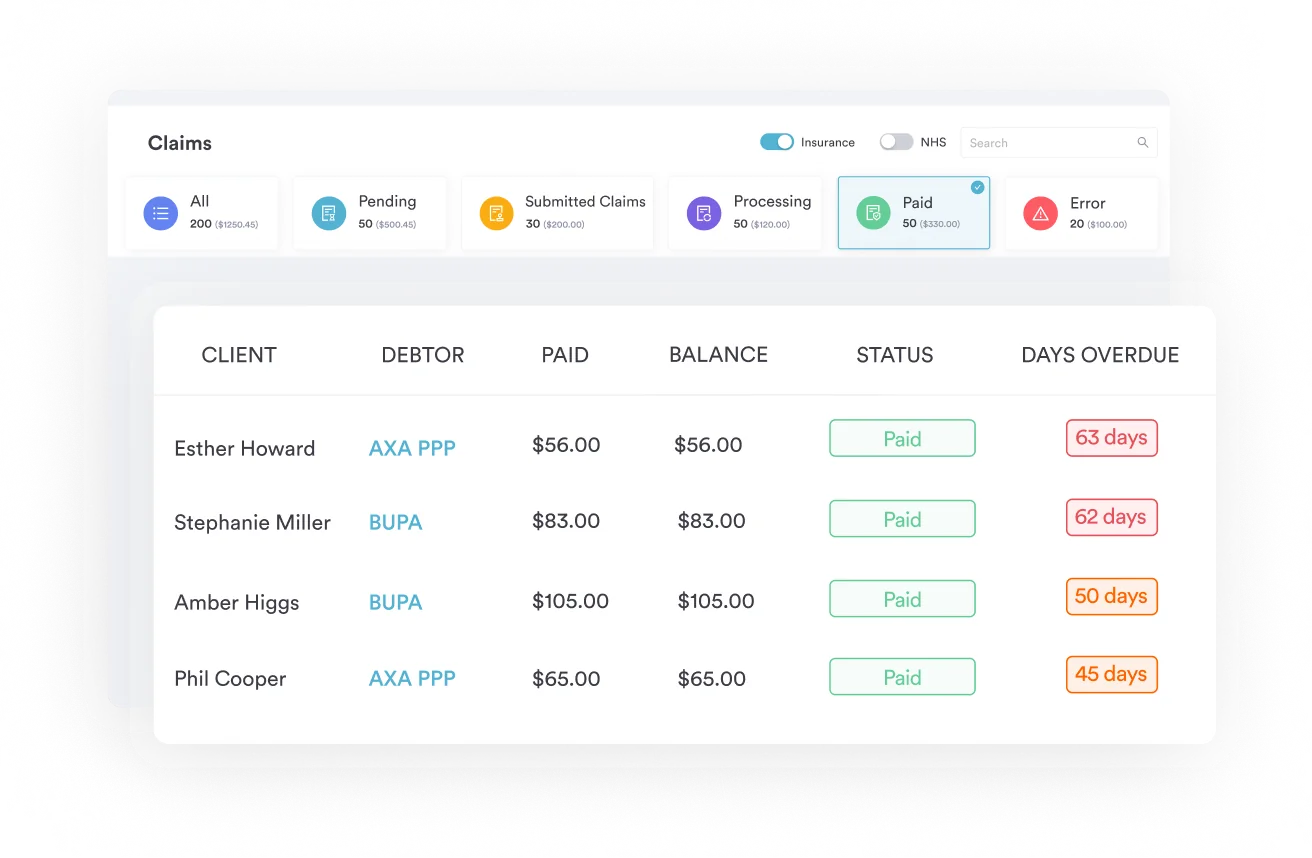
Review the AAPC CPT code range reference for the full 99366-99368 family to confirm code descriptions before your next payer contract negotiation. When negotiating with commercial payers, request explicit written confirmation of their team conference reimbursement policy, not just a fee schedule rate.
Several billing rules govern CPT 99366 claims beyond the documentation requirements. Violating any of these is a common source of rejections and audits.
Billing CPT 99366 alongside a same-day E/M code for the same patient requires careful consideration. Most payers bundle the team conference into the E/M service. If both are billed, attach a modifier (typically Modifier 25, indicating a significant, separately identifiable E/M service) and ensure the documentation clearly distinguishes the two services. Without that distinction, the E/M will often survive and the 99366 will be denied.
Only one provider from each specialty may bill CPT 99366 or 99368 for the same encounter. A physical therapist and an occupational therapist can both bill for the same conference (different specialties). Two physical therapists from the same practice cannot. This rule is frequently misunderstood in large rehabilitation departments where multiple clinicians from the same discipline attend team rounds.
The 30-minute threshold for CPT 99366 must be met by the reporting clinician’s own participation time, not the total conference duration. If the full conference lasted 45 minutes but a social worker joined only for the last 20 minutes, the social worker cannot bill CPT 99366. Document individual participation times, not just overall conference length. Practices handling complex caseloads across occupational therapy, physical therapy.
Administrative meetings, care coordination calls without clinical decision-making, and discharge planning discussions that are purely logistical do not meet the threshold for CPT 99366. The AMA’s code descriptor and ASHA guidance both specify that the conference must address medical or clinical issues related to the patient’s condition and care plan.
CPT code 99366 sits within a broader landscape of care coordination and case management codes. Knowing which adjacent codes apply to different scenarios helps practices choose the right code and avoid upcoding risk.
Chronic Care Management (CCM) codes such as 99490 are sometimes confused with team conference codes. The distinction is structural: CCM covers ongoing care plan management over a calendar month, while CPT 99366 covers a specific, time-limited, in-person meeting. For mental health practices coordinating care between psychiatrists and nonphysician therapists, understanding both code families is essential. See how mental health practice management platforms can support accurate coding across complex care teams. The clearinghouse validates structure before the payer validates content, which is why an electronic claim can fail twice. Diagnosis pointers on the claim form link each service line to the diagnosis that justifies it.
Practices billing specialty CPT codes in adjacent clinical areas should use the AAPC Codify CPT lookup to verify code descriptors and any applicable NCCI bundling edits before filing claims.
Most claim denials for CPT 99366 trace back to one of two problems: incomplete documentation or mismatched payer policy. Fixing both requires a workflow, not just awareness.
A practical billing workflow for CPT 99366 includes these steps:
Practices managing behavioral health CPT billing alongside team conference codes will find that centralizing documentation and claim rules in a single platform significantly reduces administrative overhead. Robust practice management software features that connect clinical notes to billing workflows eliminate the manual transfer errors that cause CPT 99366 to be flagged during audits.
For practices supporting multi-disciplinary teams, patient care management workflows that automatically flag team conference encounters for billing review help ensure no qualifying conference is missed and no non-qualifying conference is erroneously submitted.
CPT code 99366 is narrowly defined, frequently misapplied, and inconsistently reimbursed across payers. Getting it right requires three things working together: accurate documentation at the point of care, a current payer-specific coverage matrix, and a billing workflow that catches bundling conflicts before submission.
Pabau’s claims management software gives nonphysician practices the tools to document team conference encounters completely, apply payer-specific billing rules, and reduce denials before they reach the clearinghouse. To see how Pabau supports complex billing workflows across interdisciplinary care settings, book a demo today.

Coding an embolization protective system? Embolization protective system billing covers the fixed CMS descriptor for this cardiovascular device code under OPPS.
Coding a laser angioplasty catheter next? Laser angioplasty catheter billing explains why OPPS status indicator N packages this catheter into the procedure payment.
Billing a guiding catheter procedure? HCPCS code C1887 billing guide covers packaged payment rules and the modifiers needed for outpatient and ASC claims.
CPT code 99366 is a medical team conference code reported by nonphysician qualified health care professionals for face-to-face participation in an interdisciplinary team conference with the patient and/or family, lasting 30 minutes or more. It replaced the deleted codes 99361 and 99362 effective January 1, 2008.
CPT 99366 is used by nonphysician professionals for face-to-face conferences with the patient or family present; CPT 99367 is used by physicians for conferences held without the patient or family. Both require 30 minutes or more of participation.
Both are reported by nonphysician qualified health care professionals for a medical team conference of 30 minutes or more. The difference is patient presence: bill 99366 when the patient or family attends face-to-face, and 99368 when the conference is held without the patient or family present.
In most cases, no — CMS treats team conference work as bundled into associated E/M services. Some state Medicaid programs, including Medi-Cal, do cover it with frequency limits.
The interdisciplinary team must include at least three qualified professionals from different specialties or disciplines, and each reporting participant must have evaluated or treated the patient face-to-face within the previous 60 days. Only one provider per specialty may report the code for the same conference.
Yes, provided they bill the correct code for their type: CPT 99367 for the physician and CPT 99366 for the nonphysician. Only one provider per clinical specialty may bill at the same encounter.
Required elements include the date, start/end times, confirmation of patient or family presence, team member names and specialties, clinical topics discussed, the reporting provider’s individual participation time, and any care plan updates.
Most payers bundle CPT 99366 into same-day E/M services. If billing both, attach Modifier 25 and ensure documentation clearly distinguishes the two services.



