ICD-10 code S61.201A: Open wound of left index finger without nail damage
ICD-10 code S61.201A covers a left index finger wound of unstated type ICD-10 co...

Last Updated: Oct 16, 2026
Billable Code Specific Code
B91 is the billable ICD-10-CM code for sequelae of poliomyelitis.
In plain terms, B91 captures the lasting damage caused by a prior poliomyelitis infection, not the active disease itself. Poliovirus can permanently injure motor neurons, leaving patients with residual paralysis, muscle weakness, joint deformities, or skeletal complications that persist for decades after the acute illness has resolved.
Let Pabau's smart automation suggest the right codes, reduce claim denials, and keep your practice compliant—effortlessly.
Automate repetitive tasks and focus on what matters most—your patients.
Reduce coding errors and ensure compliance with the latest regulations.
Clean claims, fewer denials, and faster reimbursements.
Powerful insights and reporting to help your practice thrive.
HIPAA compliant SOC 2 certified GDPR-compliant Trusted by 4,000+ clinics worldwide

B91 (Sequelae of poliomyelitis) is a billable ICD-10-CM diagnosis code valid for HIPAA-covered transactions in FY2025 and FY2026.
B91 must never be used as a standalone primary diagnosis with UnitedHealthcare; pair it with a manifestation code describing the specific residual condition.
B91 carries a Type 1 Excludes note for postpolio syndrome (G14); the two codes are never reported together.
The ICD-9-CM equivalent is code 138 (Late effects of acute poliomyelitis); B91 replaced 138 when ICD-10-CM took effect.
B91, ICD-10 code A80.9 (active poliomyelitis), and ICD-10 code G14 (post-polio syndrome) are three separate codes for three different stages of the same disease — never interchangeable.
Poliomyelitis maps to three separate ICD-10-CM codes depending on the stage of disease being documented, and mixing them up is the single most common coding mistake on this topic. This page covers B91 specifically; the table below places it alongside the other two so a coder can find the right code on sight.
Wild poliovirus was eliminated from the United States in 1979, per the CDC, so active-infection coding (A80) is now rare in US practices. Nearly all polio-related coding today involves either B91 or G14 — and because the two are so easily confused, a Type 1 Excludes note keeps them from ever being billed on the same claim (details below).
Coders searching by clinical term rather than code number need to recognize the range of synonyms that map to B91. The WHO’s ICD-10 browser and the ICD-10-CM tabular list both catalog multiple clinical expressions for the same code — clinical notes also frequently abbreviate the same idea as “hx of polio” or “history of polio,” both of which point to B91 when residual effects are documented.
Each synonym describes a different manifestation of the same underlying cause: Permanent neurological damage from prior poliovirus infection. When a physician documents “late effect of polio” or “residual polio paralysis,” the correct code remains ICD-10 code B91 regardless of which specific synonym appears in the clinical note.
Inside software for GP practices, an infection diagnosis connects to its test result and any notifiable-disease steps.
B91 carries one Type 1 Excludes note: postpolio syndrome (G14). A Type 1 Excludes note functions as an absolute prohibition. Unlike a Type 2 Excludes note (which allows simultaneous coding), it means the excluded code should never be assigned at the same time as B91.
In practice, this means B91 and G14 can never be reported together on the same claim. The two codes describe different clinical situations, and the tabular list treats them as mutually exclusive. Choosing correctly between them is covered in the post-polio syndrome section below.
Correctly sequencing etiology and manifestation codes prevents claim rejections. For practices handling complex neurological cases.
Separately from the Type 1 Excludes note, a core principle governs all B90-B94 sequelae codes: They apply only after the acute infection has resolved. If poliomyelitis is still active, it is coded from category A80 (Acute poliomyelitis) \u2014 most often A80.9 for an unspecified presentation, or A80.0 through A80.4 for a specific paralytic subtype \u2014 never from B91. Once the infection has fully resolved and only residual effects remain, B91 applies.
UnitedHealthcare (UHC) explicitly lists B91 as an inappropriate primary ICD-10 diagnosis code in its provider reimbursement policy. This is a critical payer-specific rule for practices billing UHC plans.
What this means for billing: B91 describes the etiology (the cause of the current condition), not the presenting manifestation. Payers expect the manifestation code to lead as the primary diagnosis, with B91 as the secondary etiology code. Submitting B91 in the primary position on a UHC claim will trigger a denial or return for additional information.
For practices managing patient care management workflows across multiple payers, tracking these payer-specific rules in documentation templates saves significant rework.
The manifestation describes what the patient is being treated for today. B91 explains why. Both codes together tell the complete clinical story and satisfy payer requirements for medical necessity documentation.

Pabau’s claims management tools help rehabilitation and neurology practices sequence diagnosis codes correctly, reducing UHC and payer denials on sequelae claims.

The ICD-10 code for post-polio syndrome is G14, not B91. The two conditions are clinically related but coded differently, and confusing them is the most common coding error surrounding B91 — one that generates denials when the wrong code leads the claim.
Sequelae of poliomyelitis (B91) covers residual deficits left over from the original infection: paralysis, muscle atrophy, joint deformities, skeletal complications. These are stable or slowly progressive residuals.
Post-polio syndrome (G14) is a distinct clinical entity. It refers to new or worsening muscle weakness that appears decades after the initial polio infection, in patients who had previously stabilized. According to the CDC, post-polio syndrome affects an estimated 25% to 40% of polio survivors, emerging 15 to 40 years after the original infection. G14 has its own ICD-10-CM code and is not a synonym for B91. Because B91 carries a Type 1 Excludes note for G14, the two codes are never reported together: Assign one or the other based on whether the findings are stable residuals or new-onset symptoms. Benefit verification tells the practice what the plan covers, which is a separate question from whether the patient is active. Coders working across several specialties keep a coding reference to hand rather than searching the full manual.
Neurologists and physiatrists treating this patient population frequently use “post-polio” loosely. Coders should query the physician when documentation does not clearly indicate stable residual versus new-onset post-polio syndrome. This is especially relevant for practices using physical therapy EMR software that captures diagnoses at the point of documentation.
When the clinical note reads ‘late effects of polio’ without specifying whether symptoms are new or stable, flag for physician query before assigning B91 or G14. A two-minute clarification prevents claim delays and supports accurate HEDIS and quality reporting data.
Practices migrating older patient records or reviewing historical encounter data regularly encounter ICD-9-CM code 138 (Late effects of acute poliomyelitis). This is the direct predecessor to B91 in the ICD-10-CM transition that took effect in the United States on October 1, 2015.
The crosswalk is a one-to-one conversion: ICD-9-CM 138 maps to ICD-10-CM B91. No additional specificity is required or available at the B91 level, as the code carries no sub-codes.
For practices maintaining continuity of care records across the ICD-9/ICD-10 transition.
Understanding B91 in context means knowing the codes that sit alongside it in the B90-B94 subcategory. Each code in this range captures the long-term sequelae of a different infectious disease. Practices that manage other late-effect diagnoses, such as sequelae of leprosy (B92), benefit from familiarity with the full category range.
B91 is notable within this category because it has no sub-codes. All clinical specificity for the residual condition comes from the paired manifestation code, not from B91 itself. This is why correct code pairing matters so much for claim completeness.
Incorrect or incomplete documentation is the primary reason B91 claims are flagged or denied. Rehabilitation and neurology practices seeing patients with polio residuals need clear documentation standards embedded in their intake and clinical note workflows.
For practices managing these encounters with digital intake forms, capturing the patient’s polio history, the date of original infection (or approximate year), and the current residual conditions in structured fields supports coding accuracy from the first patient interaction. Paper-based processes make this harder to standardize.
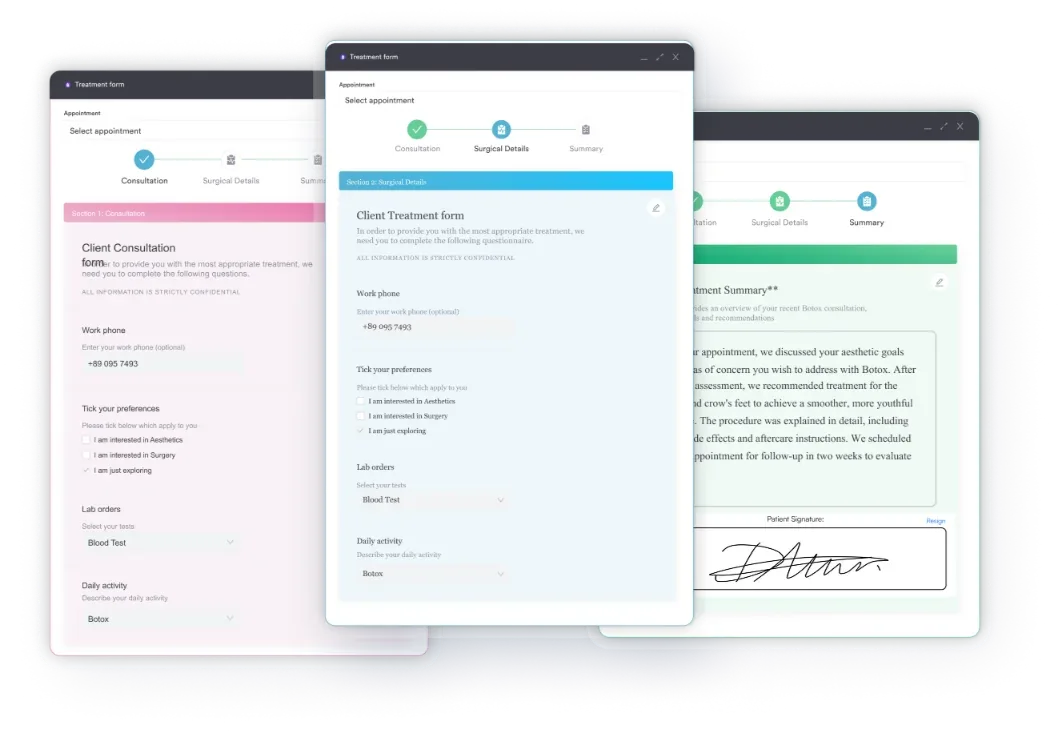
Practices using structured EHR documentation that prompts for these fields consistently produce cleaner claims. For neurology and rehabilitation teams.
Build a documentation prompt into your sequelae encounter template: (1) confirm prior infection, (2) name the specific residual, (3) establish the causal link, (4) note stability status. These four fields give coders everything they need to assign B91 correctly and pair it with the right manifestation code.
The ICD-10-CM Official Guidelines for Coding and Reporting, maintained jointly by the CDC/NCHS and CMS, provide the authoritative framework for sequelae code use. The sequelae coding rules in Section I.C.1 and the general sequelae guidelines in Section I.B.10 both apply to B91.
Key rules from the official guidelines that govern B91 use:
For practices also navigating related coding scenarios, understanding how manifestation codes pair with B91 helps build pattern recognition. Common residuals include muscle weakness (M62.81) and other abnormalities of gait (R26.89), each reported as the primary manifestation with B91 as the secondary etiology code.
One practical note on HIPAA compliance: B91 is valid for all HIPAA-covered electronic transactions, including CMS-1500 claims, UB-04 facility claims, and electronic remittance advice. For practices managing HIPAA compliance for medical offices, using only valid current-year codes is part of the standard compliance requirement.
Sequelae coding requires precision: The right code pair, the right sequencing, and documentation that explicitly connects the present condition to its historical cause. B91 captures the lasting impact of poliomyelitis, but it only works correctly when paired with a manifestation code and placed in the secondary position for most payers including UHC.
Pabau’s claims management software supports rehabilitation and neurology practices in applying sequelae coding rules consistently, reducing denials and audit exposure. To see how Pabau handles complex coding workflows, book a demo.

Need another initial-encounter fracture example? Metacarpal base fracture coding covers how S62.349B applies at the initial visit for a nondisplaced, open fracture.
Looking for another sequela coding example? Contusion of forearm, sequela (S50.10XS) shows how the seventh-character sequela convention works for late-effect coding.
Need an unspecified finger fracture code? Unspecified finger fracture coding explains how S62.601B applies to a Gustilo type I or II open fracture at the initial encounter.
ICD-10 code B91 is the billable ICD-10-CM diagnosis code for sequelae of poliomyelitis. It captures permanent residual conditions, such as paralysis, muscle atrophy, or joint deformities, that remain after a prior poliomyelitis infection has resolved. It is found in Chapter 1 (Certain infectious and parasitic diseases) under subcategory B90-B94.
Yes. ICD-10 code B91 is valid for HIPAA-covered transactions in both FY2025 (October 1, 2024 through September 30, 2025) and FY2026. CMS and NCHS have confirmed no changes to this code in recent annual updates.
B91 (Sequelae of poliomyelitis) covers stable or longstanding residuals from a prior polio infection, such as permanent paralysis or deformity. G14 (Post-polio syndrome) is a distinct diagnosis applied when patients experience new or worsening muscle weakness decades after stabilization. If documentation is unclear, query the treating physician before assigning either code.
Rarely. UnitedHealthcare explicitly designates B91 as an inappropriate primary diagnosis code. ICD-10-CM sequelae coding guidelines recommend listing the manifestation code (the residual condition) as the primary diagnosis, with B91 as the secondary etiology code. Exceptions exist only when no specific manifestation code is available.
The ICD-9-CM equivalent of B91 is code 138 (Late effects of acute poliomyelitis). The two codes are a direct one-to-one crosswalk, with B91 replacing 138 when the United States transitioned from ICD-9-CM to ICD-10-CM on October 1, 2015.
The ICD-10 code for post-polio syndrome is G14, a distinct code from B91 (sequelae of poliomyelitis). G14 applies when polio survivors develop new or worsening muscle weakness — affecting an estimated 25% to 40% of survivors, per the CDC — while B91 covers stable residual effects, such as paralysis or joint deformity, that have been present long-term. The two share a Type 1 Excludes note and are never billed together.
Active poliomyelitis is coded from category A80, most often A80.9 (unspecified) or A80.0 through A80.4 for a specific paralytic subtype. That’s a different code family from B91, which only applies once the infection has resolved and residual effects remain.