CRM for chiropractors: how to manage patients, bookings and marketing
A CRM for chiropractors is a patient relationship management system built around...

Last Updated: Oct 13, 2026

Starting a chiropractic practice requires passing all four NBCE exams, obtaining a state license, and registering an NPI before seeing a single patient.
Startup costs typically range from $70,000 to $250,000 depending on location, equipment, and whether you lease or build out a space.
Insurance credentialing can take 90 to 180 days per payer – submit applications before your target opening date, not after.
Pabau’s chiropractic software handles scheduling, digital intake forms, SOAP notes, and insurance billing in one platform, so you can focus on patient care from day one.
Most chiropractors spend years mastering spinal manipulation but far less time on the business side, and that is where many practices stall before they open. This guide covers what the clinical curriculum skips: licensing timelines, entity formation, equipment sourcing, credentialing, software selection, and the marketing moves that fill your first month of appointments.
Think of it as a checklist for starting a chiropractic practice: each section maps to a real decision, in roughly the order you will face it.
This guide is built for US-based chiropractors starting a chiropractic practice from scratch or transitioning from an associate role into ownership.
The process of starting a medical practice in any specialty follows a predictable arc: legal structure first, credentials second, operations third, marketing last. Chiropractic is no different, but it carries a few discipline-specific wrinkles around Medicare billing, NBCE exam requirements, and equipment lead times that can catch new owners off guard.
Work backwards from your target opening date. Most of the hard deadlines, especially credentialing, are outside your control once submitted. Plan for 9 to 12 months of runway from “I want to open” to “we are seeing patients.”
Before you sign a lease or order an adjustment table, three things must be in place: a business entity, a state chiropractic license, and a National Provider Identifier.
Most solo chiropractors incorporate as a sole proprietorship, LLC, or PLLC (Professional Limited Liability Company), depending on state law. An LLC or PLLC separates personal assets from practice liabilities. Consult a healthcare attorney in your state before filing. The SBA’s business structure guide outlines the tax and liability trade-offs across entity types.
After filing, apply for an Employer Identification Number (EIN) from the IRS. You will need this for payroll, banking, and tax filings even if you have no employees at launch.
According to the National Board of Chiropractic Examiners (NBCE), chiropractors must pass all four parts of the NBCE examination before most state boards will grant a license. Processing times vary by state board, from four weeks to over three months. Verify current timelines directly with your state’s chiropractic licensing board, as requirements change.
Most states also require proof of professional liability (malpractice) insurance as a condition of licensure, though the specific requirement varies. Budget for this before you submit your application.
Chiropractic malpractice insurance cost typically runs $2,500 to $6,000 or more a year, depending on your state and claims history. Budget it as a license requirement, not an optional extra. It is separate from general liability insurance, which covers slip-and-fall and property claims, and workers’ compensation, which becomes mandatory once you hire your first employee.
All chiropractors billing any payer in the US must have a National Provider Identifier (NPI). Per CMS documentation, you need both a Type 1 NPI (individual) and a Type 2 NPI (organizational entity) if you are billing under a practice name. Registration is free and takes 7 to 10 business days.
Understand the benefits of running a private practice before committing to the full independent-owner model. Some chiropractors find a hybrid arrangement, such as suite rental inside an existing practice, reduces startup capital significantly.
A solid medical practice business plan is not just for investors. It forces you to stress-test your assumptions before spending money.
At minimum, your chiropractic business plan should cover:
Lenders and SBA reviewers read the financing ask first. A vague number here stalls approval before they look at anything else.
Startup costs for chiropractic practices vary widely. Industry sources estimate ranges between $70,000 and $250,000 depending on location, lease terms, equipment choices, and build-out scope. Treat these as approximate figures and build your own projection from real quotes.
| Cost category | Typical range | Notes |
|---|---|---|
| Leasehold build-out | $20,000 – $80,000 | Varies by space condition and local contractors |
| Chiropractic adjustment tables | $2,000 – $15,000 each | Budget for 2-3 tables at launch |
| X-ray equipment (if in-house) | $25,000 – $75,000 | Many solo practices refer out initially |
| EHR and practice management software | $100 – $400/month | SaaS model; no large upfront cost |
| Malpractice insurance (annual) | $2,500 – $6,000+ | Rates vary by state and carrier |
| Marketing and website | $3,000 – $15,000 | One-time setup plus ongoing budget |
| Working capital (6 months) | $30,000 – $60,000 | Covers payroll and overhead during ramp-up |
The SBA loan programs cover healthcare practice launches, including chiropractic practices. SBA 7(a) loans go up to $5 million with terms up to 10 years for working capital. SCORE mentors can help you stress-test financial projections before you approach a lender.
Location decisions for starting a chiropractic practice hinge on three overlapping factors: patient demographics, competition density, and commercial lease economics.
Your minimum clinical footprint: one reception/waiting area, two to three treatment rooms (each roughly 100-120 sq ft for a table plus patient movement), and a private consultation space. A 1,200 to 1,800 sq ft suite is typical for a solo or two-provider launch.
Run a ZIP code-level analysis using US Census Bureau data before signing a lease. Filter for the 25-54 age cohort with household incomes above $60,000 – this demographic drives the highest volume of elective chiropractic visits and has the insurance coverage to support regular care plans.
Equipment decisions at launch shape both your clinical capabilities and your cash burn. Buy only what you will use in year one.
In-house X-ray adds $25,000 to $75,000 in capital and requires a state radiation license and periodic inspection. Most solo practices refer patients to an imaging center for the first 12 to 18 months and bring imaging in-house only when patient volume justifies the capital. A mobile imaging service is a middle path worth exploring if local options charge high per-study fees.
Credentialing is the single longest lead-time item in starting a chiropractic practice. Submit applications to all target payers on the same day you sign your lease, not after.
The credentialing process requires your NPI, state license, malpractice certificate, and practice entity documentation. Each payer manages its own timeline, typically 90 to 180 days. Medicare operates under federal enrollment rules that are separate from commercial payer credentialing.
Not every new practice needs to wait out 90 to 180 days of insurance credentialing before opening. A growing number of chiropractors launch on a cash-based model: patients pay a set fee per visit or through a membership plan, and the practice never bills a payer directly.
That single decision changes your fee schedule, your marketing message, and your credentialing timeline all at once.
A cash-based launch removes the payer wait entirely, since there is no application to submit. The trade-off is a smaller addressable patient pool in markets where patients expect insurance coverage, and pricing has to be transparent enough that patients are not blindsided at the front desk.
Practices in higher-income areas, or those built around wellness and maintenance visits rather than acute injury care, tend to have the easiest time making a cash model work.
A hybrid path is common too: credential with two or three major payers in your market while running a cash-pay track for maintenance visits and package plans. That way you are not fully dependent on any single insurer’s reimbursement rate, and you can open your doors to cash-paying patients on day one instead of waiting on your first payer approval.
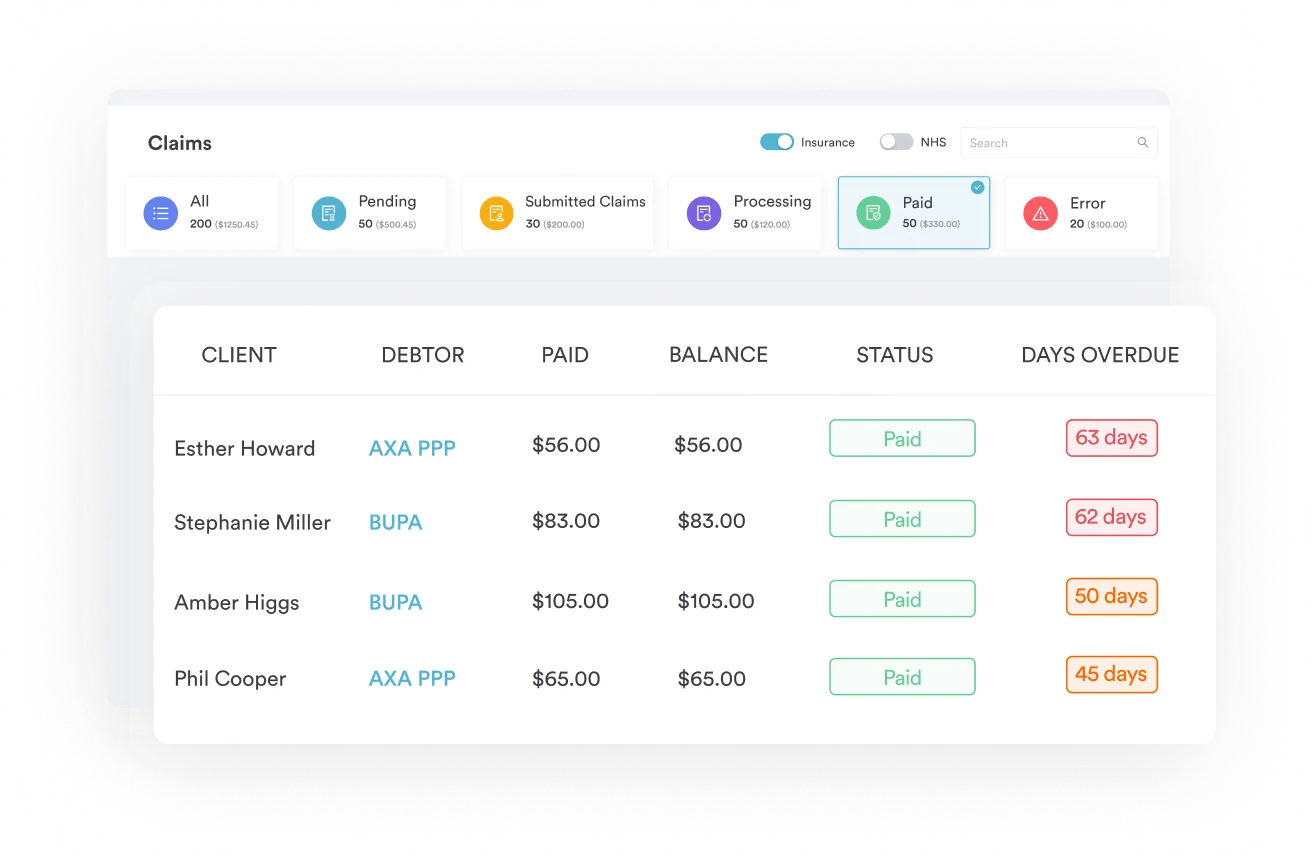
According to the CMS Medicare Benefit Policy Manual, Medicare covers chiropractic care only for spinal manipulation to correct subluxation. Diagnostic services, X-rays, and maintenance care are explicitly excluded from Medicare coverage. This is a common source of claim denials for new practices unfamiliar with Medicare’s narrow chiropractic benefit. Use Pabau’s insurance claims management tools to flag Medicare claims against documentation requirements before submission.
Medicaid coverage for chiropractic varies by state, from comprehensive coverage to no coverage at all. Check your state Medicaid program before credentialing with them.
Your technology stack is not a year-two decision. Practice management software features like automated scheduling, SOAP note templates, billing workflows, and patient communication need to be configured before your first patient walks in. Retrofitting these systems mid-operation wastes time you cannot get back.
Choose a platform that handles scheduling, clinical documentation, billing, and patient communication in one place. Separate tools that do not talk to each other create double-entry and missed documentation that hurt both efficiency and compliance. Comparing platforms against a wider list of patient management software helps confirm you are not missing a stronger fit before you commit.
Pabau offers chiropractic software that covers each of these functions within a single platform. The features that save private practices time matter most in a solo or small-team launch where every hour of admin is an hour you are not treating patients.
According to Capterra reviews, Pabau scores 4.5/5 from over 370 verified users, with reviewers consistently highlighting the all-in-one platform as a key advantage for multi-disciplinary practices.
One differentiator worth noting: Pabau supports multi-disciplinary expansion without switching platforms. If you later add massage therapy, physical therapy, or functional medicine to your practice, the same system grows with you, something chiropractic-specific tools like ChiroTouch cannot offer without a platform migration.

From digital intake forms and SOAP note templates to insurance billing and automated patient reminders, Pabau gives new chiropractic practices the operational foundation to open efficiently and scale confidently.

Per HHS HIPAA guidance, any chiropractic practice that transmits patient health information electronically (which includes billing claims) is a covered entity under HIPAA. That means you need a signed Business Associate Agreement with your EHR vendor, your billing software provider, and any third-party lab or imaging service you use.
OSHA compliance adds a separate layer: eyewash station requirements, bloodborne pathogen training, and a written exposure control plan if you perform any procedures involving blood risk. Check your state OSHA plan for any requirements that exceed federal baseline standards.
Your first 90 patients come from a short list of sources: personal referrals from your professional network, local Google search results, and direct outreach to complementary providers. Diversify your patient acquisition strategies from the first week, not after the calendar empties out.
Starting a chiropractic practice in a competitive market requires a clear positioning statement. “General chiropractic” is a category. “Sports injury specialist serving recreational athletes” or “pediatric and family chiropractic care” are positions. Pick one niche for your first 18 months of marketing, build authority in it, then expand.
Build a referral tracking field into your patient intake process from day one. Ask every new patient how they found you and record the source in your practice management system. After 90 days you will have clear data on which acquisition channels produce patients who complete care plans versus one-time visitors – then fund what works.
Most chiropractic practices launch with one chiropractor and one front-desk coordinator. That coordinator handles scheduling, intake, insurance verification, and payment processing. The workload for one person is significant; choose for systems aptitude, not just personality.
As volume grows, the typical expansion path is: chiropractic assistant (CA) at roughly 80 to 100 patient visits per week, a biller or billing service at around 150 visits per week, and a second chiropractor or associate when your schedule is consistently 85% full for six consecutive weeks.
The metrics your system tracks, including utilization rate and revenue per visit, give you the data to time these hires correctly rather than guessing, and they are the same numbers that show when chiropractic practice growth has outpaced your current team.
A chiropractic associate is a licensed chiropractor who treats patients under your practice’s name, usually on a productivity-based split rather than a flat salary, with a defined path toward partnership, buy-in, or simply moving on.
Put the compensation split, any buy-in terms, and a reasonable non-compete radius in writing before they see a single patient. A vague verbal arrangement is the most common source of associate disputes later on.
For chiropractic intake and consent documentation, use a pre-built chiropractic intake form template to ensure your forms capture the clinical and legal information required for both documentation standards and insurance auditing.
For low back cases, a Yeoman’s test template keeps sacroiliac findings in a consistent format, so a retest weeks later is easy to compare.
If you later add rehab services, a separate PT intake form template captures those patients’ baseline history and functional limitations from the first visit.
Starting a chiropractic practice is a 12-month operational build before it is a clinical one. Whether you are working out how to start a chiropractic practice for the first time or how to open a second location, the practitioners who open on schedule are those who treat credentialing, entity formation, and software selection as parallel workstreams rather than sequential tasks.
Pabau’s chiropractic practice management platform consolidates scheduling, SOAP documentation, digital intake, billing, and patient communication into one system so your first hire can focus on patients rather than paperwork. To see how it works for a new practice setup, book a demo with the team.

Need a reliable way to assess patient balance? Dynamic Gait Index evaluates how patients adapt their balance across eight walking scenarios, from straight-line walking to stepping over obstacles.
Need a template for thoracic outlet screening? Eden’s test template documents an Eden’s test assessment, with fields for clinical notes, the military brace test, and sign-off.
Starting a chiropractic practice involves forming a business entity, obtaining a state chiropractic license (after passing all four NBCE exams), registering an NPI, credentialing with insurance payers, securing a clinical space, purchasing equipment, configuring an EHR and practice management system, and establishing a patient acquisition strategy. Most practitioners need 9 to 12 months from initial planning to opening day.
Industry estimates place chiropractic practice startup costs between $70,000 and $250,000, depending on location, lease terms, whether you install in-house X-ray, and your working capital reserve. Solo practices in smaller markets that refer imaging out and lease a pre-built medical space tend toward the lower end of that range.
Credentialing with commercial insurance payers typically takes 90 to 180 days per payer, and Medicare enrollment operates on a separate federal timeline. Submit all credentialing applications on the same day you execute your lease. Waiting until closer to your opening date will delay your ability to bill insurance from day one.
The best practice management software for a new chiropractic practice combines scheduling, SOAP note templates, insurance billing, digital intake forms, and automated patient communication in one platform. Pabau covers all of these functions and supports multi-disciplinary expansion if you later add massage, physical therapy, or other services alongside chiropractic care.
Buying an existing practice gives you an established patient base, staff, and cash flow from day one, but typically costs more upfront and carries the risk of patient attrition after the ownership change. Starting from scratch gives you full control over brand, systems, and culture but requires 12 to 24 months to reach financial breakeven. The right choice depends on available capital, risk tolerance, and local acquisition opportunities. The value of a chiropractic practice for sale is typically weighed against trailing revenue, patient retention, and payer mix rather than equipment alone, so get an independent valuation before making an offer. Chiropractic practice brokers can also flag red flags, like an outsized reliance on one referral source, that are not visible from the outside.
Starting a chiropractic cash practice means patients pay you directly instead of through insurance, so you skip the 90-to-180-day payer credentialing wait and can open for paying patients as soon as your doors unlock. It works best with transparent, published pricing and, often, a membership or visit-package plan. This is really a chiropractic business model decision, and many owners run a hybrid: credentialing with a couple of major payers while keeping a cash-pay track for maintenance visits and packages.