Newborn feeding schedule: How much and how often by week
A newborn feeding schedule is a framework for how often and how much a baby eats...

1
Last Updated: Oct 13, 2026
Here is how to set up a private medical practice in the UK: register with the CQC, arrange indemnity cover and budget £80,000 to £250,000. All three need to be in place before your first fee-paying patient walks in.
The order matters. The Care Quality Commission (CQC) won’t accept an application until your premises and staff are ready. That means paying rent for months before you can earn a fee.
This guide covers the private, self-pay route. Opening an NHS GP surgery runs through a GMS or PMS contract with your integrated care board, which is a different process.
It also assumes you’re building your own solo or small-partnership practice. Joining an established private group trades some control for a faster start. The nine steps below take you from first plan to opening day, in the order the CQC process sets.

Setting up a private medical practice in the UK starts with CQC registration, since carrying on a regulated activity without it is an offence.
Medical indemnity for private work, ICO registration and a legal structure (sole trader, partnership or limited company) all need to be in place before opening.
Budget roughly £80,000 to £250,000 in startup costs, with premises and fit-out as the biggest swing factors.
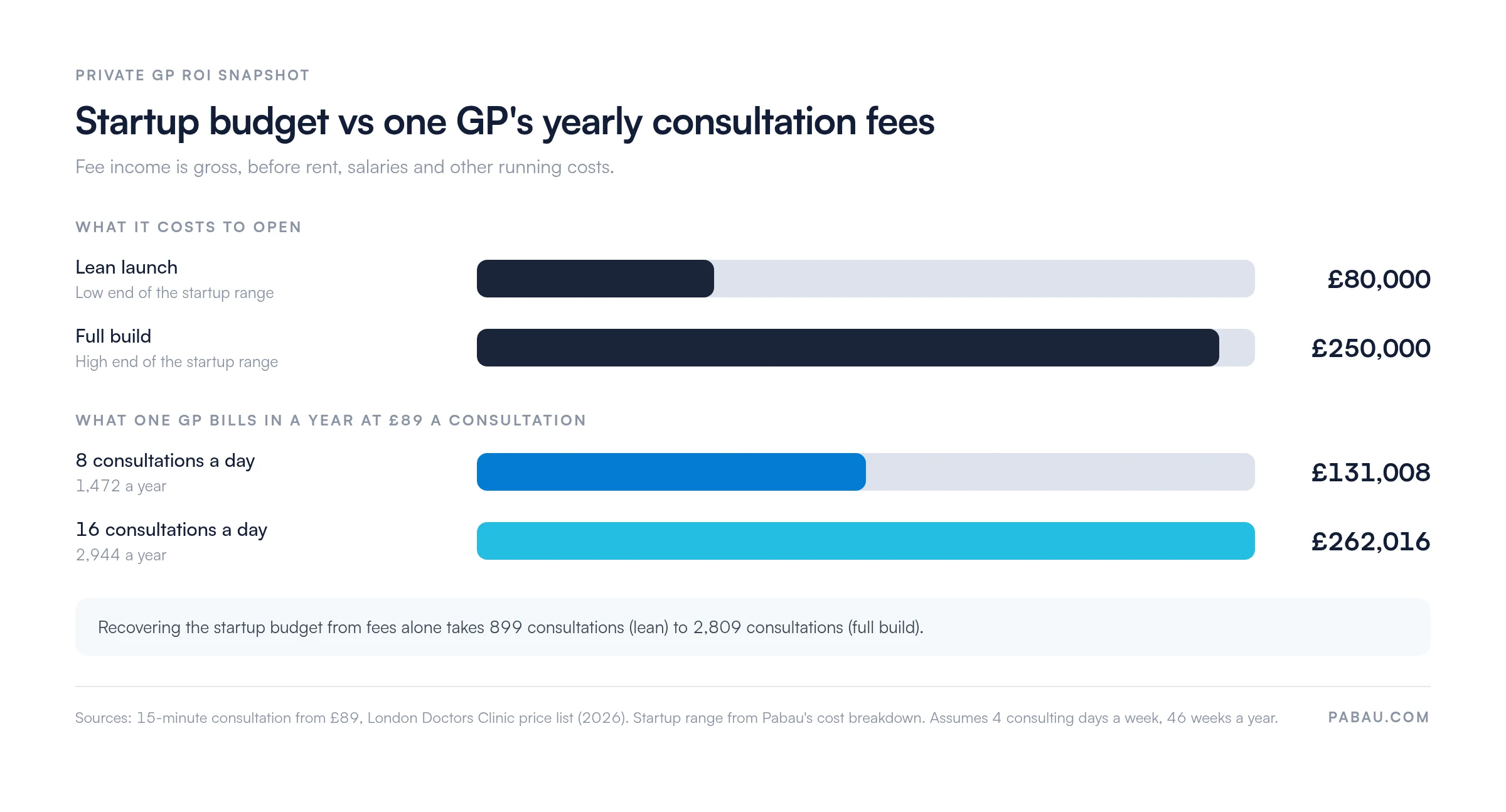
The Private GP ROI Snapshot shows one GP charging £89 a consultation grosses about £131,000 a year at eight appointments a day, before running costs.
Follow the nine steps in order, because CQC won’t process an application until your premises and staff are ready.
A private medical practice in the UK lets you set your own hours, fees and appointment length, and more patients now pay for faster access.
NHS waits drive most of that demand. The BMA’s backlog analysis puts the median wait to start treatment at 12 weeks in July 2026, against 7.3 weeks in July 2019. Healthcare market analyst LaingBuisson estimates 13% of GP consultations are now private, up from 3% two decades ago.
For a business GP, the appeal goes beyond income:
Opening a practice is still a business decision first. Our guide to the benefits of private practice weighs the trade-offs if you’re still deciding.
The cost to open a GP surgery in the UK privately is typically £80,000 to £250,000. Premises, fit-out and first-year staffing make up most of that budget.
Premises decide most of what it costs to start a medical practice, since rent and fit-out alone can vary by over £100,000. The table breaks the budget into the lines you’ll be invoiced for.
| Cost item | Low estimate | High estimate | Notes |
|---|---|---|---|
| Premises rent (1,200 to 1,500 sq ft, per year) | £18,000 | £50,000+ | Prime central London space runs higher, and regional rents lower |
| Fit-out and refurbishment | £20,000 | £100,000 | Clinical sinks, partitions, infection-control finishes and step-free access |
| Office setup (IT, desks, furniture) | £2,000 | £5,000+ | Specialist medical equipment is extra and varies by service |
| Practice management software | Monthly subscription | Monthly subscription | Priced by users and locations, so budget it from day one |
| CQC annual fee (one location) | £1,867 | £1,867 | Community healthcare band, rising to £3,728 for two to three locations |
| ICO data protection fee | £52 | £78 | Tier 1 covers most new practices with up to 10 staff |
| Enhanced DBS check (per registered person) | £49.50 | £49.50 | Falls to £41.00 from October 5, 2026 |
| Medical indemnity for private work | Quote-based | Quote-based | Depends on your services, hours and claims history |
| Practice manager salary (per year) | £40,896 | £47,762 | Indeed averages for the UK and London, May 2026 |
| Total startup budget | £80,000 | £250,000 | Our estimate, before your own drawings |
Clinical staff push the numbers up quickly. Outsourced admin support typically costs £20 to £30 an hour, and Indeed puts private GP practice nurses at around £29.50 an hour.
Most private GPs fund the launch with a mix of savings, a business loan and equipment finance, and bring in investors only for larger builds.
Whichever route you take, lenders will ask how many consultations it takes to cover the loan. The next section does that sum.
A private GP charging £89 per 15-minute consultation grosses about £131,000 a year at eight appointments a day, or £262,000 at 16, before running costs.
Those figures come from the Private GP ROI Snapshot, which starts from a published fee rather than a guess.
The Private GP ROI Snapshot pairs this guide’s startup range with a published price list. The fee is the 15-minute weekday consultation on the London Doctors Clinic price list, which starts at £89.
The volume assumption is deliberately modest: four consulting days a week, 46 weeks a year, at either eight or 16 paid appointments a day.
| Snapshot line | Lean launch | Full build |
|---|---|---|
| Startup budget | £80,000 | £250,000 |
| Consultations at £89 to recover it | 899 | 2,809 |
| Weeks to recover it at 8 a day (32 a week) | 28 | 88 |
| Weeks to recover it at 16 a day (64 a week) | 14 | 44 |
Those weeks count fee income only, so read them as the floor. The fixed costs you can pin down today are the CQC fee, the ICO fee and a practice manager on the UK average salary.
Together they come to £42,815 a year, which takes 482 consultations to cover before rent. The chart below puts the startup budget next to one GP’s yearly fee income.
To run it with your own numbers, divide your startup budget by your fee. That gives the consultations you need before running costs, and your diary tells you how many weeks that is.
Buying an existing private practice changes the numbers. You pay for goodwill and a patient list, but you skip much of the empty-diary period the Snapshot assumes.
The UK private GP sector is small but growing: a little over 550 CQC-registered services offered private GP consultations in mid-2024.
The figures come from LaingBuisson’s Primary Care UK Market Landscape report. It counts 447 of those services in private clinics and 103 in independent hospitals. It values the private GP market at about £1.6 billion.
Nationally, that’s a thin field for a £1.6 billion market. Locally it can be crowded, which is why Step 3 starts with mapping the competition.
Setting up a private medical practice in the UK follows a fixed order, because each step unlocks the next. Use this list as your checklist:
Before you see a single patient, you need CQC registration, a legal business structure, medical indemnity and registration with the Information Commissioner’s Office (ICO).
The CQC regulates independent doctors in England, and carrying on a regulated activity without registration is an offence. It assesses you against its fundamental standards, covering consent, safety, safeguarding, staffing and governance.
Practicing in Scotland, Wales or Northern Ireland? You register with Healthcare Improvement Scotland, Healthcare Inspectorate Wales or the RQIA instead.
Next, pick the legal entity you want the CQC to register. It registers individuals, partnerships and organizations such as limited companies:
Then put your cover in place:
Finally, register with the ICO and pay the data protection fee before you store a single patient record.
The private GP registration requirements in the UK run in parallel, so start the long ones first. The table lists each one with its typical lead time.
| Requirement | Who you deal with | Typical timeframe | What to know |
|---|---|---|---|
| Enhanced DBS check for your main CQC contact | Disclosure and Barring Service | Up to 60 days | The CQC can’t process your application until it is done |
| GMC registration, licence to practise and GP Register entry | General Medical Council | Already held by practicing GPs | You also need a designated body or suitable person for revalidation |
| Legal entity (limited company) | Companies House | Usually within 24 hours online | Skip this row if you register as a sole trader |
| Registered manager | CQC | Submitted with the application | Required for companies and partnerships, and for individuals not running the service day to day |
| CQC provider registration | CQC | A few months | Apply only when premises and staff are ready, and expect a fit person interview or site visit |
| Controlled drugs licence (if needed) | Home Office | Up to 16 weeks to arrange a compliance visit | Only applies if you will hold controlled drugs |
| Medical indemnity for private work | MDU, MPS or MDDUS | Before opening | Needed before the CQC site visit, so get quotes early |
| ICO data protection fee | Information Commissioner’s Office | Before you process patient data | £52 a year at tier 1 |
The CQC registration guidance says it can’t hold applications that aren’t ready. In practice, that means signing the lease, finishing the fit-out and hiring before you apply, then funding several months of rent with no fee income.
A private GP business plan needs three numbers first: your startup cost, your monthly running cost and the patient volume that covers both.
Start with your services. Will you offer only general consultations, or add health screening, travel vaccinations or minor surgical procedures? Each one changes your equipment list, your CQC scope and your fee schedule.
Then build the financial section around:
Include where the funding comes from and when you expect to break even. Last, name your competitive edge, whether that’s same-day appointments, extended hours or a membership model for busy professionals.
Choose premises by local demand first, then confirm the building can meet the CQC’s standards before you sign anything.
Demographics come first. A practice near a busy commuter hub, for example, can fill evening and weekend slots with city workers.
Next, map the competition. If three private GPs already operate on the same high street, look elsewhere or offer a service they don’t.
The format of your premises matters as much as the postcode. The four common options compare like this:
| Premises option | Upfront cost | Control | Patient perception | CQC position |
|---|---|---|---|---|
| Sessional room in a private hospital | Low, paid per session | Low, as the hospital sets hours and rules | Strong, borrowed from the hospital brand | Covered by the hospital’s registration only if you work under its practising privileges and management |
| Room rental in an NHS or shared medical building | Low to moderate | Moderate | Good, in a clinical setting | Usually needs your own registration for that location |
| Dedicated standalone practice (leased) | Highest, with £20,000 to £100,000 of fit-out | Full | Strongest, and the brand is yours | Your own registration, with premises ready for a site visit |
| Home-based or remote-first | Lowest | Full | Weakest for in-person care | Remote consultations fall outside the consulting-room exemption, so expect to register |
Whichever option you choose, CQC compliance means the premises need:
Tip: Before you commit, weigh the rent against how quickly the space can pass a CQC site visit. A cheaper unit that needs six months of works can cost more than a ready one.
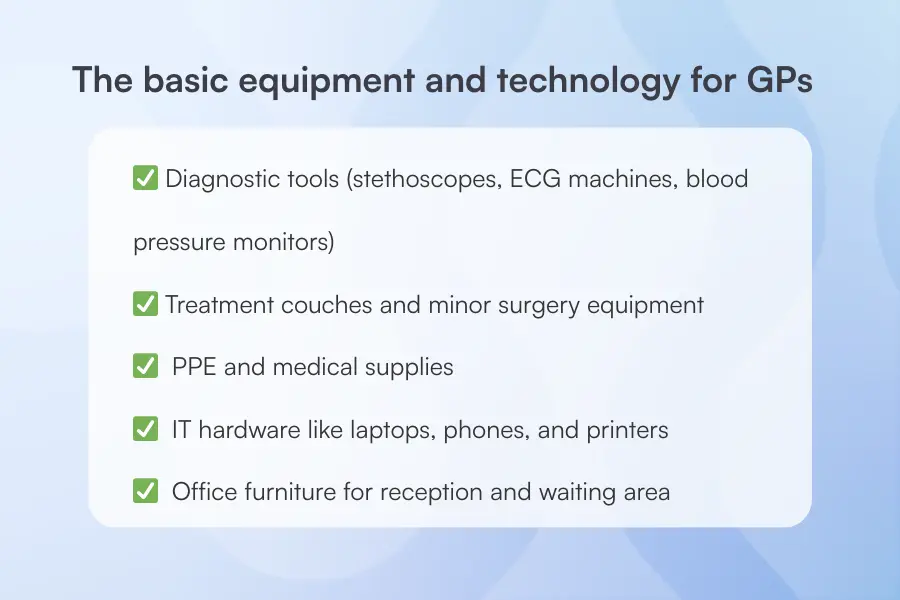
Kit out the consulting room with diagnostic tools, treatment couches, PPE and IT, then choose the software you’ll run records, bookings and billing on.
Choose software before opening day rather than after. Migrating patient records six months in is far harder than starting clean.
Dedicated GP clinic software should handle appointments, patient records, lab orders, referrals, prescriptions and invoicing in one place. All-in-one practice management software like Pabau covers each of those.
Check how any system handles private GP NHS referrals, since patients will ask you to refer them on. It should also keep an audit trail the CQC can inspect.
A new private GP practice usually needs a receptionist, clinical support from a nurse or healthcare assistant, and eventually a practice manager.
If you plan to add sessional private practice doctors, check each one’s GMC licence, indemnity and revalidation connection before their first session. Anyone you name on the CQC registration also needs an enhanced DBS check.
Hire for values as well as credentials, since a small team feels every mismatch. Protect everyone with proper employment contracts, a structured induction and a training record you can show an inspector.
Set prices against local competitors and your break-even volume, then offer pay-per-visit, membership and bundled options so patients can choose how they pay.
In a private healthcare business, the fee is the whole revenue line, so price from your costs as well as the competition. Common models include:
Keep your medical practice accounts separate from day one. That means a dedicated business bank account, monthly reconciliation and an accountant who understands how VAT applies to medical services.
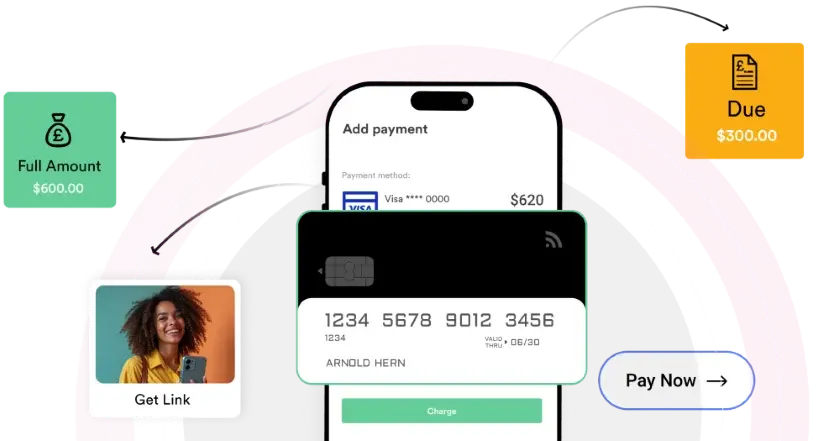
Then decide how you’ll handle payment processing, from deposits at booking to invoices and financial reports.
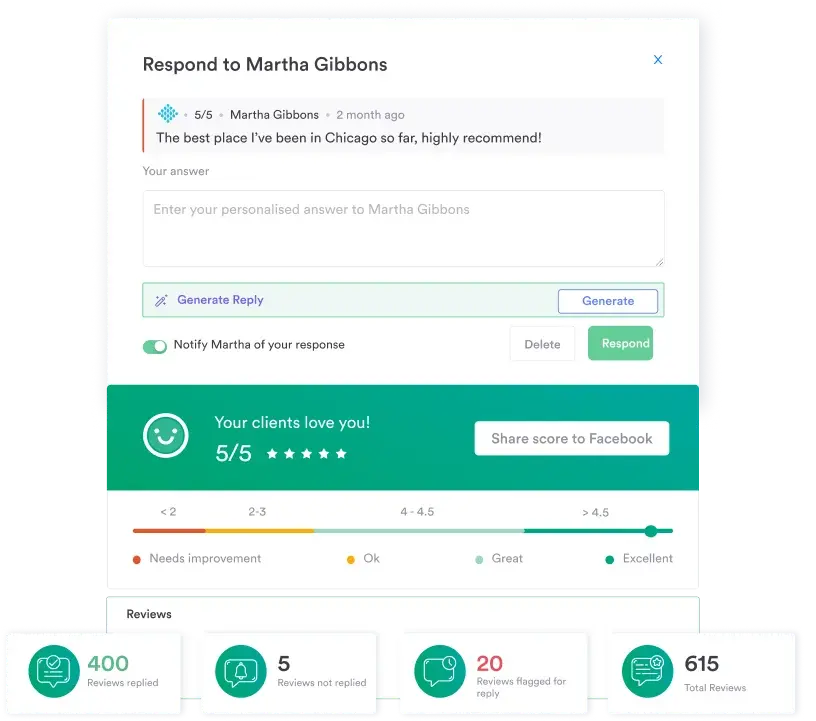
Patients find private GPs through search, reviews and referrals. Your first marketing job is a website with online booking and a steady flow of Google reviews.
List your practice on Healthcode’s Private Practice Register as well. The PPR shares your credentials with private medical insurers and hospitals, and over 57,400 practitioners are registered.
Decide early who owns SEO, because it compounds slowly. Local listings suit an in-house owner, while technical SEO and content often suit a healthcare-specialist agency.
Patient education, from blog posts to seasonal newsletters, keeps patients coming back between appointments and gives search engines content to rank.
A September email about flu vaccinations, or a spring note on travel health, turns a one-off patient into a returning one.
After launch, track retention, diary fill rate and patient satisfaction every month, and audit yourself against the CQC’s standards before an inspector does.
Setting up in private medical practice is a one-off project, while running one is a monthly discipline. Build these habits early:
Revisit the Private GP ROI Snapshot each quarter once you’re open. Your own fee and diary fill will replace the assumptions within months.
Plenty of new private GPs open on a patchwork: a booking tool, a card terminal, paper consent forms and a spreadsheet for invoices. At the CQC site visit, those records then sit in four places.
Pabau puts appointments, patient records, consent forms, prescriptions and invoices in one system. Pabau’s online booking lets patients book and pay a deposit themselves, so your receptionist isn’t taking card details over the phone.
When we onboard a new private GP practice, the first job is setting up the records the CQC asks about. That means consent, treatment notes and an audit trail. Pabau Scribe, our AI scribe, then drafts notes and letters from the consultation.
Pabau also integrates with CloudRx for private prescriptions. Every subscription includes every feature, and structured onboarding comes with a dedicated Client Coordinator who helps move your data in.

Pabau brings bookings, patient records, consent, prescriptions and invoicing into one system. Your new private GP practice opens with the records the CQC expects to see.

Treat CQC registration as the critical path of the project and plan backward from it. The lease, the fit-out and your first hires should all be timed around when the CQC can visit.
Then run the Private GP ROI Snapshot with your own figures before you sign a lease. If your local fee and a realistic diary won’t recover the budget within two years, change the premises plan rather than the price.
Book a demo to see how Pabau keeps a new private GP practice’s bookings, records and billing in one place from opening day.

Still deciding whether to leave? Leaving the NHS for private practice sets out the 11 steps and the pension maths behind the move.
Comparing systems before you open? The best GP clinic software compares tools on features and pricing for private GP practices.
Want the case for going private? Why UK doctors are choosing private practice covers the income, autonomy and lifestyle trade-offs.
Unsure how onward referrals work? Can a private GP refer to NHS specialists? explains the referral rules your patients will ask about.
You need full GMC registration with a licence to practise, entry on the GP Register and a connection for revalidation. You can then join an existing private practice or start your own GP practice by registering with the CQC. Starting your own is open to any qualified GP who meets the CQC standards.
A private practice is a medical service that patients or their insurers pay for directly, rather than one funded by the NHS. A private GP practice in the UK sets its own fees and appointment lengths, but it still has to register with the CQC.
Yes. The CQC registers the organization that provides the service, not the people who control it, so a company owned by non-doctors can register. Its directors must meet the fit and proper person requirement, and it needs a registered manager. Clinical care still has to be delivered by GMC-registered doctors.
Start with whoever can publish consistently. A practice manager can own your Google Business Profile, reviews and local listings in-house. For technical SEO and content, hire an agency with healthcare experience that knows the ASA and CAP rules on advertising health services.