CRM for chiropractors: how to manage patients, bookings and marketing
A CRM for chiropractors is a patient relationship management system built around...

Last Updated: Oct 13, 2026

Functional medicine patients research extensively before booking, so education-first content consistently attracts more of the right patients.
Local SEO and Google Business Profile optimization are the fastest low-cost channels for attracting nearby patients actively searching for root-cause care.
Automating intake, follow-ups, and recall sequences with practice management software converts more inquiries into booked appointments.
Pabau’s online booking, automated workflows, and digital forms reduce friction at every stage of the functional medicine patient journey.
The patients you want spend weeks or months researching before they commit to a first appointment. They seek root-cause answers rather than symptom management, and your patient acquisition strategies need to match that behavior. Some arrive after complications such as capsular contracture, still seeking a root-cause explanation rather than another prescription.
Thankfully, the same qualities that make functional medicine distinctive, like depth, personalization and a long-term health focus, are exactly what today’s health-conscious patients are searching for. The challenge is making sure your practice shows up at each stage of that search and makes booking easy when they’re ready.
This guide covers the functional medicine marketing strategies that consistently attract more patients, from digital presence and content marketing to referral networks and the operational systems that convert interest into booked appointments.
Before running any paid advertising or social media campaign, your practice needs a digital foundation that communicates credibility. Functional medicine patients are skeptical of generic health claims and quick to spot thin content.
Speed matters too. A website that loads slowly on mobile loses the patient before they read a single line. Compress images, use a reliable host, and test load time on a 4G connection.
Functional medicine SEO starts with local search. Patients searching “functional medicine doctor near me” or “integrative medicine clinic [city name]” are not browsing. They are ready to book, and local optimization captures this high-intent traffic before a single dollar is spent on advertising.
The Institute for Functional Medicine maintains a practitioner directory that many patients use as a starting point. But most bookings still happen through Google, which means your Google Business Profile is your most important local asset.
For practices serving multiple areas, each location needs its own Google Business Profile and its own website page. One generic page covering three cities performs poorly against a focused single-location competitor.
The research phase for most functional medicine patients also involves reading reviews carefully, not just counting stars. Encourage patients who have had meaningful outcomes to leave detailed, specific reviews describing what they came in for and what changed. Sharing those stories across the social platforms where patients already spend time amplifies this proof further.
Functional medicine patients research deeply before booking. They compare practitioners, read about conditions and protocols, and look for practices that clearly explain their approach before they ever pick up the phone. Practices that answer patient questions through content consistently fill their schedules with better-fit cases.
Content that works for functional medicine practices tends to address the questions patients are already asking, often before they know functional medicine exists as an option.
| Content type | Best for | Channel |
|---|---|---|
| Blog posts answering condition questions | Top-of-funnel awareness | SEO, social sharing |
| Email newsletters with protocol insights | Nurturing warm leads | Email list |
| Educational webinars or workshops | Building trust and authority | Zoom, in-person, social |
| Short video explainers | Social media reach | Instagram, YouTube, TikTok |
| Downloadable guides or assessments | Lead capture | Website landing pages |
The key constraint: functional medicine content must inform without promising outcomes. Phrases like “we can reverse your autoimmune condition” violate FTC and FDA advertising standards. Frame content around what the process involves, what testing shows, and what options become available, not guaranteed results.
Webinars deserve special mention. A 45-minute “Understanding the root causes of fatigue” session, promoted to your email list and local Facebook groups, typically generates both direct bookings and social proof you can repurpose as clips. These educational events also strengthen retention among existing patients, reducing churn while you grow.
Traffic without conversion is expensive. A functional medicine patient who finds your content, visits your website, and then hits a confusing booking process will choose a competitor. Converting leads into patients requires a frictionless path from interest to confirmed appointment.
Three points of friction consistently lose functional medicine practices the most bookings:
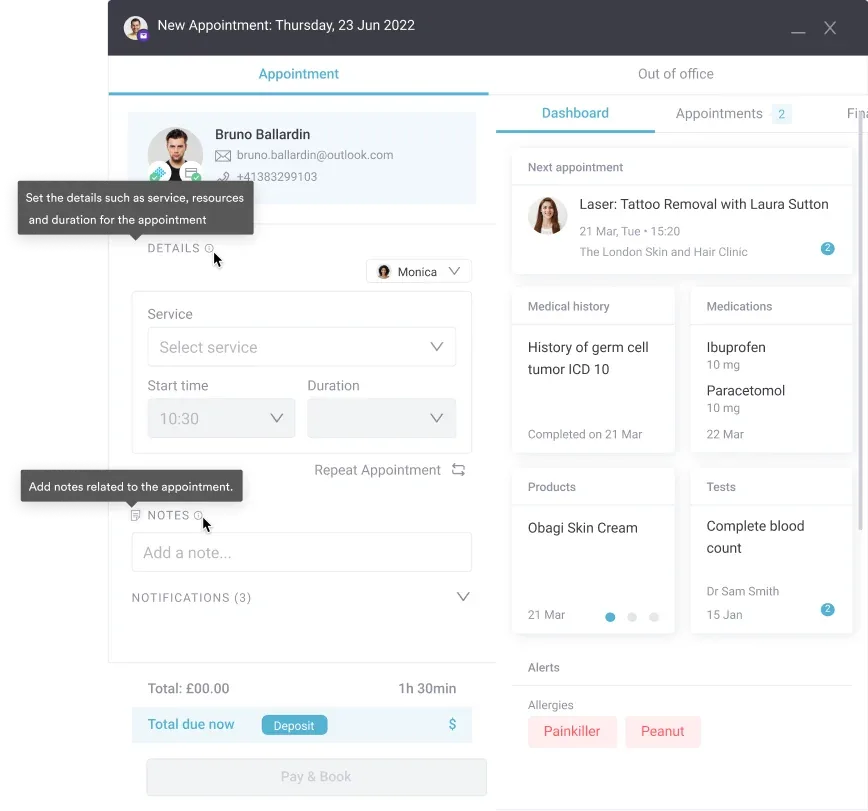
Pabau’s online booking lets patients self-schedule around the clock, with service-specific intake questions collected automatically before the appointment. That means a new functional medicine patient arrives with their health history, current medications, and chief concerns already documented, giving the practitioner more consultation time and the patient a better first experience.
Pre-appointment digital forms sent via SMS or email remove the clipboard moment entirely. Patients complete them on their phone before they arrive, consent included.
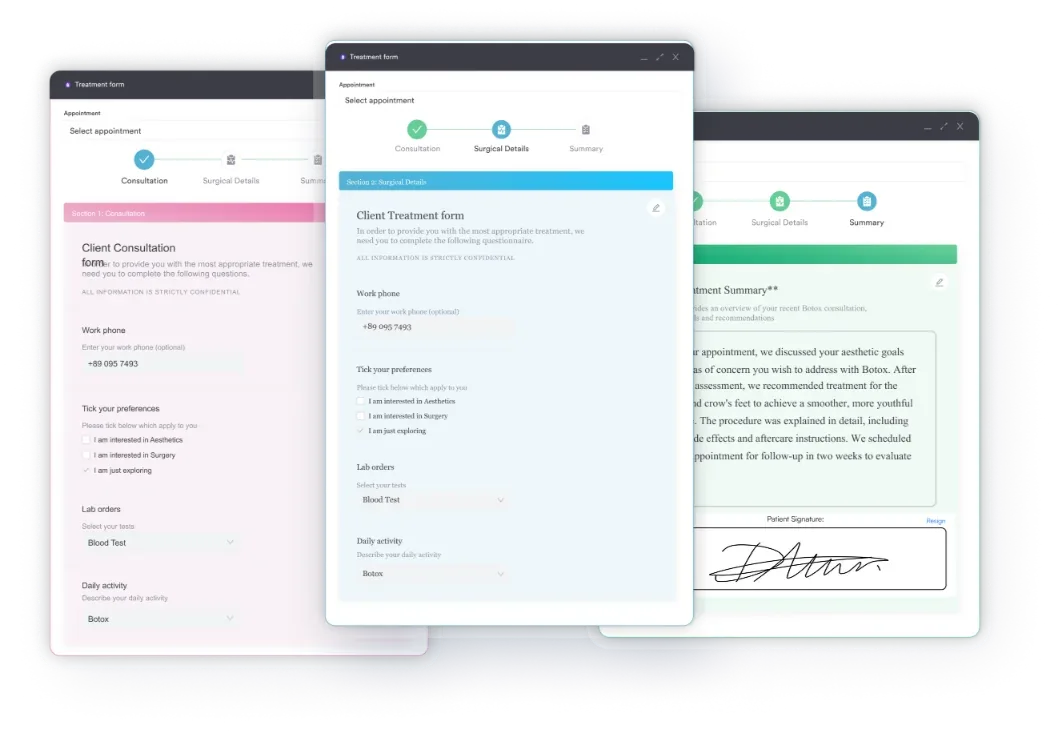

From online booking to automated follow-ups, Pabau handles the operational layer so you can focus on delivering root-cause care.

Conventional GPs, nutritionists, personal trainers, and mental health practitioners all see patients who are a strong fit for functional medicine but don’t know where to send them. A referral relationship with even five aligned practitioners can generate a consistent stream of pre-qualified patients who arrive already trusting the process.
The Cleveland Clinic Center for Functional Medicine, one of the most recognized functional medicine programs in the US, built much of its early patient base through internal physician referrals. Independent practices can replicate this model at a smaller scale by identifying local practitioners whose patient populations overlap with yours.
Practical steps for building referral partnerships:
Reciprocal referrals work better when both practices document to a shared standard. A physical therapist who shares structured physical therapy SOAP notes gives your team a handover it can act on quickly.
Community partnerships extend this further. Yoga studios, functional gyms, and corporate wellness programs attract the same demographic. A free 30-minute talk at a local CrossFit box or workplace wellness day positions you as the credible expert in the room. Lead generation tactics built on community presence tend to produce higher-trust patients than cold digital advertising.
Track where every new patient comes from during intake, whether that’s Google search, a referral, a webinar, or social media. After 90 days, review the breakdown and double down on the channels delivering the most qualified bookings. Most practices are surprised to find one channel dramatically outperforms all others.
Attracting a new patient costs significantly more than retaining an existing one. A functional medicine practice that loses 30% of patients after the first protocol cycle is running an expensive treadmill. Retention and referrals are the multipliers that make acquisition sustainable.
Clinic automation for revenue growth closes the gaps where patients fall through. The most impactful automations for functional medicine practices are:
Pabau’s automated workflows handle all three without manual intervention. Once set up, they run in the background, sending the right message at the right time based on patient actions or appointment dates.
Membership programs are worth considering once your patient base reaches a sustainable size. A monthly membership covering a set number of consultations, with priority booking and discounted testing, provides predictable revenue and deepens patient commitment. It’s one of several functional medicine business models worth evaluating once your patient base grows. Capturing patient feedback regularly across your membership base helps you iterate on the offer and catch dissatisfaction before it becomes a cancellation.
On the marketing side, email and SMS campaigns are the most cost-effective channel for reaching your existing patient base and reactivating lapsed ones. A monthly email covering a relevant functional medicine topic, a seasonal health focus, or a new service keeps your practice relevant without feeling like advertising. Email marketing campaigns that lead with education rather than promotion consistently deliver higher open rates in health-conscious audiences.
The functional medicine patients you want are already searching. The practices that attract more of them are the ones that show up credibly at each stage of that search, answer questions before they’re asked, make booking frictionless, and follow up consistently. Pull these tactics into a single functional medicine marketing plan so each channel reinforces the next instead of competing for attention.
Pabau’s functional medicine software brings online booking, digital intake forms, automated recall sequences, and email campaigns into one system, so the operational layer of patient acquisition runs without adding to your administrative workload. Book a demo to see how it works for practices like yours.

Seeing patients with unexplained fainting or dizziness? Autonomic testing guide walks through the test types, how to prepare patients, and how to read results.
Choosing an EMR for your functional medicine clinic? Best functional medicine EMR software compares seven EMR platforms on features, pricing, and fit for integrative clinics.
Need a structured way to screen cognitive function? Brain health assessment template gives your team one structured form to administer, score, and document cognitive screening.
Functional medicine is a root-cause approach to healthcare that investigates the underlying drivers of chronic conditions rather than managing symptoms. It requires a different marketing approach because patients typically spend weeks researching before booking, respond to educational content over promotional messaging, and prioritize practitioner credibility and specificity over price or convenience.
Functional medicine doctors attract new patients most effectively through local SEO optimization, education-first content such as blog posts and webinars, referral networks with aligned practitioners, and a streamlined online booking experience that converts research-phase interest into confirmed appointments.
Local SEO improvements and Google Business Profile optimization often show measurable results within 60 to 90 days. Content marketing typically takes 3 to 6 months to build organic traffic. Paid advertising can deliver patient inquiries within weeks, but works best once the website and booking process are already converting well.
Local SEO captures patients who are actively searching for a functional medicine practitioner in a specific area, meaning they have already decided they want this type of care and are choosing between providers. These patients have higher intent and lower education costs than cold social media audiences, making local search one of the highest-return acquisition channels available to independent practices.
Online booking available 24/7, digital intake forms sent automatically before appointments, and automated follow-up sequences are the three features that most directly improve patient acquisition in functional medicine practices. Together they reduce friction at every stage between initial interest and a confirmed appointment, and they improve first-appointment show rates by ensuring patients feel prepared and expected.