Fertility clinic marketing: Strategies that attract & convert patients
Fertility clinic marketing is how a fertility practice attracts, educates, and c...

Last Updated: Oct 14, 2026

Healthcare content marketing means creating educational content to attract and retain patients, not just run ads
Blog posts, video, email, and social media each serve a different stage of the patient journey
HIPAA-compliant content requires patient consent for testimonials and careful handling of protected health information
Pabau’s automated workflows turn everyday patient communications into content marketing touchpoints without extra effort
Most practices spend money on advertising but lose patients between visits because they never built a relationship. Patient acquisition strategies focus on the front door. Healthcare content marketing keeps patients engaged long after the first appointment.
According to Pew Research, 72% of internet users look online for health information. That makes educational content one of the most direct routes to prospective patients.
This guide covers the strategy, formats, compliance rules, and the technology that turns everyday clinical records into marketing assets.
Healthcare content marketing is the practice of creating and distributing educational content that attracts patients, builds trust, and drives appointments. Advertising interrupts someone to push a service. Content answers a question they already typed into a search bar.
A dermatology practice writing a guide on managing eczema flare-ups is doing healthcare content marketing. So is a physical therapy practice explaining recovery after knee surgery, or a med spa filming how Botox works. The content serves the reader first. The practice benefits second.
According to research from DemandMetric, content marketing costs 62% less than traditional marketing and generates roughly three times as many leads. For practices with a small marketing budget, that ratio matters.
Three things drive growth for most practices. New patients find them, existing patients come back, and referred patients arrive already sold on the team’s expertise. Healthcare content marketing supports all three.
The practice owner who publishes one useful post per month compounds those benefits over time. Each piece becomes a permanent asset that keeps drawing traffic without further spend.
Not every format works at every stage of the patient journey. Matching format to intent is what separates content that books appointments from content that gets published and forgotten.
Long-form educational content drives most of the organic search traffic for healthcare practices. Condition-specific posts, procedure explainers, and seasonal health topics all target the queries patients type before booking. Think “what causes tension headaches” or “what to expect from your first Botox appointment”.
A physical therapy practice publishing neck pain exercises reaches those searchers weeks before anyone calls. The marketing strategies for practices that outperform rely on a steady publishing cadence rather than sporadic bursts.
Video is the highest-trust content format in healthcare. A short clinician Q&A, a procedure walkthrough, or a testimonial filmed with written consent covers the consideration stage better than any written description.
Research published in the Journal of Medical Internet Research finds that video-based health education improves patient understanding and recall compared with text alone.
Smartphone footage performs well on social media. Production value matters far less than authenticity here.
Email remains the most cost-effective retention channel in healthcare. Industry benchmarks from Litmus put the return at around $36 for every $1 spent across industries.
The email types that work hardest in healthcare are post-visit care instructions, recall reminders, and seasonal health alerts. Practices using automated email and SMS campaigns set these sequences up once and deliver them to the right patient segment automatically.
The email marketing playbook written for med spas applies just as well to a general practice. Segment by treatment history, personalize the subject line, and keep the body short.
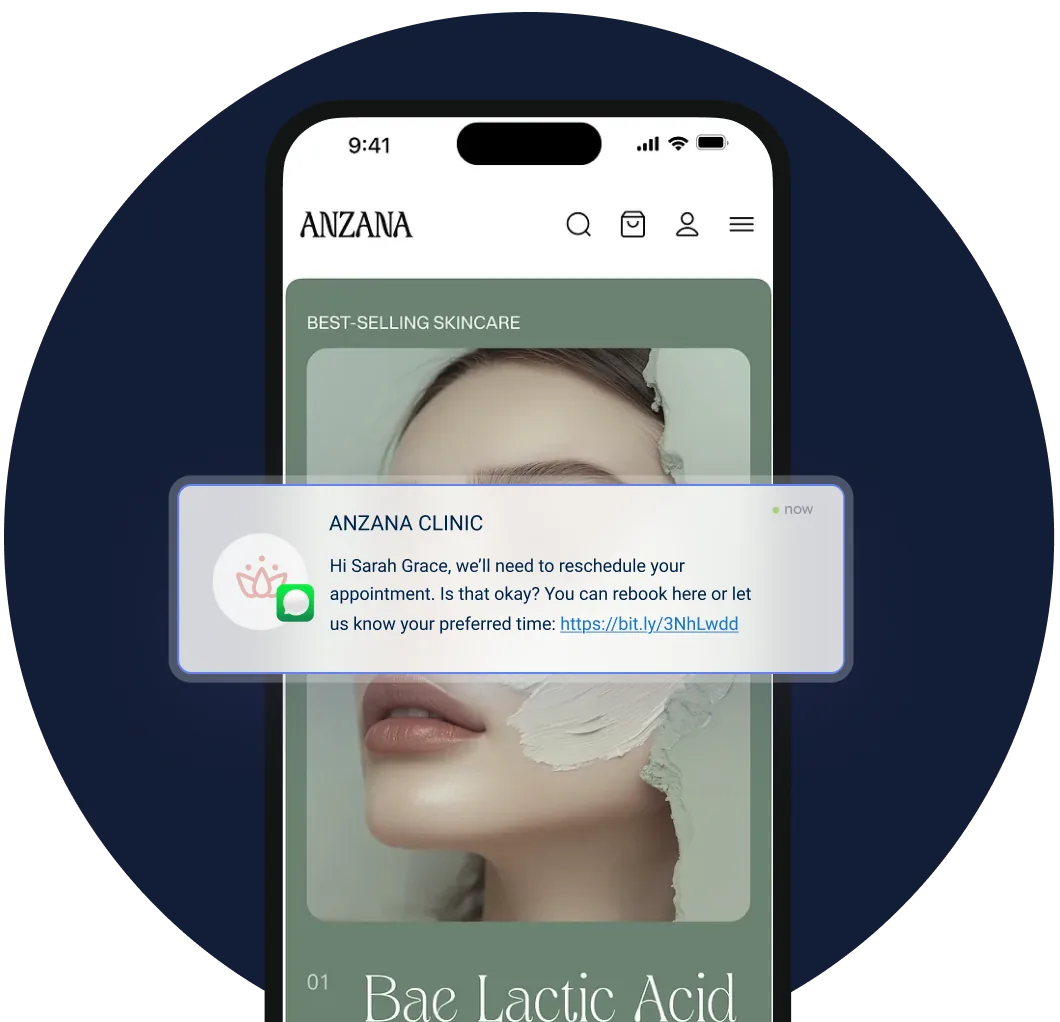
Platform choice depends on the practice. Instagram and TikTok work for visual specialties like aesthetics, dermatology, and plastic surgery. Facebook reaches an older demographic and supports local community engagement. LinkedIn drives referrals from primary care physicians, insurers, and corporate health clients.
The social media framework that works is simple. Post consistently, mix educational and behind-the-scenes content, and never publish anything that could count as individualized medical advice.
Pre- and aftercare instructions, condition leaflets, and procedure guides do double duty. They cut the administrative load on clinical staff and work as content marketing assets at the same time.
A downloadable guide on what to expect before a first IV drip earns email sign-ups when gated, or organic traffic when published openly. A wellness practice can hand out a wellness wheel worksheet the same way.
The documents a practice already writes for clinical reasons can be republished as patient-facing content with almost no extra production time. Place a brief medical disclaimer at the top of each published piece, stating that it’s educational and doesn’t replace professional advice.
A content marketing strategy for a practice needs to be specific rather than complex. The practices that see results are producing the right content for the right person at the right stage of their journey.
The healthcare marketing ideas that get implemented are always simpler than the ones left in a strategy document. Start with one format, run it for 90 days, then add the next channel.
Picking the next channel is the harder call. Our guide to wellness marketing strategies ranks the main options by return on effort, with paid ads last.
Creating good content is half the job. Distribution decides whether that content reaches anyone at all.
For organic search, the fundamentals apply. Run keyword research on patient queries rather than clinical terminology. Build location pages for searches like “physical therapist near me”. Use structured headings so Google can pull the answer straight off the page. Your booking page needs promotion too — our French guide to promoting an online booking site shows how.
For multi-channel distribution, repurposing cuts production overhead. One post becomes a social carousel, an email newsletter, and the script for a short video. Practices using automated patient workflows can trigger content delivery from clinical events without scheduling anything by hand.
Audit the practice’s existing clinical documents before creating anything new. Pre- and aftercare instructions, informed consent summaries, and procedure FAQs already exist as clinical assets. Publishing cleaned-up versions of them as patient-facing articles costs no extra production time, and they often rank well for high-intent procedure queries.
Healthcare content operates under tighter rules than most industries. Getting it wrong can bring regulatory action, patient complaints, or reputational damage.
Keep the practice’s notice of privacy practices current, since it sets out how patient information may be used in any communication. UK practices should also review ASA guidance on advertising treatments, alongside the GDPR checklist covering the data handling that applies to marketing.
Measuring content marketing ROI in healthcare means connecting digital activity to booked appointments. Without that connection, content marketing gets credited for everything or for nothing.
Start with these metrics:
The tactics that worked two years ago still work, but the competitive environment has shifted. Practices that want to keep an edge should track these developments:
The common thread is that patients expect information that is relevant and immediate. Content that delivers it earns trust. Content that feels generic sends the reader to whoever answered the same question better.
Most content marketing guides treat software as an afterthought. In a practice, it decides whether the plan survives a busy week.
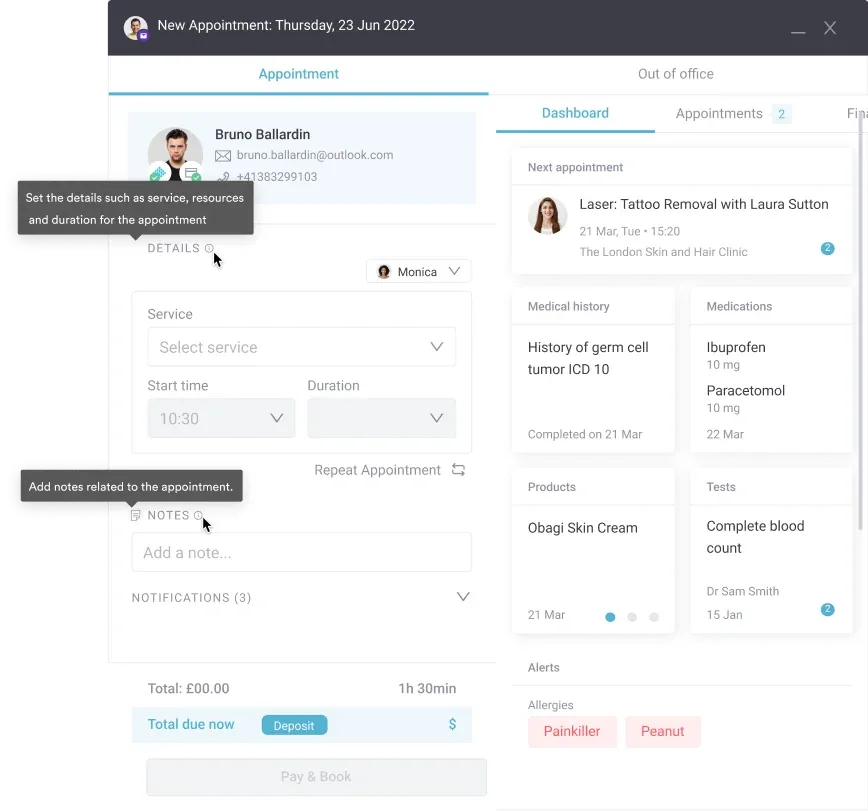
Execution is where practice content marketing usually breaks down. A solo practitioner or small team cannot manually send post-visit emails, schedule recall reminders, and request reviews for every patient. Those touchpoints get skipped. Automation keeps them running without anyone pressing send.
Pabau connects operational workflows to content marketing touchpoints in three ways:
Operational data is also marketing data. Appointment history, treatment preferences, and communication records are the segmentation inputs that make personalized delivery possible, with no extra tools and no data exports.
UK aesthetics practice River Aesthetics moved off manual lead tracking. Automated email and SMS campaigns now convert its inquiries, which frees the team for patient care.

Pabau automates appointment reminders, post-visit follow-ups, and review requests, so every patient interaction becomes a content marketing touchpoint. See how it works.

The practices that grow through content marketing are rarely the ones with the biggest budget. They are the ones that publish something useful every month and keep following up in between.
Pick one format and one automated touchpoint, then hold both for 90 days. That will teach you more than another quarter of planning, and it gives you the numbers to decide what to add next.
Pabau’s automated workflows handle reminders, follow-ups, and review requests without manual work. Book a demo to see how the whole patient communication workflow would run in a practice like yours.

Marketing a specialty practice? Orthodontic practice marketing breaks down seven strategies that grow patient volume.
Need more patients on the schedule? How to get more patients covers 9 strategies that fill schedules without doubling your marketing budget.
Writing service descriptions that convert? Service descriptions that convert shows how to educate, reassure, and set expectations, with 3 free templates.
Need a marketing plan that keeps referrals steady? Marketing plan for private practice walks through a step-by-step approach so referrals and inquiries do not stall.
Want marketing handled inside your software? Marketing Plus upgrade in Pabau lists 12 ways the upgrade extends your marketing tools.
Healthcare content marketing is the creation and distribution of educational content designed to attract, engage, and retain patients without interrupting them with paid ads. Traditional advertising pays for reach and stops when the budget stops. Content marketing builds assets such as articles, videos, and email sequences that keep generating traffic and trust long after publication.
The leading trends are AI-assisted content creation with mandatory clinical review and short-form video on Instagram Reels and TikTok. Voice search optimization for conversational health queries is close behind. Hyper-personalized email sequences triggered by patient behavior rather than calendar dates round out the list.
Small practices see the best results from condition-specific articles targeting local search queries, automated post-visit email follow-ups, and patient testimonial videos filmed on a smartphone. Those three tactics together cover the full patient journey from discovery to retention at minimal cost.
Small practices compete by being more specific, more personal, and faster to respond than large systems. A solo primary care physician writing about the exact conditions they treat will outrank a hospital’s generic health library for local queries. Specificity and a genuine clinical voice are advantages that large organizations struggle to replicate at scale.
Track organic search traffic growth and inquiry volume by channel using UTM parameters. Then compare email open and click rates against healthcare benchmarks of roughly 33% to 44%. Finally, attribute appointment bookings to specific content touchpoints. Connecting content activity to booked appointments closes the attribution loop and proves the business case for further investment.