Journal prompts for mental health
Journal prompts for mental health are guided questions that help people process ...

2
Last Updated: Oct 13, 2026

The Transtheoretical Model (TTM) describes six stages of behavior change that clients move through non-linearly.
A stages of change worksheet helps clinicians identify which stage a client occupies and apply stage-matched interventions.
Addiction treatment is the primary clinical application; relapse is treated as a return to an earlier stage, not failure.
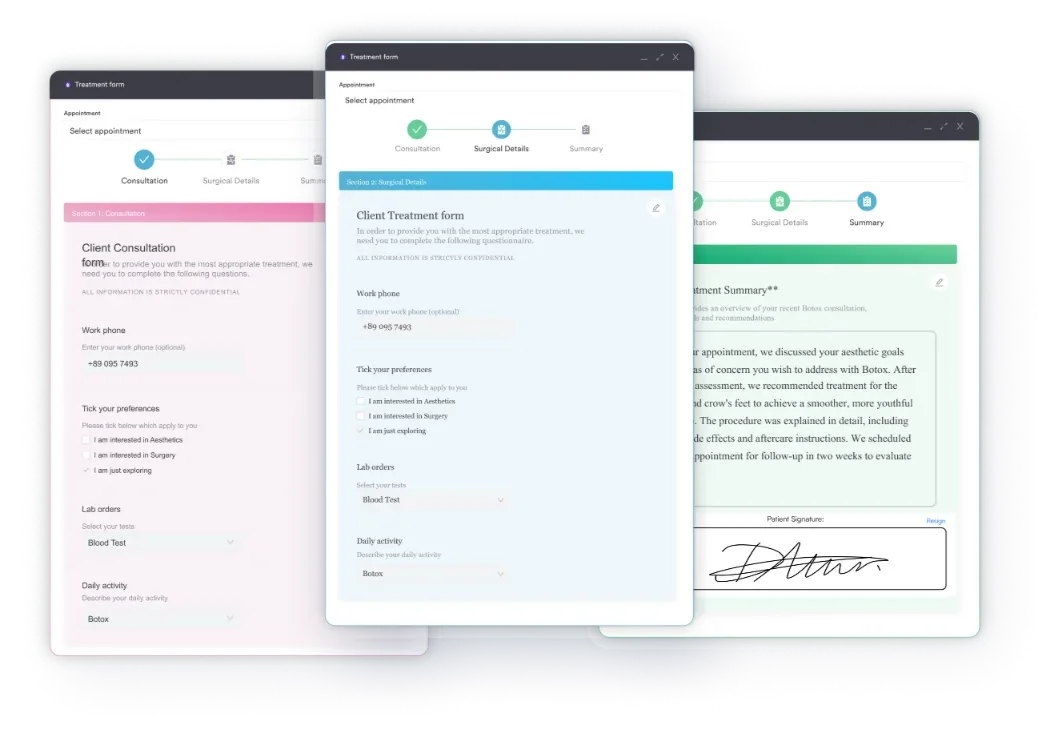
Pabau’s digital forms and client records allow clinicians to store completed worksheets, track progress across sessions, and attach stage assessments to treatment plans.
A ready-to-use template covering all six stages of change (Precontemplation through Termination), reflection prompts to help clients identify their readiness, a decisional balance exercise for weighing the pros and cons of behavior change, and sections for documenting barriers and support systems.
Download templateMany clinicians encounter a fundamental challenge: clients arrive at therapy at different points in their readiness to change.
Without a structured tool to assess where a client stands, clinicians often default to generic encouragement that misses the mark.
Using a stages of change worksheet integrated into mental health EMR software like Pabau solves this problem. The worksheet helps clinicians identify which of the six stages a client occupies and apply interventions matched to that specific stage. This approach, grounded in the Transtheoretical Model (TTM), has become a cornerstone of evidence-based behavior-change therapy across mental health, addiction treatment, and coaching.
This guide explains what a stages of change worksheet is, how to use it in clinical sessions, and why it’s essential for therapists working with clients on behavior change. You’ll also learn how integrating it into your clinical workflow can transform how you track progress.
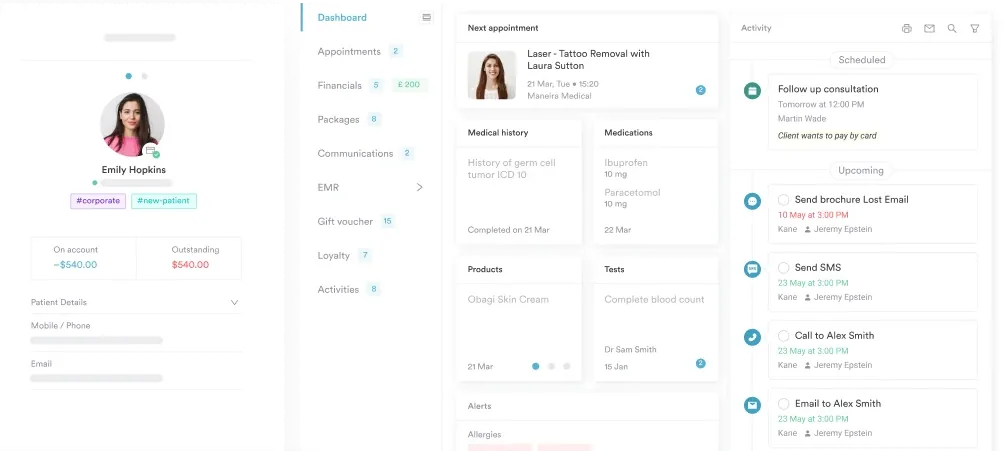
A stages of change worksheet is a therapeutic assessment tool based on the Transtheoretical Model of behavior change, developed by psychologists James Prochaska and Carlo DiClemente in the 1980s. The worksheet helps clinicians and clients work through a structured process to identify the client’s current readiness to change a specific behavior.
The TTM treats behavior change as a process that unfolds across distinct stages, rather than a single decision. Instead of expecting a client to simply “decide to change” and then change, the model acknowledges that clients move through phases of awareness, consideration, planning, action, maintenance, and sometimes termination. Each stage has its own characteristics, barriers, and therapeutic strategies.
Clinicians use a worksheet format for several reasons. It operationalizes the abstract TTM concept into a tangible tool clients can work through during a session. It creates a shared visual reference point. It generates documentation of the client’s readiness level at a specific point in treatment. And it prompts reflection using structured questions rather than relying on clinician intuition alone.
Effective use of a stages of change worksheet follows a five-step clinical process. The first step is introducing the model itself. Explain to the client that behavior change happens in stages, and that understanding their current stage helps you tailor your therapeutic approach. Many clients find this immediately validating. It explains why well-meaning advice hasn’t worked in the past.
Step two involves guiding the client to identify their current stage. Use the reflection prompts on the worksheet to help them recognize whether they’re in precontemplation, contemplation, preparation, action, or maintenance. You might ask, “On a scale where 1 is not ready at all and 10 is completely ready, where would you place yourself right now?” This anchors the abstract concept in the client’s lived experience.
Step three focuses on exploring barriers and resources. Use the worksheet sections to identify obstacles standing in the way of change, such as lack of time, financial constraints, unsupportive relationships, and competing priorities. Then turn to resources. Who in the client’s life could support this change? What practical resources exist?
Step four is completing the decisional balance exercise, where the client weighs the pros and cons of changing versus staying the same. This technique directly addresses ambivalence, the core feature of the contemplation stage. Step five involves setting goals aligned with the client’s stage and documenting that stage of readiness in your clinical notes for continuity across sessions.
Documenting worksheet completion is important. Many clinicians attach the completed worksheet to the session note or save it in the client file. Using digital intake and assessment forms streamlines this. Clients complete the worksheet digitally during or between sessions, and it auto-saves to their record.
Knowing how practice management software works helps you decide which forms to digitize first.

Store completed stages of change worksheets in client records, track readiness across sessions, and attach stage assessments to treatment plans, all within one integrated platform.

The stages of change worksheet is most valuable for mental health clinicians working with clients on behavior change. Therapists and counselors use it across a wide range of settings: individual therapy, group therapy, addiction treatment. Clinicians managing mood episodes alongside behavior change often pair this with a bipolar disorder nursing care plan for medication monitoring.
Addiction specialists rely on the worksheet extensively. Whether treating substance use disorder, alcohol dependence, or behavioral addictions, the TTM acknowledges that clients enter treatment at different readiness levels. Many clients with addiction are in precontemplation. They may be mandated to treatment by the legal system or pushed by family, but they don’t personally believe change is necessary. The worksheet helps clinicians meet such clients where they are without judgment.
Mental health counselors use the worksheet for behavioral health goals beyond addiction: smoking cessation, weight management, exercise initiation, medication adherence, and interpersonal behavior change. Any behavior-change goal fits the TTM framework. When a client’s presentation doesn’t fit a more specific diagnosis, clinicians sometimes document progress alongside a general code such as F09. Trauma-focused practices sometimes track this work alongside a PTSD nursing care plan built on the same NANDA framework.
Using a stages of change worksheet in your clinical practice offers several concrete benefits. First, it improves therapeutic alliance. When a clinician can accurately identify a client’s stage and match interventions to that stage, the client feels understood. They’re less likely to perceive the clinician as pushing them to change before they’re ready.
Second, the worksheet accelerates progress. Rather than spending sessions on motivation-building strategies when a client is already in preparation, you can jump straight to action planning. Conversely, if a client is still in contemplation, you spend time exploring ambivalence rather than prematurely demanding commitment.
Third, the worksheet creates clear documentation. You have a tangible record of where a client was at a specific moment in treatment. This supports patient accountability tracking across sessions, allows you to track progression (or regression) across the stages, and demonstrates evidence-based practice to supervisors, insurers, and quality-assurance reviewers.
Finally, the worksheet is adaptable. You can modify the reflection prompts for different populations.
The Transtheoretical Model distinguishes six stages of change. Understanding each stage is essential for using the worksheet effectively and tailoring your clinical approach.
Movement through the stages is rarely linear. Clients often cycle back. A client in action may slip and return to contemplation. This is not failure; it’s part of the change process.
The decisional balance exercise is one of the most powerful components of the stages of change worksheet. It directly targets the ambivalence at the core of the contemplation stage. That ambivalence is the internal conflict between wanting change and fearing it.
The exercise invites the client to list the pros and cons of changing and the pros and cons of remaining the same. Rather than the clinician arguing for change, the client generates their own arguments by filling out the worksheet.
As the client fills out the table, the imbalance often becomes visible to them without you having to point it out. The benefits of changing typically outweigh the costs of staying the same, but the client needed to articulate that balance themselves. This exercise moves clients from contemplation toward preparation, giving them permission to acknowledge ambivalence while building their own case for change.
Addiction treatment is where the Transtheoretical Model and the stages of change worksheet prove most clinically powerful. Many clients entering addiction treatment are in precontemplation: they’ve been pressured by family, mandated by the courts, or pushed by a crisis. They don’t necessarily believe they have a problem. They’re compliant, not convinced.
The stages of change worksheet acknowledges this reality. Rather than confronting a precontemplative client about their denial, clinicians use the worksheet to explore the client’s own ambivalence and concerns. This approach also reduces the emotional labor of engaging resistant clients.
In addiction treatment, relapse is reframed not as failure but as a return to an earlier stage. That often means a return to action or maintenance, followed by a slip back to contemplation or preparation. The stages of change worksheet helps clients understand relapse as a setback within the larger change process, not evidence that recovery is impossible. Pairing this stage assessment with a behavior chain analysis worksheet helps trace the specific triggers behind a slip.
Addressing client crises during early recovery is critical in addiction treatment. When a client experiences a crisis or health scare, crisis intervention strategies help you assess whether the event strengthens their motivation (moving toward action) or destabilizes them (risking a return to precontemplation).
A stages of change worksheet is most valuable when it becomes part of a larger clinical workflow. Printing it, completing it by hand, and filing it in a paper chart limits its utility. You can’t easily retrieve past assessments, track stage progression over months, or integrate the assessment into treatment planning.
Pabau’s client records and treatment history feature lets you store completed stages of change worksheets directly in each client’s electronic record. You can attach them to session notes, tag them by date, and retrieve them instantly to review a client’s stage history across your entire treatment relationship. Pairing this with progress-tracking reports turns the worksheet from a static assessment into a dynamic tool for monitoring change over time.
The stages of change worksheet is a straightforward yet powerful clinical tool. It acknowledges that your clients move through behavior change at different paces and in different ways. Rather than expecting everyone to be equally ready for action, the worksheet helps you meet each client where they are and guide them forward one stage at a time.
Whether you’re working in mental health, addiction treatment, or coaching, the worksheet provides a structured framework for assessment, a shared language for exploring ambivalence, and clear documentation of progress. Integrating it into your digital clinical workflow and storing completed worksheets in Pabau’s client records system ensures the assessment supports both your immediate clinical decisions and your long-term treatment tracking.

Working in a forensic assessment setting? Hare Psychopathy Checklist Revised measures personality traits and behavioral patterns linked to psychopathy across twenty structured clinical items.
Want another worksheet for mapping behavior triggers? Anxiety Triggers Worksheet helps clients identify the situations and thoughts that precede a behavior, complementing stage-based assessment.
Screening for impulsive behavior patterns? impulse control disorder test screens for impulsive behavior patterns and includes symptom assessment against DSM-5 diagnostic criteria.
The Transtheoretical Model (TTM) is a psychological framework developed by Prochaska and DiClemente describing how people move through six stages when changing behavior: Precontemplation, Contemplation, Preparation, Action, Maintenance, and Termination. The model recognizes that behavior change is a process, not an event, and that clients enter this process at different readiness levels.
Motivational interviewing (MI) is a clinical method explicitly designed to work alongside the stages of change model. MI therapists use stage-matched strategies. They explore ambivalence in the contemplation stage, evoke change talk in preparation, and support commitment in action to move clients through the stages. The stages of change worksheet often accompanies MI-based sessions to formalize the stage assessment.
A decisional balance exercise is a structured technique where a client lists the pros and cons of changing their behavior and the pros and cons of staying the same. This exercise directly addresses ambivalence (the core feature of the contemplation stage) by having clients generate their own arguments for change rather than hearing arguments from the clinician. Listing the benefits of changing and costs of staying the same often creates internal motivation to move toward action.
Readiness is assessed through clinical interview and formal instruments. Use open-ended questions on the stages of change worksheet to understand the client’s awareness of the problem, their ambivalence, and their intention to change. Formal readiness scales like the URICA (University of Rhode Island Change Assessment), SOCRATES (Stages of Change Readiness and Treatment Eagerness Scale), or RTCQ (Readiness to Change Questionnaire) provide standardized scoring. Most clinicians combine worksheet reflection prompts with observational cues, such as whether the client talks about change and whether they describe specific plans or barriers.
Yes. Addiction treatment is one of the primary clinical applications of the stages of change worksheet. Many clients entering substance use treatment are in precontemplation (pressured by family or courts, not self-motivated). The worksheet helps clinicians assess readiness and apply stage-matched interventions. Relapse is reframed as a return to an earlier stage within the change process, normalizing setbacks while maintaining focus on recovery progression.
Termination is the sixth stage where the client has permanently adopted the new behavior and experiences zero temptation to return to the old pattern. The original TTM model included this stage, though some clinical adaptations omit it or redefine it. For behaviors like addiction recovery, some clinicians reserve Termination for cases where relapse risk is genuinely zero; others understand Maintenance as the final clinically relevant stage for most real-world behavior change.