Printable values cards: What they are and how to use them in therapy
Printable values cards are a reflection tool that helps a patient work out which...

14
Last Updated: Sep 30, 2026

A mindful eating worksheet gives clients a structured way to notice hunger cues, emotional triggers, and eating patterns without judgment.
The strongest worksheets pair a 1-10 hunger and fullness scale with before, during, and after prompts and a section on emotional triggers.
Therapists, dietitians, health coaches, and occupational therapists use it as a between-session assignment, never as a diet plan.
Practice management software like Pabau sends the worksheet digitally, tracks who completed it, and files responses in the client record.
A ready-to-use worksheet covering hunger-fullness tracking, emotional eating identification, reflection prompts, and practical mindful eating techniques for individual or clinical use.
Download templateA mindful eating worksheet gives clients a structured place to record hunger cues, fullness levels, and the emotions steering their food choices. It turns a vague intention into something they can read back.
Whether you’re a therapist, dietitian, or health coach, the worksheet builds a healthier relationship with food through awareness rather than restriction. It guides clients to read physical hunger cues, name emotional patterns, and eat without self-criticism.
The mindful eating PDF above is ready to print or send digitally. This guide covers what belongs in the worksheet and how to run it with clients. You’ll also see what each section is doing and why it earns its space.
A mindful eating worksheet is a structured template that helps someone notice their hunger cues, emotional triggers, and eating patterns. It records the experience of eating rather than prescribing what or how much to eat. That means the sensations, emotions, and thoughts present before, during, and after a meal.
The same document works two ways. In a practice it’s a clinical tool for therapists, dietitians, and health coaches. On its own it’s a mindful eating handout someone can work through privately, between appointments or with no clinician involved. For health coaches, a coaching client management system keeps session notes, goals, and scheduling on one client record.
It rests on three mindfulness principles: non-judgmental awareness, present-moment attention, and self-compassion. Practitioners use digital intake forms to send it out, track completion, and review responses over time.
Clients often confuse this with two other tools. A food diary logs what was eaten. A meal plan prescribes what to eat. The worksheet logs the experience, so clients learn why they eat rather than only what. For a broader baseline, the health triangle worksheet rates physical, mental, and social health on a 1-5 scale before eating gets its own sheet.
Four sections do the work. Three of them have their own headings below, and the fourth is simply space for sensory notes on color, smell, and texture. Each maps to a section of the downloadable PDF above.
A 1-10 scale helps clients recognize physical hunger and satiety. Anchor three points for them. One is starving, five is neutral, and 10 is uncomfortably full. Clients match their internal state to a number before and after eating.
This section sets emotional triggers such as stress, boredom, and loneliness against physical cues such as a growling stomach and low energy. Clients learn to pause and ask one question. Am I physically hungry, or am I eating to cope with a feeling?
Prompts for before, during, and after eating are what turn observation into insight. Useful ones ask what brought the client to eat right now, and where they sit on the 1-10 scale. A third checks how they feel once the meal is finished. Any mindful eating exercise PDF you hand out should carry at least one prompt for each of those three stages.
Introduce it in session, fill in one section together, assign three to seven days of tracking, then debrief at the next appointment. The five steps below add the details that stop clients quietly abandoning it in week one.
Steps two and three double as mindful eating activities clients can repeat without you in the room. By week three, the sheet should feel like something they run on their own.
Software for psychology practices lets clients complete resources like this securely before their next appointment.
It suits practitioners who work on eating behavior alongside something else, whether that’s mood, weight, chronic illness, or daily function. Six groups get the most out of it.
Occupational therapists assessing independent living can run it alongside the KELS living skills assessment, which scores obtaining food inside its self-care area.
The worksheet is not a treatment for eating disorders such as anorexia nervosa, bulimia nervosa, or binge eating disorder. Use it alongside professional care, introduced by a clinician experienced in eating behavior.
Clients start eating from internal cues instead of clock time and portion rules, and your sessions get more specific. Mindful eating habits build slowly, so the worksheet’s job is keeping the practice visible between appointments.
Start small. Ask clients to track one meal or snack a day for three days rather than logging everything. Small, consistent tracking builds the habit better than an ambitious all-or-nothing attempt. Once they have three days behind them, invite them to expand if they feel ready. Keeping the ask small is what gets the sheet finished and brought back.
The worksheet teaches seven mindful eating techniques clients can use at their next meal. Each one is tied to a prompt on the sheet, so the technique and the record stay together.
Teach one or two techniques per session and anchor each to a worksheet question. If you introduce the five senses, add a prompt to the next sheet asking what they tasted, smelled, and felt in the mouth. That’s what carries a technique from your office to their kitchen.
The mindful eating journal is the same worksheet, repeated. Running it over one to two weeks turns a single exercise into a record clients can read patterns from.
A structured journal has room for the time of day, hunger level before eating, and what was eaten. Add emotional state, physical sensations during and after, and a short reflection. After two weeks the patterns state themselves, from the 3 PM boredom snack to never registering fullness until it hurts.
Many practitioners pair the journal with automated workflow reminders sent through the client portal at set times. That removes the remembering, which is usually the part that breaks the habit.
The worksheet usually goes out as a printout at the end of a session. It comes back a week later, or it doesn’t, and the pages sit in a paper file nobody opens between appointments.
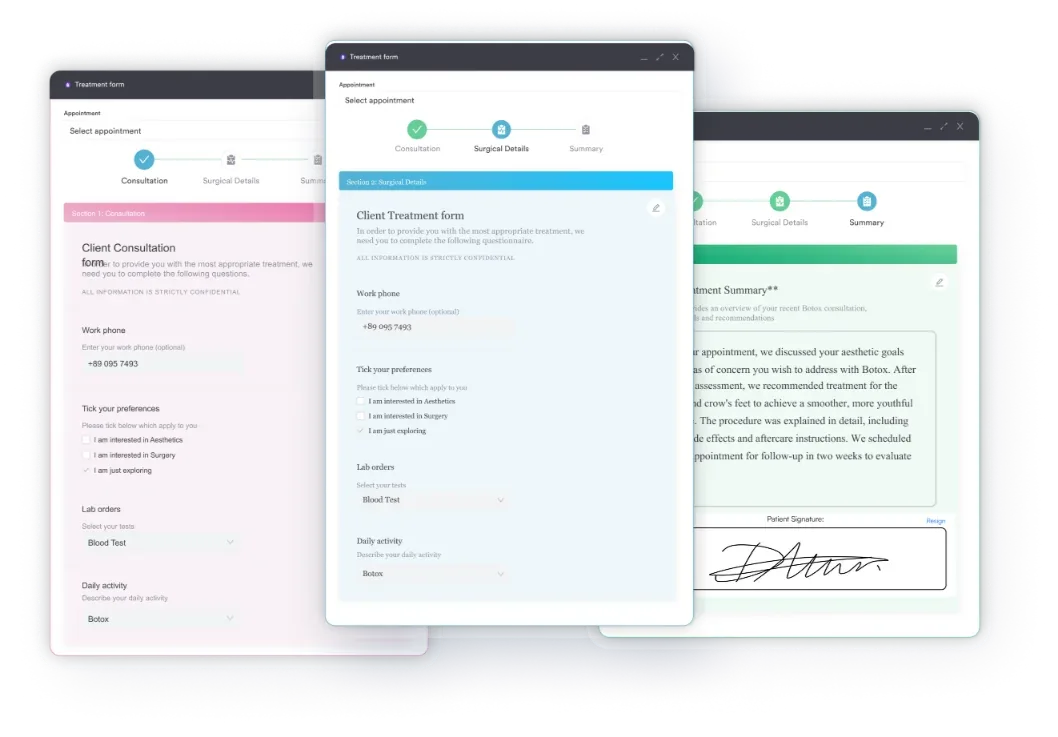
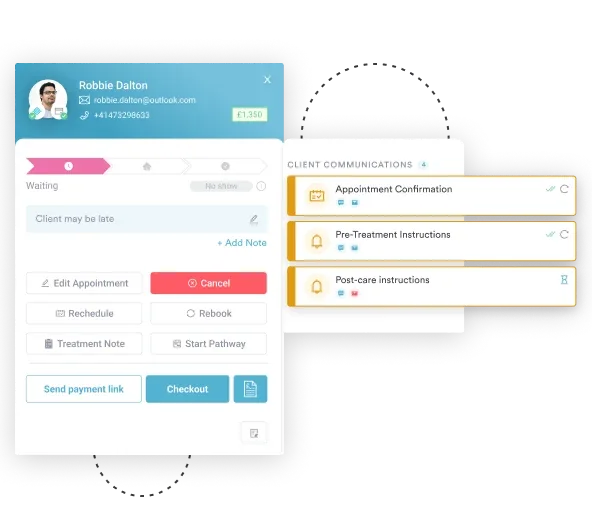
Practice management software like Pabau sends the same worksheet as a digital form before or after the appointment. Clients complete it on their phone, and the answers land in their record automatically. You can see at a glance who finished it, so nobody on your team spends the morning chasing.
Reminders go out on a schedule you set once. The journal prompt then reaches the client at 3 PM, rather than surfacing in your head at 9 PM. Every completed sheet stays on one timeline, and that’s what makes change over months visible to both of you.

Pabau’s digital forms and client portal send the worksheet to a client’s phone and file the answers in their record. You open one screen at the next session instead of hunting for paper.

A well-designed mindful eating worksheet is the most practical thing you can hand a client working on their relationship with food. The hunger scale, the trigger section, and the prompts give them a map for the six days you’re not in the room.
One trade-off is worth remembering. A worksheet nobody completes teaches nothing, so pick three days rather than seven and review what comes back without grading it. Sending it through digital tools in your practice management system turns a good handout into data you can act on.
Book a demo to see how Pabau’s digital forms and client portal get the worksheet out, back, and into the client record.

Screening for a personality disorder as well? Histrionic personality disorder test gives you a clinical framework for screening histrionic traits against other Cluster B conditions.
Suspecting health anxiety behind the symptoms? Hypochondria test template helps you evaluate excessive worry about physical symptoms and health-related anxiety systematically.
Working with a couple on communication? Love language test template helps couples identify their core preferences and strengthen communication and emotional connection.
An effective mindful eating worksheet includes a hunger-fullness scale from 1 to 10 with descriptors for each level. It also needs an emotional versus physical hunger comparison and reflection prompts for before, during, and after eating. Add space for sensory observations and a journal section for tracking patterns across meals.
Introduce the concept in session, walk through one example together, and assign three to seven days of tracking rather than every meal. Review the completed worksheets at the next session by asking what patterns they noticed, not by judging the content. Customize the worksheet to the client and send it as a digital form to improve completion.
Yes. The emotional eating section helps clients separate physical hunger from triggers such as stress, boredom, and sadness. Recognizing a trigger creates choice, so the client can decide whether to eat or use a different coping strategy. Pair it with counseling or therapy for the deeper emotional work.
No. Mindful eating is a supportive practice for building awareness and a healthier relationship with food. It is not a treatment for diagnosed eating disorders such as anorexia, bulimia, or binge eating disorder, which need specialized clinical care. If a client has an eating disorder history, consult a dietitian who specializes in eating disorders first.
Start with three to seven days of tracking at one meal a day. Consistency matters more than frequency. Once the habit is established, some clients continue weekly tracking and others move to check-ins as needed. Let the client’s capacity and engagement set the pace.
Yes, with modifications. Use child-friendly language and a simpler three-point hunger scale of hungry, just right, and too full. Focus on sensory fun rather than emotional analysis. Involving a parent or guardian helps, since the whole family can practice mindful eating together.
Eat one meal a day without a screen, and rate your hunger before you start and after you finish. Those two mindful eating techniques do most of the work on their own. Add a pause halfway through the meal to check whether you are still hungry.
The term describes conscious eating. You give full attention to the food in front of you and to your body’s signals while you eat. It covers what you notice during a meal, not what you are allowed to have.
Mindful eating is present-moment attention to the act of eating, which is why it teaches well from a structured worksheet like this one. Intuitive eating is a broader framework that rejects external diet rules and trains people to eat from internal hunger and fullness cues. One is a practice you run at a single meal. The other is a stance toward food overall, and it has no set worksheet.