Reflection questions: 14 examples and a free template
Reflection questions are open-ended prompts that guide a person through structur...

6
Last Updated: Oct 16, 2026

An accountability worksheet is a structured therapeutic tool that guides clients through self-reflection, goal-setting, and progress tracking to build personal responsibility.
Accountability worksheets are widely used in therapy, coaching, mental health treatment, and recovery settings to clarify expectations and document behavioral commitments.
Properly designed accountability worksheets increase client engagement, improve treatment outcomes, and create a clear record of goals and progress for clinical documentation.
Pabau’s digital forms and client portal enable secure distribution, completion, and tracking of accountability worksheets, turning paper-based processes into integrated clinical workflows.
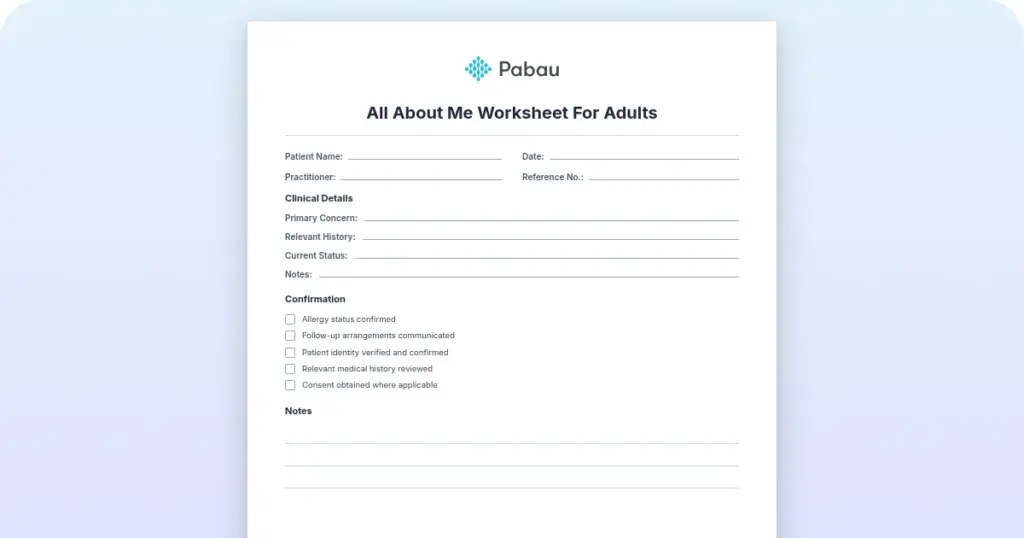
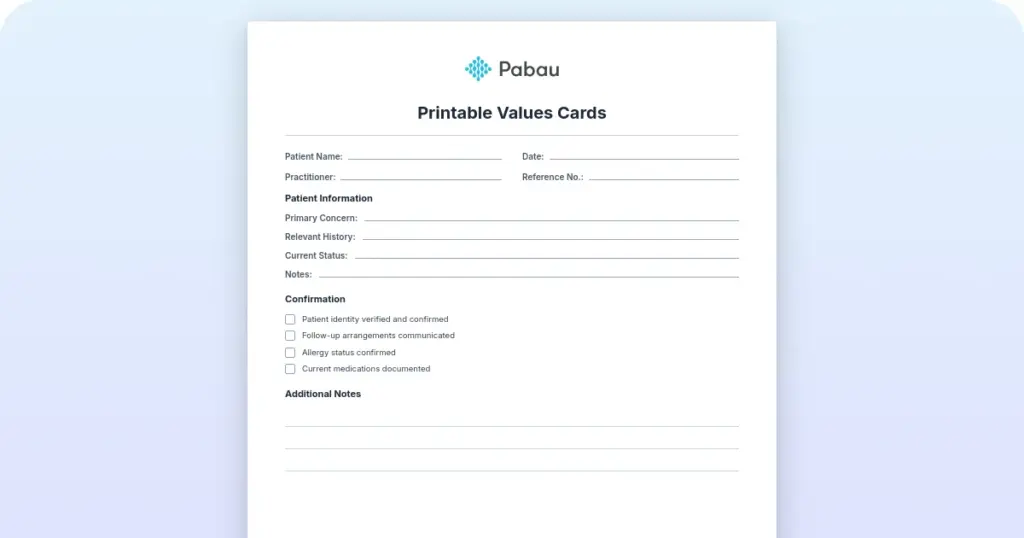
A ready-to-use, printable PDF worksheet that helps clients examine their choices, set measurable goals, identify accountability barriers, and commit to behavioral change. Use it with individual adult clients, group therapy sessions, coaching programs, or recovery settings.
Download templateMany therapists and coaches watch clients understand their problems clearly but stall before acting on them. An accountability worksheet gives clients a structured space to name what they’ll change, commit to it in writing, and track whether they followed through.
Accountability worksheets are widely used in therapy, coaching, and recovery settings. They help clients identify barriers to change, commit to concrete behavioral goals, and track progress over time, turning insight into measurable action.
This guide explains what an accountability worksheet is, how to use it with your clients, and how it fits into a comprehensive therapeutic or coaching practice.
An accountability worksheet is a structured clinical document that helps clients take ownership of their behaviors, decisions, and progress toward therapeutic or coaching goals. Unlike a passive assessment, an accountability worksheet requires active participation. The client writes down specific commitments and reflects on how they’ll follow through.
Accountability worksheets typically include sections for:
Structured goal-setting and self-monitoring sit at the center of evidence-based modalities like Cognitive Behavioral Therapy (CBT) and Motivational Interviewing (MI). The American Psychological Association recognizes CBT as an evidence-based treatment. An accountability worksheet puts that principle to work by making commitments explicit and trackable.
The structure of an accountability worksheet guides a five-step clinical process. Here’s how practitioners integrate it into real therapy or coaching sessions:
Distribute the completed worksheet securely through therapy practice management software that offers digital forms and a client portal. This gives the client a personal copy and keeps your documentation in one place.
Accountability worksheets are valuable across multiple clinical settings where behavior change is the treatment goal:
Any setting where clients commit to behavioral goals benefits from a structured accountability framework. The worksheet makes this framework tangible and documentable.
Improves treatment outcomes. Clients who write down specific commitments and review them regularly tend to follow through on more of their therapeutic homework and behavioral goals. Writing the commitment down turns a vague intention into a measurable one.
Clarifies expectations on both sides. The worksheet eliminates vague assumptions. Both therapist and client know exactly what success looks like, removing ambiguity that leads to disappointment or therapeutic misalignment.
Creates a clinical documentation record. The completed worksheet becomes part of the client record, documenting what was discussed, agreed upon, and achieved. This supports clinical quality, regulatory compliance, and continuity of care if the client sees another provider.
Increases client engagement. Writing down a commitment increases a client’s psychological investment in following through. They see themselves as active agents in their own change, not passive recipients of treatment.
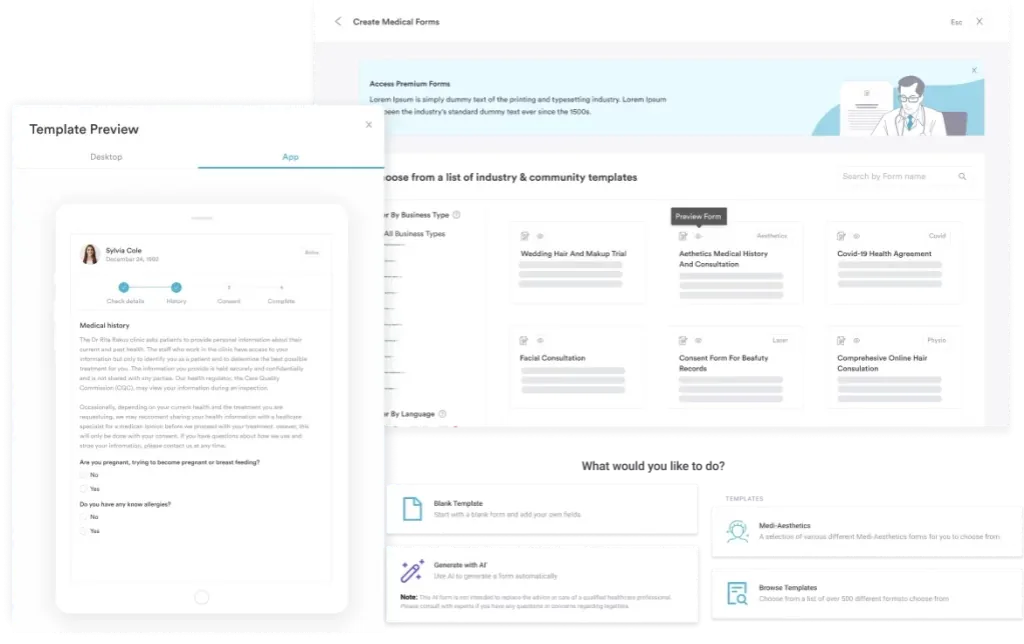
Supports HIPAA-compliant digital workflows. When worksheets are completed and stored in a secure patient portal, you cut paper clutter, keep records encrypted, and maintain the audit trails that healthcare compliance requires.
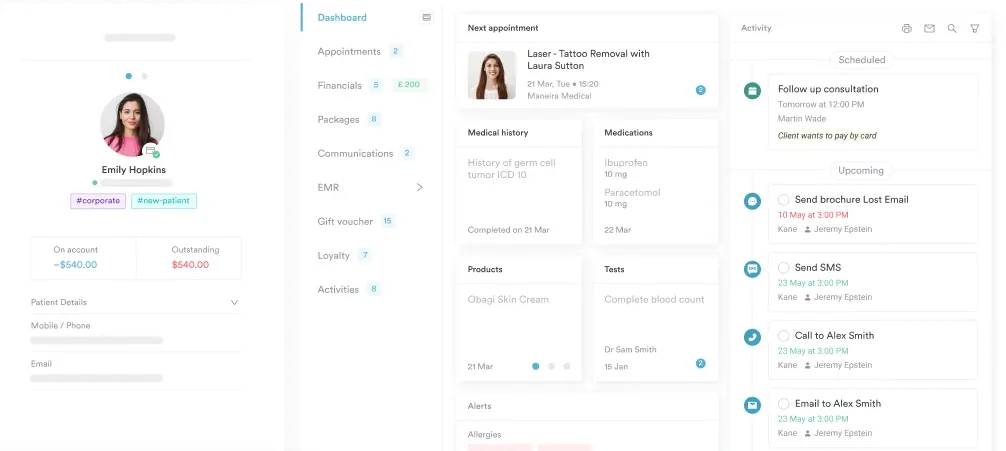
Practice management software like Pabau changes how your practice collects, manages, and tracks accountability commitments. Its digital forms and automated workflows let you send a worksheet, track completion, and file the response straight into your clinical notes, so you can retire the paper version and the manual chasing that comes with it.
Want to see a client complete an accountability worksheet in their portal and have it land in their record automatically? Book a Pabau demo.
A common clinical mistake is conflating accountability with shame or blame. True accountability is forward-looking and collaborative, the opposite of punitive.
Accountability asks: “What role did you play in this situation, and what will you do differently next time?” It assumes the client has capacity for change and invites partnership in problem-solving.
Blame asks: “Why did you mess up?” It’s backward-looking and shame-inducing, often shutting down the conversation rather than opening it.
A well-designed accountability worksheet reflects this distinction. It includes phrases like “I will…” and “My plan is…”, which keep the language active and forward-focused. Avoid questions that sound accusatory or judgmental. This framing is especially important in trauma-informed therapy and psychology practice software documentation standards.
The most effective accountability worksheets become part of the clinical record, referenced in session notes, progress tracking, and treatment planning. Modern practice management systems make that integration straightforward.
Store completed worksheets in the client’s record alongside SOAP notes and treatment plans. In progress notes, reference the accountability commitment: “Client reviewed accountability worksheet from 6/15; reported completing 4 of 5 assigned behavioral tasks this week. Adjusted next week’s target to 5/5 based on demonstrated capacity.”
This creates a longitudinal accountability narrative that informs treatment adjustments, demonstrates progress to the client, and supports clinical defensibility if outcomes are questioned. Clinical client records systems with integrated form management make this documentation seamless instead of burdensome.
Schedule accountability reviews in advance. Don’t wait for a crisis or missed commitment to revisit the worksheet. A standing 15-minute checkpoint every two weeks keeps the commitment visible and allows adjustments before small slips become major setbacks. This consistency is more effective than reactive reviews.
An accountability worksheet transforms therapy and coaching from conversation into documented, measurable action. By making commitments explicit and tracking progress systematically, you help clients move from insight to behavior change, which is the goal of therapeutic work.
The worksheet also strengthens your clinical practice by creating accountability records that support documentation standards, treatment planning, and measurable outcome tracking. When paired with secure digital tools, accountability worksheets become a cornerstone of modern therapy and coaching practice. See how Pabau builds accountability into every client interaction.

Setting up a formal coaching agreement? Coaching contract template gives you all 10 clauses in an editable PDF, including safeguarding and data protection wording.
Want feedback on how a coach is performing? Coaching evaluation form rates a coach across 10 questions covering goal clarity, feedback, participation, and session focus.
Looking for a HIPAA-compliant worksheet storage solution? Pabau’s client portal provides secure, encrypted access to accountability documents with full audit trails for compliance.
An accountability worksheet helps therapists and coaches guide clients toward specific behavioral commitments, goal-setting, and measurable progress tracking. It operationalizes therapeutic concepts like self-responsibility, behavioral change, and commitment within a documented, clinically useful format.
Yes. In group settings, accountability worksheets serve multiple purposes: clarifying individual goals within a group context, enabling peer accountability partnerships, and creating a written record of each member’s commitment. They’re particularly effective in recovery groups and coaching cohorts.
Most therapists and coaches review accountability worksheets every 1-2 weeks, aligned with session frequency. This cadence keeps commitments visible and allows quick adjustments. For intensive programs (daily check-ins), reviews can happen weekly with more frequent self-monitoring by the client.
Related but distinct. A behavioral contract is typically more formal and consequence-oriented, spelling out specific rewards or penalties tied to a behavior. An accountability worksheet is collaborative and forward-looking, designed for everyday therapeutic and coaching goal-setting across all client populations.
Completed worksheets should be scanned and stored in your practice’s HIPAA-compliant document management system, or distributed and collected via secure patient portals. Paper originals should be filed in the client’s physical chart per your practice’s retention policy.
Yes, and recommended. Digital forms enable secure distribution, automatic storage in the client record, and easy referencing in session notes. This eliminates paper handling and ensures compliance with HIPAA audit trail requirements.
An accountability coaching template is a version of the accountability worksheet adapted for life, executive, or career coaching. It turns each goal-setting conversation into written weekly commitments the client reviews between sessions, with space for the action step, the check-in date, and what success looks like.
In substance use disorder recovery, an accountability worksheet in recovery documents relapse-prevention commitments, names high-risk triggers, and reinforces support-group participation. Clients record the coping strategy they will use for each trigger, which keeps the plan concrete between sessions.
Effective accountability questions are forward-looking rather than blaming. Ask what role the client played in a situation and what they will do differently next time, what one specific action they will commit to this week, and which barrier is most likely to stop them and what their plan is for it. These prompts keep the language active and collaborative.