Amniotic Injection Therapy: Clinical Guide for Practices
Roughly 33.2 million US adults live with osteoarthritis. Many of them reach a po...

Last Updated: Sep 23, 2026

HydraFacial is a non-invasive facial treatment combining cleansing, exfoliation, extraction, and serum infusion to refresh and hydrate skin
Avoid sun exposure, makeup for 24 hours, retinoids, exfoliating acids, heat, and strenuous exercise immediately after treatment
Results typically last 4-6 weeks; monthly treatments are recommended for ongoing maintenance and best outcomes
Pabau automates aftercare delivery via client portal messaging, reducing manual follow-up and improving patient compliance with recovery instructions
A comprehensive aftercare template for HydraFacial treatments, covering immediate post-treatment care, product recommendations, avoidance guidelines, and recovery timelines for aesthetic clinics and med spas.
Download templateHydraFacial is a non-invasive aesthetic treatment that cleanses, exfoliates, extracts impurities, and infuses skin with serums in a single session. Proper hydrafacial aftercare is essential to maximising treatment results, minimising complications, and ensuring patient satisfaction. This guide covers everything your clinic team needs to communicate to patients-and how to automate those instructions for better compliance. If HydraFacial sits alongside injectables or laser work at your practice, our ranking of the top med spa software compares scheduling and retail tools.
Understanding the treatment process helps clinicians explain aftercare to patients confidently. The HydraFacial device uses vortex-fusion technology to perform four key steps: cleansing removes surface debris and prepares skin, exfoliation sloughs away dead cells to reveal fresh skin, extraction uses gentle suction to clear pores of oil and impurities, and serum infusion delivers hydrating and nourishing serums tailored to the patient’s skin type and concerns.
Because the treatment exfoliates the outer skin layer and leaves skin more receptive to topical products, the post-treatment period is critical. Skin is temporarily more sensitive to sun, heat, friction, and active ingredients. Communicating clear aftercare instructions immediately after the appointment-ideally via digital forms in your patient portal-ensures patients follow the protocol and achieve optimal results.

Before a HydraFacial appointment, patients should prepare their skin to minimise irritation and maximise treatment efficacy. In the 48 to 72 hours before treatment, patients must avoid retinoids (including retinol), exfoliating acids (AHA, BHA, glycolic acid), and vitamin C serums-all of which can sensitise skin and increase post-treatment redness. They should use a gentle cleanser and avoid other exfoliating treatments such as scrubs or microdermabrasion.
On the day of treatment, arrive with clean skin free of makeup and sunscreen so the provider can assess baseline skin condition. Avoid strenuous exercise or heat exposure (sauna, steam room) the morning of the appointment, as these can dilate pores and increase skin sensitivity.
The first two days post-treatment are when skin is most vulnerable. This is the critical window where sending aftercare instructions via the patient portal ensures immediate compliance-before patients leave the clinic or forget what was discussed.
Mild redness and slight sensitivity are normal immediately after treatment and typically resolve within a few hours. Some patients experience temporary flushing or a warm sensation-this is expected and not cause for concern.
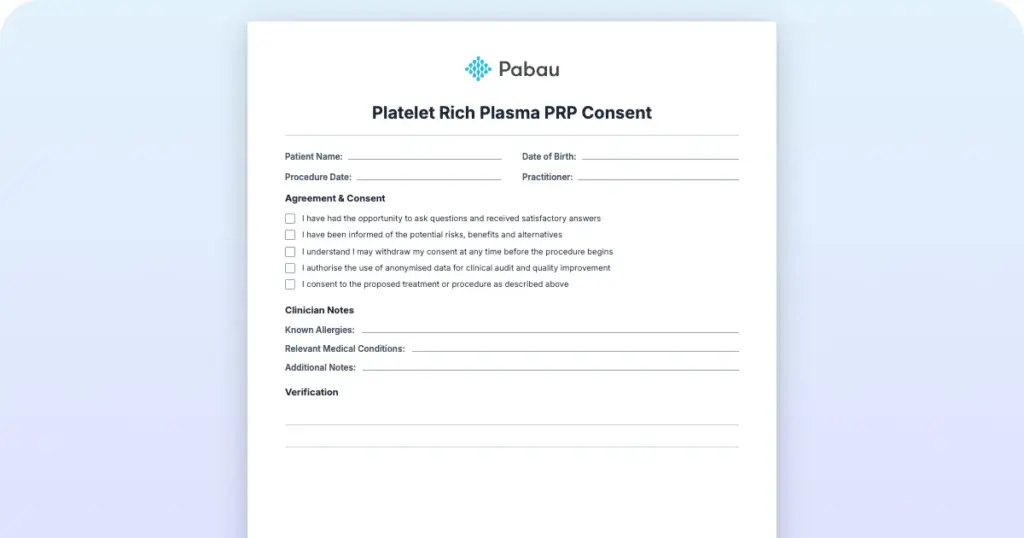
A skin clinic platform stores completed forms alongside consents and before-and-after photos.
Certain products and activities can compromise post-treatment skin recovery. Clear avoidance guidance prevents patient-initiated damage and reduces the risk of complications.
Recommend that patients resume active skincare ingredients gradually. By day 5-7, they can cautiously reintroduce one product at a time-waiting 2-3 days between introductions to monitor for sensitivity. This staged approach prevents barrier damage and allows skin to stabilise fully.
Guide patients toward product categories and ingredients that support healing rather than specific brands, allowing flexibility and respecting existing skincare routines.

By day 5-7, patients can reintroduce their regular skincare routine one product at a time, provided it does not contain active exfoliants or retinoids.

See how Pabau’s client portal and automated workflows can deliver consistent aftercare instructions, improve patient compliance, and boost your treatment frequency.

Clear guidance on expected versus concerning symptoms empowers patients to seek help promptly if needed. Include contact instructions in your automated pre- and post-care messaging so patients know how to reach your team if questions arise.
Normal reactions (resolve within 24-48 hours): mild flushing or redness, slight warmth or tingling, temporary sensitivity to touch, minimal dryness or light flaking, and slight tightness. These are expected consequences of exfoliation and require no intervention.
Contact your clinic if: redness persists beyond 48 hours, blistering or severe swelling occurs, itching or hives appear (possible allergic reaction), persistent stinging when applying water or moisturiser, signs of infection (pus, increasing warmth, lymph node swelling), or unusual pigmentation changes. Most reactions resolve quickly with gentle care, but safety-flagged symptoms require clinical assessment.
HydraFacial results typically last 4 to 6 weeks, depending on the patient’s skin type, sun exposure, skincare routine, and lifestyle factors. To extend results and maintain skin quality, recommend a consistent daily routine: gentle cleansing, hydrating serum, moisturiser, and SPF during the day; evening routine without active ingredients; monthly HydraFacial treatments as a maintenance schedule; and consistent sun protection (the primary driver of skin ageing).
Patients who commit to this regimen typically see cumulative improvements: increased hydration, improved skin texture, reduced pore appearance, and a radiant glow that compounds with repeated treatments.
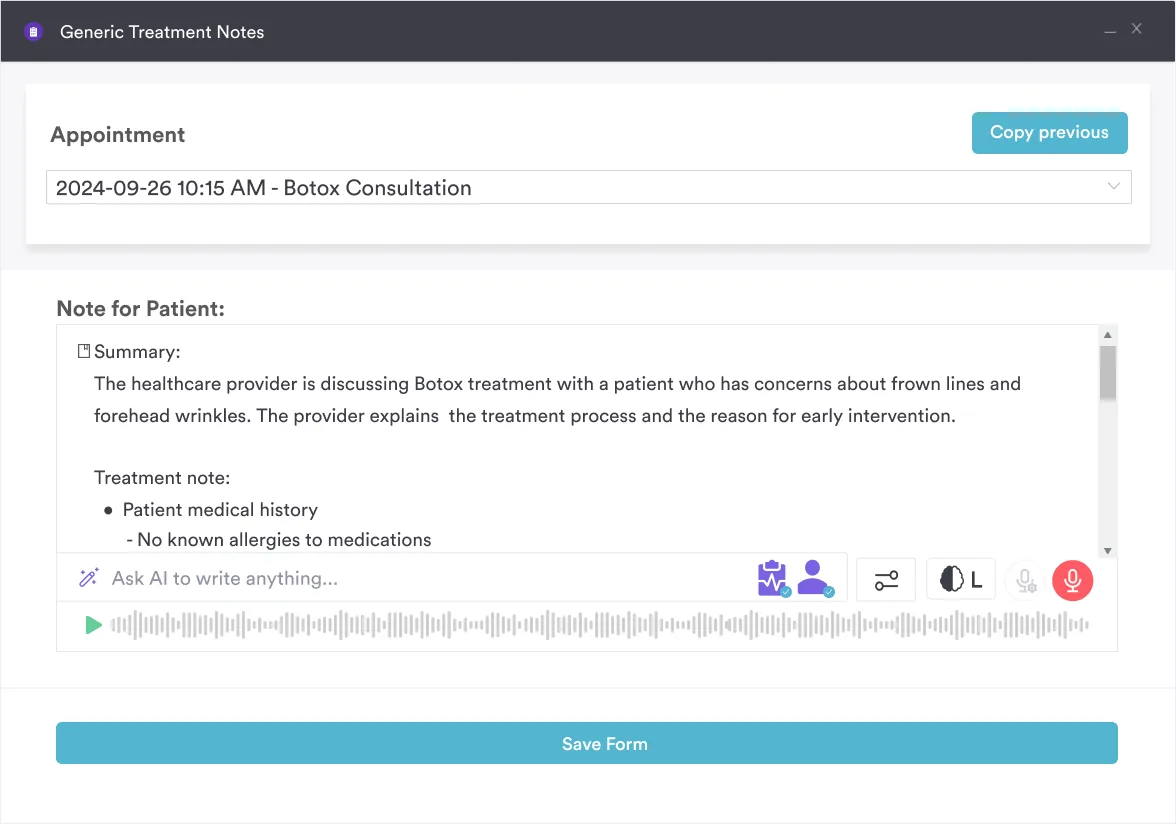
Manual aftercare follow-up-phone calls, printed sheets, repeated verbal instructions-is time-consuming and inconsistent.
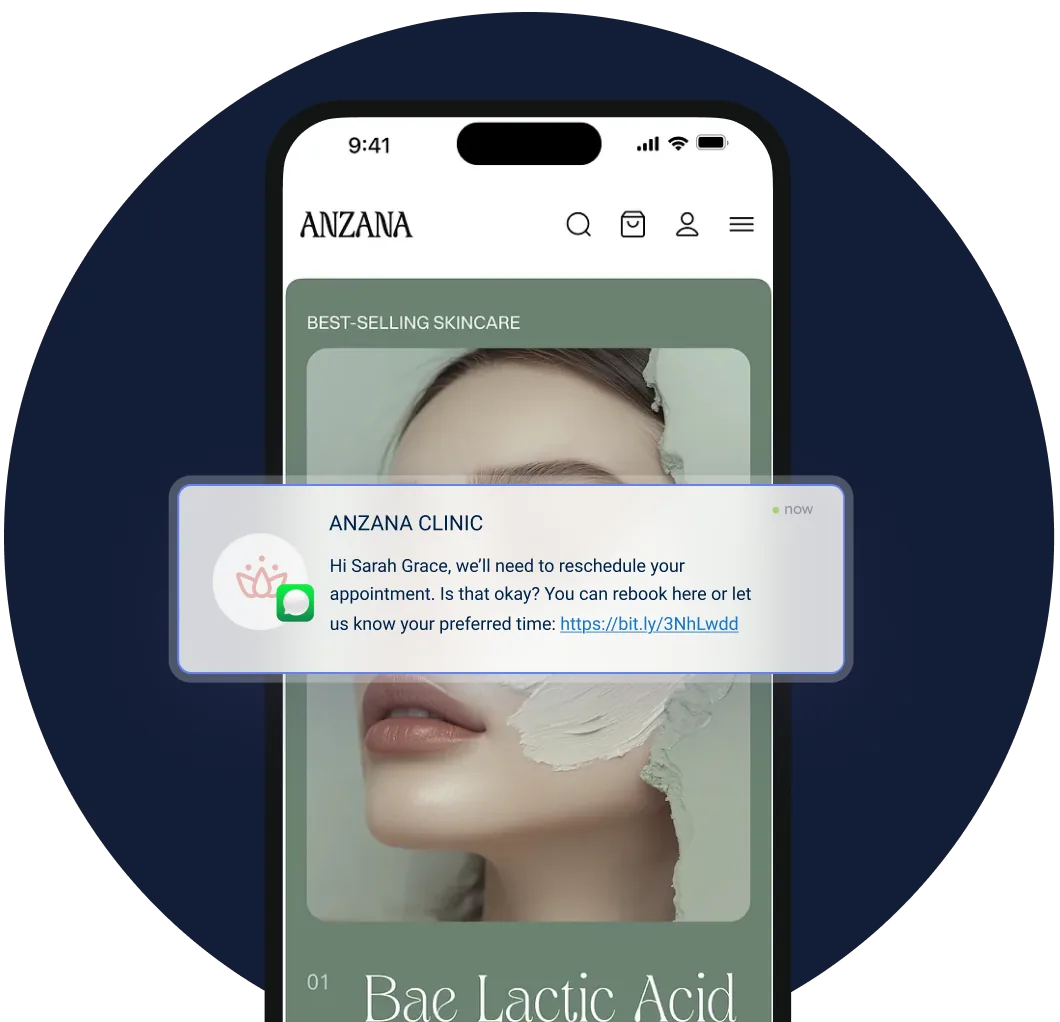
Your clinic can attach the downloadable HydraFacial aftercare template to appointment confirmation emails, post-treatment SMS messages, and client portal documents. Patients receive instructions at the moment they need them-before leaving the clinic or the day after-reducing confusion and improving compliance. This approach reduces no-shows to follow-up appointments and increases treatment frequency without requiring staff to repeat the same conversation dozens of times per week.
Proper HydraFacial aftercare is the difference between satisfied patients who return for monthly treatments and confused patients who experience preventable complications and never rebook. A downloadable template ensures your team communicates consistently, reduces liability, and removes guesswork from patient recovery. Pairing that template with Pabau’s automated aftercare workflows means every patient gets personalised follow-up without staff overhead-so your clinic scales without losing the care quality that builds loyalty. Medical spa management software links the consultation, the consent and the treatment into one sequence.

Looking to simplify payment processing at checkout? payment processing tools for med spas reviews payment processing tools that help med spas offer a smooth, pain-free checkout experience.
Need to send a professional service quote? writing professional med spa quotes gives practical steps to build trust and close more bookings with clear, professional quotes.
Want to keep clients coming back? Best med spa marketing software compares tools for automations, campaigns, retention, and patient engagement.
HydraFacial aftercare is the set of instructions and practices patients follow after a HydraFacial treatment to support skin healing, extend results, and minimise complications. It covers immediate post-treatment steps (avoiding makeup, sun, heat, exercise), product recommendations (gentle cleansers, hydrating serums, SPF), and avoidance of active skincare ingredients (retinoids, exfoliating acids) for 5-7 days.
HydraFacial results typically last 4 to 6 weeks, depending on skin type, sun exposure, and skincare routine. Monthly treatments are recommended for ongoing maintenance and cumulative skin improvements. Patients who commit to daily SPF and hydrating skincare see results last toward the longer end of that range.
No, skip makeup for at least 24 hours after treatment. Makeup can trap bacteria and irritants on newly exfoliated skin, increasing redness and infection risk. After 24 hours, non-comedogenic, fragrance-free makeup applied gently is acceptable.
Yes, mild redness and flushing are normal immediately after treatment and typically resolve within a few hours. Temporary sensitivity and warmth are expected consequences of exfoliation. Redness persisting beyond 48 hours or accompanied by blistering or itching should be reported to your clinic.
Avoid strenuous exercise for 24 hours post-treatment. Sweating irritates freshly exfoliated skin and can trigger sensitivity. Light activity such as walking is acceptable; return to gym sessions and intense workouts after 24 hours.
Immediately post-treatment, skin may appear slightly flushed or feel dry as the exfoliation process removes the protective outer layer temporarily. This is normal and typically resolves within 24-48 hours. Consistent hydration and sunscreen use during this window prevent lasting dryness and support optimal results. If dryness or redness persists beyond 48 hours, contact your clinic.