Despina Petrushevska
Nursing care plan for aggressive behavior
A nursing care plan for aggressive behavior is a structured clinical document fo...

2
Last Updated: Oct 26, 2026
Free PDF 2 pages, print-ready Clinician-reviewed
This guide is written for the therapist, counselor, or coach who has to run the boundary conversation, not just define it. It covers how to introduce the checklist in a session, which boundary types to walk through, the example statements clients can borrow, and how to document the work afterward.
With practice management software like Pabau, clients can complete it between sessions, and their responses wait in the clinical record for the next appointment.
A free, printable relationship boundaries checklist template for therapists, counselors, and coaches to help clients evaluate their boundaries across emotional, physical, digital, financial, and other everyday dimensions. Includes self-assessment prompts and discussion starters for therapy sessions.
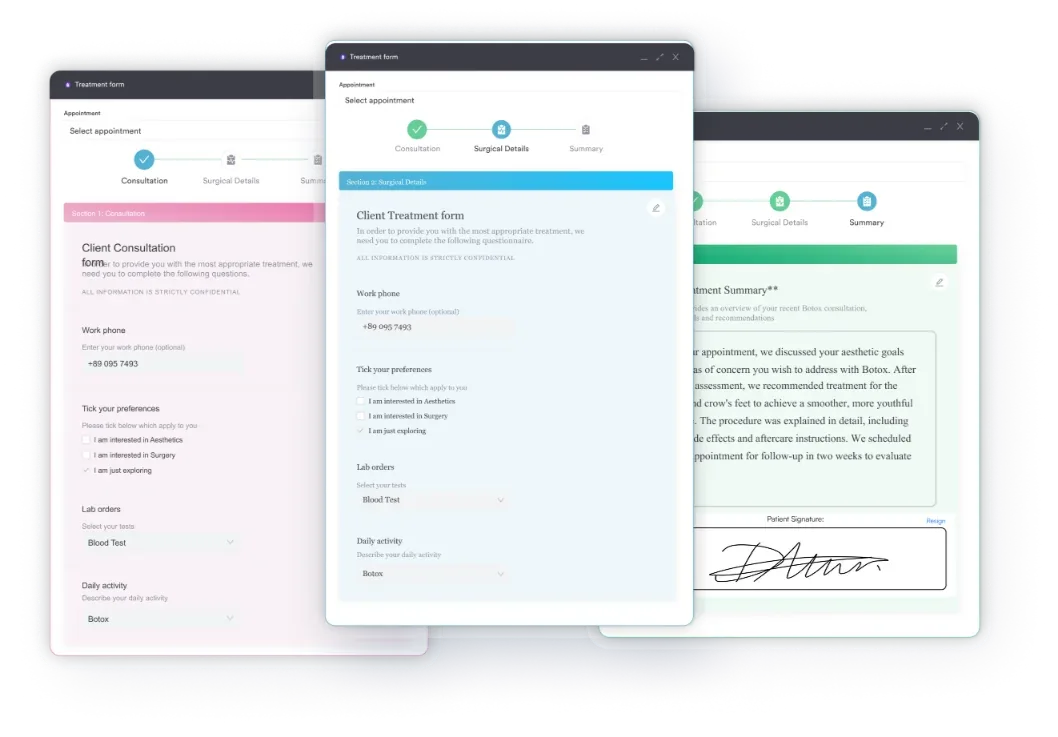
Upload this PDF, or any form you already use, and Pabau's AI Form rebuilds it with tick boxes, text fields and a signature. Attach it to the treatment once, and every patient gets it on time.
AI Form rebuilds the consent, history and aftercare forms you already use. You review each one, then publish.
Patients complete forms on their phone before they arrive, so the front desk stops retyping paper.
Every signed form is versioned and attached to the treatment record, ready when you need it.
Set how long a consent stays valid. Returning patients skip forms they have already signed.
Supports HIPAA and GDPR compliance AES-256 encryption 4.8 on G2 4.7 on Capterra Trusted by 4,000+ practices worldwide

A relationship boundaries checklist is a structured assessment tool that helps clients identify, communicate, and maintain healthy limits across the everyday domains a couple negotiates — emotional, physical, digital, time, and financial.
Healthy boundaries enable people to say ‘no’ while remaining open to intimacy; unhealthy boundaries (either rigid or porous) lead to relationship distress, resentment, and reduced wellbeing.
Therapists use this checklist in sessions to help clients distinguish between their own needs and those of their partner, creating a foundation for more satisfying relationships.
Pabau’s digital forms feature allows therapists to deliver the checklist to clients electronically and track their responses directly in the clinical record.
A relationship boundaries checklist is a structured assessment tool that helps individuals and couples evaluate how they set and maintain limits in their relationships. This template guides clients through identifying healthy versus unhealthy boundary patterns, making it easier to recognize where they might be overgiving, underprotecting themselves, or responding to partners’ boundary violations.
Relationship boundaries span several domains, from emotional and physical closeness to digital habits, shared time, and financial decisions. The downloadable checklist turns these into eight practical sections a couple can work through, from personal space and communication to future planning and conflict resolution.
According to HelpGuide’s mental health content, without healthy boundaries, relationships can become toxic, and individual wellbeing suffers. Someone with healthy boundaries can say “no” to others when they want to, but is also comfortable opening themselves up to intimacy and close relationships.
This is where the relationship boundaries checklist becomes clinically valuable. Rather than relying on vague definitions, the checklist gives therapists and clients a shared language to discuss specific, concrete examples of boundary-setting in action. Clients need to know exactly what to expect and what their role is.
Boundaries are easier to set when a client can name the domain a limit belongs to. Therapists generally work across these types:
The downloadable checklist turns these domains into practical sections a couple can work through together: personal space and time, communication, emotional boundaries, social interactions, intimacy, financial agreements, future planning, and conflict resolution.
The fastest way to help a client set a boundary is to show them what one sounds like. These example statements use “I” language, which keeps the focus on the client’s own needs rather than a partner’s faults. Offer them as starting points, then help the client reword each one to fit their situation.
Using the checklist effectively means breaking it into structured, manageable steps that fit your therapy workflow.
Delivering this checklist via digital intake forms means clients can complete it between sessions, giving them time to reflect. Therapists then have the responses in the clinical record, ready to discuss.
Any therapist, counselor, coach, or clinical practitioner working with individuals on relationships can use this checklist. It’s particularly valuable for:
Any therapy practice management software should make it easy to store, retrieve, and refer to client checklists across sessions. This ensures continuity and helps track progress over time.
Clarity and specificity: Rather than discussing boundaries in abstract terms, the checklist anchors conversations in concrete examples. Clients leave sessions knowing exactly what they do and don’t want in their relationships.
Self-awareness: Many clients have never examined their boundaries systematically. The checklist reveals blind spots: areas where they’ve accepted unhealthy patterns or where they might be too rigid. This is the foundation for change.
Improved communication: Once clients identify their boundaries, they can communicate them more clearly to their partners. Many therapists find that clearer emotional boundaries help lower relationship distress, and clients who reach this clarity often report feeling more satisfied in their relationships.
Accountability and progress tracking: Storing the completed checklist in your clinical record allows you to review it at future sessions. You can see which boundary-setting efforts worked and where clients need additional support.
Reduced therapist burden: The checklist structures a potentially difficult conversation, so you’re not starting from scratch. Your clients have already begun the reflection process, and you can focus the session on deeper work rather than basic psychoeducation. Pairing it with a resilience worksheet gives clients practical skills for holding a new boundary once they’ve named it.

Deliver digital forms to clients electronically, track responses in their clinical record, and reference checklist results in every session. Let Pabau handle the admin so you can focus on therapy.

Not all clients struggle with the same boundary patterns. Understanding the three main styles helps therapists tailor their guidance.
Most clients don’t fit neatly into one category. A client might have healthy boundaries at work but porous boundaries with family, or rigid boundaries around emotions but porous boundaries around time. The checklist makes these mixed patterns visible so therapy can address them accurately.
In couples therapy, the checklist gives partners a shared starting point for dialogue. They complete it separately, then discuss where they agree and disagree. One partner might mark “My partner respects my need for time alone” as healthy, while the other marked the same item as unhealthy because they feel their partner withdraws too much.
When a couple is separating rather than repairing, a divorce worksheet keeps boundary conversations separate from co-parenting and asset decisions.
These discrepancies give couples a place to start. Boundary-setting works best when partners aim for mutual understanding rather than trying to win or prove each other wrong. A therapist using the checklist guides partners toward boundaries that work for both of them, which strengthens the relationship overall.
Digital delivery via client portal resources means partners can fill out the checklist from home, at their own pace, without the pressure of sitting across from each other while writing. This often yields more honest responses.
Once you’ve used the checklist with a client, documenting the work properly is critical. Your notes should capture which boundaries were discussed, what the client learned, and what actions they’ll take. Good clinical documentation supports continuity of care and protects you in case of any future disputes about the care provided.
Reference the completed checklist in your SOAP notes or progress notes. For example: “Client completed relationship boundaries checklist; identified porous boundaries around time and finances, rigid boundaries around emotional expression. Discussed patterns with mother; prioritized one boundary-setting goal: communication with partner about money decisions.”
By linking the checklist to your written progress notes, you create a full record. This approach to clinical documentation best practices ensures you and any colleague covering your cases can understand exactly what was discussed and why.
When working with clients who have experienced abuse or domestic violence, boundary-setting is especially sensitive. The checklist must never be used to pressure a client into setting boundaries before they’re ready. Safety comes first.
If a client mentions feeling unsafe with their partner or experiencing coercion, pause the boundary-work conversation and connect them with appropriate resources. The National Domestic Violence Hotline provides crisis support and safety planning. Trauma-informed therapy always prioritizes safety over agenda.
For clients with a history of trauma, rigid boundaries may feel protective, and porous boundaries may stem from learned survival strategies (“keep the peace by giving in”). A compassionate therapist honors these patterns while gently exploring whether they still serve the client’s wellbeing.
An ACE questionnaire can help surface the early experiences behind a client’s current boundary style before you start this work.
The most effective use of this checklist happens when it’s built into your practice’s workflow. In mental health EMR software (an electronic medical record system built for therapy), you can store the PDF in your client portal, assign it as a pre-session task, track when clients complete it, and reference it in every relevant session going forward.
They create accountability for both therapist and client. Clients feel supported when they know their work is documented and valued. Therapists gain a complete picture of client progress and can measure outcomes more reliably.
Boundary work isn’t a one-time conversation. Revisit the checklist every three to six months, or when a client enters a new relationship or a new phase of an existing one. Early on, couples often have idealized views of boundaries. As the relationship deepens, harder challenges surface.
By revisiting the checklist, you can measure progress, identify new issues, and celebrate wins. A client who marked “rigid” in emotional boundaries last year might now mark “healthy” — that’s evidence of therapeutic progress worth acknowledging.
Managing paper checklists doesn’t scale. As your practice grows, you need a central system where clients can access tools, complete them digitally, and therapists can pull results into clinical notes in seconds. This is where practice management software becomes essential.
Look for software that lets you upload the checklist as a form, send it to clients via the patient portal, and automatically capture their responses in the clinical record. This workflow eliminates manual data entry, reduces lost paperwork, and ensures every clinician on your team has access to the same information.

Working on emotion regulation with clients? ABC PLEASE handout covers all eight DBT skill components for helping clients manage intense emotions.
Tracking behavioral changes across sessions? Aberrant behavior checklist offers a scoring guide and five subscales for psychology, psychiatry, OT, and ABA settings.
Working with families of children with ADHD? ADHD handout for parents covers the three DSM-5 ADHD types and home strategies practices can share with families.
The relationship boundaries checklist is one of the most practical tools a therapist can use. It transforms vague boundary discussions into concrete, actionable insights. Clients leave sessions understanding not just what healthy boundaries are, but where they personally need to set limits and how to communicate those limits to their partners.
Whether you’re working individually, with couples, or in groups, this checklist provides the structure and clarity that leads to real change.
Store it in your practice management system, send it to clients via your client portal, and reference it in every relevant session. The result is faster progress, better documentation, and stronger therapeutic relationships. Ready to streamline your assessment process? Book a demo to see how Pabau makes managing client tools effortless.
A healthy boundary is a clear limit that respects both your own needs and your partner’s autonomy. It means you can say ‘no’ without guilt and remain open to intimacy. For example: “I’m happy to listen to your work stress, but I need you to ask before venting for more than 20 minutes, so I have space for my own thoughts.”
Yes. With therapy, awareness, and practice, clients can shift from rigid or porous patterns toward healthier boundaries. A person who grew up in an enmeshed family might start with porous boundaries but learn to say ‘no’ through consistent effort and support.
Both. In individual therapy, it helps clients clarify their own boundary needs and patterns. In couples therapy, it creates a shared conversation starter where partners can discuss differences and negotiate compromise. You might even use it in both contexts with the same couple.
The checklist is a tool, not gospel. If a client says “I don’t care about digital boundaries” or wants to focus on a boundary type not listed, honor their priorities. Customize the checklist to match each client’s relational context and values.
Pause the checklist conversation immediately. Prioritize safety planning and connect the client with domestic violence resources like the National Domestic Violence Hotline (1-800-799-7233). Document your findings and consult your clinical supervisor or legal advisor as needed. Abuse work requires specialized training and crisis protocols.
Most frameworks start with five core types: emotional, physical (including sexual), digital, time, and financial. Many therapists add intellectual and material boundaries, so treat five as a starting point rather than a hard limit — the checklist covers the domains most couples actually negotiate.
Healthy boundaries let a person say no without guilt while staying open to closeness. Unhealthy boundaries tend to be either rigid (keeping others at a distance) or porous (over-giving and losing track of your own needs). Boundary work aims to move mixed patterns toward the healthy middle.