Crisis safety plan template
A crisis safety plan is a short, personalized written plan that a patient and cl...

3
Last Updated: Oct 19, 2026
A mental health self-care checklist is a structured daily tool for tracking the habits that support emotional well-being. Those habits range from sleep and movement to connection and journaling. Clinicians often recommend it because it turns general advice into specific, repeatable actions.
A ready-to-use checklist covering daily physical, emotional, and social self-care habits, weekly and monthly check-ins, and a clinician section for therapists and mental health professionals.
Download template
A mental health self-care checklist is a daily tracker for physical, emotional, and social habits.
Daily items work best when grouped into physical, emotional, and social categories.
Therapists need a separate checklist covering caseload and compassion fatigue.
Pabau, the practice management platform we build, can send the checklist to patients as a digital form before sessions.
A mental health self-care checklist is a printable or digital list of daily and weekly habits that support emotional well-being. It records whether each habit happened, so patterns become visible over time.
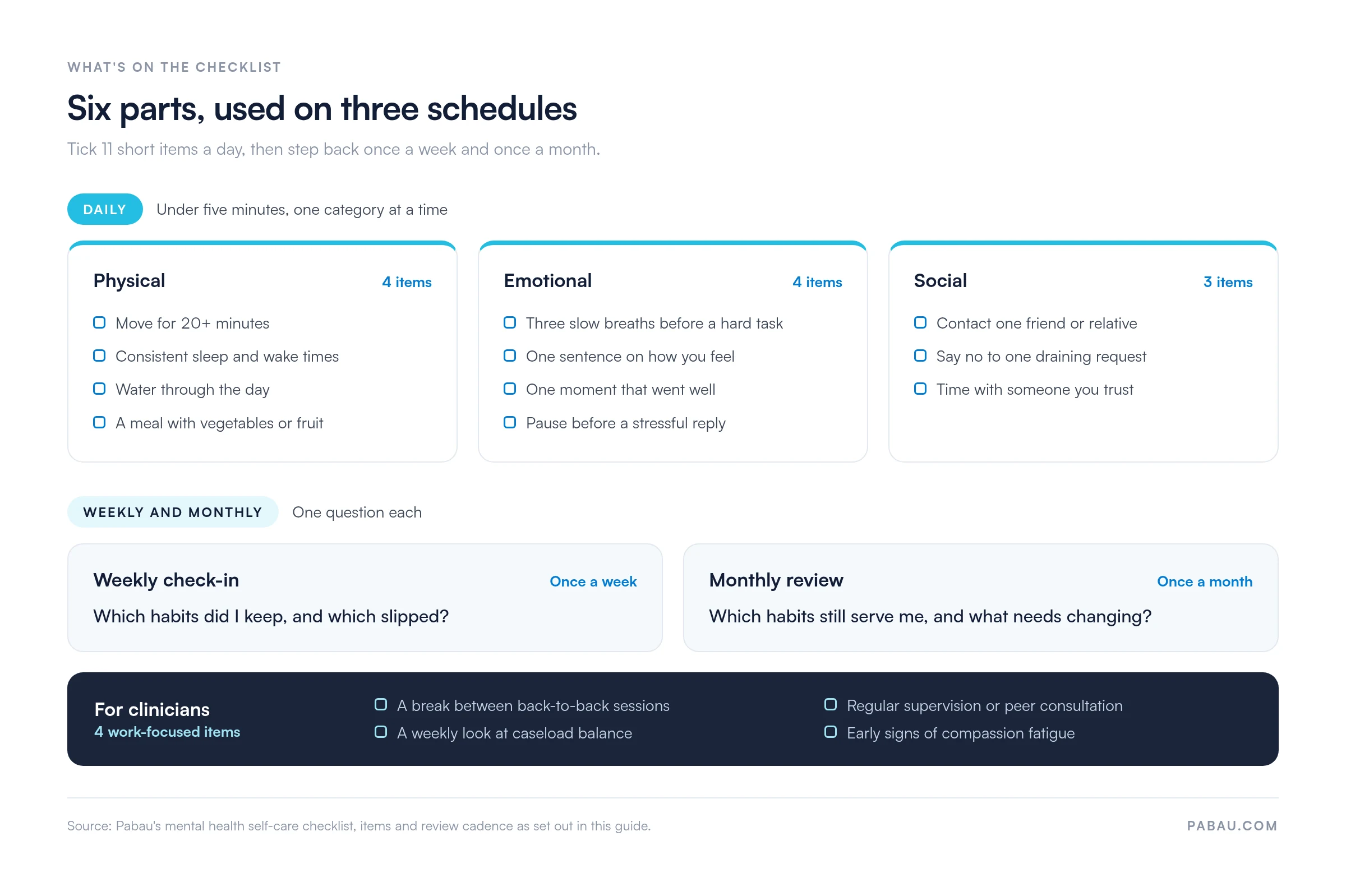
The checklist doesn’t diagnose or treat a condition. It gives patients and practitioners a shared, concrete picture of routine, which makes conversations in session more specific. It has six parts, used on three different schedules, as the overview below shows.
Regular physical activity is associated with improved mood and fewer symptoms of anxiety and depression, according to the National Institute of Mental Health. Sleep matters too, because poor sleep is linked to worse mental health symptoms. A sleep hygiene worksheet helps pin down which evening habits get in the way.
Mindfulness practices may help reduce stress and anxiety, although effect sizes vary between people. Journaling may support emotional regulation, and social connection is associated with better well-being.
A short daily list is easier to keep than a long one. The items below are grouped by category so you can tick off one area at a time.
Daily items show what happened today. Weekly and monthly reviews show whether the routine is sustainable. Once a week, ask which habits you kept and which ones slipped.
If two questions feel too loose, a mental health check-in worksheet gives the weekly review its own page.
Therapists and mental health professionals are at elevated risk of compassion fatigue and burnout, a finding well documented in the occupational health literature. A checklist built for clinicians looks at the work itself as well as personal habits. Our guide to therapist burnout covers the warning signs and stages in more depth.
If the last item keeps coming up, a short compassion fatigue test gives you a clearer read on how you’re doing.
Start with one daily item in each category rather than the full list. A long list is hard to sustain past the first week, so keep the checklist short enough to complete in under five minutes.
Turning a checklist into a plan means choosing the items that fit your week. Start with the three habits you already do most days, then add one new habit at a time. Our self-care plan template gives each area of the plan its own section.
Self-care supports well-being, but it does not replace assessment or treatment. If low mood, anxiety, or sleep problems persist for several weeks or affect daily functioning, speak with a qualified professional. The SAMHSA National Helpline offers free, confidential referral information in the United States.
If someone is at immediate risk of harm, contact emergency services or a crisis line straight away. In the United States, the 988 Suicide and Crisis Lifeline can be reached by calling or texting 988.
On paper, a self-care checklist goes home after a session and often doesn’t come back. The next appointment then starts from the patient’s memory of the week instead of a record.
Pabau sends the checklist to patients as one of its digital intake forms before a session. The completed form is stored against the patient record, next to session notes. You can compare this week’s answers with last month’s without digging through a folder.
Forms can go out automatically ahead of a booked session, so nobody has to remember to send them. The same system runs scheduling, notes, and payments as part of Pabau’s therapy practice management software.
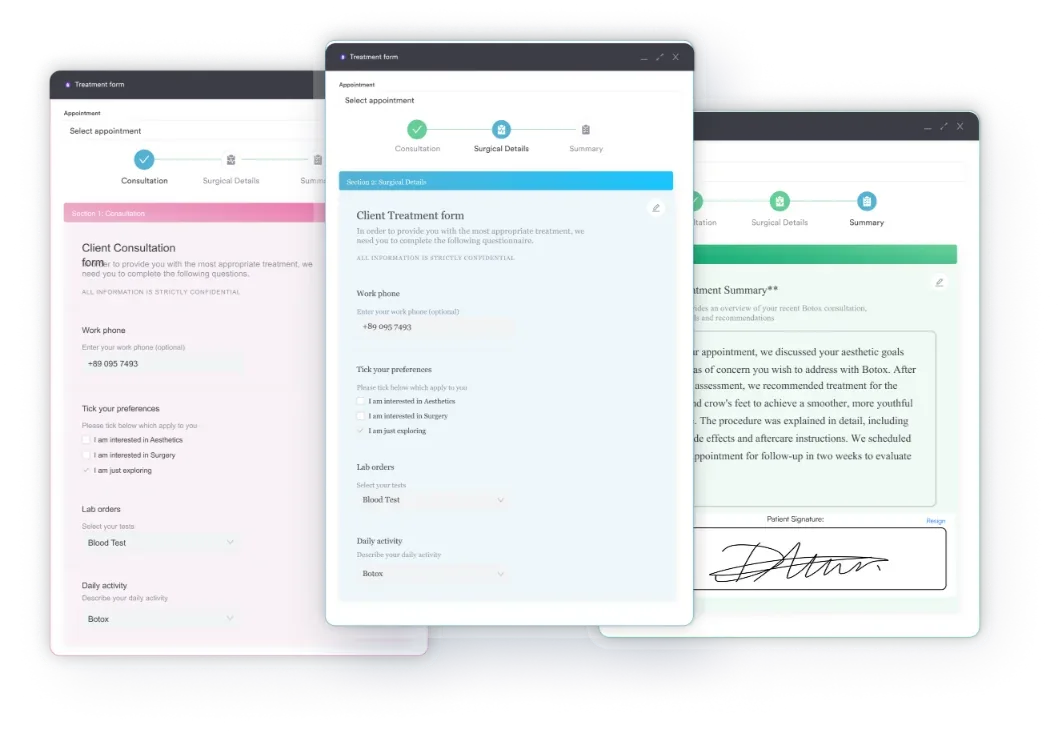

Pabau sends the checklist as a digital form ahead of each appointment. Answers land in the patient record, so you can review patterns in session.

Start small. Three daily items you keep for a month will tell you more than a full page you drop by Thursday. The weekly check-in then shows which items deserve a place.
If you’re a therapist, run the clinician list alongside your own. Breaks, supervision, and caseload balance tend to slip first in a busy week, and they’re the hardest to spot from the inside.
If you hand the checklist to patients, its value comes from seeing it again before each session. Book a demo to see how Pabau sends self-care checklists ahead of appointments and keeps every answer in the patient record.

Want to see self-care as a whole? Self-care wheel maps eight areas of self-care so you can spot the one your checklist leaves out.
Need a worksheet for session? Self-care worksheet gives patients a structured page to plan self-care with their therapist.
Looking for emotional self-care ideas? Journal prompts for mental health offers prompts that make the daily journaling item easier to start.
Want to track habits over months? Habit journal template records new habits once your three daily items are routine.
Worried about burnout at work? Oldenburg Burnout Inventory measures exhaustion and disengagement with a validated scoring guide.
A mental health self-care checklist is a structured list of daily and weekly habits that support emotional well-being. It records which habits were completed so patterns can be reviewed.
Include physical items such as movement and sleep, emotional items such as journaling or mindfulness, and social items such as connection. Keep the list short enough to finish daily.
A checklist records what you did each day. A plan sets out which habits you intend to build and when, using the checklist as its raw material.
Review daily items at the end of each day and check overall patterns once a week. A monthly review helps decide which habits to keep.