Antipsychotic medication list
An antipsychotic medication list is a structured reference that organizes psychi...

3
Last Updated: Oct 13, 2026
A habit journal is a structured daily record that helps patients track behaviors, spot patterns, and measure progress toward their goals. Patients complete it on paper or through digital forms between sessions. You then see what happened each day, rather than only what they remember in the room.
The free template below suits practitioners in mental health, psychology, therapy, wellness, and coaching. This guide covers how to introduce it, who it suits, and how to review entries with patients.
Three dated daily entries, each with done or skipped checks for morning routine, physical health, mental well-being, productivity, and self-care. Every entry closes with a reflection on mood, wins, challenges, and areas for improvement.
Download template
A habit journal records daily behaviors to reveal patterns over time.
Patients complete it between sessions, capturing behavior as it happens.
Limit each patient to one to three trackable habits to keep the journal focused.
Expect a new habit to take around 66 days to feel automatic, not 21.
Digital forms let patients complete the journal before each appointment.
A habit journal is a patient-completed record of specific behaviors, usually logged daily against an agreed goal. It sits between a diary and a clinical record.
Entries are short and factual, and they focus on what the patient did or avoided. That makes them far easier to review than open-ended notes. Where a patient only needs a yes-or-no log, a simpler habit tracker template does the job.
Why it works: self-monitoring has a long history in behavior-based approaches, as summarized by the American Psychological Association. That is why the journal fits behavior modification programs as well as general wellness work.
Where it stops: the journal is the patient’s self-report, so it sits outside the clinical record. Keep your clinical note standards as they are, and use the entries to inform session notes.
Pair the journal with a structured clinical assessment at intake, so you know the baseline before tracking begins.
Introduce the journal in five steps, and adjust each one to the patient and the treatment plan.
A habit journal suits any practice where progress depends on what patients do between appointments. The table below shows common settings, the behaviors they usually track, and why the record helps.
Mental health practices often rely on between-session tracking. The journal pairs well with a mental health EMR that keeps entries beside session notes.
Where patients need general well-being guidance, the National Institute of Mental Health offers self-care guidance you can point them to. Start with one setting and one patient group, then widen use once the review routine works.
The journal replaces recollection with evidence. Patients often remember the difficult days and forget the good ones, and a dated log corrects that.
Three benefits matter most in practice:
A journal does not guarantee that behavior will change. Its value is that progress becomes visible early, so you can adjust the plan sooner.
Start with one habit, not five. Patients who track too many behaviors tend to stop logging within a week, and a half-empty page tells you little. Choose the behavior that matters most to the treatment goal, and define it in observable terms. Add a second target only after the first has been logged consistently for two or three weeks.
Review the journal at a fixed point each week, and compare entries with the targets you agreed. Look for three patterns:
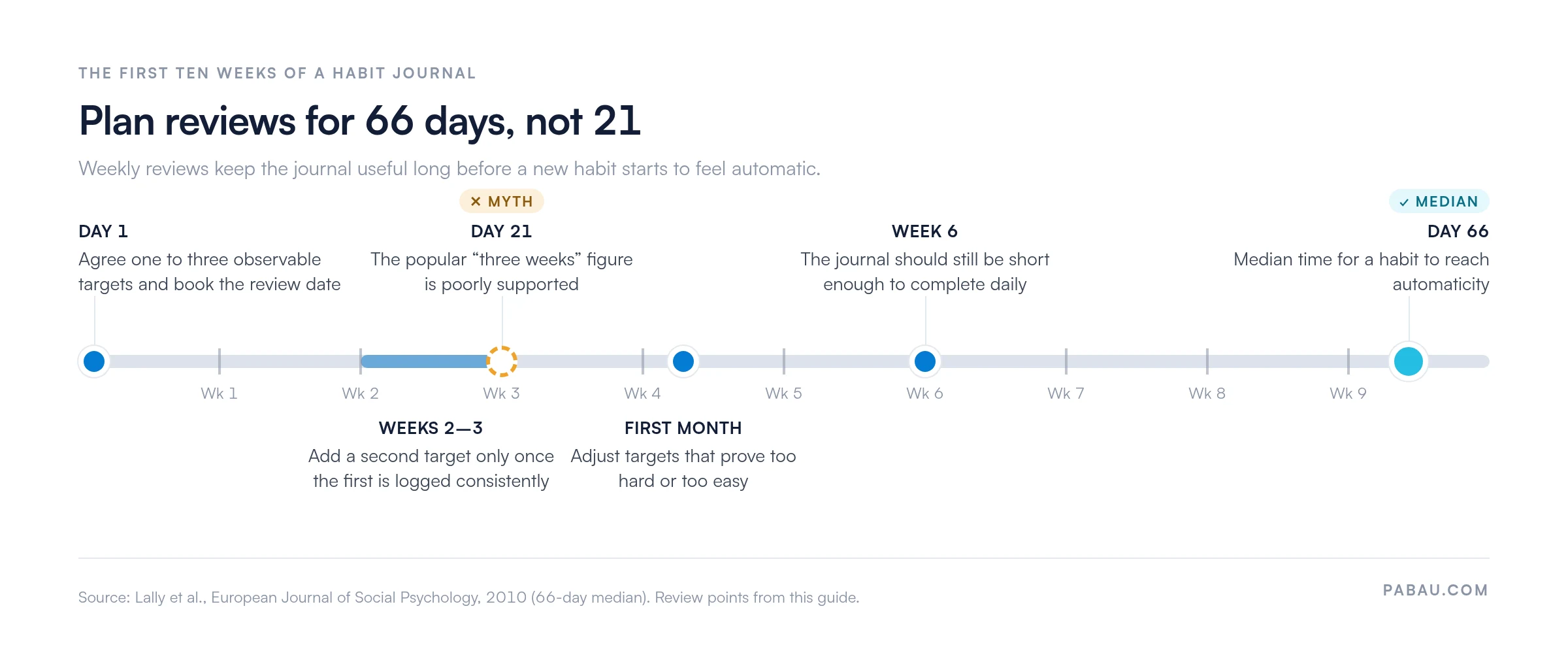
The 21-day myth: many patients expect a new habit to feel automatic within three weeks. That figure is widely repeated but poorly supported. A 2010 study by Lally and colleagues at University College London found a median of 66 days to reach automaticity. Published in the European Journal of Social Psychology, it also found wide variation between people and behaviors.
Set that expectation at the start, so a missed week reads as data rather than failure. The timeline below shows where your review points fall against that 66-day median.
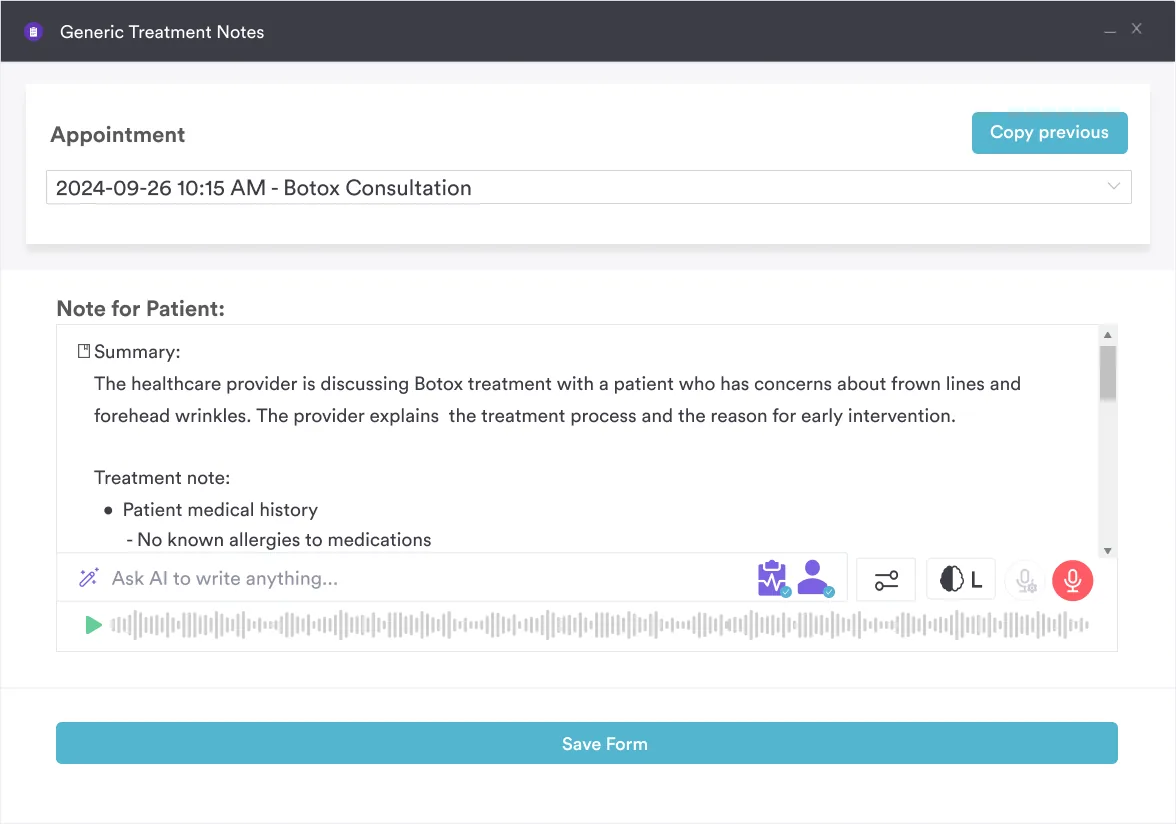
When entries need turning into session notes, Pabau Scribe can draft them. It’s the AI medical scribe built into Pabau, the practice management platform we make. The clinician checks every word before filing, as with any drafted note.
Most journals fail for predictable reasons, and each one has a simple fix.
Too many targets: five behaviors feel thorough, but the page soon fills with blanks. Limit the patient to three, and retire a target once it runs on autopilot.
Vague definitions: a goal like “eat better” cannot be logged reliably. Write targets a patient can answer yes or no to each day.
Judging missed days: if patients feel judged, they stop writing. Treat a missed day as information for the next session.
No review date: a journal nobody reads teaches patients that logging does not matter. Put the review in the calendar from the first session.
Many practices still hand out a printed journal and hope it comes back. Pages get lost, entries arrive on the day of the session, and someone retypes the useful parts into the notes.
Pabau sends the journal as a digital form before each appointment, and completed entries land in the patient’s Client record. Automated reminders prompt patients who have not logged yet. Because Pabau works as therapy practice management software, the journal sits beside bookings, session notes, and follow-ups.
The result is a review that starts from a full week of data, with no paper to chase. Practices that want to see how journal entries sit alongside patient records can book a demo of Pabau.

Pabau brings patient records, forms, and follow-up into one system, so the journal sits alongside treatment notes rather than in a separate folder.

Start smaller than feels useful: one patient group, one target each, and a weekly review you never skip. The trade-off is depth for consistency. A short journal that patients still complete in week six tells you more than a detailed one abandoned in week two.
Download the template, pilot it, and adjust the targets after the first month. Pabau’s pre- and post-care features can send the check-ins between sessions, so the journal reaches patients on time.
Book a demo to see how Pabau puts habit journal entries beside session notes, so every review starts from the data.

Want a lighter check-in format? Self-monitoring checklist sets out check-in intervals for patients who log less often.
Turning journal patterns into a plan? Behavior modification plan walks through building a structured plan around target behaviors.
Need sharper targets before tracking starts? SMART goals worksheet helps patients turn vague goals into specific, measurable ones.
Want to track thoughts as well as actions? Thought journal gives patients a format for logging thoughts alongside triggers.
Measuring progress against a goal scale? Goal attainment scale shows how to score progress toward individual treatment goals.
A habit journal records reflections and context alongside behavior, while a habit tracker records whether a behavior happened. Trackers suit simple yes-or-no logging, and journals suit patients who need to explore triggers, mood, and reasons. Many practitioners combine the two, with a short tick-box log and a reflection space on the same page. Choose the format the patient will complete every day.
Daily logging at a consistent time works well for most patients. Daily entries take only a few minutes and produce the most useful pattern data. If a patient misses days, ask them to note why rather than leave the page blank. Review the full journal at a fixed weekly point with the patient.
A habit journal should track one to three specific behaviors that connect directly to the treatment or coaching goal. Good targets are observable and countable, such as a ten-minute walk, a fixed bedtime, or a glass of water with each meal. Avoid vague outcomes like feeling better, which the patient cannot log reliably. Add a reflection prompt about triggers so patterns become visible.
No, a habit journal cannot replace clinical notes or a formal assessment. It is a patient-completed record that supports your clinical judgment, and your practice should keep its own documentation standards for session notes and risk records. Store the journal as part of the patient file in line with your local regulations, and review the entries alongside your notes at each session.