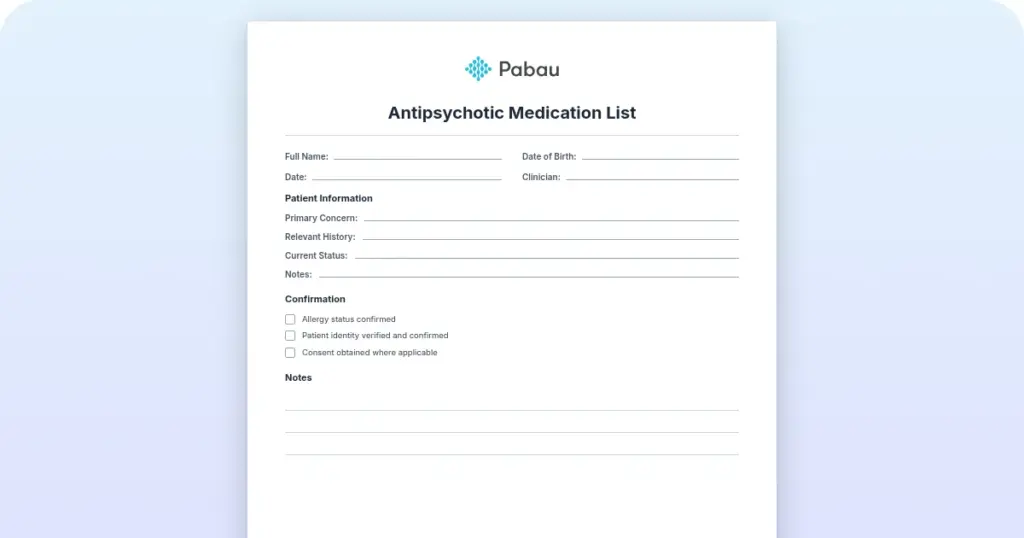
Antipsychotic medication list
An antipsychotic medication list is a structured reference that organizes psychi...

2
Last Updated: Oct 13, 2026

A sleep hygiene worksheet is a structured tool therapists use to assess a client’s sleep patterns, bedtime routine, and bedroom environment.
The worksheet covers five pillars: sleep schedule, bedtime routine, sleep environment, daytime habits, and stress management.
It also carries a plan for night waking, built on stimulus control rather than relaxation alone.
Filling it in during a session surfaces the one barrier worth fixing first, instead of a general goal to sleep better.
Practice management software like Pabau stores the completed worksheet in the client record and automates the follow-up review.
The worksheet walks a client through six areas. It covers sleep schedule, wind-down routine, bedroom setup, daytime habits, stress management, and what to do after a night waking. Print it for the session or send it digitally.
Download templateA sleep hygiene worksheet gives you a structured way to find out what is keeping a client awake. It turns a vague complaint about bad sleep into six areas you can work through together in session.
Sleep advice usually stops at bedtime. The worksheet on this page also covers what a client should do at 3 AM. It shows you how to adjust the advice for a teenager whose body clock runs late. Any psychology practice can run it as a baseline and repeat it later to show change.
A sleep hygiene worksheet is a structured assessment tool that shows how a client’s habits and environment are affecting their sleep. It reads as a guided review rather than a tick-box list, so every answer points at something you can change.
The form covers five core areas: sleep schedule consistency, bedtime routine, sleep environment, daytime behavior, and stress management. It works as psychoeducation and as a baseline you can measure later sessions against.
Therapists use it to normalize sleep difficulties and to set behavioral goals with the client rather than for them. It also moves the conversation from assessment into treatment planning, because each answer suggests a next step.
Poor sleep runs in both directions with anxiety, depression, and cognitive decline. According to the CDC’s sleep guidance, chronic insufficient sleep raises the risk of mental health disorders. It also makes treatment for an existing condition less effective.
Sleep deprivation weakens emotional regulation, decision-making, and stress tolerance. Those are the same capacities therapy sets out to build. Bringing the worksheet in early lets you shore up that foundation before it undermines the rest of the work.
Research suggests sleep quality improvements often arrive before symptom relief in anxiety and mood disorders. That makes sleep an early win worth taking in a longer treatment plan.
The same logic applies to you. Clinician burnout and sleep deprivation are closely linked, and modeling the habits you recommend makes them far easier to sell.
An effective form organizes its recommendations into five pillars:
Working through all five lets the client see which areas are already fine and which need attention. That specificity turns “sleep better” into a short list of concrete changes. Where worry is the blocker, a primary emotions worksheet pairs well with it.
Tell the client to leave the bedroom, do something calm elsewhere for 20 minutes, and return only when drowsy. This is stimulus control, and it carries more evidence than any relaxation technique on its own.
Stress management techniques such as controlled breathing and grounding still help in the moment. They work best alongside stimulus control, not as a reason to stay in bed.
The aim is to stop the bed from becoming a place the client associates with lying awake. Undoing that association is what cognitive behavioral therapy for insomnia, known as CBT-I, spends most of its time on.
A five-step workflow keeps the form collaborative rather than clinical:
Sleep goals are easier to defend when you can show movement. An outcome rating scale run alongside the worksheet gives you a session-by-session number to set against the sleep changes.
The form suits therapists, counselors, psychologists, social workers, and psychiatrists. Any mental health practice treating anxiety, depression, insomnia, or PTSD will find a use for it.
Wellness practitioners, coaches, and occupational therapists use it too, usually as a general health check rather than a clinical assessment.
It also flexes to the presenting problem. With trauma clients you might emphasize safety cues in the bedroom. With seasonal affective disorder you would focus on light exposure timing instead. It works in individual therapy, couples counseling, and group settings without modification.
Standardizes assessment: Every client gets the same review, so nothing important gets skipped on a busy day. A new team member can pick the protocol up quickly, the way a progress notes cheat sheet standardizes write-ups.
Educates the client: The form explains why each recommendation exists, and clients who understand the reasoning follow it more often. The same consent and documentation logic applies across your paperwork.
Tracks progress: A baseline and a follow-up give you numbers. You can tie sleep improvement to symptom relief and justify keeping sleep on the agenda.
Improves follow-through: Written goals in the client’s own handwriting are harder to quietly drop than a verbal agreement made at the end of a session.
Saves session time: The form rules out a vague sleep history. You get more depth in less time, and you never have to recall what to ask next.
Ask clients to rate sleep quality weekly on a one to ten scale in your patient engagement portal. Plot that score against anxiety, mood, and energy. Watching the two lines move together does more for motivation than any explanation you can offer.
Adolescents run on a delayed body clock. Their natural sleep window sits one to two hours later than an adult’s, which is why early school start times hit them so hard.
Adjust the target rather than the principle. A realistic bedtime is 11 PM to midnight, not 10 PM, and weekend consistency matters more than the exact hour.
Cut screens an hour before bed, with social media the main offender. Teens also respond to evidence, so show them how an extra hour of sleep tracks against their grades or their anxiety scores.
Sleep architecture changes with age. Older clients get lighter sleep, more night waking, earlier wake times, and less deep sleep. That is normal aging rather than insomnia, but it still needs a plan.
Reframe the target instead of fighting it. If a client naturally wakes at 5 AM, support that with an early dinner and morning light exposure rather than pushing for a later start.
Add a medication review to the form. Antidepressants, blood pressure drugs, and anticholinergics all disturb sleep, and the timing is often adjustable with the prescriber.
Normalize the afternoon nap too. A 20 to 30 minute nap early in the afternoon restores alertness without stealing from the night.
On paper, the worksheet gets filled in during the session, filed in a folder, and rarely looked at again. The review two weeks later then starts from memory, which is where most of the value leaks away.
Practice management software like Pabau keeps the form in your digital forms library instead. You can send it out before the appointment or complete it on screen with the client. Either way, it saves straight into their record.
From there the follow-up runs itself. Automated reminders prompt the client at the two-week mark. Their digital intake forms carry the updates back to you, and the old answers sit beside the new ones.
So the sleep work lives in the same place as everything else you record. You can see whether the schedule change held without digging through a filing cabinet between clients.
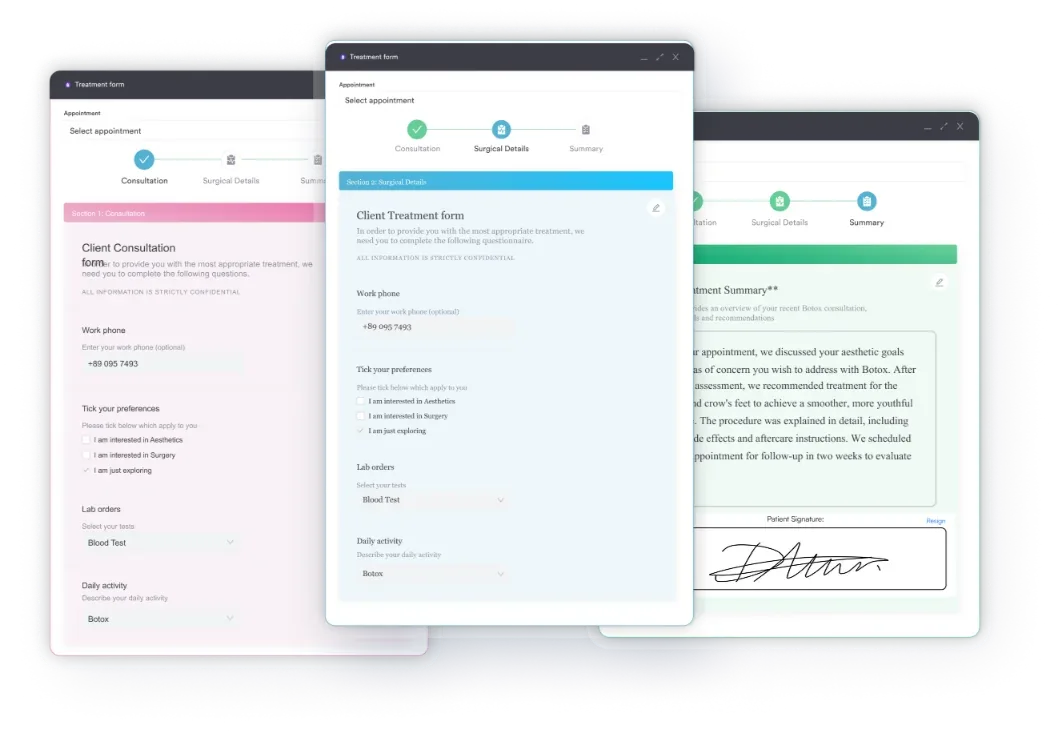

Send the worksheet before the session and store every answer in the client record. Automated reminders then handle the two-week review for you.

The worksheet earns its place by making sleep concrete. Once a client can point at the one habit costing them an hour a night, the conversation stops being about willpower.
Keep the scope small. One or two changes that survive a month beat five that collapse in a week, and only the review tells you which is which.
Book a demo to see how Pabau stores completed sleep worksheets in the client record and automates the follow-up review.

Want clients to connect body sensations to their emotions? Body sensations and emotions template helps clients map physical sensations like chest tension to specific feelings.
Documenting coaching sessions alongside your therapy notes? Coaching notes template gives you a structured framework to track progress and keep complete records.
Not sure a client is ready to change a habit? Motivation assessment scale helps you judge readiness before you agree on a sleep goal together.
Helping a client challenge negative thought patterns? Cognitive restructuring worksheet walks clients through identifying automatic negative thoughts and building balanced alternatives.
It is a structured assessment tool therapists use to review a client’s sleep patterns, routines, and bedroom environment. It covers five areas and doubles as a baseline you can measure progress against.
Complete it together rather than sending it home. Ask what feels manageable, pick one or two changes, and record the baseline in the client’s file. Revisit it every two to four weeks.
It helps, but rarely on its own for clinical insomnia. It works best inside cognitive behavioral therapy for insomnia, alongside stimulus control and sleep restriction. The American Academy of Sleep Medicine names CBT-I as the first-line treatment.
No. It supports treatment rather than standing in for clinical assessment. Use it alongside cognitive behavioral techniques, psychoeducation, and psychiatric care where that is needed.
If they have been awake for more than 20 minutes, they should leave the bedroom. They should do something calm elsewhere for 20 minutes and return only when drowsy. This stops the bed from being associated with lying awake.
Allow for the adolescent body clock, which runs one to two hours late. A realistic bedtime is 11 PM to midnight. Emphasize weekend consistency and cutting screens an hour before bed.
Yes. The National Sleep Foundation recommends seven to nine hours for adults and eight to ten for teenagers. Older adults need adjustments for age-related changes in sleep architecture.