Trauma response test: Free template for clinicians
A trauma response test is a structured screening questionnaire that helps clinic...

3
Last Updated: Oct 15, 2026

Compassion fatigue is emotional exhaustion from exposure to patients’ suffering – it’s distinct from burnout and measurable with self-assessment tools like the Compassion Satisfaction and Fatigue Self-Test.
This free 66-item self-test assesses three areas: compassion satisfaction (26 items), burnout (17 items), and compassion fatigue, also called secondary traumatic stress (23 items).
Low scores on the compassion satisfaction subscale combined with high burnout or STS scores indicate urgent need for self-care and workplace support.
Healthcare workers in direct patient care roles (nurses, therapists, social workers) face the highest risk, and early identification enables timely intervention.
Pabau’s practice management features reduce administrative burden that compounds caregiver exhaustion – freeing mental bandwidth for wellness.
A 66-item self-assessment questionnaire measuring compassion satisfaction, burnout, and compassion fatigue (secondary traumatic stress). Identify early signs of caregiver exhaustion and access actionable support strategies.
Download templateNurses, therapists, social workers, counselors, physicians, and other healthcare workers absorb the emotional weight of their patients’ suffering every day. Over time.
A compassion fatigue test measures where you stand on three dimensions: how satisfied you feel about your helping work, how depleted you’ve become, and whether you’re experiencing secondary traumatic stress from indirect trauma exposure.
The version you can download here is the Compassion Satisfaction and Fatigue Self-Test for Helpers (CFST), a 66-item questionnaire developed by Charles Figley and Beth Hudnall Stamm in the mid-1990s that helped lay the groundwork for caregiver wellness research.
This guide walks you through administering and scoring the free compassion fatigue test, interpreting your results, and taking action if your scores indicate risk.
A compassion fatigue test is a brief self-assessment questionnaire designed to measure the emotional consequences, both positive and negative, of working in a helping profession. Unlike a clinical diagnosis, a compassion fatigue screening tool identifies where you fall on a spectrum of caregiver well-being, helping you recognize whether your exposure to patients’ distress is beginning to erode your own resilience. Assessment results kept on paper get filed and forgotten, so practice software for psychologists keeps them beside the notes.
The test measures three overlapping but distinct constructs:
The downloadable version here is the Compassion Satisfaction and Fatigue Self-Test for Helpers, a 66-item questionnaire split into 23 compassion fatigue items, 26 compassion satisfaction items, and 17 burnout items, each rated from 0 (never) to 5 (very often). It’s an earlier self-test long used by mental health professionals, nurses, and social workers.
It later evolved into the shorter, standardized Professional Quality of Life Scale (ProQOL), now in its fifth version, which many practices use today. Both require no special training to administer.
Before completing a formal compassion fatigue test, recognizing the early warning signs in your own experience helps you take the assessment seriously. The symptoms span emotional, cognitive, behavioral, and physical domains:
If you recognize several of these patterns in yourself, a compassion fatigue test provides objective data and a structured framework for taking next steps.
The compassion fatigue test follows a straightforward five-step process:
The entire process typically takes 15-20 minutes to complete and score, given the length of the questionnaire. For a practice team or group setting, administering the test during a staff meeting and discussing results collectively can create a culture of mutual support and normalize conversations about caregiver exhaustion.
Clinical form capture tools let staff complete assessments like this on a tablet during the session itself.
After completing all 66 items, add up your ratings within each section to get three raw totals. Because the highest rating per item is 5, the maximum possible total is 130 for compassion satisfaction (26 items), 115 for compassion fatigue (23 items), and 85 for burnout (17 items).
The higher your total within a section, the stronger the presence of that construct. The table below includes the original CFST scoring key’s risk-band cutoffs for each subscale, so you can check your totals against a fixed benchmark rather than relying only on how the three scores compare to each other.
Your overall risk profile combines all three totals. The highest-risk pattern is a low compassion satisfaction total alongside high burnout and high compassion fatigue totals, signaling that the helping role no longer feels rewarding while emotional exhaustion and vicarious trauma have accumulated.
Compassion fatigue and burnout are related but distinct. Understanding the difference helps you target interventions correctly.
Many healthcare workers experience both at once. A clinician might feel burned out by a bloated intake form and billing backlog, a systemic stressor, and also develop compassion fatigue from managing a patient’s disclosure of sexual trauma, a form of vicarious trauma.
The compassion fatigue test measures both dimensions, but the interventions differ. Burnout often calls for workflow automation and boundary-setting, while compassion fatigue demands trauma-informed self-care and clinical supervision.
One dimension of the compassion fatigue test — secondary traumatic stress (STS) — warrants special attention. STS is the acute stress reaction from working with traumatized patients.
A therapist processing a client’s childhood sexual abuse, a nurse stabilizing a domestic violence survivor, or a social worker managing a neglect case can develop trauma-like symptoms such as hypervigilance, nightmares, or emotional flooding, without directly experiencing the original trauma. In social work, mapping a client’s family and community connections can clarify which environmental stressors are driving a difficult case.
A high score on the STS subscale suggests you’re at risk of vicarious traumatization and may benefit from clinical peer supervision, trauma-informed therapy, and structured case consultation. Unlike burnout (which is cumulative and preventable through workflow changes), STS can strike suddenly and requires immediate support.
📌 Crisis signposting: If your compassion fatigue test reveals high STS or low compassion satisfaction combined with suicidal ideation, contact your Employee Assistance Program (EAP), a therapist, or the 988 Suicide & Crisis Lifeline (988) immediately. Caregiver mental health crises are medical emergencies.
While this self-test applies across all helping professions, different roles experience distinct risk profiles. Understanding your role’s typical pressures helps contextualize your scores:
If your role carries high STS risk (frontline trauma response), prioritize clinical consultation and peer support after difficult cases. If your role carries high burnout risk (administrative overhead), workflow automation and protected administrative time are critical protections.
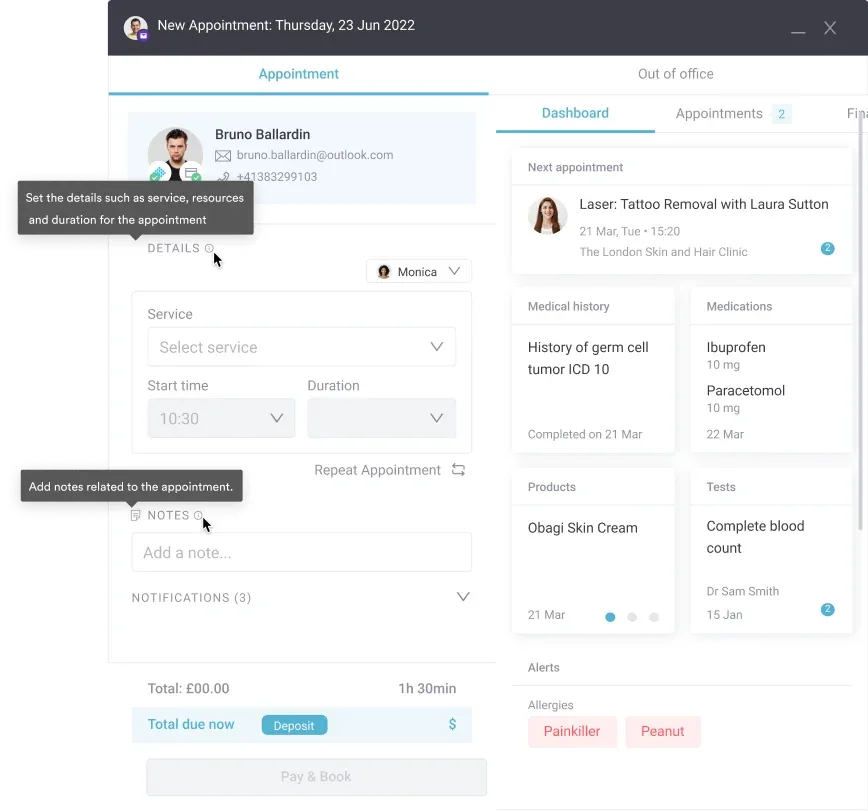
A high score on your compassion fatigue test doesn’t mean you’ve failed. It means your caregiver system is under strain and needs attention. Here’s how to respond:
The highest-leverage intervention for burnout is reducing administrative burden. Practices using digital intake forms, automated scheduling.
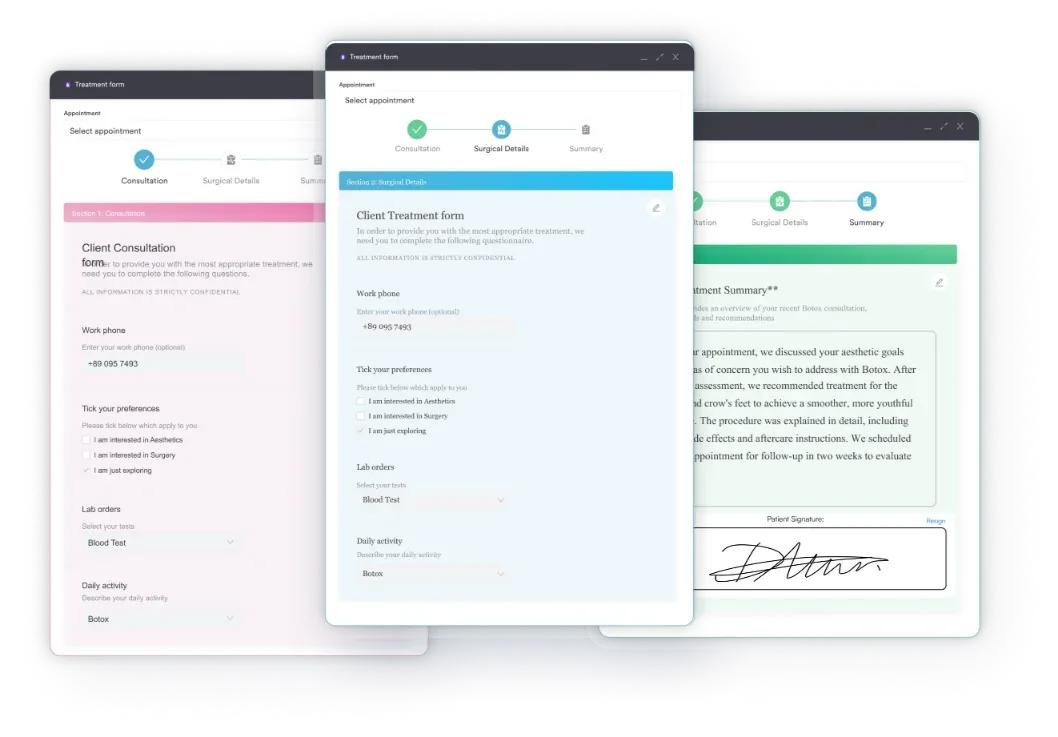
Intake forms are just one entry point. When scheduling, reminders, and clinical documentation all run through the same system instead of scattered spreadsheets and paper charts, staff spend fewer hours on repetitive data entry and reclaim that time for patients and for their own recovery.

Pabau’s practice management platform eliminates administrative overhead through digital forms, automated reminders, and AI documentation, freeing your team to focus on patient care and wellness.

The compassion fatigue test is designed for any healthcare professional or caregiver in direct contact with people experiencing suffering, trauma, or distress. This includes:
Practice managers and organizational leaders benefit from administering the test across their team to identify burnout hotspots and allocate support resources strategically. Mental health practices in particular use population-level compassion fatigue screening to inform culture and retention strategies.
A validated compassion fatigue test provides three concrete benefits:
The compassion fatigue test is a brief, validated tool that every healthcare professional and caregiver deserves access to. By measuring compassion satisfaction, burnout, and secondary traumatic stress, it creates a shared language for naming the costs of caring work.
Your results aren’t a judgment. They’re a compass pointing toward the support you need. Download the free PDF template, tally your raw totals for each section, and use your data to advocate for the systemic changes and personal practices that will restore your resilience.
Explore these resources to deepen your understanding of caregiver wellness and practice management:

Want a low-lift way to build coping strategies into daily practice? A coping cards template gives clinicians a printable, ready-to-use tool for building resilience between sessions.
Need a structured way to help yourself or a client name difficult emotions? An expressing emotions worksheet gives you a starting point for that reflection.
Diagnosing a stress response to a life event? Adjustment disorder DSM-5 criteria translates the diagnostic framework into a checklist for evaluating all five criteria.
A compassion fatigue test is a validated self-assessment questionnaire that measures the emotional and physical toll of caregiving work on healthcare professionals. Any practitioner in direct patient care, including nurses, therapists, social workers, and physicians, should take it annually or when symptoms of exhaustion appear.
This self-test takes about 15-20 minutes to complete and score. It has 66 self-rated items on a 0-5 scale. The PDF here includes all 66 items but not the original scoring key’s risk-band cutoffs, so you’ll tally your own raw totals for each of the three sections and check them against the risk bands in the scoring section above.
A high burnout score indicates emotional exhaustion and reduced effectiveness from chronic workplace stress. Common drivers include high caseloads, administrative overhead, lack of autonomy, or misaligned values. Interventions include workflow automation, boundary-setting, peer support, and workload redistribution.
No. Compassion fatigue is a broader term encompassing burnout and secondary traumatic stress. Secondary traumatic stress is the acute stress reaction from indirect trauma exposure, similar to PTSD but acquired through helping traumatized clients. The compassion fatigue test measures both constructs separately.
If your score is high, seek immediate support: talk to your supervisor, contact your Employee Assistance Program, schedule therapy, or consult a peer supervisor. Identify whether your stressors are systemic (caseload, workflow) or individual (boundary issues, unprocessed trauma). Request workplace accommodations such as reduced hours, case rotation, or administrative support.
Yes. The Compassion Satisfaction and Fatigue Self-Test for Helpers is free to download and use for reflection, training, and team discussions, at no cost.
Yes, in part. Organizational protections (reasonable caseloads, peer supervision, administrative support, clinical autonomy, values-aligned leadership) significantly reduce compassion fatigue risk. Individual practices (boundary-setting, self-care, peer connection, trauma processing) also matter. Reducing administrative burden through workflow automation is one of the highest-leverage interventions.