Free model waiver form + what it is and when your practice needs one
A model waiver form is a signed document that lets a healthcare practice use a p...

5
Last Updated: Sep 29, 2026

An aesthetic consultation form captures patient demographics, medical history, allergies, medications, contraindications, and aesthetic goals in a structured format.
Current CQC standards and professional body guidance (JCCP, Save Face) call for documented informed consent, risk disclosure, before/after photography consent, and GDPR compliance. A full licensing scheme for non-surgical procedures in England is still pending secondary legislation.
Essential form sections include constitutional assessment, medication review, skin type classification (Fitzpatrick scale), Body Dysmorphic Disorder screening, and treatment planning.
Pabau’s digital forms and client records automate intake workflows, reduce paper clutter, and ensure every consultation is properly documented and instantly retrievable.
A ready-to-use consultation form covering patient details, medical history, contraindication screening, aesthetic goals, risk consent declarations, and signature blocks. It’s designed for UK aesthetic practices following current CQC and professional body guidance.
Download templateAn aesthetic consultation form is the first clinical record a patient interacts with. It sets the tone for the whole treatment relationship. This guide covers what to include and how to run the consultation. It also covers how practice management software like Pabau keeps every form searchable and tied to the patient’s ongoing record. New or solo practices and multi-location groups each get their own pick in our comparison of med spa software.
A structured consultation form is the foundation of safe, patient-centered aesthetic practice. The Care Quality Commission (CQC), along with professional bodies like the Joint Council for Cosmetic Practitioners (JCCP) and Save Face, sets clear expectations here. Before any non-surgical cosmetic procedure, practices should document informed consent, screen for medical contraindications, assess psychological suitability, and obtain explicit permission for photography.
The Health and Care Act 2022 gave the UK government powers to introduce a licensing scheme for non-surgical cosmetic procedures in England. That scheme is still working through secondary legislation and isn’t in force yet.
Until it is, good documentation is judged against CQC standards, professional body guidance, and general clinical governance and duty of care. There’s no specific compliance deadline to work toward.
Without a professional consultation form, practices face regulatory exposure and incomplete medical histories. They also risk missed contraindication flags and patient disputes over treatment expectations. A well-designed aesthetic consultation template protects your practice and standardizes your process. It also ensures every patient receives the same thorough assessment, regardless of which clinician leads the session.
An aesthetic consultation form is a structured intake document. It captures a patient’s baseline health status, aesthetic concerns, and treatment expectations before any procedure begins. The form serves three functions: clinical safety, legal protection, and operational efficiency.
From a clinical perspective, the form documents medical history, current medications, allergies, and past aesthetic procedures. It also flags conditions that might contraindicate treatment, such as pregnancy, active skin infections, recent retinoid use, or anticoagulant therapy. In addition, it captures constitutional assessment data — skin type using the Fitzpatrick scale, facial anatomy landmarks, and any areas of concern.
The form also demonstrates informed consent. The patient signs acknowledgment that they understand the procedure, expected results, potential risks, realistic timelines, and costs. For regulated treatments like injectable consultations, documented consent should explicitly name the medicines involved. It should also confirm the patient isn’t pregnant, on antibiotics, or recovering from recent surgery.
Operationally, a standardized form speeds up the first appointment and cuts down repeated verbal explanation. It also creates an auditable record for compliance inspections. Beyond that.
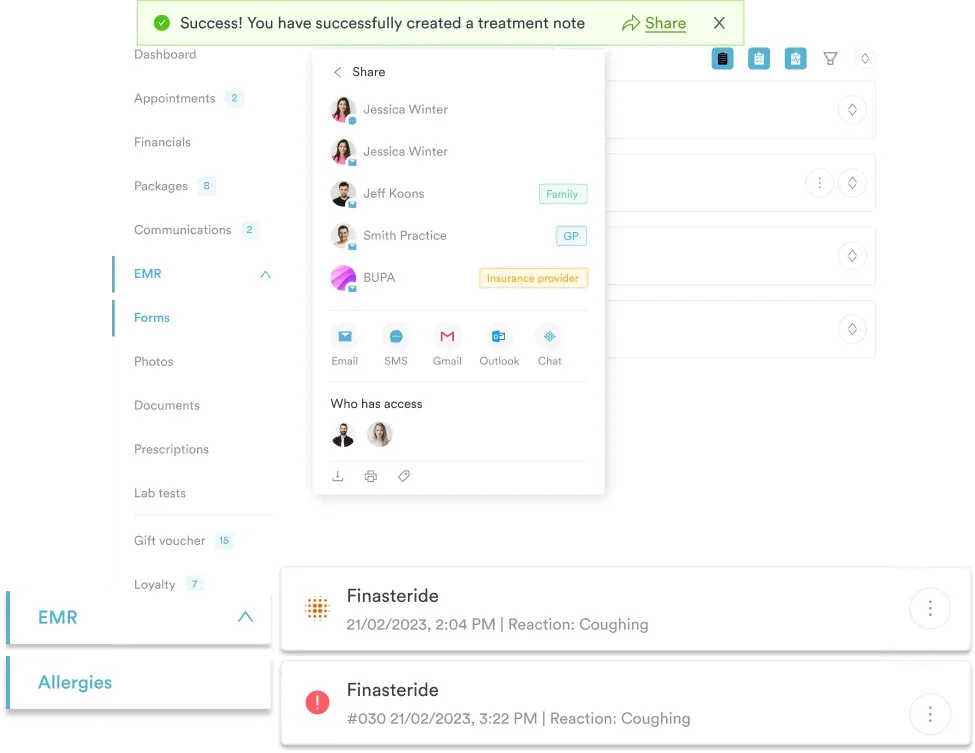
The aesthetic consultation template is designed to be completed during the patient’s first appointment. Here are the five operational steps your team should follow:
After completing these steps, transfer the key findings into your practice’s digital forms system or client record. That way, the information is accessible to all clinicians and automatically backed up.
Pabau, for example, lets you store the PDF in the patient’s record and create automated reminders for follow-ups. It can also pull historical consultation data when the patient books their next appointment.
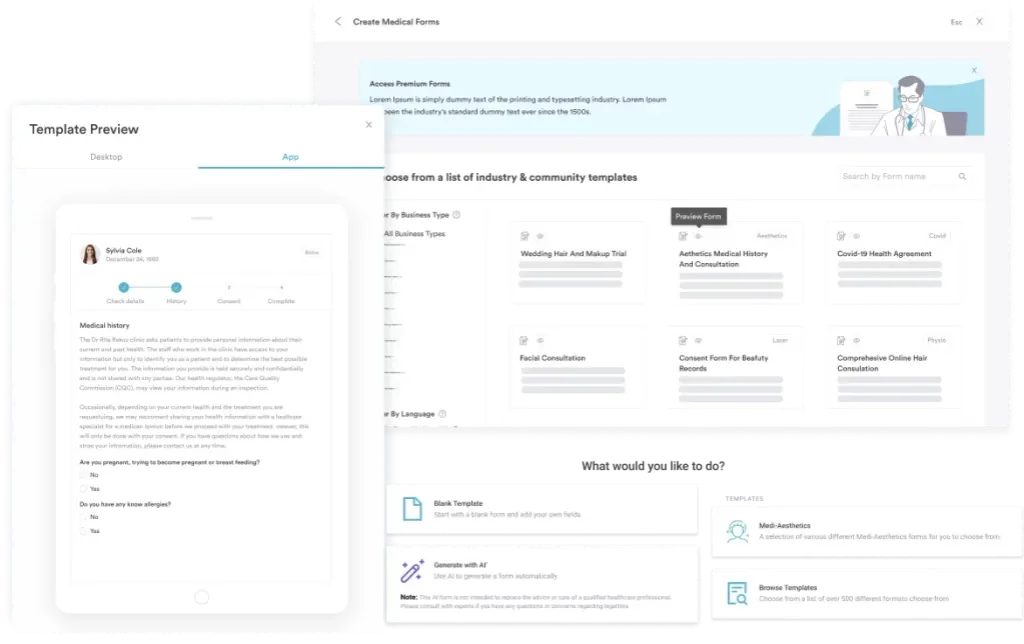
Most medspas manage notes like this inside medical spa software, linked to photos and consent forms.
This template is essential for any aesthetic practice or practitioner offering non-surgical cosmetic procedures. That includes:
If you’re a clinician who wants to become an aesthetic practitioner in the UK, this form is useful too. It demonstrates the professional documentation standard expected by regulators and medical directors. Training bodies like JCCP and Save Face reference structured consultation forms as a marker of clinical competence.
Regulatory compliance: The form is designed to meet CQC expectations, JCCP standards, and Save Face accreditation criteria. It documents informed consent in a way that survives regulatory scrutiny.
If a patient complaint or audit occurs, you have a complete paper trail. It shows that consent was informed, risks were disclosed, and the patient was screened for contraindications.
Clinical safety: Systematic screening for contraindications — pregnancy, anticoagulation, retinoid use, skin infections, immunosuppression — catches unsafe candidates before they reach the treatment chair. Documenting BDD screening flags patients who need psychological referral rather than cosmetic treatment. This protects both the patient and your medico-legal position.
Documentation clarity: A standardized form ensures every clinician asks the same questions and records findings in the same structure. This reduces ambiguity and enables seamless handoffs between clinicians.
It also simplifies note-writing during the consultation. The form becomes the baseline, so only deviations or additional observations need separate documentation. It’s the same principle behind keeping client records up to date across the rest of the patient’s file.
Patient accountability: When patients see their own signature confirming they understand risks and realistic timelines, disputes become much rarer. Complaints like “I expected immediate results” or “Nobody told me about downtime” happen far less often. The form functions as a shared understanding rather than a one-way instruction.
Operational efficiency: A printed or digital form completed before the consultation frees your clinician from writing baseline history during the appointment. That leaves more time to focus on listening, examining, and building rapport. If you integrate the form with practice management software, patient data from a standard intake form auto-populates on future bookings, so returning patients skip re-entering details they have already given.
Store the completed consultation form in your patient management system alongside clinical notes. When the patient books a follow-up appointment, pre-load their medical history and aesthetic goals so the second consultation can skip the baseline questions and focus on progress assessment and next-step planning.
Before a patient arrives for their aesthetic consultation, your team should prepare the environment and documentation. Marketing and front-of-house teams should partner on this. The goal is a welcoming patient experience from the moment they call or book online.
Send the patient a pre-appointment email or text confirming the date and time. Ask them to bring photo ID, a list of current medications, and any photos of desired results they have saved. Mention that they will complete a medical history form during the appointment, so they should allow extra time.
If your practice uses online pre-booking forms, send the consultation template in advance. Patients can then review it and start filling it out at home. That saves time in person and captures more detail than rushed verbal responses. The same before-the-visit approach works well in other specialties.
Prepare a private, well-lit consultation space with a comfortable chair and mirror. Have the blank consultation form printed or load it into a digital documentation system that syncs with your client records. For returning clients, make sure your clinician has reviewed any relevant clinical notes, such as past treatments, previous concerns, or contraindications.
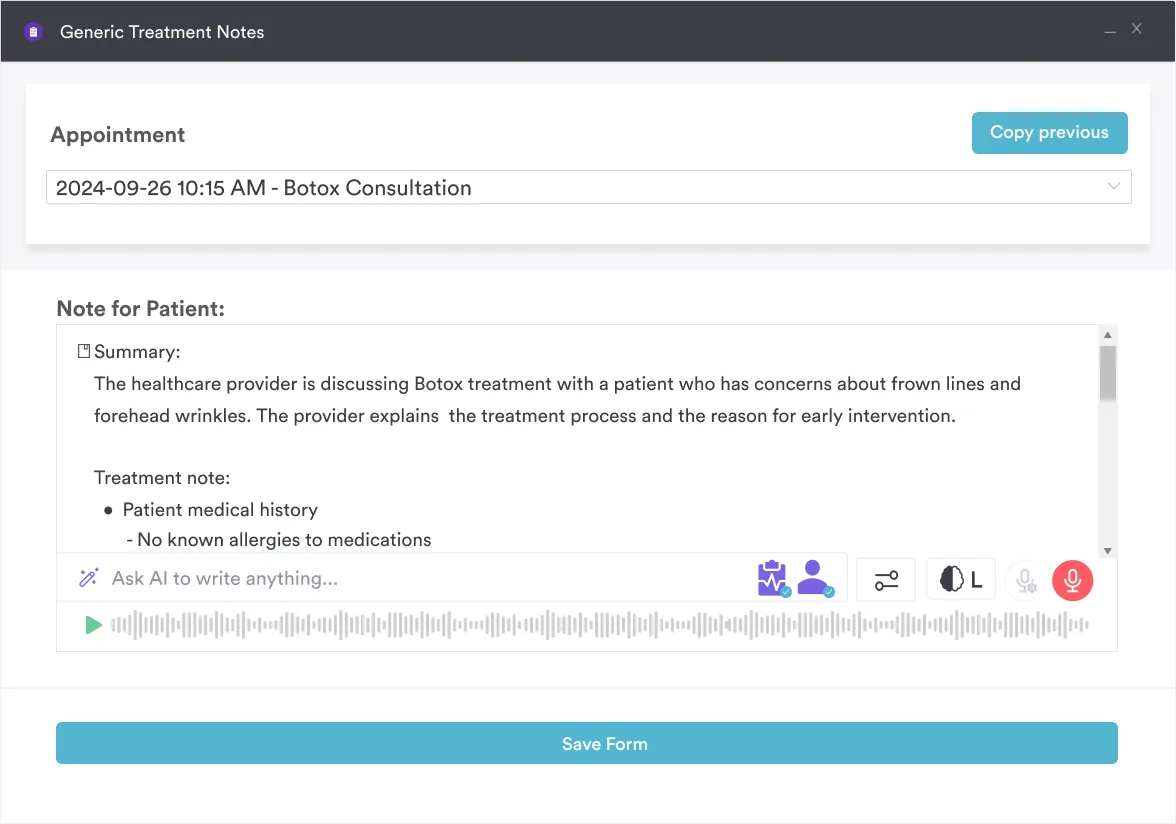
The aesthetic consultation form captures sensitive health information: medical history, medications, mental health comments, photographs. Under UK GDPR and the Data Protection Act 2018, you must handle this data securely. It should only be used for the patient’s care.
Obtain explicit, written consent for before/after photography. A blanket checkbox is insufficient. The form should specify options such as “I consent to photographs being used in marketing materials on the practice website and social media,” or “I consent to photographs for internal clinical records only.” Patient consent must be granular: they can refuse website use but accept internal documentation.
Store completed consultation forms in a locked cabinet (if paper) or encrypted digital system with access restricted to clinical staff. Never leave forms on a desk. Never discuss a patient’s medical history where other patients can overhear.
Staff should sign a confidentiality agreement confirming they understand GDPR obligations. When a patient requests deletion of their records, your practice must respond within one month. That right is balanced against legal retention requirements, which are typically a minimum of eight years for adult healthcare records in the UK, following NHS England guidance.
A consultation form is only valuable if it flows into your broader practice system. After the appointment, the clinician should summarize key findings in the client portal or patient record. Flag any action items: contraindication requiring GP consultation, BDD referral, follow-up labs, or standing order for repeat treatments.
Use the recorded aesthetic goals and baseline assessment to create a personalized treatment plan. Include specific procedures, an expected timeline (e.g., “Results visible in 7-10 days, full effect at 2 weeks”), cost, and realistic outcome photos. Share this plan with the patient in writing so they have a clear roadmap for their aesthetic journey.

Pabau’s digital forms and client records system automates intake, ensures compliance, and makes patient information instantly retrievable across your practice.

A patient books a consultation for her first filler treatment at a London aesthetic practice. Three days before the appointment, she receives an email with a pre-booking form asking for her medical history. She fills it out at home, noting that she is on metoprolol for high blood pressure. She has never had aesthetic treatment before.
On appointment day, she arrives with the form half-completed. The receptionist hands her the full printed consultation form and offers 10 minutes in a private area to finish it.
The clinician reviews the completed form and notes the blood pressure medication, which slightly increases bleeding risk but is not a contraindication. She then asks follow-up questions about the patient’s aesthetic goals and why she wants fillers now.
The patient mentions she is “concerned about looking tired lately.” The clinician, using the consultation form as a guide, asks a follow-up question: “Have you always been unhappy with your appearance, or is this new since something happened?” The patient explains her mother recently passed away, and she feels emotionally depleted.
The clinician gently suggests waiting. Major life decisions, including cosmetic treatment, are best made a few months after grief, once emotions settle. The patient agrees and books a follow-up appointment in September rather than proceeding now.
Six months later, the patient returns. Her consultation form from the first appointment is instantly pulled from the system, showing her baseline state and previous goals.
The new consultation shows significant improvement in her outlook and renewed interest in subtle fillers for hydration. Because the form was thorough the first time, the second consultation is focused, efficient, and feels personalized. The clinician already knows the patient’s history and can see clear progress.
An aesthetic consultation form is more than a compliance checkbox. It’s the conversation starter between practitioner and patient. It’s also the safety net that catches contraindications before they cause harm, and the record that protects your practice if a dispute arises.
Get it right, and you’ve laid the groundwork for personalized treatment planning and patient trust. That’s the kind of relationship that brings people back year after year. Download the template, add your own branding, and build it into your workflow today.
Better still, you don’t have to keep it on paper. With practice management software like Pabau, patients complete their intake forms, sign consents, and submit before-photos from their phone before they arrive. It all flows straight into their record. Want to see how it works for your practice? Book a demo and we’ll walk you through it.

Need a framework for ethical consultation? Performing Consultations That Convert covers psychological readiness, setting expectations, and documenting patient autonomy — the three pillars of informed consent.
Wondering how a CRM helps your practice? CRM for aesthetics businesses explains why implementing a CRM soon after launch is critical for growing your practice.
An aesthetic consultation form should capture patient demographics, medical history (surgeries, diagnoses, medications, allergies), past aesthetic procedures, and constitutional assessment (Fitzpatrick skin type, facial anatomy). It should also cover contraindication screening (pregnancy, anticoagulants, retinoids, active infections), aesthetic goals, psychological suitability screening, and informed consent signatures covering procedure risks, realistic timelines, costs, and photography permission.
Start with goals: “What are your aesthetic concerns and why are they important to you?” Next, ask about history: “Have you had aesthetic treatment before, and what was your experience?” Then check motivation: “Are you doing this for yourself, or is someone else encouraging you?” Screen for body image concerns: “Do you have any worries about your appearance that go beyond typical self-concern?” This question screens for BDD. Cover medications: “Are you currently on any medications or supplements?” (anticoagulants, antibiotics, retinoids). Check contraindications: “Do you have any active skin infections or are you pregnant?” Finally, set expectations: “What is a realistic timeline for results you would accept?”
Document in the patient’s record: baseline assessment (skin type, facial landmarks, areas of concern), patient-stated goals verbatim, and contraindication screening results (flag any absolute or relative contraindications). Also record psychological suitability impression, treatment recommendations with expected timeline and cost, and signed informed consent. Digital practice management systems let you attach the consultation form PDF and auto-populate future appointments with baseline data.
Essential information includes current medications (especially anticoagulants, antibiotics, retinoids, immunosuppressants), allergies (especially to anesthetics, lidocaine, or metals), and previous surgeries. Also record chronic conditions (uncontrolled diabetes, autoimmune disease, active skin infection), pregnancy status, past aesthetic procedures and satisfaction, and any history of abnormal scarring or keloid formation. Ask about retinoids specifically. Topical tretinoin is usually paused for about a week before skin-resurfacing treatments, while oral isotretinoin can require a longer wait before ablative procedures like laser resurfacing — always confirmed with the prescriber.
Not yet, as a single UK-wide legal requirement. The licensing scheme enabled by the Health and Care Act 2022 is still going through secondary legislation and hasn’t come into force. In the meantime, CQC registration, JCCP accreditation, and Save Face standards all expect practices to evidence informed consent in writing. A consultation form is the standard way to do that.