Body piercing aftercare is the set of cleaning, care, and healing protocols that minimize infection risk and support healthy tissue healing after a piercing procedure.
Sterile saline solution rinses twice daily — recommended by the Association of Professional Piercers — are the gold standard. Hydrogen peroxide and alcohol slow healing and should be avoided.
Healing timelines vary significantly by location: earlobes fully heal in 6-8 weeks, cartilage in 6-12 months, and oral piercings (tongue and lip) take 8 to 16 weeks to fully heal, even though initial surface healing is faster. Individual variation is normal.
Practice management software like Pabau offers a downloadable aftercare template that gives studios a ready-to-print client handout covering care instructions, healing expectations, infection warning signs, and medical referral criteria — reducing phone calls and improving compliance.
Download your free body piercing aftercare instructions template
Body piercing aftercare instructions
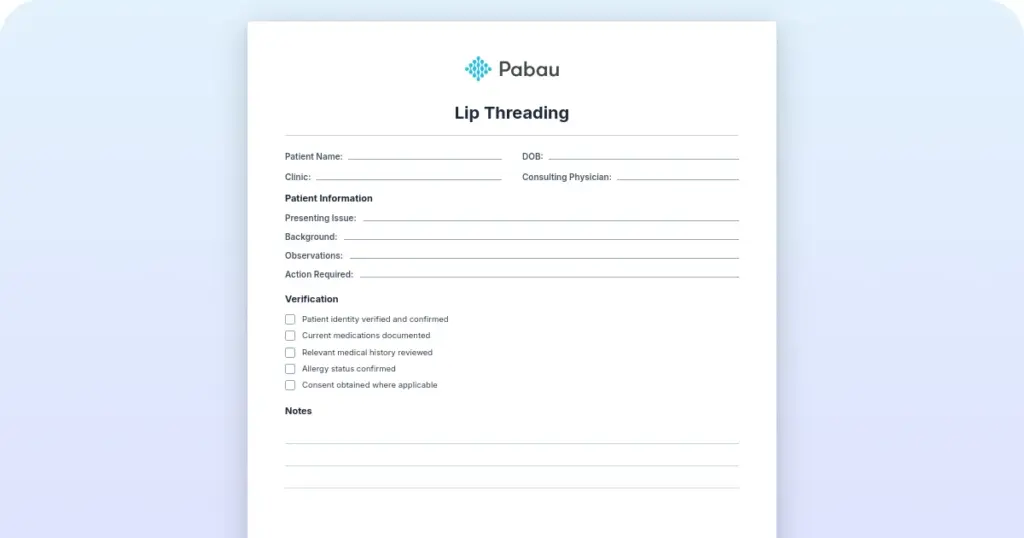
These body piercing aftercare instructions are a ready-to-print clinical form covering saline rinse steps, healing timelines by piercing type, normal vs infection symptoms, product recommendations, and guidance on when clients should contact a healthcare provider.
What body piercing aftercare instructions protect?
When a client walks out of your piercing studio, their healing journey has just begun. Most piercing complications (infections, keloids, migration, excessive discharge) stem from improper aftercare in the first 6 weeks rather than the piercing procedure itself, particularly when clients skip post-care instructions or reach for inappropriate products like hydrogen peroxide or antibiotic ointments.
This guide covers the complete set of body piercing aftercare instructions: how to clean piercings using sterile saline, what to avoid during healing, and how to recognize normal healing versus infection warning signs. It also covers location-specific timelines — because a cartilage piercing heals very differently from an earlobe piercing — and guidance on when clients should seek medical attention.
In practice, whether you operate a piercing studio.
What is body piercing aftercare?
Body piercing aftercare instructions are a set of clinical protocols designed to support tissue healing, prevent infection, and reduce the risk of complications after a piercing. Specifically, every piercing creates a wound that must heal from the inside out — a process that typically takes weeks to months depending on location and individual anatomy.
In practice, the Association of Professional Piercers (APP), the industry’s gold-standard authority, establishes evidence-based aftercare guidelines taught to certified piercers worldwide.
These guidelines rest on three core principles. First, keep the piercing clean with saline solution. Next, avoid substances and activities that delay healing or introduce bacteria. Finally, recognize signs of infection early enough to seek medical help before complications develop.
Proper aftercare significantly reduces infection risk in studios that enforce strict protocols. In addition, it reduces keloid formation, migration, rejection, and other complications that damage a client’s confidence in your studio and create liability exposure. Store this guidance in secure client records so your team can reference each client’s specific aftercare instructions if they call back with questions. A day spa managing several therapists needs one calendar rather than one per room.
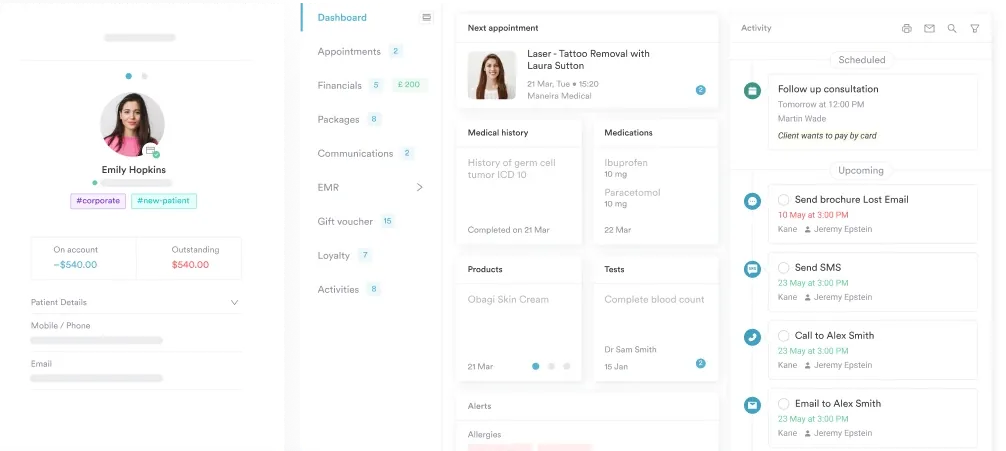
Detailed client records in Pabau
General body piercing aftercare instructions
All piercings, regardless of location, follow the same fundamental saline-based cleaning protocol. As a result, this foundation prevents the majority of infections.
The saline rinse protocol
Use sterile saline solution (0.9% sodium chloride), available as a spray, soak, or pre-made wound wash. This is the only product you need for cleaning.
Rinse the piercing twice daily: morning and evening. More frequent cleaning does not speed healing. It irritates tissue instead.
For spray or pour method: spray saline directly onto the piercing for 10-15 seconds, then gently pat dry with a clean paper towel (not cloth, which harbors bacteria).
For soak method (a fallback if packaged sterile saline isn’t available): dissolve 1/8 to 1/4 teaspoon non-iodized sea salt in 8 oz warm distilled water, soak the piercing for 5-10 minutes twice daily. This method works well for oral piercings.
Do NOT rotate, twist, or move the jewelry during healing. This myth persists but contradicts APP guidelines — movement irritates healing tissue and introduces bacteria deeper into the wound.
Sterile saline works because it mimics the body’s natural plasma, supporting white blood cells without introducing irritants or substances that slow healing. By contrast, tap water contains chlorine, minerals, and trace contaminants, so clients should avoid it and stick to saline for rinsing.
What to avoid during healing
Hydrogen peroxide and rubbing alcohol: Both kill healthy tissue alongside bacteria, creating an inflammatory response that delays healing. They are outdated relics of old wound care — discontinue immediately.
Antibiotic ointments (Neosporin, bacitracin): These ointments trap bacteria in a moist environment and suffocate healing tissue. Piercings need air circulation, not a barrier cream.
Touching the piercing with unwashed hands: The primary infection vector. Hands introduce Staphylococcus, Streptococcus, and other skin flora. Teach clients to avoid touching unless cleaning with freshly washed hands.
Submerging in pools, hot tubs, lakes, or ocean water: These environments harbor Pseudomonas, Vibrio, and other pathogens that thrive in warm, moist conditions. The piercing acts as a direct entry point into the bloodstream. Wait until full epithelialization (typically 6+ weeks).
Excessive cosmetics, perfumes, or skincare products near the site: These introduce irritants and can trigger granulomas or inflammatory reactions. Keep the piercing clean and dry, avoiding the area with makeup and lotions.
Sleeping on a fresh piercing: For ear and facial piercings, sleeping on the new piercing creates pressure and irritation. Use a travel pillow or sleep position adjustment for the first 2-4 weeks.
In practice, educate clients that “avoiding” these behaviors is not optional aftercare — it’s the difference between a healing piercing and an infected one. Use digital intake forms to document which aftercare instructions you provided at the time of piercing, creating a liability trail.
For example.
Customizable consent and intake forms
Aftercare instructions by piercing type
Healing time and care specifics vary dramatically by location. As a result, use the section below matching your client’s piercing to provide location-tailored instructions.
Ear and cartilage piercing aftercare
Earlobe piercings: initial healing takes 4-6 weeks, with full healing by 6-8 weeks. Lobes have excellent blood supply, so they heal quickly. Standard saline rinses twice daily.
Cartilage piercings (helix, conch, daith): initial healing takes 6-12 weeks. However, full healing can take 6-12 months. Cartilage is avascular (lacks direct blood supply), so healing is significantly slower. Expect persistent mild swelling for 2-3 months. Avoid sleeping on the ear. Use a travel pillow.
Use saline spray for daily cleaning. For initial swelling, apply a cold saline compress in the first 24-48 hours.
Cartilage piercings are prone to keloid formation in certain clients. If raised scar tissue appears around the piercing, refer the client to a dermatologist. Dermatology practices can recommend treatments like pressure earrings or steroid injections.
Nose and septum piercing aftercare
Nostril piercings: initial healing takes 6-12 weeks. However, full healing takes 3-6 months despite good local blood supply.
Septum piercings: initial healing takes 6-12 weeks. However, full healing takes 3-6 months.
Rinse with saline spray 2-3 times daily, especially after meals (food particles and seasoning irritate the site).
Avoid blowing your nose forcefully. Use saline nasal drops if congested, not regular nasal spray which contains medications.
Do not wear makeup over or near the piercing. Foundations and concealers introduce bacteria and block saline access.
If swelling is excessive, apply a cold saline compress 2-3 times daily for 10 minutes in the first week.
Oral piercing aftercare (tongue and lip)
Tongue piercings: initial healing takes 4-6 weeks. However, full healing takes 8-12 weeks. Significant swelling is normal in the first 48-72 hours.
Rinse with alcohol-free saline mouthwash or sea salt solution 3-4 times daily, particularly after eating and drinking.
Soft diet for the first week: soups, smoothies, mashed foods. Avoid hot beverages (heat increases swelling), crunchy foods (can snag jewelry), and acidic foods (citrus, spicy, carbonated drinks irritate the wound).
Expect minor bleeding and clear-to-yellow discharge for several days — this is normal lymph fluid. Fever or spreading pain signals infection and requires medical evaluation.
Do not smoke or drink alcohol during healing. Both irritate the wound and slow tissue repair.
Lip piercings: initial healing takes 6-8 weeks. However, full healing takes 8-16 weeks. Same oral rinse protocol. Avoid heavy cosmetics. Cold compresses reduce swelling effectively in the first 2 days.
Dermal and microdermal piercing aftercare
Dermal piercings (microdermals, surface piercings): initial healing takes 8-12 weeks minimum, with full healing taking 6-12 months. These are the most fragile piercing type because they sit at an angle in shallow skin.
Rinse twice daily with saline. Extra care needed because these piercings snag easily on hair, clothing, and jewelry.
Watch for signs of rejection: the anchor begins to surface, edges lift, or jewelry angle changes. Early detection allows removal before scarring. If rejection appears likely, contact your piercer immediately.
Avoid tight clothing over the site for at least 4 weeks. Friction and pressure accelerate rejection.
These piercings have the highest complication rate. Let clients know upfront that dermal piercings carry a comparatively high rejection and migration risk that varies significantly by placement, regardless of how carefully they follow aftercare.
Navel piercing aftercare
Navel piercings: initial healing takes 6-12 weeks. However, full healing can take 6-12 months. The navel sits in a high-friction, high-moisture area, which slows healing compared with most other locations.
Rinse with saline solution twice daily and pat the area completely dry afterward. Trapped moisture around the navel encourages bacterial growth.
Avoid tight waistbands, high-rise jeans, and compression garments that rub against the jewelry. Loose, breathable clothing over the site reduces irritation for the first 8-12 weeks.
Watch for granulomas: small, raised, red bumps that form from irritation rather than infection. They are common with navel piercings because of friction and pressure from clothing. Persistent bumps should be evaluated by the piercer or a dermatologist rather than treated at home.
Avoid swimming pools, lakes, or the ocean until full epithelialization, and avoid abdominal exercises that repeatedly stretch the piercing site during the first few weeks.
Nipple piercing aftercare
Nipple piercings: initial healing takes 6-12 weeks. However, full healing takes 6-12 months. Extended timeline due to the location’s sensitivity and friction from clothing.
Rinse with saline solution twice daily. For the first few days, soak in warm saline 2-3 times daily for 10 minutes to reduce swelling.
Wear loose, soft, breathable clothing. Tight bras or friction from clothing re-injures healing tissue. Some clients prefer loose sports bras or tank tops for the first 4 weeks.
Avoid friction during intimacy for at least 3-4 weeks. Physical contact irritates the piercing and introduces bacteria.
These piercings bleed more than others — normal for the first few days. Monitor discharge color: whitish-yellow is normal lymph, while green or foul-smelling discharge requires medical evaluation.
Distribute these location-specific protocols via your client portal so clients have written reference immediately after their appointment.
Healing time reference table by piercing location
In addition, use this table to set client expectations at consultation and provide a copy in the aftercare handout.
Piercing Location
Minimum Healing Time
Full Healing Time
Care Notes
Earlobe
4-6 weeks
6-8 weeks
Fastest healing; good blood supply; standard saline rinse
Ear cartilage (helix, conch, daith)
6-12 weeks
6-12 months
Avascular tissue; slow healing; avoid sleeping on ear; watch for keloids
Nostril
6-12 weeks
3-6 months
Good blood supply; avoid nose blowing; avoid makeup over site
Prone to granulomas; friction from tight clothing; extended healing needed
Nipple
6-12 weeks
6-12 months
High friction; loose clothing essential; avoid intimacy for 3-4 weeks
Dermal/microdermal
8-12 weeks
6-12 months
Highest rejection risk that varies by placement; watch for lifting; avoid friction
Important: These timelines represent typical healing ranges. Individual variation is normal and depends on client anatomy, immune function, and aftercare compliance. For example, clients who smoke, have diabetes, or take immunosuppressive medications may heal more slowly.
Signs of normal healing vs. signs of infection
The first 2 weeks post-piercing involve an inflammatory response: redness, swelling, and discharge are expected. However, not all swelling is normal. That’s why learning to distinguish between typical healing and early infection signs is critical for client safety.
Normal healing symptoms (not concerning)
Mild redness and swelling around the piercing site, concentrated at the jewelry entry/exit points. This should peak in days 2-4 and begin subsiding by day 7.
Clear to whitish-yellow discharge: this is lymph fluid, a normal part of tissue repair. It forms a crusty ring around the jewelry. Soften and gently rinse it away with saline.
Minor bleeding or slight seepage in the first 24-48 hours. Use a clean paper towel to gently dab away blood. Don’t apply pressure or reopen the wound.
Tenderness to direct touch for several days post-piercing. The area is literally a fresh wound.
Warning signs that require medical attention
Fever (temperature >101°F / 38.3°C): Systemic infection. Requires prompt medical evaluation and possible antibiotic treatment.
Rapidly spreading redness beyond the immediate piercing site: Indicates cellulitis, a bacterial skin infection that spreads. Urgent medical care needed.
Green, yellow, or foul-smelling pus with surrounding warmth: Unlike normal whitish-yellow lymph, these characteristics signal bacterial infection. Do not assume it will resolve with saline alone.
Severe or worsening swelling 7+ days post-piercing: Some swelling is normal initially. Persistent severe swelling beyond one week suggests allergic reaction to the jewelry material, granuloma formation, or infection.
Throbbing pain or pulsating sensation: May indicate abscess formation or deep infection. Professional evaluation needed.
Red streaking extending from the piercing site up the arm or leg: Indicates lymphangitis, or infected lymph vessels. Medical emergency requiring IV antibiotics.
Educate clients: if they experience fever, spreading redness, or foul-smelling discharge, they should contact their physician or an urgent care clinic rather than wait for a follow-up appointment with the piercer. As a result, early treatment prevents serious complications. In addition.
Appointment scheduling in Pabau
What products to use for piercing aftercare?
The APP-recommended product for piercing aftercare is sterile 0.9% saline solution, whether as a spray, soak, or pre-packaged wound wash. In practice, this is the primary product clients need.
Recommended products
Saline sprays that meet the APP’s sterile-saline criteria: NeilMed Wound Wash and similar products are commonly recommended by piercers, along with H2Ocean and generic sterile saline 0.9%. These are available at pharmacies and online. Cost is typically $5-15 per bottle.
Sea salt solution (fallback option): If packaged sterile saline isn’t available, dissolve 1/8 to 1/4 teaspoon non-iodized sea salt in 8 oz distilled water. Use within 24 hours and store in a clean container to avoid contamination.
Implant-grade jewelry material: If clients plan to change jewelry, recommend surgical steel (316LVM), titanium (ASTM F136), niobium, or solid 14k gold minimum. Acrylic, plated, and low-grade steel cause reactions and infections.
Products to avoid
Hydrogen peroxide (H₂O₂): Kills healthy tissue alongside bacteria, creating an inflammatory response that delays healing. Outdated wound care. Discontinue immediately.
Rubbing alcohol (isopropyl alcohol): Equally damaging. It dries and irritates tissue. Never recommend it.
Antibiotic ointments (Neosporin, bacitracin, etc.): These ointments trap bacteria in a moist environment and suffocate the wound. Piercings need air circulation, not a barrier. Do not use.
Chlorhexidine mouthwash: Can stain oral piercings and irritate tissues. Use alcohol-free saline-based oral rinse instead.
Tea tree oil or other essential oils: Concentrated oils irritate fresh wounds and can cause chemical burns. Avoid topically on new piercings.
Help clients tell the difference between products that sound antimicrobial and products that are genuinely safe for healing. In practice, the safest product is inert sterile saline — it supports healing without interfering.
When to see a doctor about your piercing?
Most piercings heal without complications. However, certain situations warrant professional medical evaluation. In addition to the warning signs listed above, contact a healthcare provider promptly if a client develops either of these two additional signals:
Crusting that does not improve despite consistent saline rinses after 2-3 weeks, which can indicate biofilm formation.
Jewelry rejecting or migrating — the anchor surfaces, the angle changes, or the edges lift. A piercer or dermatologist should evaluate for early removal before scarring.
Encourage clients to contact their primary care physician, an urgent care clinic, or a dermatologist for specialized piercing complications. Instead, do not remove the jewelry before seeing a healthcare provider. Removal can trap infection inside the wound, so let the professional decide on jewelry management.
In addition, your studio should document these guidelines in the client’s file and provide contact information for local physicians, establishing liability protection for your business.
In practice, standardizing your studio’s aftercare documentation ensures every client receives consistent, evidence-based guidance from day one. Schedule a Pabau demo to see how template management and automated aftercare reminders keep you in touch with clients throughout their healing journey, all within one secure system.
Continue your research
Want to build a broader wellness plan with clients? Our personal wellness plan template covers a baseline health assessment, short and long-term goals, and progress tracking.
Also offering spa treatments at your practice? See our spa intake form template for medical history, skin concerns, and customizable treatment preference fields.
Want clients tracking wellness between visits? Our wellness journal template tracks mood, sleep, nutrition, and exercise, with guided prompts for self-reflection.
Protect your clients through aftercare education
The piercing itself takes 60 seconds. By contrast, the healing takes 6 weeks to 12 months. A single missed aftercare instruction or product misunderstanding can turn a beautiful piercing into an infected wound that requires medical intervention, damages client trust, and creates liability for your studio.
That’s why body piercing aftercare instructions — delivered on paper, in digital forms, and reinforced through automated reminders — are your most important defense.
First, use the downloadable template above with every client. Next, personalize it with your studio branding and contact information. Finally, walk clients through the saline protocol, location-specific healing timeline, and warning signs before they leave.
Follow up with email and SMS reminders. In addition, always advise clients to seek medical attention if fever, spreading redness, or foul-smelling discharge develop. As a result, your thoroughness today prevents complications tomorrow and builds a reputation for safety that keeps clients coming back.
Frequently asked questions
How do you clean a new body piercing?
Clean with sterile saline solution (0.9% sodium chloride) twice daily using a spray, soak, or pour method. Spray directly onto the piercing for 10-15 seconds or soak for 5-10 minutes in saline solution prepared from 1/8 to 1/4 teaspoon non-iodized sea salt dissolved in 8 oz warm distilled water (a fallback when packaged sterile saline isn’t available). Gently pat dry with a clean paper towel. Never use cloth towels, which harbor bacteria. This is the only cleaning method needed; no soaps, alcohol, or antibiotic ointments are required.
What solution should I use for piercing aftercare?
Sterile saline solution (0.9% sodium chloride) is the gold standard recommended by the Association of Professional Piercers. Purchase pre-made sprays like NeilMed Wound Wash or generic sterile saline from a pharmacy ($5-15). If packaged saline isn’t available, a fallback is dissolving 1/8 to 1/4 teaspoon non-iodized sea salt in 8 oz distilled water. Use within 24 hours if homemade. Do NOT use hydrogen peroxide, rubbing alcohol, antibiotic ointments, or tap water. These delay healing or introduce contaminants.
How long does it take for a body piercing to heal?
Healing time depends on piercing location, and it helps to separate initial (surface) healing from full (internal) healing. Based on our reference table: earlobes take 4-6 weeks to heal initially and 6-8 weeks to heal fully; ear cartilage takes 6-12 weeks initially but 6-12 months to fully heal; nostril piercings take 6-12 weeks initially but 3-6 months to fully heal; septum piercings take 6-12 weeks initially but 3-6 months to fully heal; tongue piercings take 4-6 weeks initially but 8-12 weeks to fully heal; lip piercings take 6-8 weeks initially but 8-16 weeks to fully heal; navel and nipple piercings take 6-12 weeks initially but 6-12 months to fully heal; and dermal piercings take 8-12 weeks minimum and up to 6-12 months to fully heal. Individual variation is normal and depends on immune function, smoking status, and aftercare compliance.
What are the signs of an infected piercing?
Warning signs include fever (temperature >101°F), rapidly spreading redness beyond the immediate piercing site, green or foul-smelling pus (as opposed to normal clear-to-yellow lymph), severe swelling that worsens after 7 days, throbbing or pulsating pain, and red streaking extending up the arm or leg. Normal healing involves mild redness and whitish-yellow discharge that subsides by day 7-do not confuse this with infection. Contact a healthcare provider if infection symptoms develop.
Can I use hydrogen peroxide on a new piercing?
No. Hydrogen peroxide kills healthy tissue alongside bacteria, creating an inflammatory response that delays healing. This is outdated wound care advice. Discontinue use immediately if you’ve been using it. Sterile saline solution is the only product needed for cleaning. It supports healing without irritating tissue.
How many times a day should I clean my piercing?
Clean your piercing twice daily: morning and evening. More frequent cleaning does not speed healing and can irritate the fresh wound. Clients often think “more is better,” but excessive cleaning causes inflammation and actually slows healing. Stick to twice daily with sterile saline and avoid touching or moving the jewelry between cleanings.
What should I avoid after getting a piercing?
Avoid: touching the piercing with unwashed hands, submerging in pools or hot tubs, makeup or skincare products over the site, sleeping on a fresh facial or ear piercing, rotating or twisting the jewelry, hydrogen peroxide and alcohol, antibiotic ointments, and tight clothing over the piercing (especially for navel, nipple, and dermal piercings). These activities introduce bacteria, delay healing, or cause irritation and infection.
When should I see a doctor about my piercing?
Seek medical attention if you develop fever (temperature >101°F), rapidly spreading redness beyond the piercing site, green or foul-smelling discharge, severe or worsening swelling after 7 days, throbbing pain, or red streaking extending up the arm or leg. These are signs of infection or allergic reaction requiring professional evaluation. Do not remove the jewelry before seeing a doctor. Removal can trap infection inside the wound. Contact your primary care physician, urgent care, or a dermatologist for evaluation.