ICD-10 code S61.201A: Open wound of left index finger without nail damage
ICD-10 code S61.201A covers a left index finger wound of unstated type ICD-10 co...

Last Updated: Oct 16, 2026
Billable Code Specific Code
F54 is the billable ICD-10-CM code for psychological and behavioral factors associated with disorders or diseases classified elsewhere.
Let Pabau's smart automation suggest the right codes, reduce claim denials, and keep your practice compliant—effortlessly.
Automate repetitive tasks and focus on what matters most—your patients.
Reduce coding errors and ensure compliance with the latest regulations.
Clean claims, fewer denials, and faster reimbursements.
Powerful insights and reporting to help your practice thrive.
HIPAA compliant SOC 2 certified GDPR-compliant Trusted by 4,000+ clinics worldwide

ICD-10 Code F54 describes psychological and behavioral factors associated with disorders or diseases classified elsewhere – it is a valid, billable ICD-10-CM diagnosis code for 2026.
F54 is a manifestation code: you must always code the underlying physical condition first, then list F54 as an additional or secondary diagnosis.
F54 sits in the F50-F59 block (Behavioral syndromes associated with physiological disturbances and physical factors) and is distinct from somatoform disorder codes in the F45 range.
Pabau’s claims management software and digital intake forms help behavioral health and integrative medicine practices document and submit F54 claims accurately.
ICD-10 Code F54 is the diagnosis code for “Psychological and behavioral factors associated with disorders or diseases classified elsewhere.” The F54 diagnosis code applies when psychological or behavioral elements contribute to a physical condition that’s diagnosed and coded separately in another ICD-10-CM chapter.
The key concept is direction of influence. The psychological factor isn’t causing an imagined symptom, which would point to a somatoform disorder instead. With F54, a diagnosable physical condition exists, and psychological or behavioral elements measurably affect its course. Tension headaches worsened by chronic anxiety, IBS flares triggered by stress, and psoriasis exacerbated by psychological distress are classic examples where ICD-10 Code F54 applies.
The WHO ICD-10 browser lists F54 under Chapter V (Mental and Behavioral Disorders), specifically within the F50-F59 block: Behavioral syndromes associated with physiological disturbances and physical factors. This reflects the code’s biopsychosocial nature. It bridges mental health and physical disease classification. Practices using claims management software like Pabau can streamline how these cross-chapter codes are submitted and tracked.
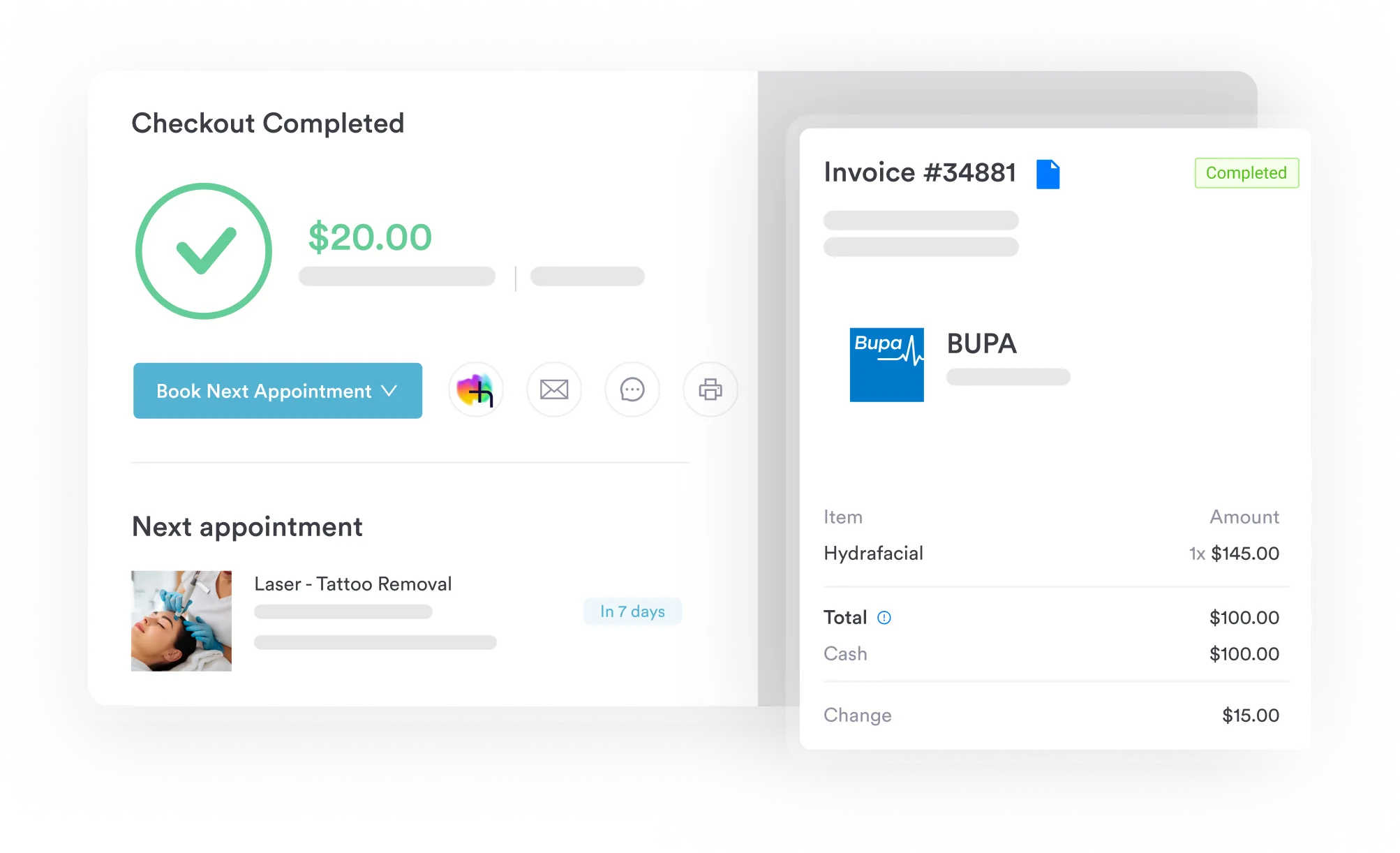
CMS confirms the F54 diagnosis code is valid and billable for fiscal year 2026, active and unchanged in the current ICD-10-CM code tables. Providers can submit it on HIPAA-covered transactions, including claims with Medicare, Medicaid, and commercial payers.
| Code detail | Value |
|---|---|
| Code | F54 |
| Full description | Psychological and behavioral factors associated with disorders or diseases classified elsewhere |
| Short description | Psych and behavrl factors assoc w disord or dis classd elswhr |
| ICD-10-CM block | F50-F59 (Behavioral syndromes associated with physiological disturbances and physical factors) |
| Chapter | F01-F99 (Mental, Behavioral and Neurodevelopmental disorders) |
| Billable | Yes |
| HIPAA-valid | Yes |
| Code first instruction | Yes (underlying physical condition must be sequenced first) |
| FY 2026 status | Active, no change from prior year |
The CDC/NCHS ICD-10-CM web tool confirms F54’s active status for 2026 and provides the official tabular list entry, including the Applicable To note and Code First instruction. Coders should verify the current year’s listing at the start of each fiscal year, as CMS updates take effect each October 1.
Practices managing behavioral health billing in a mental health practice management system benefit from having these code details pre-loaded with correct sequencing flags, reducing manual error at the point of claim submission.
The most critical rule for ICD-10 Code F54 is the Code First instruction. F54 describes a manifestation of an underlying disease, not the disease itself. Under ICD-10-CM convention, manifestation codes cannot be sequenced as the principal diagnosis on a claim.
When a patient presents with a physical condition that is being influenced by psychological or behavioral factors, the sequencing must follow this order:
Reversing this order is a coding error. Payers may reject or down-code any claim where F54 appears as the primary diagnosis without a supporting physical condition code. The CMS ICD-10-CM coding guidelines specify that conditions with a manifestation code convention must follow the etiology/manifestation sequencing rule without exception.
The official ICD-10-CM tabular list includes an Applicable To note under F54: “Psychological factors affecting physical conditions.” This note clarifies that the code applies when psychological processes contribute to a documented physical disorder, not for psychological distress in isolation.
Index entries for F54 include terms such as “psychic, associated with diseases classified elsewhere” and selected somatic presentations with documented psychological contributors. Coders should always verify through the ICD-10-CM Alphabetic Index rather than relying on memory for synonyms. The AAPC Codify ICD-10-CM lookup provides the full index entry list alongside the tabular description. Psychiatry practices can manage these multi-code submissions efficiently using psychiatry documentation workflows built for complex sequencing. An out-of-network claim rests on the paperwork the practice hands over, so what a superbill includes matters. The billing cycle for one claim can run weeks, and most of that time is spent waiting on a payer.
F54 is secondary by convention. Current ICD-10-CM rules permit no scenario where a coder correctly sequences F54 as the principal diagnosis on an inpatient admission or the first-listed diagnosis on an outpatient claim.
However, as a secondary code it carries real clinical weight. Payers increasingly use secondary codes to inform medical necessity, care management stratification, and risk scoring. Documenting F54 on a claim signals that the treating team has assessed the psychological component of the physical condition and is factoring it into the care plan. This is particularly relevant for practices using psychology practice software that submits behavioral health codes alongside medical diagnoses.
Flag F54 in your EHR or practice management system as a secondary-only code so it cannot be entered as the first-listed diagnosis. This prevents sequencing errors before they reach the claim. Pabau’s claims management workflows allow you to set code-level rules that catch this type of error at the point of documentation, not after a denial.
F54 occupies a specific and narrow clinical lane. Several adjacent codes cover overlapping territory, and choosing the wrong one creates medical necessity problems, audit risk, and claim denials. The most common source of confusion involves F45 (Somatoform disorders).
The distinction is clinically significant. With F45, the physical symptoms are not fully explained by a medical condition: the somatic complaints exceed or cannot be accounted for by an underlying diagnosable disease. With F54, there is a real, identifiable physical condition coded elsewhere, and the psychological factor is influencing that condition. F54 and F45 are not interchangeable.
Confusing these two codes can misrepresent the clinical picture. It can also affect reimbursement: F45 codes may trigger different medical necessity rules than F54 paired with a physical diagnosis code.
F43 captures the psychological reaction itself: post-traumatic stress disorder, acute stress reaction, adjustment disorder. If the clinical question is “how has this patient responded to a stressor?”, F43 is likely the more appropriate code. If the question is “how is this patient’s psychological state affecting their physical condition?”, F54 is the right choice. Both codes can appear on the same claim when both elements are independently documented. Practices billing for integrated behavioral and physical health care.
Z codes document circumstances and social determinants that influence health but are not themselves disease states. If a patient’s chronic stress is driven by housing instability (Z59.0) or employment problems (Z56.x), those Z codes capture the social context. F54 captures the clinical impact of psychological factors on a physical condition. These are complementary, not competing, and both can appear on the same encounter when documentation supports them. For a related clinical reference on anxiety-spectrum coding.

Pabau’s claims management and digital documentation tools help mental health and integrative medicine practices submit complex multi-code claims accurately. See how the platform handles F-chapter and cross-chapter sequencing in a live walkthrough.

Using ICD-10 Code F54 on a claim without adequate clinical documentation is an audit liability. The record must establish two distinct elements: the presence of the underlying physical condition, and the clinician’s assessment that psychological or behavioral factors are materially contributing to that condition.
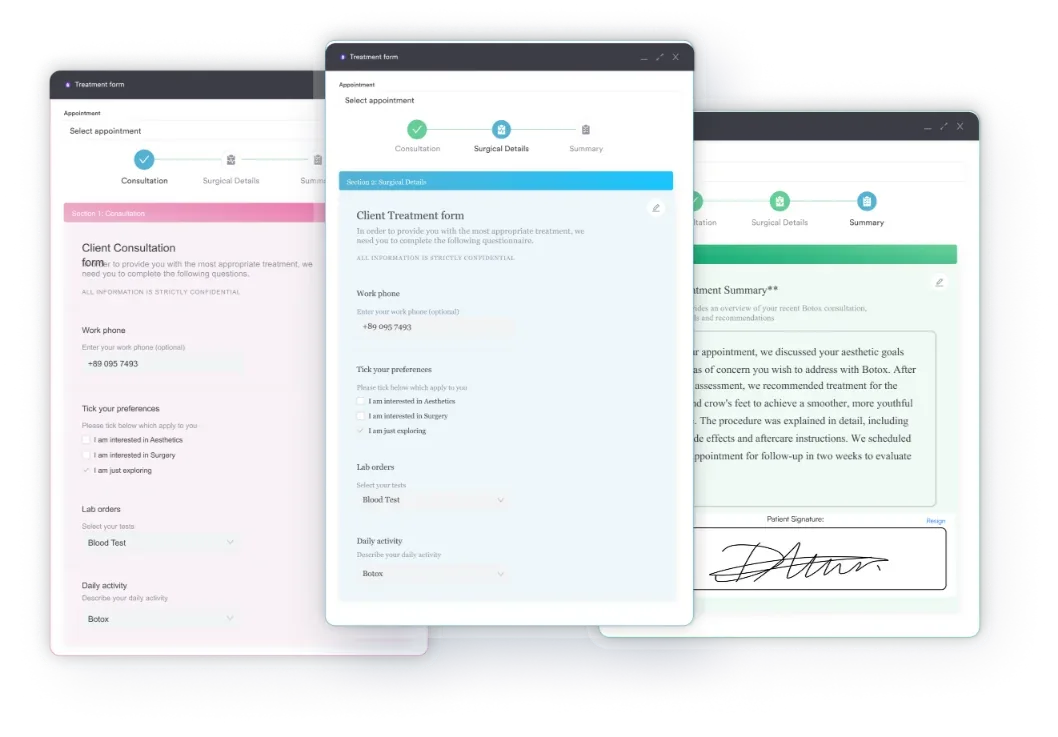
Practices using digital intake forms can build structured intake templates that prompt clinicians to capture the psychological contribution to physical complaints at the point of assessment, making F54 documentation a workflow step rather than a retrospective documentation task. Maintaining clinical record documentation that clearly links behavioral factors to physical diagnoses also supports audit defense. For guidance on staying within HIPAA requirements for behavioral health records.
In the DSM-5, the closest parallel to F54 is “Psychological Factors Affecting Other Medical Conditions,” a diagnostic category that requires similar documentation: a medical symptom or condition is present, psychological or behavioral factors adversely affect it, and the relationship is not better explained by another mental disorder. The DSM-5 and ICD-10-CM are separate systems with differing terminology. For billing purposes, F54 is the ICD-10-CM code that most closely aligns with this DSM-5 category.
When building clinical note templates for psychosomatic presentations, include a dedicated field for ‘Psychological contribution to physical condition’ that requires free-text input. This creates an explicit documentation trail for F54 use and supports the contributory link required by payers. Pabau’s digital forms allow you to create custom structured fields across any template type.
Abstract coding rules become clearer with concrete examples. The following scenarios illustrate correct and incorrect F54 use across different specialty contexts.
A patient with a documented history of IBS presents during a period of occupational stress. The gastroenterologist notes that stress appears to be driving a significant symptom flare. The correct coding sequence is:
A dermatologist documents that a patient’s psoriasis flare is temporally correlated with a period of psychological distress and that standard topical treatment has been less effective than expected given disease severity. The record explicitly notes the psychological contribution. Correct sequence:
A mental health clinician submits F54 as the sole diagnosis on a claim for a psychotherapy session focused on the mind-body connection. This is incorrect. F54 must be paired with a physical condition code from another chapter. The appropriate coding for a psychotherapy encounter addressing psychological distress would use appropriate F3x-F4x codes, with F54 added only if a specific physical condition is also documented and influenced by the psychological factors being treated.
For practices that manage behavioral health claims alongside physical diagnoses. Coding education for psychiatric practices is also covered in our autism spectrum disorder ICD-10 code reference, which walks through similar Chapter F sequencing conventions.

F54 is one of the more nuanced codes in the F50-F59 block, not because the clinical concept is complex, but because the billing rules require deliberate sequencing and explicit documentation. The underlying physical condition always leads. The psychological contribution must be clearly stated in the record. And F54 as a standalone primary code is always incorrect.
Pabau’s claims management tools and structured digital intake forms give behavioral health and integrative medicine practices the documentation infrastructure to use ICD-10 Code F54 correctly, every time. To see how Pabau handles multi-code behavioral health claims in practice, book a demo with the team.

Billing a continuous glucose monitor supply? CGM supply allowance billing guide explains why CMS discontinued HCPCS code K0553 and what replaced it.
Billing an infusion pump battery replacement? infusion pump battery billing guide covers the coding rules and denial fixes for HCPCS code K0605.
Billing a power operated vehicle claim? power operated vehicle billing guide covers the weight capacity descriptor for HCPCS code K0808.
ICD-10 Code F54 is a billable diagnosis code meaning “Psychological and behavioral factors associated with disorders or diseases classified elsewhere.” It is used when psychological or behavioral factors are contributing to the onset, exacerbation, or maintenance of a documented physical condition coded in another chapter of ICD-10-CM.
Yes, F54 is a valid and billable ICD-10-CM diagnosis code for fiscal year 2026, confirmed as active by CMS. It is valid for HIPAA-covered transactions including Medicare, Medicaid, and commercial payer claims, provided it is sequenced as a secondary diagnosis behind the underlying physical condition code.
F45 (Somatoform disorders) applies when physical symptoms are not fully explained by an identifiable medical condition. F54 applies when a real, diagnosable physical condition exists and psychological or behavioral factors are influencing it. F54 requires a confirmed physical diagnosis coded elsewhere; F45 does not.
F54 must always be listed as a secondary or additional diagnosis. It is a manifestation code under ICD-10-CM convention and cannot be sequenced as the principal or first-listed diagnosis. The underlying physical condition must always be coded first.
Code the physical condition first using its appropriate ICD-10-CM code from the relevant body-system chapter, then list F54 as an additional diagnosis. The clinical documentation must explicitly state that psychological or behavioral factors are contributing to the physical condition, not simply that the patient has both a mental health concern and a physical diagnosis.
The closest DSM-5 category to ICD-10 Code F54 is “Psychological Factors Affecting Other Medical Conditions.” Both describe a diagnosed medical condition that psychological or behavioral factors are influencing, but DSM-5 and ICD-10-CM are separate systems with different terminology. For billing purposes, F54 is the ICD-10-CM code that aligns with this DSM-5 category.