Mental health self-care checklist
A mental health self-care checklist is a structured daily tool for tracking the ...

5
Last Updated: Oct 20, 2026

An adult counseling intake form is a structured questionnaire that collects demographic, clinical, and consent information from new therapy clients before their first appointment.
Essential sections include client contact details, presenting problem, mental health history, substance use history, family background, medications, emergency contacts, and informed consent acknowledgments.
Digital intake forms reduce administrative burden, improve data accuracy, and enable secure client portal completion before appointments, compared to paper-based intake.
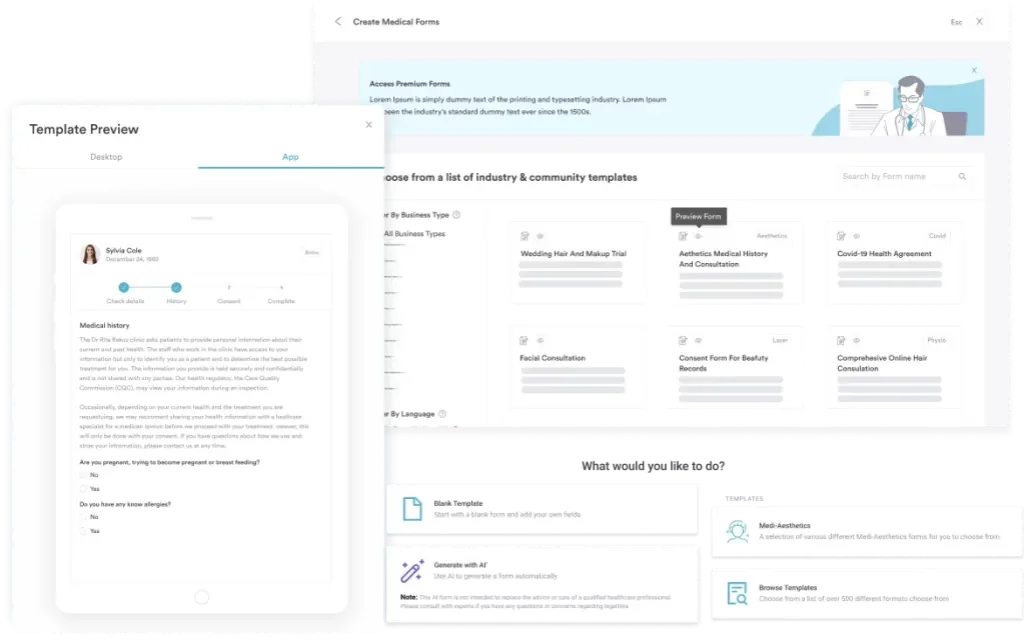
Practice management software like Pabau lets therapists create, customize, and distribute intake forms electronically through the client portal, automating data collection and HIPAA-compliant storage.
A ready-to-use intake form covering client demographics, presenting problems, mental health history, family background, substance use history, emergency contacts, insurance information, and informed consent declarations for adult therapy clients.
Download templateAn adult counseling intake form is the first structured touchpoint between a therapist and a new client. It captures the clinical and personal information you need to build an effective treatment plan, while documenting legal consent and confidentiality boundaries before the first session.
Whether you run a solo practice or a multi-clinician counseling center, this form shapes how a client experiences your practice from day one.
The adult counseling intake form is a structured assessment questionnaire designed to gather essential information from adults beginning mental health treatment. It serves three core purposes: documenting client history and presenting concerns, establishing informed consent and confidentiality agreements, and creating a foundation for the therapeutic relationship.
This form differs from an initial consultation note because it is completed by the client before the first session. It captures self-reported information about demographics, mental health history, family background, substance use, medications, emergency contacts, and prior counseling experience. Clinicians then review and expand on this information during the intake interview.
Legally, the form serves as documented evidence that a client has received information about therapy confidentiality, limits to confidentiality (mandated reporting, court orders), privacy rights under HIPAA, and their right to decline treatment. This protection applies equally to therapists, clinical social workers, licensed counselors, and psychiatrists in private practice.
An effective intake form organizes information into logical sections, each addressing a distinct clinical or administrative domain. Here is the standard structure:
The referral source line matters most when a counseling referral form came first. That form already logs the reason for referral and a 0–10 urgency scale, so your questions can build on it.
Each section should be clear, free of clinical jargon, and written at a reading level accessible to adults without healthcare backgrounds.
Using the form well involves five operational steps that integrate the form into your client onboarding workflow.
This process turns intake from a clerical task into part of the clinical relationship, cutting the time spent on data entry and giving you more context before the first session.
Weighing tools for your practice? Check how alternatives to Carepatron handle forms and client records.
A structured intake form is essential for mental health professionals across multiple practice contexts.
Solo and small-group therapy practices benefit most from a standardized intake form because it ensures consistent data collection and reduces the cognitive load on clinicians who manage their own scheduling and record-keeping.
If you’re also comparing systems to run the rest of your practice, our guide to the best therapy practice management software covers the leading options.
Community mental health centers and non-profit agencies use intake forms to standardize assessment across multiple clinicians and ensure compliance with funding and regulatory requirements (e.g., state licensing boards, accreditation bodies). Multi-clinician teams benefit from a shared intake template that all staff understand.
Consistent intake data also supports accurate billing later — for example.
Substance abuse counseling programs require additional intake questions about substance use history, triggers, prior treatment attempts, and recovery goals. The form can be customized to include these specialized sections while maintaining the core structure — for example.
Trauma-informed therapy practices may add screening questions for trauma exposure, dissociation, and PTSD symptoms, and include explicit information about trauma-specific confidentiality protocols and crisis safety planning.
A comprehensive intake form provides operational, clinical, and legal benefits for therapy practices.
Mental health records are among the most sensitive healthcare documents. A completed intake form contains protected health information (PHI) under HIPAA, so it requires secure transmission, encrypted storage, and access logging.
It helps to know where the form sits legally. The intake form lives in the client’s medical record as ordinary PHI. Psychotherapy notes are a separate, more protected category: the private notes a therapist keeps to analyze a session, stored apart from the record.
Under 45 CFR § 164.501, psychotherapy notes specifically exclude anything summarized in the record itself, such as diagnosis, medications, symptoms, and the treatment plan. Most of what an intake form captures is therefore standard PHI. Notes that do qualify as psychotherapy notes need specific written authorization to disclose under 45 CFR § 164.508.
If your intake form requests information about substance use disorders, those records fall under additional federal protections under 42 CFR Part 2. This means you cannot disclose substance use treatment records without explicit written consent, even to other healthcare providers treating the same client.
Best practice: Use a secure patient portal software or encrypted email to distribute intake forms, never unencrypted email or paper copies left in waiting rooms. After submission, verify the form was received and acknowledge completion to the client. Store the original document in a secure electronic health record with access restricted to authorized clinicians and administrative staff.
While the core sections apply across therapy specialties, you may need to add or emphasize certain sections depending on your clinical focus.
For couples work, the expanded family history section sets up the first joint meeting. A structured set of marriage counseling questions carries the assessment forward, covering communication, trust, intimacy, and shared goals.
If you work with clients under 18, use our adolescent intake questionnaire instead — it adjusts consent, confidentiality, and parental involvement language for minors.
You can also add branching logic: for example, if a client indicates prior therapy, reveal follow-up questions about therapist name, duration, and what was helpful or unhelpful. Digital form tools enable this conditional display without overwhelming clients with irrelevant questions.
These specialty adaptations pair well with condition-specific worksheets you introduce later in treatment — for example.

Send intake forms electronically, collect responses securely, and store completed forms in compliant client records. See how digital intake workflows reduce appointment prep time.

Mental health intake is a critical moment where clients decide whether to trust your practice. An intake form that uses jargon, assumes US-centric perspectives, or ignores accessibility needs can alienate clients before therapy even begins.
Plain language: Avoid clinical terminology like “psychotropic medications” or “suicidal ideation.” Instead ask “What medications are you currently taking?” and “Have you ever had thoughts of hurting yourself?” Aim for a 6th- to 8th-grade reading level.
Multilingual options: If your practice serves non-English speakers, provide intake forms in Spanish, Mandarin, or other prevalent languages in your community. Partner with professional medical translators rather than automated translation services to ensure accuracy on sensitive mental health items.
Accessibility for vision and cognitive disabilities: If using digital forms, ensure high contrast text, readable fonts (sans-serif, 12-14pt minimum), and screen-reader compatibility. For clients with cognitive disabilities, consider a shorter version with branching logic that reveals follow-up questions only when relevant.
Cultural responsivity: Add questions about cultural background, spiritual/religious beliefs, immigration history, and experiences of discrimination where relevant to the client’s presenting concerns. Frame these as strengths and sources of resilience, not deficits.
Therapists often struggle with intake form design. Here are the most common pitfalls and how to fix them.
A well-designed intake form does three jobs at once. It collects the clinical information you need to plan treatment, it documents informed consent, and it shows new clients that your practice is organized and respectful of their privacy. That is a strong first impression before you have even met.
Use the template provided above, customize it for your clinical specialty and practice context, and distribute it electronically via a secure client portal. Store completed forms with full HIPAA compliance, review responses before each first appointment, and use intake data to deepen rather than repeat during the intake interview.
The investment in a thoughtful intake process pays dividends in reduced appointment prep time, improved clinical clarity, and stronger therapeutic alliances from day one. Ready to streamline your intake workflow? Book a demo and see how Pabau’s digital forms help therapy practices automate intake and client onboarding.

Want to bring meditation into a session? Metta meditation script gives you three scripts to read aloud, the five stages, pause timings, and a before-and-after rating.
Need a quick reference for MI sessions? Motivational interviewing cheat sheet puts OARS, PACE, DARN-CAT, and the five stages of change on one printable sheet.
Curious about a personality-based assessment tool? Number personality test sorts clients into nine types, each with a core desire, core fear, and stress response.
An adult counseling intake form is a structured questionnaire that collects demographic, clinical, and consent information from adults beginning mental health treatment. It includes sections on presenting problem, mental health history, family background, substance use, medications, emergency contacts, and informed consent acknowledgments.
A core template can apply to all adult clients, but you can customize branching questions based on specialty (e.g., trauma screening for trauma therapists, substance use detail for addiction counselors). Digital forms enable conditional logic so clients only see questions relevant to their situation.
While not explicitly mandated by federal law, intake forms documenting informed consent and confidentiality acknowledgments are standard of care and strongly recommended by professional associations (APA, NASW). They provide legal protection if issues of mandated reporting or record requests arise.
Contact the client immediately before their first appointment. Conduct a suicide risk assessment by phone, document the conversation, and determine whether the client needs crisis services or a higher level of care before therapy can begin. Never ignore a high-risk disclosure.
Aim for 10-15 minutes. Longer forms experience higher abandonment rates. Prioritize essential information and save detailed assessments for the intake interview or follow-up appointments once the therapeutic relationship is established.
Yes. “Therapy intake form,” “counseling intake form template,” and “adult counseling intake form” all describe the same document: the questionnaire a new adult client completes before their first session. This template works for individual therapy, counseling, and general mental health intake. Adjust the sections to match your specialty.