CPT Code 98981: RTM Treatment Management Billing Guide
CPT code 98981: Definition and official descriptor CPT code 98981 is an add-on c...

Last Updated: Nov 9, 2026
S0178 is the HCPCS Level II code for lomustine, oral, 10 mg. Lomustine is an alkylating chemotherapy drug, sold as Gleostine and as generic capsules, for brain tumors and relapsed Hodgkin lymphoma. Each unit equals 10 mg, so a 230 mg dose bills as 23 units.
S0178 is a non-Medicare code. Medicare fee-for-service does not pay it, and most plans cover lomustine through the pharmacy benefit by National Drug Code (NDC). Use S0178 only when a commercial plan or Medicaid program asks for it on a medical claim.
Let Pabau's smart automation suggest the right codes, reduce claim denials, and keep your practice compliant—effortlessly.
Automate repetitive tasks and focus on what matters most—your patients.
Reduce coding errors and ensure compliance with the latest regulations.
Clean claims, fewer denials, and faster reimbursements.
Powerful insights and reporting to help your practice thrive.
HIPAA compliant SOC 2 certified GDPR-compliant Trusted by 4,000+ clinics worldwide

HCPCS code S0178 describes oral lomustine, 10 mg, as a drug supply with no administration service attached.
One unit equals 10 mg, and the label rounds each dose to the nearest 10 mg, so units equal the dose divided by 10.
Lomustine is given as one dose every 6 weeks, so a correct claim carries one dose per cycle, never a full bottle.
Medicare fee-for-service does not pay S0178, and Medicare patients usually fill lomustine through Part D by NDC.
Some commercial payers and Medicaid programs accept S0178 on medical claims, but acceptance and prior authorization vary by plan.
HCPCS code S0178 is a temporary national Level II code for lomustine, oral, 10 mg. It sits in the S-series, which commercial payers and some Medicaid programs use for items Medicare doesn’t price.
The code took effect on January 1, 2002, and is still active in the October 2026 CMS HCPCS file.
Lomustine is an alkylating chemotherapy drug that patients swallow as capsules. Its FDA-approved uses are primary and metastatic brain tumors, after surgery or radiation, and Hodgkin lymphoma that has progressed after initial chemotherapy.
S0178 lets a plan price that drug on a medical claim when it wants the supply billed there. Most of the time, though, lomustine never touches a medical claim at all.
S0178 pays for the lomustine itself. The patient takes the capsules by mouth, so the code has no injection, infusion, or administration step built in. Chemotherapy administration codes don’t belong on the line.
Here’s how the scope breaks down on a claim:
The neighboring S-codes follow the same pattern, each with its own unit size. S0177 covers oral levamisole in 50 mg units, and S0179 covers oral megestrol acetate in 20 mg units. If the prescription isn’t lomustine, S0178 is the wrong code.
S0178 also has no link to leuprolide. Leuprolide depot injections bill under J-codes, such as J1950 per 3.75 mg, J9217 for 7.5 mg, and J9218 per 1 mg.
Lomustine dosing makes the unit math unusually clean. The label sets the adult and pediatric dose at 130 mg/m² by mouth every 6 weeks, rounded to the nearest 10 mg. Because the dose is always a multiple of 10, units equal the dose divided by 10.
The prescriber may reduce the dose for low blood counts or other toxicity. Bill the units for the dose actually dispensed, not the starting dose in the treatment plan.
The label also limits what you dispense. It tells prescribers to order only one dose per treatment cycle, and pharmacists not to hand over the whole container. So a correct S0178 line covers one dose, and a second line inside 6 weeks needs explaining.
That rule protects patients from a dangerous overdose. Lomustine causes delayed bone marrow suppression, about 4 to 6 weeks after each dose, and the label carries a boxed warning about it.
Before you code anything, decide which benefit pays. Lomustine is a self-administered oral drug, so most plans cover it under the pharmacy benefit. The pharmacy bills the plan with the NDC, and no HCPCS code appears on that claim.
Medicare adds a second reason to stay off the medical claim. Part B pays for an oral cancer drug only when an injectable drug with the same active ingredient exists. Lomustine has no injectable form, so Part B doesn’t cover it, and Medicare patients usually fill it through their Part D plan.
S0178 itself carries coverage indicator I in the CMS file, meaning not payable by Medicare. Send it on a Medicare fee-for-service claim and the line is rejected.
S0178 belongs on a medical claim only when a plan tells you to use it, often when the practice dispenses the drug itself. The quickest way to settle the benefit question is insurance eligibility verification before the dose is dispensed. It also tells you whether the plan wants prior authorization.
The decision path below runs those checks in the order a biller should ask them.
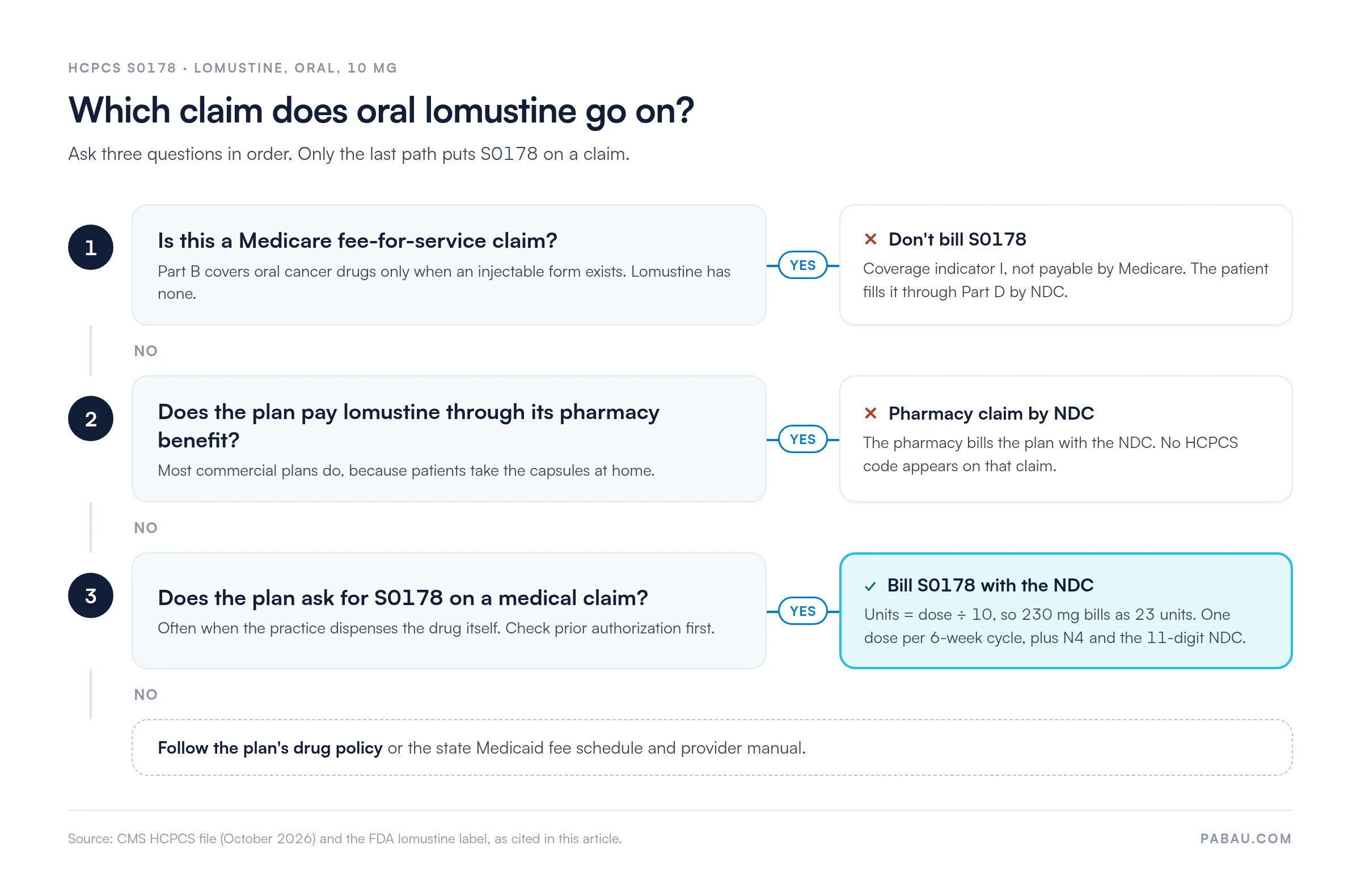
With the benefit settled, the claim follows a fixed sequence. Each step feeds a field the payer checks later.
On a paper CMS-1500 form, the NDC details go in the shaded area of item 24A. Electronic claims carry them in the drug identification loop of the 837P file. A dose that mixes capsule strengths may need one line per NDC, so check the plan’s companion guide.
Payers check the diagnosis against their covered-indication list for lomustine. Code the condition the prescriber documented, at the highest specificity ICD-10-CM allows.
Use C71.9, the unspecified brain code, only when the record gives no site. Off-label use is where claims get harder. Some plans allow it with prior authorization and supporting notes, while others exclude it, so check the drug policy before dispensing.
Even careful billers slip on the same few points with this code. Watch for these:
Keep a short payer grid for oral chemotherapy. For each plan you bill, record whether it pays lomustine through the pharmacy or medical benefit. Note whether it accepts S0178 and wants prior authorization each cycle. Review the grid when plan years renew.
When a denial does land, start with the reason code on the remittance. The guide to denial codes in medical billing explains how to read each one. Log each S0178 denial by reason, and fix the step that caused it before the next cycle.
Because Medicare doesn’t pay S0178, CMS publishes no national payment amount for it. The CMS HCPCS quarterly update lists the code and its status, not commercial rates. Each commercial contract or state Medicaid fee schedule sets its own rate per unit.
To find your rate, check the fee schedule addendum in your payer contract, then compare remittances across plans. A per-unit rate below your acquisition cost is worth raising at renewal. Keep the dispensing record with each claim, because every billed unit must trace back to it in an audit.
Most S0178 errors start when claim details get retyped from the prescription record. Pabau, the practice management and billing platform we build, pre-fills the claim form from the patient record. The HCPCS code and diagnosis come straight from what the clinician documented.
Its claims management software also checks that required claim fields are complete before you send. US practices submit through Claim.MD, with eligibility checks and remittance posting in the same place. You still decide the benefit, units, and NDC, but you enter them once.
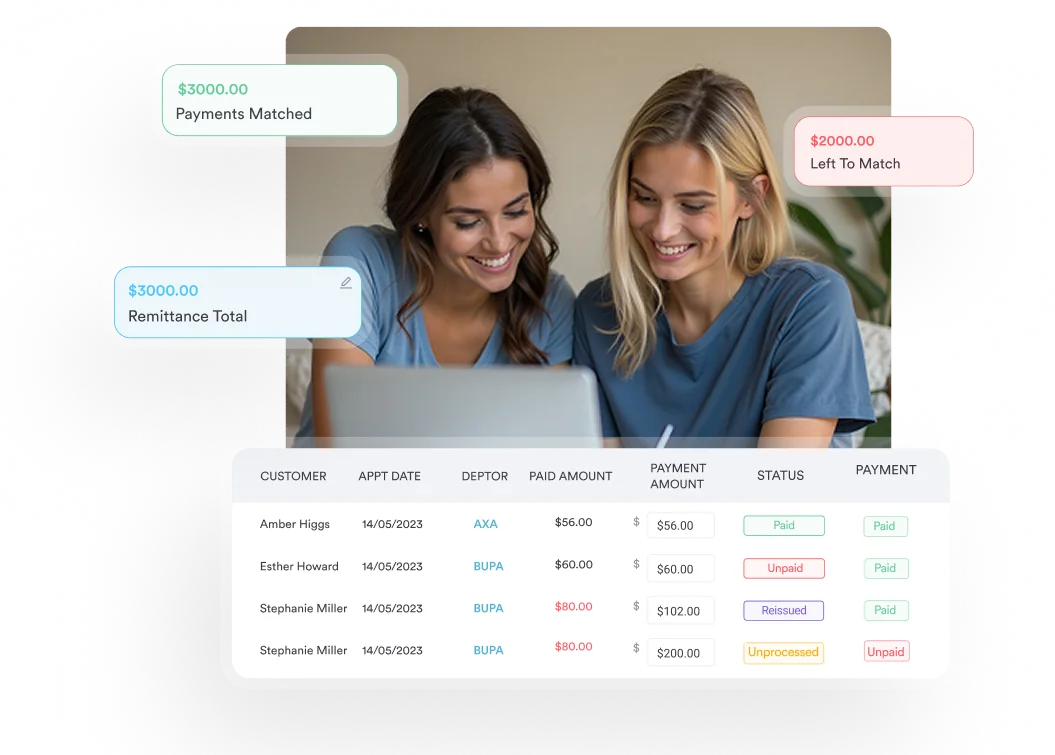

Pabau pre-fills claims from the patient record and checks required fields before submission, so S0178 claims leave your practice complete.

S0178 has one narrow job, pricing oral lomustine in 10 mg units for the plans that ask for it. Bill it as a single-dose drug supply, never as an administration service, and most avoidable denials disappear.
The decision that matters most comes before coding. If the patient has Medicare, or the plan pays lomustine through the pharmacy, leave S0178 off the claim. If the plan does want it, bill one dose per 6-week cycle and keep the NDC quantity in step with the units.
Book a demo to see how Pabau pre-fills drug-supply claims from the patient record and checks required fields before they reach the payer.

Want every claim to pass on the first submission? What is a clean claim? sets out the fields and checks that let a payer process a claim without follow-up.
Billing another oral cancer drug? HCPCS code J8510 covers oral busulfan, with its own unit size and coverage rules.
Need to read the payment that comes back? Electronic remittance advice explains how to read an 835 and match each line to its claim.
Coding a neighboring S-code? HCPCS code S0179 covers oral megestrol acetate in 20 mg units.
S0178 is the HCPCS Level II code for lomustine, oral, 10 mg. It is a temporary national S-code, active since January 1, 2002. Commercial payers and some Medicaid programs use it to price oral lomustine on a medical claim.
Divide the dose in milligrams by 10. The label rounds each lomustine dose to the nearest 10 mg, so the result is always a whole number. A 230 mg dose bills as 23 units.
No. S0178 carries Medicare coverage indicator I, not payable by Medicare. Medicare patients usually get lomustine through their Part D plan, which the pharmacy bills by NDC.
No. J8999 covers oral chemotherapy not otherwise classified. But Medicare Part B pays oral cancer drugs only when an injectable form with the same active ingredient exists. Lomustine has none, so Part D is the usual Medicare route.
Lomustine is sold as Gleostine and as generic capsules. CeeNU is the older brand name. The current label lists 10 mg, 40 mg, and 100 mg capsules, and S0178 counts every strength in 10 mg units.
No. S0178 describes oral lomustine only. Leuprolide depot injections bill under J-codes, such as J1950 per 3.75 mg, J9217 for 7.5 mg, and J9218 per 1 mg.