

HCPCS code E0198: Water pressure pad billing guide
HCPCS code E0198 is a water pad for a standard mattress HCPCS code E0198 is the ...

Last Updated: Oct 13, 2026
J9177 is the HCPCS Level II code for injection, enfortumab vedotin-ejfv, 0.25 mg.
Because PADCEV is a high-cost oncology drug, using accurate claims management software to track HCPCS Level II drug codes like J9177 helps reduce keystroke errors and duplicate claim submissions.
J9177 falls within the chemotherapy drugs series (J9000-J9999), the range CMS uses for injectable antineoplastic and related therapeutic agents billed under Medicare Part B. In addition, the SEER CanMED oncology database categorizes J9177 under Immunotherapy, with a major drug class of Drug Antibody Conjugate and a minor drug class of Nectin-4.
Let Pabau's smart automation suggest the right codes, reduce claim denials, and keep your practice compliant—effortlessly.
Automate repetitive tasks and focus on what matters most—your patients.
Reduce coding errors and ensure compliance with the latest regulations.
Clean claims, fewer denials, and faster reimbursements.
Powerful insights and reporting to help your practice thrive.
HIPAA compliant SOC 2 certified GDPR-compliant Trusted by 4,000+ clinics worldwide

HCPCS code J9177 describes Injection, enfortumab vedotin-ejfv (PADCEV), 0.25 mg, effective July 1, 2020, used for metastatic urothelial carcinoma.
One billable unit equals 0.25 mg, so dose calculation directly determines unit count on the claim.
J9177 is subject to mandatory JW and JZ modifier requirements under CMS policy for Medicare claims.
Practice management software like Pabau streamlines oncology drug claim submission with built-in modifier tracking and documentation workflows.
Enfortumab vedotin-ejfv is an antibody-drug conjugate (ADC) that links a monoclonal antibody targeting Nectin-4, a protein overexpressed on urothelial cancer cells, to a cytotoxic payload (monomethyl auristatin E, or MMAE). As a result, the antibody delivers the cytotoxin directly to tumor cells, limiting systemic exposure compared with conventional chemotherapy.
The FDA granted accelerated approval in December 2019 and later converted to regular approval, based on clinical trial data showing clear improvements in overall survival for patients with locally advanced or metastatic urothelial carcinoma (bladder cancer and related urothelial tumors).
PADCEV is administered intravenously on days 1, 8, and 15 of each 28-day cycle. It is supplied as a lyophilized powder in single-dose vials for reconstitution. Coders should note the single-dose vial status because it directly affects drug wastage billing under CMS policy.
CMS assigned J9177 a billing unit of 0.25 mg per unit, matching its usual approach of using the smallest practical dose increment to allow for dose variability. This means the number of units billed equals the total milligrams administered divided by 0.25.
For example, a patient receiving 125 mg in one infusion requires 500 units billed (125 / 0.25 = 500).
The prescribing information for PADCEV caps the dose at 125 mg regardless of body weight above 100 kg. Therefore, verify the administered dose against the pharmacy dispensing record before submitting the claim. Units billed should reflect the milligrams actually administered, not the vial size dispensed.
Medicare Part B reimburses most physician-administered drugs at Average Sales Price plus 6% (ASP+6%). For J9177, the West Virginia Bureau for Medical Services fee schedule (effective October 1, 2025) lists a payment limit of $36.743 per 0.25 mg unit.
CMS updates ASP pricing every quarter, so practices should always verify the current rate directly from the CMS Physician Fee Schedule lookup before processing claims.
ASP+6% (typical Medicare): The standard Medicare Part B rate for drugs billed by physician offices and outpatient clinics under the buy-and-bill model.
WAC-based rates: When ASP data is unavailable for a new drug, CMS reimburses at Wholesale Acquisition Cost plus 3% (WAC+3%). However, J9177 now has established ASP data.
Hospital Outpatient Prospective Payment System (OPPS): Hospital outpatient departments bill J9177 under OPPS, where the drug is typically packaged into an Ambulatory Payment Classification (APC) group rather than paid at the ASP+6% rate used in physician offices. As a result, the reimbursement structure differs a lot between settings. This is separate from the administration codes themselves. Australian MBS billing changes descriptors and fees periodically, so last year printout is not a safe reference.
Prior authorization: Commercial payers and some Medicare Advantage plans require prior authorization before PADCEV infusion. Since payer requirements vary, confirm authorization status and document the approved authorization number on the claim before submission. Practices using dedicated HIPAA-compliant documentation workflows.
Check CMS quarterly ASP Drug Pricing Files every January, April, July, and October. The ASP update for Q3 (July 1) is often the most significant for oncology drugs introduced mid-year. Build a calendar reminder for your billing team to pull the new file and update your fee schedule reference on each update date.
Practices administering injectables should read up on inventory software for medical spas before wastage eats the margin.
J9177 appears clearly on the CMS JW Modifier and JZ Modifier Policy HCPCS Codes list, making modifier compliance mandatory for Medicare claims. Getting this wrong triggers audits and overpayment demands, since PADCEV’s high cost attracts scrutiny from Medicare Administrative Contractors (MACs). The same modifier discipline applies to other administration codes.
The JW modifier identifies the portion of a single-dose vial that was drawn but discarded. PADCEV is dispensed as a single-dose vial in 20 mg (NDC 51144-0020-xx) and 30 mg (NDC 51144-0030-xx) presentations. Because doses are weight-based and vials come in fixed sizes, wastage is common.
For example, a patient weighing 70 kg receives 87.5 mg (350 units of J9177). To prepare that dose, the provider uses three 30 mg vials (90 mg total), so the 2.5 mg of unused drug becomes wastage.
On the claim, bill 350 units of J9177 for the drug administered, plus a separate line with the JW modifier for the remaining 10 units (2.5 mg / 0.25 mg = 10 units) discarded. CMS reimburses JW-billed wastage at the same ASP+6% rate, provided the medical record documents the administered dose and wastage amount.
When no drug is wasted, meaning the dose exactly matches vial content, the JZ modifier must be appended to J9177 to clearly declare zero wastage. This modifier signals CMS that the provider reviewed wastage and confirms none occurred.
Omitting JZ when wastage is zero raises audit flags, similarly to how a missing JW does when wastage is present. Documentation must confirm the administered dose equals the vial amount dispensed.
In addition to modifier accuracy, practices managing infusion drug billing can use the prescription management tools inside practice management software like Pabau to document administered drug quantities and vial usage at the point of care. This creates an audit trail that supports both the administered-dose line and the JW wastage line on the claim.

Pabau’s claims management tools help infusion practices track drug administration, modifiers, and ICD-10 documentation in one place, so claims submit clean the first time.

Many payers require National Drug Code (NDC) reporting alongside J9177 on outpatient drug claims. In addition, NDC reporting captures the specific product dispensed, including the lot number and NDC qualifier code.
The two established NDCs for PADCEV are listed below. Verify the specific NDC on the dispensed vial label before entering it on the claim, because product package changes can alter the last segment of the NDC.
On CMS-1500 claims, NDC is reported in box 24 using the qualifier N4 followed by the 11-digit NDC in 5-4-2 format, the unit qualifier UN (units), and the quantity dispensed. On UB-04 institutional claims, NDC is reported in the drug information loop (loop 2410 in the 837I transaction).
Confirm payer-specific NDC format requirements before submission, since reporting formats can differ between Medicare and commercial plans. Accurate diagnosis documentation matters just as much, because ICD-10 coding accuracy directly supports the broader claims process.
Every J9177 claim requires at least one ICD-10-CM diagnosis code establishing medical necessity. PADCEV is FDA-approved for locally advanced or metastatic urothelial carcinoma. The diagnosis codes listed below represent the most commonly paired codes. In addition, always document the specific site and laterality based on the patient’s pathology report and staging.
Document the specific ICD-10-CM code in the medical record before coding the claim. Linking the diagnosis to the drug administration note, infusion flowsheet, and oncologist order closes the audit loop.
Consistent ICD-10 documentation supports accurate claim linkage across specialties, and the same coding discipline applies to other clinical areas that report similar diagnoses.
Because urothelial carcinoma is treated across multiple drug classes, coders supporting oncology practices need to recognize codes that commonly appear alongside or instead of J9177, depending on the patient’s treatment regimen and line of therapy.
The EV-302/KEYNOTE-A39 combination trial data supporting pembrolizumab plus enfortumab vedotin as first-line treatment for advanced urothelial carcinoma means that claims pairing J9177 and J9299 on the same date of service are clinically expected for many patients.
Therefore, the treatment plan documented in the medical record should reflect the approved combination protocol, since procedure code documentation and oncology care delivery are closely linked.
When billing J9177 alongside a checkpoint inhibitor like pembrolizumab (J9299) on the same infusion day, confirm that each drug has its own administration line with the correct quantity and modifier. Bundling or combining them into a single line is a common error that triggers NCCI editing flags and claim rejections.
Where PADCEV is administered determines which claim form and reimbursement pathway apply. The table below summarizes the key differences between the three most common settings. Some practices also coordinate home infusion or specialty drug administration for patients who cannot travel to a physician office or hospital outpatient department.
Buy-and-bill is the most common purchasing model for physician-office PADCEV administration: the practice purchases the drug from a distributor, administers it. Keep acquisition cost records on file in case of audit.
In addition, specialty pharmacy distribution, where the pharmacy ships directly to the infusion site, affects how the drug cost is recorded on the claim, and should be confirmed with the payer before the first infusion. Practices running multi-location infusion operations can benefit from Pabau’s multi-location management tools to standardize documentation and billing workflows across sites.
Billing HCPCS code J9177 correctly requires precise unit calculations, mandatory JW or JZ modifier application, accurate NDC reporting, and paired ICD-10-CM diagnosis codes that establish medical necessity for urothelial carcinoma treatment.
However, each of these elements interacts with the others: a correct dose calculation means nothing if the JW wastage line is missing, and a clean modifier set does not protect a claim with a wrong or unsupported diagnosis code.
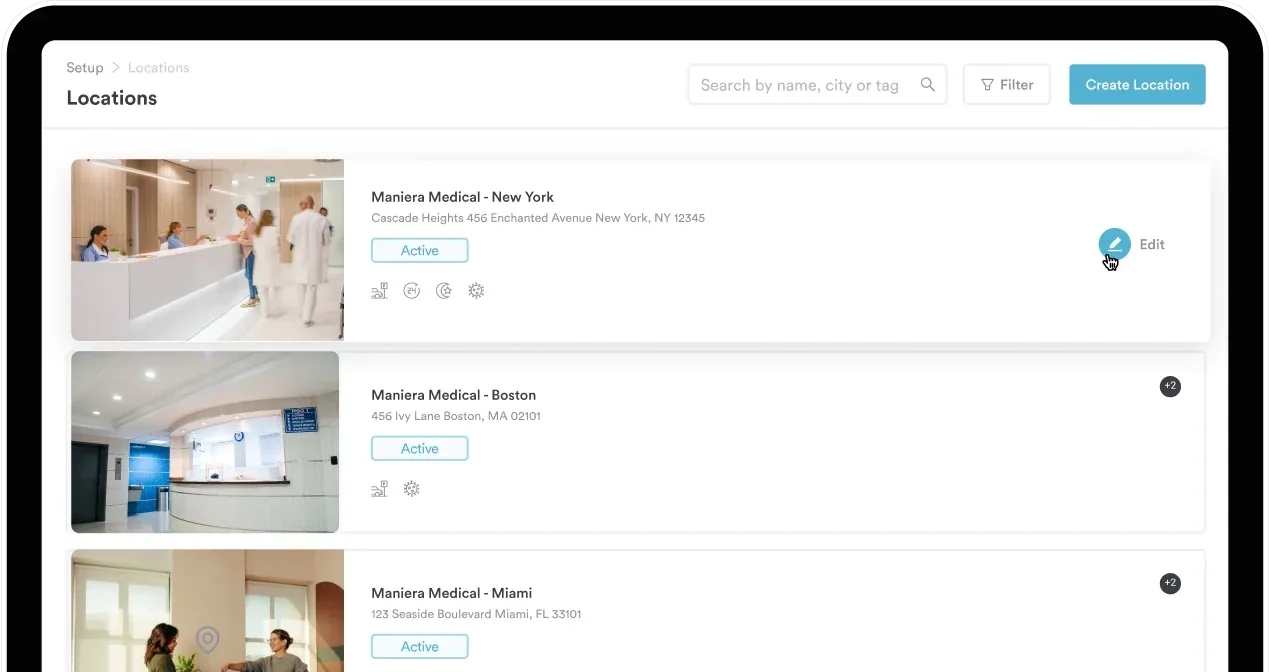
Pabau’s claims management software supports oncology and infusion practices with structured claim submission workflows, modifier tracking, and documentation linkage between the clinical encounter and the billing record. To see how Pabau handles oncology drug billing end to end, book a demo.

Coding a different diagnosis on this claim? Ankle abrasion coding guide covers the code structure, laterality variants, and documentation requirements for ICD-10 code S90.519A.
Billing a follow-up fracture visit instead? Calcaneus fracture coding guide explains how to code a delayed-healing calcaneus fracture at a subsequent encounter.
Billing a different injectable this week? HCPCS code J0690 covers injection, cefazolin sodium, 500 mg.
Coding an ophthalmology visit too? ICD-10 code H47.49 covers disorders of the optic chiasm.
Coding a different bone fracture today? Talus fracture coding guide covers the 7th character rules for a nonunion dome fracture of the left talus.
HCPCS code J9177 is a Level II chemotherapy drug code used to bill for Injection, enfortumab vedotin-ejfv (PADCEV), 0.25 mg, administered intravenously for locally advanced or metastatic urothelial carcinoma (bladder cancer). Each billable unit equals 0.25 mg of the drug administered.
Divide the total milligrams administered by 0.25 to determine the number of units. A 100 mg dose equals 400 units of J9177. Always base the unit count on the actual administered dose from the pharmacy or nursing administration record, not the vial size dispensed.
Yes, J9177 is on the CMS mandatory modifier list. Use the JW modifier to separately bill any drug drawn but discarded from the single-dose vial. Use the JZ modifier when the administered dose exactly matches vial content and no drug is wasted. Omitting either modifier when applicable triggers claim flags and potential audits.
Medicare reimburses J9177 at ASP+6% per 0.25 mg unit. A reference rate of $36.743 per unit appeared in the West Virginia Bureau for Medical Services fee schedule effective October 1, 2025, but CMS updates ASP pricing every quarter. Verify the current rate from the CMS Physician Fee Schedule lookup tool before billing.
C67.9 (malignant neoplasm of bladder, unspecified) and specific bladder site codes C67.0-C67.8 are the primary pairings. Upper tract urothelial carcinoma uses C65.x (renal pelvis) or C66.x (ureter) with laterality specified. Z79.899 is added as a secondary code to document ongoing chemotherapy.
HCPCS code J9177 became effective July 1, 2020. CMS established the code following FDA approval of enfortumab vedotin-ejfv (PADCEV) in December 2019 for locally advanced or metastatic urothelial carcinoma.
J9177 is a HCPCS Level II code, not a CPT code. Coders often search for a J9177 CPT code, but CPT codes are five numeric digits and describe procedures, while J9177 is an alphanumeric HCPCS drug code for the enfortumab vedotin-ejfv product itself. The infusion procedure is billed separately with CPT administration codes such as 96413.
Enfortumab vedotin-ejfv is an antibody-drug conjugate (ADC), and the SEER*Rx database classifies PADCEV under Immunotherapy rather than conventional chemotherapy. It carries a cytotoxic payload (MMAE) but delivers it through an antibody that targets Nectin-4 on tumor cells. For billing, J9177 still sits in the chemotherapy drugs J-code series (J9000 to J9999), so the claim uses a chemotherapy J-code regardless of the drug’s targeted mechanism.
The J-code for PADCEV is J9177, which describes injection, enfortumab vedotin-ejfv, 0.25 mg. One billable unit equals 0.25 mg, so a 100 mg dose is reported as 400 units of the PADCEV J-code on the claim.



