

HCPCS code E0198: Water pressure pad billing guide
HCPCS code E0198 is a water pad for a standard mattress HCPCS code E0198 is the ...

Last Updated: Oct 13, 2026
J9201 is the HCPCS Level II code for injection, gemcitabine hydrochloride, not otherwise specified, 200 mg.
Gemcitabine received FDA approval in 1996, according to the NCI SEER CanMED oncology toolbox. Its BETOS classification is Chemotherapy, and its Medicare coverage status is "D" - special coverage instructions apply. The action code is "N," meaning no active maintenance is required for the code descriptor itself. Practices billing gemcitabine under this code should review coverage instructions annually, as payer-specific LCD requirements can change with each CMS fiscal year update.
Let Pabau's smart automation suggest the right codes, reduce claim denials, and keep your practice compliant—effortlessly.
Automate repetitive tasks and focus on what matters most—your patients.
Reduce coding errors and ensure compliance with the latest regulations.
Clean claims, fewer denials, and faster reimbursements.
Powerful insights and reporting to help your practice thrive.
HIPAA compliant SOC 2 certified GDPR-compliant Trusted by 4,000+ clinics worldwide

HCPCS Code J9201 describes injection of gemcitabine hydrochloride, not otherwise specified, 200 mg – a chemotherapy antimetabolite used across multiple solid tumor indications.
Each billing unit equals 200 mg; a 1,000 mg dose requires 5 units of J9201 on the same claim line.
CMS designates J9201 as a single-dose container code – JW modifier (drug wastage) and JZ modifier (no wastage) are both required when applicable under current CMS policy.
Pabau’s claims management software helps oncology and infusion practices track drug units, attach modifiers, and submit clean claims with fewer denials.
Gemcitabine hydrochloride is an antimetabolite chemotherapy agent classified more specifically as a pyrimidine analog. It works by interfering with DNA synthesis in rapidly dividing cancer cells.
J9201 is the “not otherwise specified” code that applies to Gemzar (the original branded product) and to multi-source generic gemcitabine. Infugem is no longer billed under J9201: although CMS initially determined in its 2019 HCPCS Application Summary that J9201 adequately described Infugem, the agency subsequently established a dedicated code – J9198 (injection, gemcitabine hydrochloride, Infugem, 100 mg) – effective July 1, 2020. J9198 is billed in 100 mg units, not the 200 mg unit used for J9201, so Infugem doses must be calculated against the correct descriptor.
For practices running mobile IV therapy business models or outpatient infusion suites, understanding the drug class distinction matters: gemcitabine is a chemotherapy agent, not a standard infusion drug, and it carries a distinct regulatory and billing footprint from vitamins or hydration solutions.
Gemcitabine is approved for several solid tumor indications. Practices must document the specific diagnosis on every claim to support medical necessity.
Off-label uses exist for bladder cancer and other malignancies. Payer coverage for off-label indications varies – most commercial payers require compendia support (e.g., NCCN guidelines) before approving reimbursement. Always verify coverage before administration.
Every J9201 claim needs an ICD-10-CM diagnosis code that supports medical necessity for the administered indication. Payers publish covered diagnoses in their local coverage determinations (LCDs) and drug policies, so the exact list varies by plan. The FDA-approved and commonly compendia-supported diagnoses map to these ICD-10 families:
Match the gemcitabine ICD-10 code to the documented diagnosis for the encounter, and confirm the code appears on the payer’s covered list before submitting. For off-label indications such as bladder cancer, attach compendia support (the applicable NCCN category) to establish medical necessity.
J9201 is a HCPCS Level II code, not a CPT code – even though billers routinely search for the “J9201 CPT code” or the “gemcitabine CPT code.” CPT codes (HCPCS Level I) are maintained by the American Medical Association and describe procedures and services. HCPCS Level II codes, maintained by CMS, cover drugs, supplies, and items that CPT does not, which is why the gemcitabine J code sits in the J-code drug range.
Here is the practical takeaway. When a searcher looks up the CPT code for gemcitabine or the CPT code for Gemzar, the drug itself is reported with HCPCS code J9201, and the only CPT codes on the claim are the administration services (96413 and 96415). Report both on the same claim – the J9201 drug line and the CPT administration line – so the payer sees the drug and the service that delivered it.
One unit of HCPCS Code J9201 equals exactly 200 mg of gemcitabine hydrochloride. Oncology practices routinely administer doses far above 200 mg, so calculating J9201 billing units accurately is critical.
| Administered dose | Units to report | Claim line example |
|---|---|---|
| 200 mg | 1 | J9201 x 1 |
| 800 mg | 4 | J9201 x 4 |
| 1,000 mg | 5 | J9201 x 5 |
| 1,200 mg | 6 | J9201 x 6 |
| 1,400 mg | 7 | J9201 x 7 |
Round up to the nearest whole unit when the administered dose falls between exact multiples. If a patient receives 900 mg, report 5 units (rounding up from 4.5). Most commercial payer contracts follow the same rounding logic, but confirm with individual plan policies before submitting.
Billing for more units than the vial size permits is a common audit trigger. Document the vial size used, the calculated dose based on body surface area (BSA), the actual administered dose, and any drug wastage in the clinical record for every infusion encounter. Good claims management software can flag unit mismatches before the claim leaves the practice.
IV therapy practices chart these drug codes inside IV therapy EMR software, with dosage and consent attached.
CMS has explicitly identified HCPCS Code J9201 as a single-dose container code in its JW/JZ Modifier Policy document. This designation creates a mandatory modifier reporting obligation for Medicare Part B claims. The same CMS policy covers other Part B oncology drugs in single-dose vials, including ipilimumab billed under J9228.
The JW modifier is appended to a separate line for any drug drawn from a single-dose vial that was discarded rather than administered. If a vial contains 1,000 mg and only 800 mg was administered, the practice bills J9201 x 4 (JZ modifier) for the administered dose and J9201 x 1 (JW modifier) for the 200 mg wasted.
Documentation in the medical record must support the JW claim. Required elements include the vial lot number, the total amount drawn, the amount administered, and a statement confirming the remainder was properly discarded. Missing documentation is the leading reason for JW modifier denials on chemotherapy claims.
The JZ modifier signals that the entire contents of the single-dose container were administered with no wastage. This modifier became mandatory for applicable codes under CMS policy. When the full vial is administered, append JZ to the administered-dose line – do not leave the modifier field blank.
Failure to include either JW or JZ on a J9201 claim submitted to Medicare can result in claim rejection or audit exposure. Commercial payers vary: some require only JW for documented wastage, others are adopting the CMS dual-modifier model. Verify each payer’s current modifier policy before submission.
Review your vial inventory log monthly against your JW modifier claims. If your wastage rate exceeds 15-20% consistently, it may signal BSA calculation errors, dose rounding issues, or vial size procurement mismatches. Correcting procurement to better-matched vial sizes often reduces both wastage and administrative burden.
Medicare Part B reimburses HCPCS Code J9201 under the buy-and-bill model at 106% of the Average Sales Price (ASP). The ASP is updated quarterly by CMS, so the reimbursement rate for any specific claim date depends on the quarter in which the drug was administered.
Use the CMS Physician Fee Schedule lookup tool to verify the current payment rate for J9201 by locality. Rates vary by geographic payment locality due to the practice expense component. Hospital outpatient departments (HOPDs) are reimbursed under a different rate structure (OPPS/APC) rather than the ASP methodology used for physician offices and freestanding infusion centers.
Under the buy-and-bill model, the oncology practice or infusion center purchases gemcitabine directly from a specialty distributor, administers it, and then bills the payer for both the drug (J9201) and the administration service (96413, 96415). The practice assumes inventory risk: if a payer denies the drug claim, the practice has already incurred the acquisition cost.
Practices using EMR software for IV therapy practices can track drug acquisition costs alongside ASP reimbursement rates to monitor margin per infusion encounter. This matters most for gemcitabine because generic pricing fluctuates and ASP lags real-world acquisition costs by two quarters.

Pabau helps oncology and infusion practices attach modifiers correctly, track drug units, and submit clean claims – so your team spends less time on rework and more time on patient care.

The drug code J9201 covers only the gemcitabine itself. The chemotherapy administration service requires separate CPT coding. Failing to bill both the drug and the administration codes on the same claim is one of the most common sources of revenue loss in outpatient oncology.
| CPT code | Description | Use with J9201 |
|---|---|---|
| 96413 | Chemotherapy administration, intravenous infusion, up to 1 hour | First infusion hour – required on all gemcitabine claims |
| 96415 | Chemotherapy administration, each additional hour | Each additional hour beyond the first |
| 96417 | Chemotherapy administration, each additional sequential infusion, up to 1 hour | When a second chemotherapy drug is infused sequentially |
NCCI edits govern the bundling relationship between J9201 and administration codes. 96413 and 96415 are correctly unbundled from J9201 – the drug and the service are billed separately. However, bundling errors arise when practices incorrectly attempt to bill a hydration code (96360) alongside 96413 for the same encounter without meeting the separate and distinct service criteria. Confirm current NCCI edit status before billing combination encounters.
Practices integrating EHR and billing systems can automate the pairing of administration CPT codes with chemotherapy J codes at the point of encounter documentation, reducing manual coding errors on high-volume infusion days.
Many payers require National Drug Code (NDC) reporting alongside HCPCS Code J9201 on the claim. The NDC identifies the specific manufacturer and formulation of the gemcitabine product administered – J9201 maps to more than 50 active NDC codes as manufacturers produce generic versions alongside the original branded products.
NDC reporting format on a CMS-1500 claim follows the 11-digit format with the qualifier “N4” in the qualifier field. The NDC unit of measure is typically “ML” for milliliter when reporting liquid formulations. Check the drug label for the exact NDC, as NDC codes are product- and lot-specific and may change when a manufacturer reformulates or repackages.
Use the PGM Billing HCPCS lookup tool or the AAPC Codify HCPCS reference to cross-reference specific NDC codes against J9201. Both tools allow you to search by drug name or J code and verify which NDC codes are currently active and mapped to the descriptor.
Practices using prescription management software can store NDC-to-HCPCS mappings within the drug formulary module, enabling automatic NDC population when gemcitabine is selected during encounter documentation. This eliminates manual NDC lookup at claim submission and reduces transcription errors on high-unit-count infusion days.
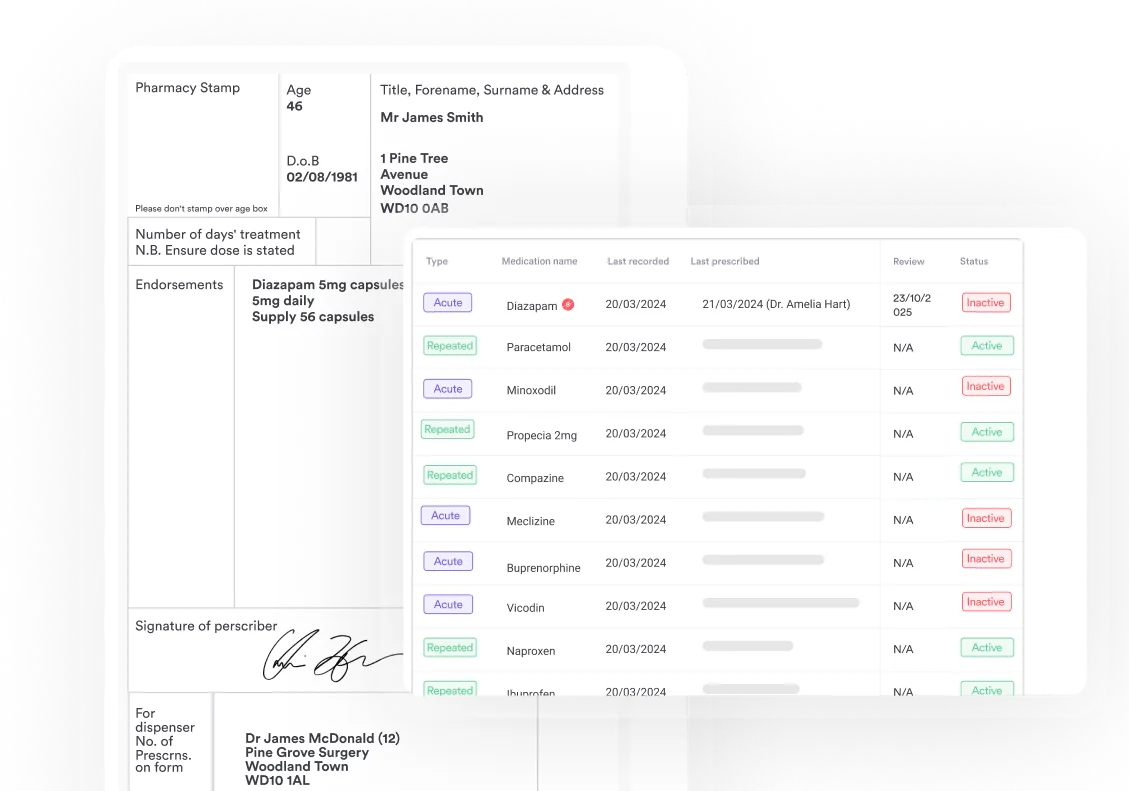
Build a standing NDC crosswalk spreadsheet for every chemotherapy drug your practice stocks. Include the J code, NDC, unit of measure, units per vial, and ASP reimbursement rate per 200 mg. Update it quarterly when CMS releases new ASP data. This document is also useful during payer audits.
Both J9196 and J9201 represent gemcitabine hydrochloride at 200 mg per unit, but they are not interchangeable. J9196 is the code for the Accord-manufactured gemcitabine that CMS flags as “not therapeutically equivalent to J9201” (a different product concentration), while J9201 is the “not otherwise specified” code used for generic and multi-source gemcitabine products.
Louisiana Medicaid’s Humana managed care plan, for example, issued explicit guidance distinguishing when to bill J9196 versus J9201 by provider specialty – home infusion therapy and pharmacy providers follow different routing than physician office providers. This payer-specific variation illustrates why practices must verify the applicable code for each payer contract rather than assuming a single code works across all plans.
A practical approach: bill J9201 as the default for generic gemcitabine, and check each payer’s formulary or LCD before submitting claims for branded formulations. Payer portals typically publish formulary updates in advance of the effective date, which gives practice billers time to adjust charge master entries. Compare this workflow to how practices manage IVF procedure billing codes – where payer-specific code routing is similarly critical to clean claim submission.
Medicare does not require prior authorization for J9201 as a standard rule, but individual Medicare Advantage plans may impose their own PA requirements. Commercial payers vary widely – some require PA for every chemotherapy drug claim, others apply PA only for specific off-label indications.
When PA is required, submit with supporting clinical documentation: the confirmed diagnosis (ICD-10 code), the treatment regimen, and the applicable NCCN guideline category for the indication. Incomplete PA requests are the most common reason for authorization delays in outpatient chemotherapy.
For practices building or scaling infusion services, reviewing IV therapy clinic billing best practices alongside oncology drug-specific guidance provides a more complete picture of the prior authorization landscape across infusion drug categories. Keep in mind that PA policies change annually – build a calendar reminder for November each year to review updated payer policies ahead of the January 1 effective date.
State Medicaid programs add another layer of variation. Coverage policies, approved indications, and modifier requirements differ by state. Always verify current policy directly with the state Medicaid agency or managed care organization before billing gemcitabine for a Medicaid-enrolled patient. Practices managing both Medicare and Medicaid populations should maintain separate billing protocols for each payer category.
J9201 denials cluster around four categories. Knowing the denial reason code tells you which documentation to gather for appeal.
Appeals should be submitted within the payer’s timely filing window – typically 60 to 180 days from the remittance date depending on the payer contract. Attach the original claim, the remittance advice with the denial reason code, and the supporting documentation for each specific denial category. Practices implementing infusion clinic operations from the ground up should build denial tracking into their revenue cycle workflow from day one rather than as a corrective action after denials accumulate.
Oncology billing involves more moving parts than most specialty types: drug units, modifiers, NDC codes, prior authorizations, and administration code pairing all need to align before a clean claim can go out. Errors compound quickly when any one element is missing or mismatched.
Pabau’s claims management software gives infusion practices a structured way to build drug billing templates, attach required modifiers, and validate claims against payer rules before submission. Combined with IV therapy EMR software features designed for infusion workflows, the platform supports NDC tracking and drug unit documentation directly in the patient record – so the billing data and the clinical data stay aligned from the point of care.
For practices managing multi-code billing workflows across different drug categories — from chemotherapy agents to supportive injectables such as HCPCS code J1940 for furosemide — Pabau’s reporting tools surface denial patterns by code and modifier, allowing billing teams to identify systemic issues before they become audit exposure. Practices can also leverage CPT billing guidance resources within Pabau’s broader procedure code reference library to keep coding teams current.
Getting HCPCS Code J9201 right means more than knowing the descriptor. Unit calculation, JW/JZ modifier compliance, NDC reporting, and payer-specific routing decisions all affect whether a claim pays on first submission or enters a denial cycle that costs the practice time and revenue.
Pabau’s claims management module helps oncology and infusion practices get J9201 claims right the first time – calculating 200 mg billing units, attaching the correct JW or JZ modifier for single-dose vials, pairing the administration CPT codes (96413/96415), and populating the NDC crosswalk before the claim goes out. To see how Pabau handles gemcitabine and chemotherapy billing workflows, book a demo with the team.

Coding a foot fracture that failed to heal? metatarsal fracture nonunion code ICD-10 Code S92.301K covers a metatarsal fracture of the right foot at a subsequent encounter with confirmed nonunion.
Coding a vascular laceration injury? ankle and foot laceration code ICD-10 code S95.919A covers a laceration of an unspecified blood vessel at the ankle and foot on initial encounter.
Coding a healed burn injury? axilla burn sequela coding ICD-10 code T22.342S covers a third-degree burn of the left axilla coded as a sequela, a healed burn.
HCPCS Code J9201 is used to bill for injection of gemcitabine hydrochloride (not otherwise specified) in 200 mg units. Oncology and infusion practices use it to report the drug cost to Medicare Part B and commercial payers when administering gemcitabine for approved cancer indications including pancreatic, lung, breast, and ovarian cancers.
One unit of J9201 equals 200 mg. A 1,000 mg dose is billed as 5 units on the claim line. Round up to the nearest whole unit when the dose falls between exact multiples of 200 mg.
CMS requires either the JW modifier (drug wastage from a single-dose container) or the JZ modifier (no wastage, full vial administered) on all Medicare Part B claims for J9201. JW goes on a separate line for the discarded amount; JZ is appended to the administered-dose line when the entire vial was used.
Medicare Part B reimburses J9201 at 106% of the Average Sales Price (ASP), updated quarterly by CMS. The exact rate depends on the quarter of administration and the geographic payment locality. Use the CMS Physician Fee Schedule lookup tool to find the current rate for your locality.
Both codes represent gemcitabine hydrochloride at 200 mg per unit, but payer routing differs. J9201 is the “not otherwise specified” code used for generic gemcitabine and multi-source products. J9196 is the code for Accord-manufactured gemcitabine that CMS designates as not therapeutically equivalent to J9201; some payers (including certain Medicaid managed care plans) also route J9196 versus J9201 by provider specialty. Verify the applicable code for each payer before billing.
Traditional Medicare does not require prior authorization for J9201, but Medicare Advantage plans and commercial payers may impose their own PA requirements, particularly for off-label indications. Check each payer’s current policy before administering gemcitabine for any indication not specifically listed in the payer’s LCD or formulary.
For intravesical gemcitabine (bladder instillation), the drug is still reported with J9201, but the administration is billed under CPT 51720 (bladder instillation of anticarcinogenic agent) rather than the intravenous chemotherapy administration codes 96413 and 96415. Match the administration code to how the drug was actually delivered, and confirm the payer covers gemcitabine for the bladder cancer indication.



