Despina Petrushevska
Nursing care plan for aggressive behavior
A nursing care plan for aggressive behavior is a structured clinical document fo...

2
Last Updated: Oct 26, 2026
Free PDF 2 pages, print-ready Clinician-reviewed
Download your free PTSD nursing care plan template PTSD Nursing Care Plan A ready-to-use structured care plan template covering patient information, subjective and objective assessment, NANDA-aligned nursing diagnoses, short- and long-term goals, evidence-based interventions with clinical rationale, and expected patient outcomes. Download template A PTSD nursing care plan turns a trauma assessment into an ordered […]
A ready-to-use structured care plan template covering patient information, subjective and objective assessment, NANDA-aligned nursing diagnoses, short- and long-term goals, evidence-based interventions with clinical rationale, and expected patient outcomes.
Upload this PDF, or any form you already use, and Pabau's AI Form rebuilds it with tick boxes, text fields and a signature. Attach it to the treatment once, and every patient gets it on time.
AI Form rebuilds the consent, history and aftercare forms you already use. You review each one, then publish.
Patients complete forms on their phone before they arrive, so the front desk stops retyping paper.
Every signed form is versioned and attached to the treatment record, ready when you need it.
Set how long a consent stays valid. Returning patients skip forms they have already signed.
Supports HIPAA and GDPR compliance AES-256 encryption 4.8 on G2 4.7 on Capterra Trusted by 4,000+ practices worldwide

A PTSD nursing care plan is a structured clinical document that guides assessment, diagnosis, goal-setting, and evidence-based interventions for patients experiencing post-traumatic stress disorder.
NANDA-aligned nursing diagnoses for PTSD typically include Post-Trauma Syndrome, Anxiety, Ineffective Coping, Sleep Pattern Disturbance, Risk for Self-Directed Violence, and Impaired Social Interaction.
Nurses working in trauma centers, emergency departments, inpatient psychiatric units, and outpatient behavioral health settings all encounter PTSD patients and need structured care planning approaches.
Pabau’s digital forms and clinical documentation features help psychiatric nurses streamline PTSD assessment, treatment planning, and patient progress tracking across multiple care settings.
A PTSD nursing care plan turns a trauma assessment into an ordered set of nursing diagnoses, measurable goals, and interventions you can document and evaluate shift by shift. Below, you’ll find how to build one: the NANDA diagnoses that fit post-traumatic stress disorder, the assessment tools that quantify severity, the interventions nurses deliver, and a worked example you can adapt.
The free template above gives you the structure. Practice management software like Pabau then keeps that plan updated and visible to every provider a patient sees, so nothing gets lost when care moves between a trauma center, an inpatient unit, and outpatient follow-up.
A PTSD nursing care plan template is a comprehensive, structured clinical document that guides registered nurses in delivering evidence-based care to patients experiencing post-traumatic stress disorder. The template provides a framework for systematic assessment, nursing diagnosis formulation, goal-setting, and therapeutic intervention planning across diverse care settings including trauma centers, emergency departments, inpatient psychiatric units, outpatient behavioral health clinics, and veteran healthcare facilities.
PTSD develops after exposure to traumatic events like combat, sexual assault, accidents, or serious injury. It shows up as intrusive memories, avoidance behaviors, hyperarousal, negative mood changes, and cognitive distortions. A structured clinical record system lets nurses document patient responses systematically and coordinate interventions across the multidisciplinary team of psychiatrists, psychologists, and case managers.
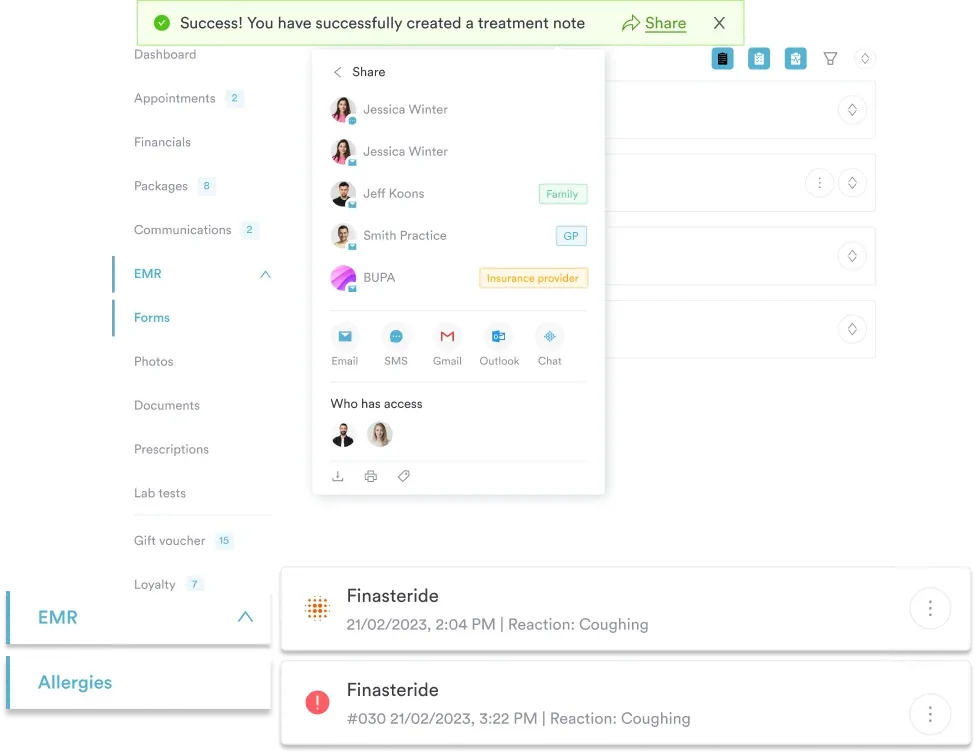
Beyond clinical care, the nursing care plan also addresses legal requirements. The Joint Commission (TJC) and state licensing boards mandate comprehensive documentation that demonstrates clinical reasoning, therapeutic communication, and evidence-based practice, and HIPAA rules require secure handling of mental health records. A well-structured template keeps you compliant while supporting continuity of care across treatment transitions.
Implementing a PTSD nursing care plan involves five core operational steps that translate clinical assessment into actionable interventions:
This template serves multiple nursing contexts and practitioner roles:
Platforms differ widely in how they handle clinical worksheets; comparing Carepatron competitors shows the gaps quickly.
Ensures systematic clinical reasoning. A structured template guides nurses through assessment-diagnosis-intervention-evaluation logic, reducing variability in care quality and ensuring no clinical element is overlooked.
Improves patient safety and outcomes. Documented risk assessment (suicide, self-harm, substance relapse) and safety interventions create an auditable record. Measurable goals and outcome tracking let the team adjust interventions quickly if a patient isn’t progressing, which helps prevent prolonged ineffective treatment and reduce readmissions.
Strengthens regulatory and legal compliance. Care plans document that nursing care meets American Nurses Association (ANA) standards and Joint Commission requirements. In a malpractice or licensing board investigation, a detailed care plan demonstrates professional diligence and evidence-based decision-making.
Facilitates interdisciplinary communication. Because PTSD treatment involves multiple providers, a centralized care plan visible to psychiatrists, therapists, case managers, and nurses reduces duplicated assessment, ensures consistent messaging to the patient, and coordinates discharge planning and follow-up care.
Supports data-driven quality improvement. Aggregated care plan data, such as symptom severity trends, intervention effectiveness rates, and discharge planning timeliness, informs program evaluation and process improvement initiatives.
A well-documented PTSD care plan avoids vague language (“patient improved”) in favor of specific observations (“patient reported 3 flashbacks this shift vs. 5 yesterday; initiated grounding technique successfully when triggered by noise”). This specificity enables outcome measurement and helps the team evaluate whether a particular intervention is effective for this particular patient.
NANDA International provides a standardized taxonomy of nursing diagnoses applicable to PTSD. The assessment foundation relies on DSM-5 diagnostic criteria, which define PTSD by four symptom clusters: intrusion, avoidance, negative changes in cognition and mood, and changes in arousal and reactivity. The following table maps NANDA diagnoses commonly used in PTSD care:
Inpatient psychiatric nurses often plan care for PTSD alongside comorbid depression, which carries its own diagnoses and goals. A separate depression care plan sets out the NANDA diagnoses, interventions, and expected outcomes that cover it.
Assessment in clinical practice relies on validated instruments. The PCL-5 (PTSD Checklist for DSM-5) has 20 items scored 0 to 80, where a total of 33 or higher suggests probable PTSD. The Primary Care PTSD Screen for DSM-5 (PC-PTSD-5) is a brief five-item screen for fast case-finding, and a clinician-administered interview such as the CAPS-5 confirms the diagnosis. Nurses administer these tools at intake and at routine intervals to quantify symptom change and guide treatment escalation or de-escalation.
PTSD care plans integrate three categories of evidence-based interventions: trauma-informed psychotherapies, nursing behavioral strategies, and collaborative medication management. These reflect American Psychiatric Nurses Association (APNA) practice guidelines and National Institute of Mental Health (NIMH) recommendations.
Psychotherapy frameworks (delivered by therapists, reinforced by nurses):
Nursing behavioral interventions. Alongside therapy, nurses independently deliver:
Collaborative interventions. Working with the wider treatment team, nurses also:
Here’s how the assessment-to-evaluation logic looks for one common diagnosis, Post-Trauma Syndrome. Use it as a model for the other diagnoses in your plan.
PTSD care plans adapt to the care setting. In trauma centers and emergency departments, the immediate plan focuses on safety, medical stabilization, and PTSD screening. Inpatient psychiatric units develop longer-term plans covering symptom stabilization, skill-building, and discharge safety. Outpatient and veteran clinics maintain ongoing plans that track medication response, therapy progress, social and occupational functioning, and relapse prevention. A centralized patient management system keeps care continuous when patients move between settings or providers.
Include the patient and their family in goal-setting and intervention planning. PTSD recovery improves when patients feel a sense of agency and understand the reason behind each nursing action, and involving families also addresses the secondary trauma caregivers can experience.
Structured care planning works as a clinical safeguard. PTSD patients at high suicide risk need systematic risk reassessment and documented safety planning. Nurses who track specific markers, like flashback frequency, sleep hours, and social engagement, can spot early whether a patient is regressing and alert the team to adjust interventions. Thorough documentation also protects the nurse if an adverse event occurs, since a detailed care plan shows the nurse acted with clinical reasoning grounded in evidence.
For nursing students, care plan assignments teach the methodology that guides clinical practice. For practicing nurses, a template reduces cognitive load, so attention stays on the patient rather than the format. That helps both patient safety and job satisfaction.
A PTSD nursing care plan is a structured clinical document that guides assessment, nursing diagnosis formulation, goal-setting, and evidence-based intervention planning for patients experiencing post-traumatic stress disorder. It provides a framework for systematic, measurable, and individualized care delivery across all mental health settings.
The most common NANDA diagnoses in PTSD care are Post-Trauma Syndrome (00114), Anxiety (00146), Ineffective Coping (00069), Sleep Pattern Disturbance (00198), Risk for Self-Directed Violence (00140), and Impaired Social Interaction (00052). Diagnosis selection depends on the patient’s presenting symptoms and assessment findings.
Nurses use validated assessment tools such as the PCL-5 (PTSD Checklist for DSM-5), the Primary Care PTSD Screen (PC-PTSD), and the Columbia-Suicide Severity Rating Scale (C-SSRS). These instruments quantify symptom severity and track progress over time, enabling objective outcome measurement.
Nursing interventions include behavioral techniques (grounding, progressive muscle relaxation, breathing exercises), psychoeducation, safety planning, therapeutic communication, support for evidence-based psychotherapies (CPT, EMDR, PE), medication management support, and social reintegration facilitation.
Registered nurses, psychiatric mental health nurse practitioners (PMHNPs), trauma center nurses, emergency department nurses, inpatient psychiatric unit nurses, outpatient behavioral health nurses, veteran-focused mental health providers, and nursing students all use PTSD care plan templates to guide clinical practice.