

HCPCS code E0198: Water pressure pad billing guide
HCPCS code E0198 is a water pad for a standard mattress HCPCS code E0198 is the ...

Last Updated: Oct 13, 2026
E0745 is the HCPCS Level II code for neuromuscular stimulator, electronic shock unit.
A single denied claim for a neuromuscular stimulator can stall a patient's stroke rehab or knee-replacement recovery for weeks while a DME supplier reworks the paperwork. HCPCS code E0745 is the billing code behind that claim, and getting it wrong is easier than it looks.
Practice management platforms like Pabau include claims management software for submitting, validating, and tracking insurance claims, though coders still need a solid command of what Medicare requires for E0745 specifically.
Let Pabau's smart automation suggest the right codes, reduce claim denials, and keep your practice compliant—effortlessly.
Automate repetitive tasks and focus on what matters most—your patients.
Reduce coding errors and ensure compliance with the latest regulations.
Clean claims, fewer denials, and faster reimbursements.
Powerful insights and reporting to help your practice thrive.
HIPAA compliant SOC 2 certified GDPR-compliant Trusted by 4,000+ clinics worldwide

HCPCS Code E0745 describes a neuromuscular stimulator, electronic shock unit, classified as durable medical equipment (DME) under the HCPCS Level II E-code series.
Medicare covers E0745 under National Coverage Determination (NCD) 160.12 for specific indications including disuse atrophy, stroke rehabilitation, and shoulder subluxation, where the nerve supply to the muscle remains intact.
Billing requires DMEPOS supplier enrollment with CMS, a physician order, a certificate of medical necessity, and supporting ICD-10-CM diagnosis codes. Prior authorization requirements vary by DME MAC jurisdiction.
Practice management software like Pabau helps billing teams submit and track insurance claims and keep medical necessity documentation organized for codes like E0745.
According to the Centers for Medicare and Medicaid Services (CMS), HCPCS Code E0745 carries the official descriptor: Neuromuscular stimulator, electronic shock unit.
It sits within the HCPCS Level II E-code series, which covers durable medical equipment (DME), and is billed to the DME Medicare Administrative Contractor (DME MAC) for the supplier’s jurisdiction.
One detail that trips up new billers: only a CMS-enrolled DMEPOS supplier may submit E0745 to Medicare. A regular provider or practice without CMS-855S enrollment cannot bill this code directly, even if the physician prescribes the device.
HCPCS Code E0745 reimbursement is set through the DMEPOS fee schedule, which DME MACs administer regionally. Rates vary by MAC jurisdiction (A through D) and are updated each calendar year.
The figures below reflect 2026 Medicare national limitation amounts; verify exact regional rates with your DME MAC or the AAPC’s HCPCS lookup tool before submitting claims.
Use the PGM Billing lookup tool or the Medicare Informatics HCPCS tables to pull current fee schedule amounts for your specific MAC jurisdiction before submitting. Rates posted in prior-year references may no longer be accurate.
CMS National Coverage Determination 160.12 governs Medicare’s coverage of neuromuscular electrical stimulation (NMES) devices, including those billed under HCPCS Code E0745.
The central requirement: the nerve supply to the affected muscle must remain intact. NMES is not covered for conditions involving complete denervation.
Medicare covers E0745 for the following diagnoses under NCD 160.12, provided intact innervation is documented and medical necessity is established.
Both physical therapy practice management and occupational therapy practice management platforms benefit from tracking these criteria at intake, since NMES spans both specialties.
NCD 160.12 explicitly excludes several diagnoses. Submitting E0745 for these conditions will result in denial, and ABN issuance is required before providing the device if coverage is uncertain.
Local Coverage Determinations (LCDs) issued by individual DME MACs may impose additional restrictions beyond NCD 160.12.
Always check the applicable LCD for your jurisdiction before submitting. Tracking patient compliance with device usage is also a documentation requirement for ongoing rental coverage under some MACs.
A patient management system reminds you when issued equipment is due for review, replacement, or return.
Incomplete documentation is the leading cause of E0745 claim denials. CMS and DME MACs require a specific set of records to substantiate medical necessity before payment.
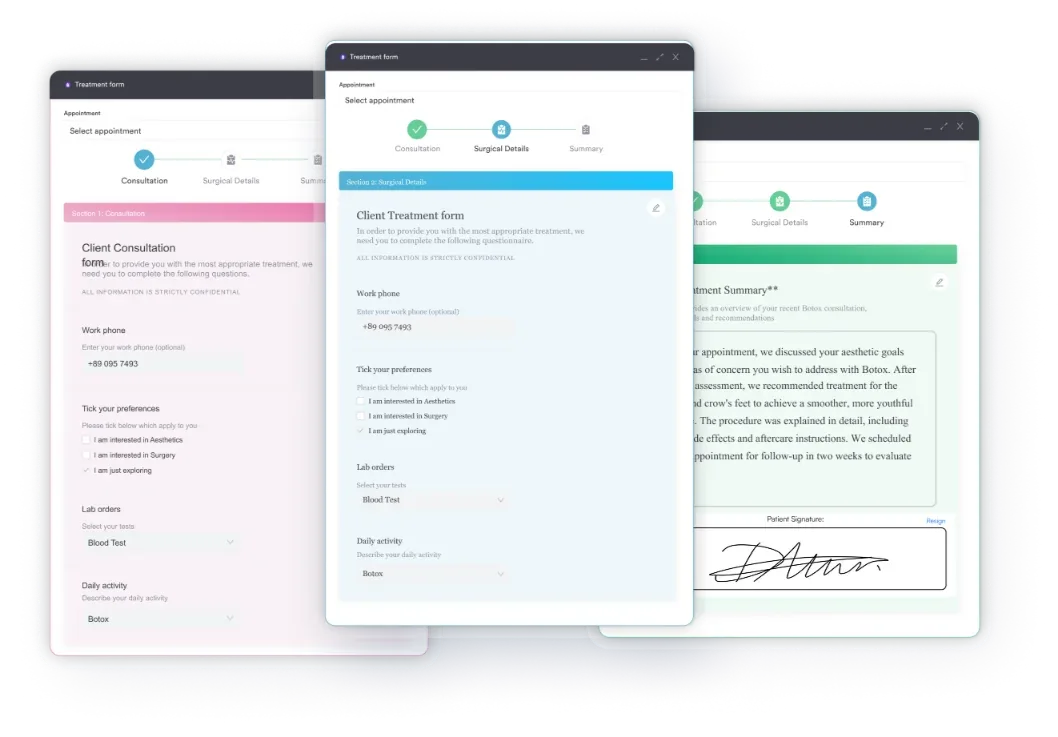
Sound medical forms management practices and digital intake forms help collect these at the point of care rather than chasing them post-submission.
HIPAA-compliant storage and retrieval of these documents matters at audit.
HCPCS Code E0745 sits on the CMS Master List of DMEPOS items potentially subject to conditions of payment, but it is not on the CMS Required Prior Authorization List (most recently updated January 13, 2026).
That means no DME MAC — Noridian (Jurisdictions A and D) or CGS (Jurisdictions B and C) — currently requires prior authorization for E0745 as a national Medicare condition of payment.
CMS reviews and updates the Required Prior Authorization List periodically, so confirm the current list before delivering the device rather than relying on this reference alone. Commercial payers such as Aetna and BCBS set their own NMES coverage policies and often require prior authorization independent of E0745’s Medicare status.
CMS does not publish an exhaustive approved list of ICD-10-CM codes for E0745. The codes below are commonly paired with this HCPCS code based on the covered indications under NCD 160.12, and each must be supported by clinical documentation establishing the diagnosis and intact nerve supply.
Stronger EHR billing integration reduces the risk of mismatched diagnosis codes making it to claim submission.
Always confirm that the selected ICD-10-CM code accurately reflects the documented clinical condition. Upcoding or using a non-specific code to satisfy coverage criteria is a compliance risk under the False Claims Act.
Billing HCPCS Code E0745 correctly requires more than selecting the right code. The claim workflow has several checkpoints where errors commonly occur. Software with features for private practices can flag common submission errors before they reach the MAC.
E0745 bills the device itself, not any hands-on training. Fitting or management for other DME categories, such as orthotics.
Common denial reasons for E0745 include: missing or incomplete CMN, KX modifier absent when coverage criteria are documented, ICD-10 code that does not map to a covered NCD 160.12 indication, and delivery to a facility rather than the beneficiary’s home without supporting documentation.
Run a pre-submission audit on every E0745 claim: confirm the CMN is signed and dated before delivery, the KX modifier is applied where criteria are met, and the ICD-10 code maps to a covered NCD 160.12 indication. Catching these three items before submission prevents the most common denial patterns for this code.

Pabau’s claims management software helps billing teams submit, validate, and track insurance claims in one place, while digital documentation tools keep medical necessity records and DME paperwork organized and audit-ready.

Choosing the correct HCPCS code from the E07xx series is critical. Each code describes a specific device type or functional category, and using E0745 when the device actually meets the description of E0744 or E0746 can result in denial or, worse, a compliance finding.
Review the related codes table and cross-reference with your MAC’s LCD for each. Practices tracking compliance for physiotherapy clinics should also audit NMES code selection quarterly.
DME billing spans far more than the E07xx series. Mobility equipment falls under codes like K0001.
If a patient’s device functions as a functional electrical stimulator (FES) rather than a standard NMES unit, check whether a more specific HCPCS code applies before defaulting to E0745. FES and NMES have overlapping clinical applications but distinct device categories and coverage rules under some LCD policies.
Missing documentation, modifier errors, and ICD-10 codes that don’t anchor to a covered NCD 160.12 indication cause most E0745 claim denials. Getting the claim right the first time means confirming DMEPOS supplier enrollment, securing the CMN before delivery, selecting the correct ICD-10 pairing, and verifying MAC-specific prior authorization requirements. Electronic remittance files post payments automatically, and the adjustment codes explain what was reduced and why.
Practices managing multiple DME codes and compliance workflows benefit from centralized practice management software features that surface these checkpoints before submission rather than after denial.
Pabau’s claims management software helps billing teams submit, validate, and track insurance claims, while digital documentation tools keep medical necessity records organized for DME and other billing workflows. Book a demo to see how Pabau supports your practice’s billing and documentation from intake to claim submission.

Need to bill a related lower-limb orthotic? HCPCS code L2050 covers hip-knee-ankle-foot orthoses, with coverage rules separate from NMES devices.
Also billing orthotic training separately? CPT code 97763 covers orthotic and prosthetic management, a distinct billing code from the device itself.
Need a different DME equipment code? HCPCS code K0001 covers standard wheelchairs, another commonly audited DME category.
HCPCS Code E0745 is the durable medical equipment billing code for a neuromuscular stimulator, electronic shock unit. It is used to bill Medicare and commercial payers for NMES devices prescribed for disuse atrophy, stroke rehabilitation, knee replacement recovery, shoulder subluxation, and spasticity management where the nerve supply to the muscle remains intact.
Yes, Medicare covers E0745 under National Coverage Determination 160.12 for specific diagnoses including disuse atrophy with intact innervation, post-stroke muscle re-education, post-knee replacement atrophy prevention, and shoulder subluxation in hemiplegia. Coverage is subject to DME MAC Local Coverage Determinations, which may impose additional criteria beyond NCD 160.12.
E0745 claims require a physician order predating equipment delivery, a completed Certificate of Medical Necessity, clinical notes confirming the diagnosis and intact nerve supply, a signed proof of delivery, and an Advance Beneficiary Notice where coverage is uncertain. Prior authorization records are required when the patient’s MAC jurisdiction mandates PA for this code.
No. E0745 is on the CMS Master List but not on the CMS Required Prior Authorization List (most recently updated January 13, 2026), so no DME MAC currently mandates prior authorization for it as a national Medicare condition of payment. CMS updates this list periodically, so confirm the current version before delivering the device. Commercial payers, including Aetna and BCBS, set independent prior authorization rules for NMES devices.
Commonly paired ICD-10-CM codes include M62.50 (muscle wasting and atrophy), I69.351 and I69.352 (hemiplegia following cerebral infarction), M24.312 (pathological dislocation of shoulder), R25.2 (cramp and spasm), and Z96.651 (presence of artificial knee joint). Each must be supported by clinical documentation confirming the covered diagnosis and intact innervation.
E0744 is a neuromuscular stimulator specific to scoliosis treatment, while E0745 describes a general neuromuscular stimulator, electronic shock unit used for disuse atrophy, stroke rehabilitation, knee replacement recovery, and shoulder subluxation. The two codes serve distinct clinical indications and are not interchangeable.



