



HCPCS code E0198: Water pressure pad billing guide
HCPCS code E0198 is a water pad for a standard mattress HCPCS code E0198 is the ...

Last Updated: Oct 13, 2026

CPT code 97763 describes subsequent orthotic and prosthetic management encounters, billed in 15-minute units, and covering upper extremity, lower extremity, and trunk.
Use 97763 only for follow-up encounters after the initial fitting; initial orthotic encounters use CPT 97760 and initial prosthetic encounters use CPT 97761.
Every claim requires documented start/stop times, device description, clinical findings, and patient response to therapy.
Pabau’s practice management software helps capture accurate time documentation, device details, and encounter-type information for therapy codes like CPT 97763.
CPT code 97763 is the billing code for subsequent orthotic and prosthetic management and training, covering upper extremity, lower extremity, or trunk, billed in 15-minute units. It applies only to follow-up visits after the initial device fitting. Billing it for a first encounter is the most common reason these claims get denied.
This reference covers documentation requirements, the Medicare fee schedule, applicable modifiers, ICD-10 pairings, related codes, and the billing errors that most often trigger denials.
According to the American Medical Association (AMA), CPT codes in the 97xxx range cover physical medicine and rehabilitation services. CPT 97763 sits within the orthotic/prosthetic management family alongside sibling codes 97760 and 97761, each reflecting a distinct stage in the patient’s device management journey.
CPT code 97763 is the code for orthotic(s)/prosthetic(s) management and/or training, upper extremity(ies), lower extremity(ies), and/or trunk, subsequent orthotic(s)/prosthetic(s) encounter, each 15 minutes. The word “subsequent” is the billing pivot. If the patient has never before been fitted or trained with this device, 97763 does not apply.
The 2018 code restructuring, referenced in guidance from the American Occupational Therapy Association (AOTA) and the American Physical Therapy Association (APTA), replaced earlier orthotic/prosthetic management codes with the current 97760-97763 family. Practices still billing under legacy codes should verify their current code set against the AMA CPT codebook for the applicable year.
Eligibility to bill CPT 97763 varies by payer. Under Medicare Part B, qualified practitioners include physical therapists, occupational therapists, orthotists, prosthetists, and physicians. Commercial payers may have narrower or broader lists. Always verify eligibility with individual payer contracts before submitting a claim.
Scope-of-practice rules for therapy disciplines vary by state. A clinician at a physiotherapy clinic in one state may face different supervisory requirements than a peer across state lines. Verify with your state licensing board and your payer contracts before billing.
Insufficient documentation is the leading cause of post-payment audit recoupment for time-based therapy codes. Every 15-minute unit of CPT 97763 must be supported by a contemporaneous treatment note that contains all of the following elements.
Medicare audits for therapy codes frequently target time documentation. If the note lacks start/stop times or records only the number of units, the claim is vulnerable to denial. Using structured digital forms for treatment notes can help practices capture every required element consistently across providers.
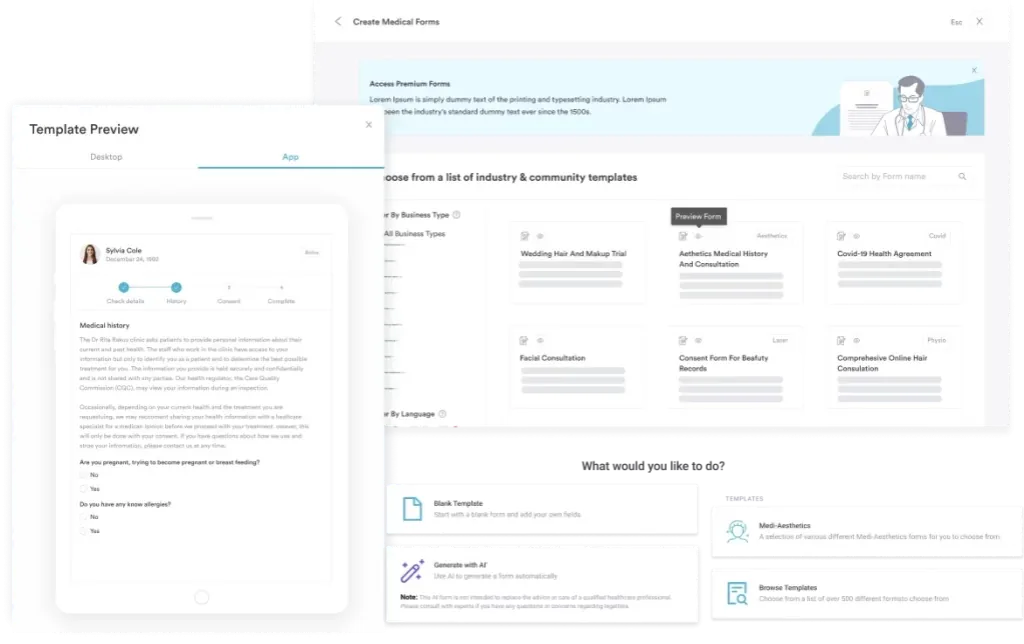
Build a 97763 documentation template that pre-populates the encounter type as ‘subsequent’ and includes mandatory fields for start/stop time, device description, and clinical findings. Review every note before submission against this checklist to reduce audit risk.
Family practices bill these codes constantly, so GP clinic software that automates the routine ones saves real time.
CPT 97763 is reimbursed per 15-minute unit under the Medicare Physician Fee Schedule (MPFS). Rates differ between the non-facility setting (e.g., private practice) and the facility setting (e.g., hospital outpatient department). Geographic practice cost indices (GPCI) adjust rates by locality, so a practice in New York City will see a different allowed amount than one in rural Kansas.
These figures are approximate ranges based on national averages and are subject to annual revision. Always verify the current allowed amount using the CMS fee schedule tool for the applicable calendar year and locality. Commercial payer rates for CPT 97763 are negotiated separately and may be higher or lower than Medicare rates depending on your contracts.
Medicare Part B covers CPT 97763 when billed under the outpatient therapy benefit. Key coverage considerations include:
Practices serving Medicare populations should review HIPAA compliance requirements alongside CMS documentation standards, since both frameworks govern how billing records are stored, accessed, and retained. Practice management software with structured documentation workflows can flag a missing modifier or an incomplete note before a claim goes out, catching the error while it is still easy to fix.
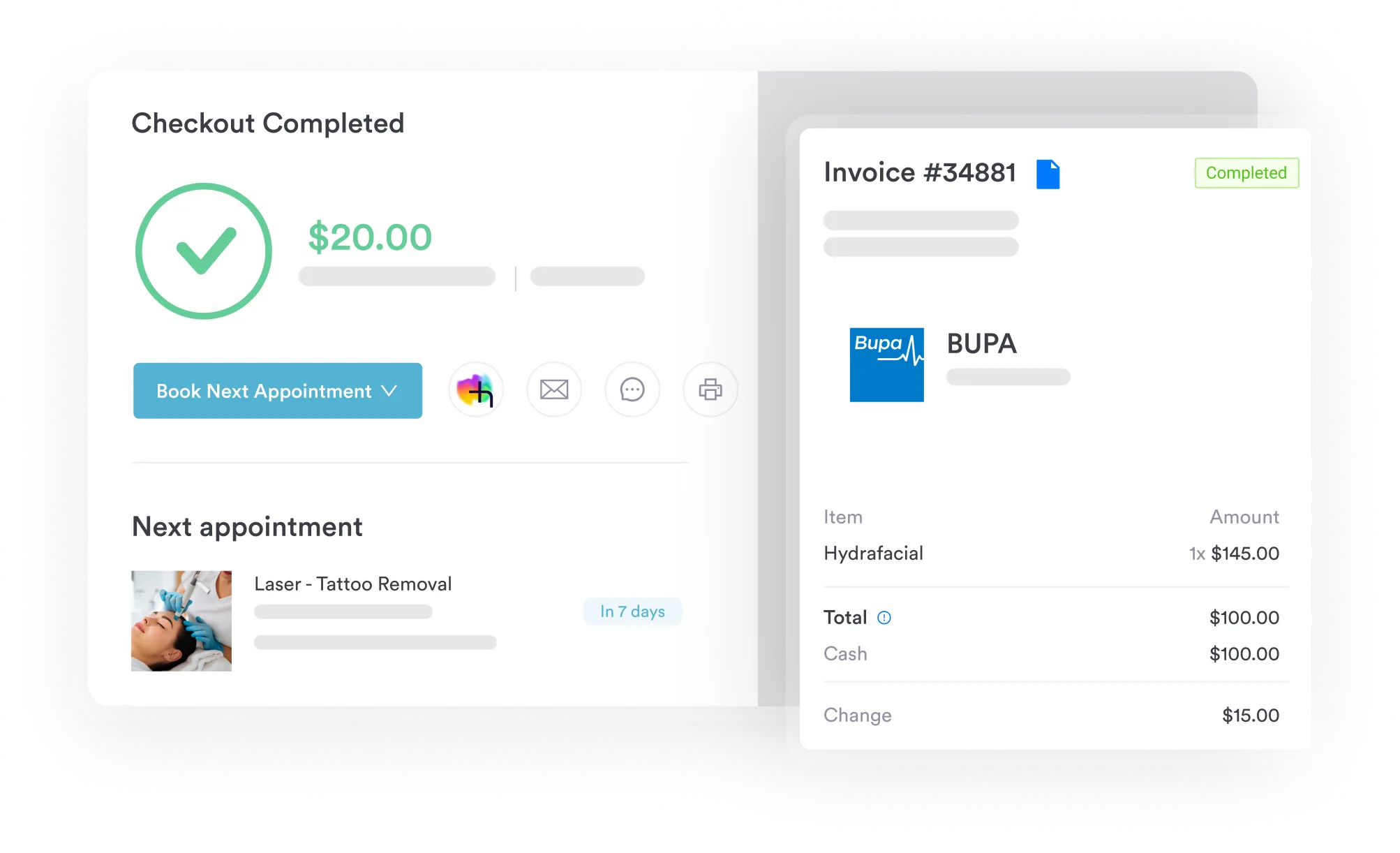

Pabau helps physical therapy and occupational therapy practices capture accurate time documentation, device details, and encounter-type information for codes like CPT 97763, so nothing is missing before a claim goes out.

Modifiers for CPT 97763 serve two purposes: identifying the therapy discipline billing the service and signaling medical necessity exceptions. Missing or wrong modifiers are a frequent denial trigger, particularly on Medicare claims.
The GP, GO, and GN modifiers are required on all Medicare outpatient therapy claims, not optional. Omitting the discipline modifier is one of the most common Medicare claim rejections for therapy codes. Verify your billing software appends the correct modifier automatically based on the treating provider’s discipline. Staff at physical therapy clinics should confirm modifier mapping is set up correctly in their practice management system before claims go out. A rejected electronic claim never reaches adjudication, so it does not appear in denial reporting. A clean claim rate below the practice benchmark usually points at one recurring coding or eligibility error.
Every CPT claim requires at least one supporting ICD-10 diagnosis code that establishes medical necessity. For orthotic and prosthetic management, the paired diagnosis should reflect the underlying condition requiring the device. Below are frequently used ICD-10 codes by body region.
The ICD-10 diagnosis code must be as specific as possible. Unspecified codes (ending in “0” or “9”) increase audit risk when a more specific code is available and documented in the clinical record. Use the AAPC’s code lookup tool to verify code-to-code crosswalk alignment before submission. For occupational therapy coding guidance specific to upper extremity orthosis management, the OT Potential’s CPT guide provides discipline-specific context.
The current orthotic/prosthetic management family covers every stage of device management across just two codes for the initial fitting and one shared code for every visit after that. Selecting the wrong code for the encounter type is the single most common billing error in this code set. The table below clarifies which code applies at each stage.
CPT 97762, the former “checkout” code, was deleted effective January 1, 2018. CPT 97763 absorbed that role, and now covers every subsequent orthotic or prosthetic visit, checkout included. Practices that operated before 2018 may still have documentation templates referencing 97762; that code is no longer billable, so those templates need updating.
The American Physical Therapy Association (APTA) publishes annual coding guidance updates covering changes to the 97xxx range, worth bookmarking for practices that bill a high volume of orthotic/prosthetic management services. Billing staff at occupational therapy practices should also consult guidance published by AOTA for discipline-specific nuances.
Three errors account for the majority of denied and recouped claims for CPT 97763. Recognizing the pattern behind each one makes them straightforward to prevent.
CPT 97763 is valid only when the patient has had a prior orthotic or prosthetic encounter. If a practitioner sees a patient for the first time regarding a specific device, the correct code is 97760 for an orthotic device or 97761 for a prosthetic device. Billing 97763 at that initial visit creates a code-to-encounter mismatch that payers will deny or flag on audit. The note must clearly show that a previous fitting session occurred.
CPT 97763 is a time-based code. Payers expect documented start and stop times for each unit billed. Notes that record only “45 minutes of orthotic training” without clock times give auditors grounds to question whether the time was actually provided.
Each 15-minute unit requires at least 8 minutes of direct treatment time to count under the 8-minute rule. Billing three units without documented time breaks is a common audit finding at practices that have not updated their note templates since the 2018 code restructuring.
Medicare claims for CPT 97763 require the appropriate therapy discipline modifier (GP for PT, GO for OT). Submitting without this modifier causes an automatic claim rejection. Submitting with the wrong discipline modifier, for example GP on an OT-billed claim, triggers a mismatch between the modifier and the enrolled provider type. Either error delays payment and may prompt a request for documentation review.
Practices providing physiotherapy clinic services alongside occupational therapy should configure their billing system to auto-assign modifiers based on treating provider type rather than relying on manual selection each time.
HCPCS L-codes describe the orthotic or prosthetic device itself, such as L2050 or, for devices that do not fit a standard code. CPT 97763 describes the management and training service, and both can be billed on the same date only when each is genuinely and separately documented.
Bundling rules vary by payer. Some commercial payers consider the training included in the L-code payment and will deny 97763 when billed together without documentation showing distinct services. Verify your payer contracts before billing both on the same claim.
Run a monthly audit of your 97763 claims: pull all claims billed in the prior 30 days and verify each one has documented start/stop times, a subsequent encounter designation in the note, and the correct therapy discipline modifier. Flag any claim missing these elements before payers do.
Manual billing workflows for time-based codes create compounding risk. A therapist who forgets to log start and stop times, a front-desk coordinator who selects the wrong encounter type from a dropdown, and a billing staff member who submits without a modifier review can each independently generate a denial. The downstream cost is not just the denied claim; it is the staff time spent on the appeal, the resubmission, and any audit response.
Practice management platforms built for therapy billing address these gaps at the point of documentation, rather than after a claim has already gone out. Pabau’s documentation workflows help therapy practices capture the required elements before a claim is ever generated. Templates can be configured to require time fields, encounter type designation, and device description as mandatory fields, flagging incomplete notes so nothing is missing before submission.
For practices managing high volumes of orthotic and prosthetic management visits alongside other therapy services, the ability to track time documentation by provider and review claim-level data in real time makes the difference between a clean billing cycle and a backlog of pending denials. For broader context on time-based billing across the 97xxx range.
Most billing problems with CPT code 97763 trace back to the same root: treating a subsequent encounter code as if it were interchangeable with the initial encounter codes. It is not. Correctly applying 97763 means confirming prior encounter history, documenting timed service with clock precision, and applying the right modifier before the claim leaves the practice.
Pabau helps therapy practices document these requirements consistently, catching incomplete notes before errors reach the payer. See how Pabau supports physical therapy and occupational therapy billing, or speak with a specialist directly.

Billing a custom foot orthosis alongside 97763? L3000 covers the UCB-type custom foot orthotic code and how it pairs with orthotic management billing.
Billing supplies for ventilated patients? Moisture exchanger billing guide is the billing code for a disposable moisture exchanger used with invasive mechanical ventilation.
Need a broader DME supply reference? Incontinence garment billing guide is a Level II code for an incontinence garment, such as a brief or diaper, billed per unit.
CPT 97763 bills subsequent orthotic and prosthetic management and training encounters (upper extremity, lower extremity, trunk) in 15-minute units. It applies only to follow-up visits; initial visits use 97760 (orthotic) or 97761 (prosthetic).
Each claim needs: start/stop times, encounter designated as subsequent, device description, body region, clinical findings, patient response, provider credentials, and medical necessity justification.
Yes, under Medicare Part B outpatient therapy benefit when medically necessary. Claims require a therapy discipline modifier (GP or GO) and may need the KX modifier once the annual therapy cap is reached.
Units must reflect actual timed minutes using the 8-minute rule for partial units. There is no fixed maximum; medical necessity and documented treatment time govern.
97760 is the initial orthotic encounter; 97761 is the initial prosthetic encounter; 97763 covers all subsequent orthotic or prosthetic management visits. Using 97763 for a first visit is a coding error.
Billing 97763 for an initial encounter, missing start/stop times, omitting the GP or GO modifier on Medicare claims, and improperly bundling with HCPCS L-codes without separate documentation.



