CPT code 93503: Swan-Ganz catheter billing and modifiers
CPT code 93503: Official descriptor and procedure overview In the AMA CPT code s...

Last Updated: Oct 23, 2026
B4150 is the HCPCS Level II code for enteral formula, nutritionally complete with intact nutrients, includes proteins, fats, carbohydrates, vitamins and minerals, may include fiber, administered through an enteral feeding tube, 100 calories = 1 unit.
It's one of the most audited codes in enteral nutrition billing. In fact, claims fall under Medicare's prosthetic device benefit, though they are processed through the DME MAC system. As a result, getting the code, units, and documentation right from the start is the fastest way to avoid denial.
Let Pabau's smart automation suggest the right codes, reduce claim denials, and keep your practice compliant—effortlessly.
Automate repetitive tasks and focus on what matters most—your patients.
Reduce coding errors and ensure compliance with the latest regulations.
Clean claims, fewer denials, and faster reimbursements.
Powerful insights and reporting to help your practice thrive.
HIPAA compliant SOC 2 certified GDPR-compliant Trusted by 4,000+ clinics worldwide

HCPCS code B4150 describes a nutritionally complete enteral formula containing proteins, fats, carbohydrates, and vitamins, billed per 100 calories (1 unit = 100 calories)
Medicare covers B4150 under its prosthetic device benefit, not the DME benefit, when a patient has a non-functional GI tract or a condition preventing adequate oral nutrition, and claims are processed through the DME MAC system with a written physician order on file
Incorrect unit calculation (not converting total daily calories to per-100-calorie units) is the most common billing error leading to claim denial for B4150
Pabau’s claims management software helps DME suppliers track documentation requirements, manage physician orders, and reduce B4150 claim denials
According to CMS, HCPCS code B4150 is a Level II HCPCS code, updated each year. Specifically, the official descriptor is: Enteral formula, nutritionally complete, contains proteins/carbohydrates/fats/vitamins/minerals, includes fiber, administered via enteral feeding tube, 100 calories = 1 unit.
Medicare covers HCPCS code B4150 under its prosthetic device benefit, not the DME benefit, since enteral nutrition replaces a permanently non-functioning body part or function. Claims are still processed through the DME MAC contractor system as part of a supplier’s patient care management workflow. However, coverage is not automatic: two distinct clinical situations qualify a patient.
CMS policy article A58833 governs coverage decisions for enteral nutrition under Medicare’s prosthetic device benefit, administered through the DME MAC system. Therefore, suppliers must verify the patient meets one of these conditions before billing HCPCS code B4150, and they must keep documentation of medical necessity for audit purposes.
In addition, coverage requires that enteral feeding is the primary means of nutrition delivery, not a supplement to adequate oral intake. Supplemental oral feeding does not qualify.
Meeting the statutory coverage threshold is necessary but not enough. In practice, CMS and Medicare Administrative Contractors (MACs) require documented evidence of specific clinical criteria.
The swallowing-impairment criterion is often first found in a speech therapy practice assessing the patient, before the referring physician orders enteral feeding.
For example, CGS Medicare (Jurisdiction C) and Noridian (JA DME) both publish enteral nutrition billing instructions that supplement the CMS policy article. Therefore, suppliers working across multiple MAC jurisdictions should verify requirements with their specific MAC.
Billing supply codes accurately starts with inventory management software that knows what actually left the shelf.
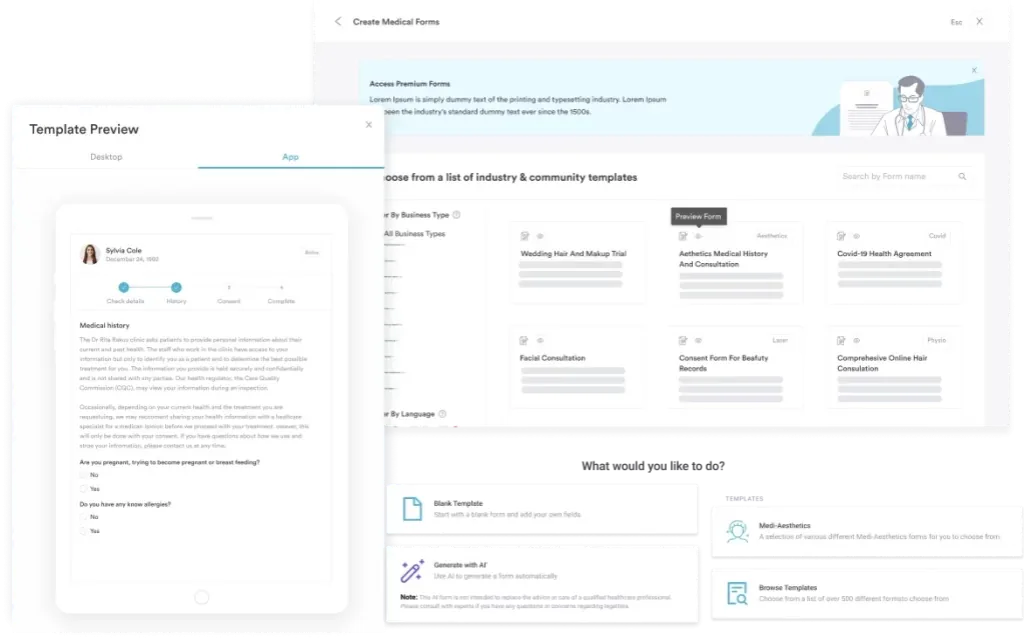
Missing or incomplete documentation is the most common reason enteral nutrition claims are denied on audit. For this reason, medical documentation forms should be standardized and checklist-driven for every B4150 order. The required file must include all of the following.
Using digital forms that map directly to these checklist items reduces the chance that any required element is missing at audit. In contrast, paper-based workflows regularly result in incomplete files, because there is no system-level prompt to capture each element.
Build a pre-submission checklist specific to HCPCS code B4150 that mirrors your MAC’s documentation requirements. Audit a sample of 10 claims per quarter against this checklist before they are submitted. This single step catches the most common denial triggers before they reach the payer.
HCPCS code B4150 is billed per 100 calories. One unit equals 100 calories of formula delivered. In practice, this is the most misapplied rule in enteral nutrition billing, and incorrect unit counts are flagged in Noridian’s JA DME correct coding article as a leading cause of overpayment and recoupment.
Worked example: A patient’s physician order prescribes 1,800 calories per day for 30 days.
Billing in cans or bottles instead of per-100-calorie units is the most common error. The formula’s caloric content per container does not matter for the billing unit calculation. Therefore, always convert to 100-calorie increments based on the physician order.

Pabau helps DME suppliers and healthcare practices manage physician orders, track documentation checklists, and submit cleaner claims for HCPCS codes including B4150.

Selecting the wrong code within the B-series is a common error. A clear-liquid electrolyte product is not a nutritionally complete formula. Adult fluid replacement bills under B4102, which Medicare treats as non-covered.
The pediatric version of that product bills under B4103, which Medicare does not cover either. Therefore, the table below covers the decision logic for HCPCS code B4150 alongside its most closely related codes, based on AAPC’s HCPCS Level II codes and CMS policy article A58833. Choose the code that matches the formula’s caloric density, composition, and the patient’s clinical condition. The same decision logic carries over to other Level II HCPCS billing guides. Checking insurance eligibility before the visit catches terminated coverage while the appointment can still be rescheduled.
Every B4150 claim requires a covered ICD-10 diagnosis code to support medical necessity under CMS policy article A58833. In addition. The table below lists the most commonly submitted diagnosis codes. However, note that CMS updates the covered code list each year: always verify against the current policy article before submission.
Submitting a non-covered diagnosis code is an automatic denial. Therefore, always cross-reference the claim’s ICD-10 code against the covered list in the current CMS policy article A58833 before billing HCPCS code B4150.
The 2026 Medicare allowable rate for HCPCS code B4150 is published by CMS in the annual DMEPOS fee schedule file. Rates are expressed per unit (per 100 calories) and adjusted by geographic region using a fee schedule adjustment factor.
Because geographic variation is standard CMS practice, the rate in one MAC jurisdiction may differ quite a bit from another. Therefore, use CMS’s fee schedule lookup tool or your MAC’s published fee schedule to confirm the current allowable in your geographic area before estimating reimbursement.
In addition, non-Medicare payers (Medicaid managed care, commercial insurers) set their own rates for B4150, which may be higher or lower than the Medicare allowable. Always verify contract rates before providing cost estimates to patients or facilities.
Noridian’s JA DME correct coding article lists recurring errors in enteral nutrition claims. As a result, these patterns account for a large share of B4150 denials and recoupment actions. Sound medical practice operations include a pre-submission review that checks each of the following.
Practice management software like Pabau targets the operational side of HCPCS code B4150 billing, not just the coding rules. The claim errors above trace back to documentation workflow failures more often than coding mistakes. For example, the physician order arrives late, the nutritional assessment lives in a different system, and the ICD-10 crosscheck happens manually at submission, if at all.
Pabau’s claims management software helps practices and suppliers build structured documentation workflows so that each required element for HCPCS code B4150 is captured before the claim is generated. In addition, HIPAA compliance for offices is built into Pabau’s record handling, which matters for enteral nutrition suppliers managing sensitive patient data across multiple care settings.
Practices using automated billing workflows can trigger documentation reminders at the point of order, prompt staff to collect outstanding signatures before delivery, and flag claims that are missing required fields before they reach the payer. That is the operational layer that billing software alone does not provide.
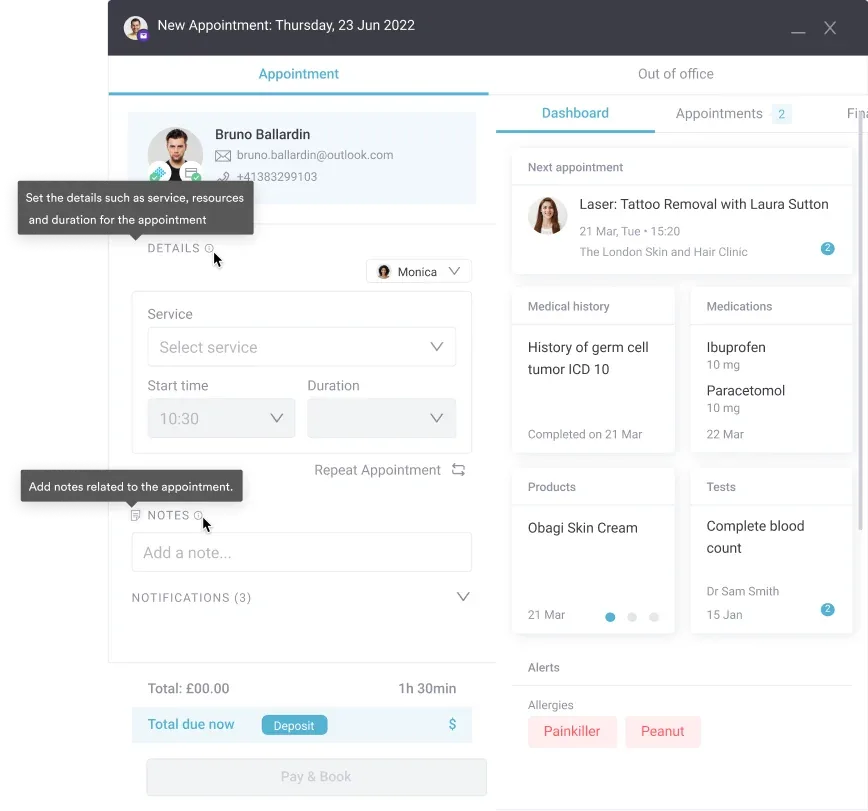
For DME suppliers managing high volumes of enteral nutrition patients, practice management software that integrates documentation, billing, and compliance in one place reduces the manual reconciliation burden that creates most of the errors in the table above.
HCPCS code B4150 denials almost always trace back to two root causes: incorrect unit calculation and incomplete documentation. Both are preventable with the right workflow. Use the worked example above to verify your unit calculations match the physician order, and use the documentation checklist to confirm every required element is on file before submission.
Pabau’s compliance tools help practices build the pre-submission checks that keep enteral nutrition claims clean. To see how Pabau handles documentation workflows for DME billing, book a demo.

Billing a pneumatic walking boot? walking boot billing guide explains the customization requirement that separates it from the off-the-shelf walking boot code.
Billing a static or dynamic AFO? ankle foot orthosis billing guide covers the modifier and diagnosis documentation that prevents months-long appeal delays.
Billing an external breast prosthesis? breast prosthesis billing guide covers Medicare’s one-prosthesis-per-side rule and the medical necessity documentation these claims require.
HCPCS code B4150 is an enteral formula that is nutritionally complete, containing proteins, carbohydrates, fats, vitamins, and minerals, administered via feeding tube and billed per 100 calories (1 unit = 100 calories). It is a Level II HCPCS code classified under Medicare’s prosthetic device benefit, processed through the DME MAC system, and billed by the supplying entity, not the prescribing physician.
HCPCS code B4150 is billed by a DMEPOS supplier, not the prescribing physician. The supplier calculates units by dividing the patient’s daily caloric prescription by 100 and multiplying by the number of supply days. A written physician order, covered ICD-10 diagnosis code, and medical necessity documentation must be on file before submission.
One unit of B4150 equals 100 calories of enteral formula delivered. For a patient prescribed 1,800 calories per day over 30 days, the claim would be submitted for 540 units (1,800 / 100 = 18 units/day x 30 days). Billing in containers or bottles instead of 100-calorie units is the most common error.
B4150 covers standard nutritionally complete formulas, including those with fiber. B4152 is a calorically dense (≥1.5 kcal/ml) formula for patients who need more calories in less volume, such as those on fluid restriction. B4153 is for hydrolyzed (predigested) protein formulas used when a patient has impaired digestion or absorption. The formula’s composition and the patient’s clinical condition determine which code applies.
Required documentation includes a signed written physician order (naming the formula, daily calories, and route of administration), a nutritional assessment confirming oral intake cannot meet caloric needs, medical records supporting the qualifying diagnosis, a covered ICD-10 code per CMS policy article A58833, and documentation that the condition is expected to persist for at least 90 days.
Yes. HCPCS code B4150, covered under Medicare’s prosthetic device benefit and processed through the DME MAC system, applies to home enteral nutrition supplied to patients in their home or home-equivalent setting. Facility-based enteral nutrition is typically bundled into facility reimbursement and is not separately billable using B4150. Suppliers should confirm the patient’s setting before billing.