

HCPCS code E0198: Water pressure pad billing guide
HCPCS code E0198 is a water pad for a standard mattress HCPCS code E0198 is the ...

Last Updated: Oct 13, 2026
A4466 is the HCPCS Level II code for garment, belt, sleeve or other covering, elastic or similar stretchable material, any type, each. CMS terminated it with effect from 31 December 2016, so it is no longer valid for claims after that date.
HCPCS Code A4466 described a garment, belt, sleeve, or other covering made of elastic or similar stretchable material, billed per item under Medicare Part B durable medical equipment (DME) supply billing. CMS deleted the code effective January 1, 2017, and replaced it with A4467, which uses a broader descriptor that no longer restricts the covering to elastic material.
Let Pabau's smart automation suggest the right codes, reduce claim denials, and keep your practice compliant—effortlessly.
Automate repetitive tasks and focus on what matters most—your patients.
Reduce coding errors and ensure compliance with the latest regulations.
Clean claims, fewer denials, and faster reimbursements.
Powerful insights and reporting to help your practice thrive.
HIPAA compliant SOC 2 certified GDPR-compliant Trusted by 4,000+ clinics worldwide

HCPCS Code A4466 describes a garment, belt, sleeve, or other covering made of elastic or similar stretchable material, billed per item.
A4466 was officially deleted effective January 1, 2017, and is not valid for any date of service on or after that date.
A4467 (Belt, strap, sleeve, garment, or covering, any type) is the correct replacement code for dates of service from January 1, 2017 onward.
Medicare does not cover A4466. Items failing to provide necessary immobilization must be coded A9270 (non-covered item or service).
The most common billing error on elastic garment claims is using a code that no longer exists. HCPCS Code A4466 was deleted effective January 1, 2017, yet it continues to appear on claims submitted years after its retirement, triggering denials that are avoidable. For DME suppliers and clinicians ordering compression or orthotic garments, understanding what this code was, why it was deleted, and what replaced it is foundational to clean billing.
The official long description for HCPCS Code A4466 reads: “Garment, belt, sleeve or other covering, elastic or similar stretchable material, any type, each.” The short descriptor used in billing systems is “Elastic garment/covering.” This code sat within the HCPCS Level II A-code range, covering medical supplies and accessories billed by DME suppliers under Medicare Part B. It was non-covered by Medicare even before its deletion, meaning reimbursement was never available through the federal program for this line item. For a broader overview of how HCPCS Level II codes work, see the CMS HCPCS overview maintained by the Centers for Medicare and Medicaid Services (CMS). The filing deadline runs from the date of service, not the date the practice noticed the claim was unpaid. Denial codes in medical billing group the reasons a payer refuses, and the group decides the fix.
This article covers the deletion timeline, the correct replacement code, Medicare and non-Medicare coverage status, A9270 fallback coding rules, PDAC classification requirements.
CMS deletes HCPCS Level II codes through an annual update process when a code no longer reflects current clinical practice, product categories change, or a more accurate descriptor is needed. HCPCS Code A4466 was removed from the active code set in the January 1, 2017 update, announced in advance by DME MAC contractors including Noridian Healthcare Solutions (JD DME MAC) and CGS Administrators (JB DME MAC).
The deletion applies to dates of service on or after January 1, 2017. Claims submitted with A4466 for any service date after December 31, 2016 will be rejected at adjudication. There is no grace period. The code cannot be used as a cross-reference, a modifier, or a secondary code on any post-2016 claim.
One practical consequence that catches billing teams off guard: some third-party code databases still list A4466 as an “active” or “valid 2025” code without clearly flagging its deleted status. Always verify against CMS’s official HCPCS annual files or the AAPC Codify HCPCS lookup, which correctly labels A4466 as a deleted code with a January 1, 2017 deletion effective date.
For DME suppliers managing high claim volumes across compression garments and orthotic sleeves.
CMS introduced A4467 to replace A4466 with a broader, more flexible descriptor. The full description for A4467 reads: “Belt, strap, sleeve, garment, or covering, any type.” The key difference is the removal of the material-specificity constraint. A4466 required elastic or similar stretchable material. A4467 covers any type of covering, regardless of whether it is elastic, fabric, neoprene, or another material. This reflects how the DME supply market had evolved since A4466 was originally added to the HCPCS schedule.
For dates of service on or after January 1, 2017, A4467 is the correct code for garments, belts, sleeves, and coverings that previously would have been billed under A4466. The transition required no change to documentation practices beyond updating the code in the billing system. The underlying product descriptions, quantities, and medical necessity rationale remain the same.
One detail worth noting for historical claims: if you are auditing or correcting claims with dates of service before January 1, 2017, HCPCS Code A4466 was the appropriate code for that period and should remain on those records. Retroactively changing pre-2017 claims to A4467 is incorrect. The deletion is prospective, not retroactive. Accurate HIPAA-compliant billing workflows depend on preserving the historically correct code for each date of service.
Run a quarterly audit of your HCPCS code library against CMS’s published deleted codes list. A4466 is one of dozens of A-codes deleted since 2015. Any code flagged as deleted in your EHR or billing system should trigger an automatic substitution rule so staff never submit claims with retired codes. Check your clearinghouse’s claim scrubbing settings to confirm deleted codes are caught before adjudication.
Billing supply codes accurately starts with inventory management software that knows what actually left the shelf.
Neither A4466 nor its replacement A4467 is covered under Medicare Part B. This means Medicare will not reimburse for elastic garments, compression sleeves, orthotic belts, or similar coverings billed under either code, regardless of the underlying diagnosis or medical necessity documentation provided.
This non-covered status has practical consequences for patient billing and advance notice requirements:
For private payers, coverage varies by plan. Some commercial insurers reimburse compression garments under durable medical equipment benefits when medical necessity is documented, particularly for lymphedema management or post-surgical compression. Always verify individual plan benefits before assuming non-coverage applies universally. Because A4466 and A4467 are statutorily non-covered DME supply codes rather than physician-service codes, neither carries a Medicare Physician Fee Schedule payment amount. Private payer contracts govern commercial coverage independently.
Billing teams supporting practices that manage chronic edema, lymphedema, or post-operative care should note that the diagnosis codes used to support medical necessity documentation, including relevant ICD-10-CM codes for the underlying condition, must align with the clinical indication for the garment. A compression sleeve ordered for a patient with a well-documented lymphedema diagnosis carries significantly different coverage potential across commercial plans than one ordered without supporting diagnosis code documentation.
When a garment or covering does not meet the clinical threshold for medical necessity, or when it cannot provide the necessary immobilization or support for the body part it is designed to address, the correct code is A9270 (Noncovered item or service), not A4467.
The Noridian DME MAC policy article on braces constructed primarily of elastic or fabric materials states this explicitly: items not capable of providing the necessary immobilization or support to the body part must be coded A9270 regardless of materials. The key clinical determination is whether the item provides genuine therapeutic immobilization. A soft elastic sleeve worn for comfort does not meet the same threshold as a compression garment prescribed for post-lymph-node-dissection edema management.
Using A9270 correctly communicates to the payer that the supplier is aware the item is non-covered and has appropriately documented the transaction. It also protects the supplier from overpayment liability. Misclassifying an A9270 item as A4467 when the clinical criteria for A4467 are not met constitutes upcoding, which carries audit risk under False Claims Act standards. Good prescription management software that captures and stores the clinical rationale for each DME order supports the audit trail required when A9270 elections are made.
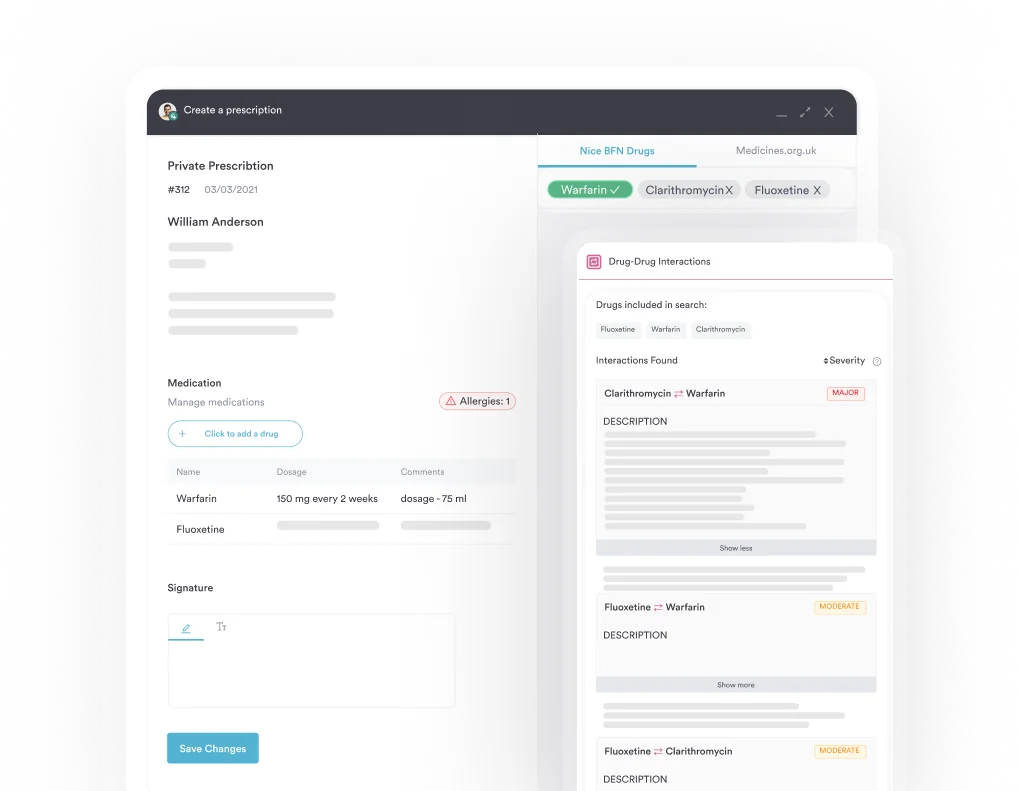

Pabau helps DME suppliers and practices manage claims workflows, flag deleted codes, and maintain the documentation trail needed for clean submissions. See how the claims management features handle elastic garment and supply billing.

Before the deletion of A4466, certain elastic garments and orthotic coverings required a product classification letter from the PDAC (Pricing, Data Analysis and Coding contractor) to establish that the specific product met the requirements of the HCPCS code being billed. The PDAC process verifies that a physical product matches the code’s descriptor, which is particularly relevant when the product sits at the boundary between an A-code supply and a more specific L-code orthosis.
A practical example: a wrist covering made primarily of elastic material would historically have been evaluated against both A4466 and L3908 (wrist hand orthosis, HCPCS code). If the PDAC determined the product did not meet L3908 criteria because it lacked the rigid components required for orthosis classification, A4466 would be the appropriate code. With A4466 deleted, the same determination now routes the product to A4467 for dates of service from 2017 onward.
For practices managing supply codes like T4524 alongside procedure codes, integrating PDAC classification records into the patient file alongside the prescription and the ICD-10 diagnosis code creates a defensible audit package. The PGM Billing HCPCS lookup can help verify current A4467 code details and fee schedule placement.
Build a product classification checklist into your DME order workflow. For every elastic garment or covering order, confirm three things before billing: (1) date of service is 2017 or later, so A4467 applies; (2) the product either has a PDAC classification letter or the L-code boundary has been evaluated; (3) an ABN is on file if the patient is a Medicare beneficiary. This three-point check prevents the majority of A4466 and A4467 claim errors.
Coding elastic garments accurately requires understanding how HCPCS Code A4466 and A4467 relate to adjacent codes in the HCPCS Level II and CPT code sets. The following codes appear frequently in the same billing context:
For billing teams managing both supply codes and orthotic codes across DME and clinical settings, the distinction between A-codes (supplies and accessories) and L-codes (orthotics and prosthetics) is clinically meaningful. L-codes carry more specific coverage criteria but also more defined reimbursement pathways. When a product genuinely functions as an orthosis, filing under the appropriate L-code is the correct approach rather than defaulting to the broader A4467 supply code.
Practices managing DME supply codes like L3762 alongside procedure codes benefit from a single-system approach where supply codes, diagnosis codes, and procedure codes are all documented in the same patient record. This reduces the risk of mismatched codes triggering medical necessity denials and simplifies audit response.
Medicare covers a facial lesion excision billed under CPT code 11443 only when symptoms such as pain, bleeding or functional impairment prompted the removal. A removal done for appearance alone stays non-covered whatever the lesion measures.
Although A4467 is the direct successor to HCPCS Code A4466, documentation requirements have not changed in substance. The claim file for an A4467 item should include:
Effective digital intake forms that capture the required clinical fields at the point of order, including diagnosis codes, product specifications, and provider NPI, reduce documentation errors at the front end rather than requiring retrospective correction before claim submission.
HCPCS Code A4466 has been deleted since January 1, 2017. Any claim submitted with A4466 for a service date after that cutoff will be denied. A4467 is the active replacement code for all elastic garments, belts, sleeves, and coverings billed from 2017 onward, while A9270 applies when the item does not meet the immobilization or support threshold required for A4467 coverage.
For DME suppliers and clinicians managing these claims, Pabau’s claims management software helps maintain accurate code libraries, flags documentation gaps before submission, and keeps the full billing record, from prescription through PDAC letter, accessible in one place. To see how Pabau handles DME supply billing workflows, book a demo.

Billing a bupivacaine injection code? Bupivacaine injection billing covers J0665, used when no product-specific NDC code applies to the formulation.
Also billing another non-covered DME supply code? B4150 covers enteral formula billing under the same Medicare non-coverage logic.
Working with ESRD-related HCPCS billing? Q4081 covers Epoetin Alfa billing under the ESRD prospective payment system.
HCPCS Code A4466 is a deleted supply code that described a garment, belt, sleeve, or other covering made of elastic or similar stretchable material, billed per item. Its short descriptor was “Elastic garment/covering” and it sat within the HCPCS Level II A-code range for durable medical equipment supplies.
No. HCPCS Code A4466 was deleted effective January 1, 2017. It is not valid for any date of service on or after that date. Some third-party code databases incorrectly list it as active, so always verify against CMS official HCPCS files or the AAPC deleted codes registry.
A4467 (Belt, strap, sleeve, garment, or covering, any type) replaced A4466 effective January 1, 2017. A4467 broadened the descriptor by removing the material-specificity restriction, covering any type of garment or covering rather than only elastic or stretchable materials.
No. HCPCS Code A4466 was never covered by Medicare, even before its deletion. Its replacement, A4467, is also non-covered by Medicare. Suppliers providing these items to Medicare beneficiaries must issue an Advance Beneficiary Notice of Noncoverage (ABN) before providing the item to preserve the right to bill the patient.
A4466 required the garment to be made of elastic or similar stretchable material; A4467 covers any type of material. A4466 was deleted January 1, 2017 and A4467 became active on the same date. Both are non-covered by Medicare, and both are billed per item. The transition required only a code update in billing systems, not changes to documentation or clinical practice.



