



HCPCS code E0198: Water pressure pad billing guide
HCPCS code E0198 is a water pad for a standard mattress HCPCS code E0198 is the ...

Last Updated: Oct 13, 2026

CPT code 99411 describes preventive medicine counseling and risk factor reduction interventions delivered in a group setting for approximately 30 minutes.
This code carries a ‘separate procedure’ designation, meaning it cannot be additionally reported when it is integral to another service billed on the same claim.
Session time must reach the midpoint threshold (approximately 16 minutes) to bill 99411; sessions exceeding approximately 45 minutes should be reported with companion code 99412 instead.
Pabau’s claims management software helps practices track group session times, attach supporting documentation, and reduce preventive medicine claim denials.
CPT code 99411 is defined by the American Medical Association’s behavioral health coding guide as: Preventive medicine counseling and/or risk factor reduction intervention(s) provided to individuals in a group setting (separate procedure); approximately 30 minutes. This article covers the descriptor, billing rules, companion code comparison, documentation standards, and common denial patterns. Practices using claims management software can automate much of the compliance workflow this code demands. The clearinghouse validates structure before the payer validates content, which is why an electronic claim can fail twice. A paper claim is scanned before it is read, so alignment and legibility affect whether it processes.
CPT code 99411 is one of only two preventive medicine group counseling codes; the other is 99412. It sits alongside the individual preventive counseling codes 99401-99404, such as 99401, 99402.
The group setting designation is what distinguishes 99411 from its individual counterparts. A single session can serve multiple patients simultaneously, each of whom can be billed separately under 99411.
| Code | Setting | Time | Description |
|---|---|---|---|
| 99401 | Individual | ~15 min | Preventive medicine counseling, individual |
| 99402 | Individual | ~30 min | Preventive medicine counseling, individual |
| 99403 | Individual | ~45 min | Preventive medicine counseling, individual |
| 99404 | Individual | ~60 min | Preventive medicine counseling, individual |
| 99411 | Group | ~30 min | Preventive medicine counseling, group |
| 99412 | Group | ~60 min | Preventive medicine counseling, group |
CPT code 99411 applies when a clinician delivers preventive counseling or risk factor reduction content to a group of patients without established illness in the area being addressed. The service focuses on health promotion and disease prevention, not the management of an active condition.
Eligible clinical topics include, but are not limited to:
The key qualifier is the absence of established illness in the counseled domain. A group session on managing an existing diagnosis (such as group diabetes disease management) may fall under a different code set. Practices running mental health EMR workflows alongside preventive medicine programs should confirm the clinical context before applying 99411.
CPT code 99411 is not limited to primary care. Family medicine, internal medicine, OB/GYN, pediatrics, and behavioral health practices can all report this code when the service meets the descriptor. Wellness clinics running group health programs, community health centers, and Certified Community Behavioral Health Clinics (CCBHCs) that crosswalk services for billing purposes also use 99411 frequently.
For practices running ADHD screening procedure codes alongside preventive counseling programs, 99411 may be billable for the group psychoeducation component of the visit.
The only difference between CPT code 99411 and CPT code 99412 is session duration. Both codes describe the same service, same setting, and same clinical content. Time is the sole determining factor.
CPT time-based billing follows the midpoint rule: a unit of time is considered attained when the midpoint is passed. As confirmed in AAP Coding News guidance on preventive medicine counseling, a session of 16 minutes or more passes the midpoint of the 30-minute threshold and may be reported with 99411. A session is reported with 99412 only once it exceeds approximately 45 minutes, the midpoint between the 30-minute and 60-minute tiers.
Document the actual face-to-face group session time in your notes, not a rounded estimate. Stating ’30 minutes’ every time is a red flag for auditors. Use start and end times, or note the actual duration in minutes based on a clock reading.
Both 99411 and 99412 carry the descriptor notation “(separate procedure).” Under AMA CPT guidelines, this designation means these codes may not be additionally reported when the service is performed as an integral component of another procedure or service billed on the same day.
If a clinician delivers preventive counseling as part of a comprehensive evaluation and management (E/M) visit, such as an office visit billed under CPT 99213 or a preventive visit billed under CPT 99383, where counseling was already a significant factor in time-based billing, separately reporting 99411 is not appropriate. When the group session stands alone as a distinct, separately scheduled service, 99411 can be reported independently.
Modern primary care platforms template routine visits, so E/M documentation takes minutes rather than the whole lunch break.
Insufficient documentation is the most common reason 99411 claims are denied or clawed back in post-payment audits. The record must clearly support the group setting, the preventive nature of the service, and the time spent.
Practices using digital intake forms can build group session attendance logs directly into their intake workflow, capturing consent, attendee lists, and session notes in a structured format. This reduces the risk of missing the documentation elements auditors look for.
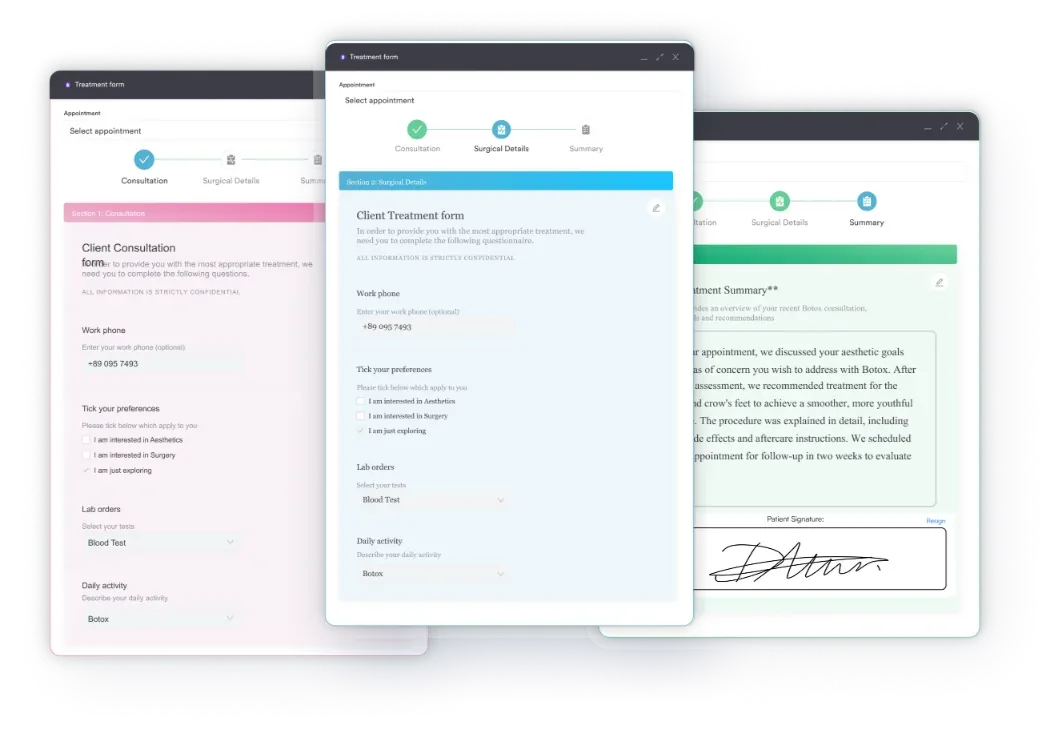

Pabau helps preventive medicine and behavioral health practices capture group session attendance, session times, and clinical notes in a single workflow, so your 99411 claims arrive at the payer with everything they need to process first time.

Medicare coverage for CPT code 99411 varies by locality and carrier. Historically, Medicare has not universally covered preventive medicine group counseling codes 99411 and 99412 as standard Part B benefits, though specific programs (such as the Medicare Diabetes Prevention Program) may create pathways for coverage under separate billing mechanisms.
Always verify current-year coverage status with your Medicare Administrative Contractor (MAC) before submitting 99411 claims for Medicare beneficiaries.
For commercial payers, reimbursement rates are set by individual contracts and may reference the CMS Physician Fee Schedule as a baseline. Use the AAPC Codify CPT lookup to review the current RVU values assigned to 99411 and calculate estimated reimbursement based on your geographic locality and the applicable conversion factor for the current fiscal year.
Rates change annually with each Physician Fee Schedule update, so using a prior year’s figures is a common billing mistake.
Private payer policies for 99411 differ significantly across carriers. Some payers bundle preventive counseling into the preventive visit reimbursement and will not pay 99411 separately. Others allow it when the group session is scheduled independently and documented as a standalone service. State Medicaid programs also vary considerably in their coverage of 99411.
Practices billing Medicaid should review their state-specific Medicaid fee schedule and provider manual before reporting this code. Reviewing your HIPAA compliance checklist for primary care is also advisable, as group session documentation intersects with privacy requirements when multiple patients share a clinical encounter.
Incident-to billing eligibility for 99411 under Medicare is not universal. According to the University of Colorado Anschutz PATHWEIGH program, some private payers may permit incident-to billing for preventive medicine codes 99401-99404 and 99411-99412, but this must be verified with each individual payer.
Do not assume incident-to rules that apply to E/M services also apply to preventive medicine codes without explicit payer confirmation. Review your HIPAA requirements for medical offices alongside payer policy when establishing incident-to workflows for non-physician staff leading group sessions.
Check your Medicare Administrative Contractor (MAC) website annually for updated Local Coverage Determinations (LCDs) and Coverage Articles related to preventive medicine services. MAC policies on 99411 can change independently of national CMS guidance.
Practices that bill 99411 without a structured review process tend to make the same documentation and coding mistakes repeatedly. Audits triggered by these patterns can result in recoupment demands covering multiple claim years.
Of those behavior change intervention codes, 99408 is the one for alcohol and substance screening. CPT lists it as an individual service, covering a structured screen plus a brief intervention of 15 to 30 minutes.
Practices running group wellness programs alongside individual services can benefit from structured automated billing workflows that flag session time thresholds and missing documentation before a claim is submitted.
For group therapy and counseling practices.
Wellness clinics offering multiple group programs benefit from purpose-built wellness clinic software that centralizes group session scheduling and documentation in a single record, rather than relying on separate spreadsheets for attendance tracking and separate EHR entries for clinical notes.
CPT code 99411 is straightforward in principle but generates consistent billing errors in practice, mostly because group session documentation is harder to systematize than individual visit documentation. The separate procedure designation, time-based threshold rules, and variable payer coverage create a compliance environment where underdocumented claims are routinely denied.
Pabau’s claims management tools help practices build group session documentation into their standard workflow, reducing denials and audit exposure for preventive medicine codes like 99411. To see how this works in practice, book a demo with the Pabau team.

Billing a wound warming device? Wound warming device billing guide covers E0231 and the mix-ups with the E0232 supply code that trigger denials.
CPT code 99411 is used to report preventive medicine counseling and risk factor reduction interventions delivered to multiple patients in a group setting, lasting approximately 30 minutes. It covers services such as obesity counseling, cardiovascular risk reduction, tobacco cessation education, and FASD prevention when delivered as a group program rather than an individual encounter.
CPT 99411 covers approximately 30 minutes of preventive medicine group counseling; CPT 99412 covers approximately 60 minutes. Both codes describe identical clinical services in identical settings. Session duration, measured using the midpoint rule, is the only factor that determines which code applies.
A session must reach the midpoint of the 30-minute threshold, meaning approximately 16 minutes of face-to-face group counseling time. Sessions that run past approximately 45 minutes, the midpoint between the 30-minute and 60-minute tiers, should be reported with CPT 99412 instead.
Medicare coverage for CPT 99411 is not universal and varies by locality and Medicare Administrative Contractor (MAC). Standard Medicare Part B generally does not cover preventive medicine group counseling codes 99411 and 99412 as a routine benefit. Verify current coverage with your MAC before submitting these claims for Medicare beneficiaries.
Not when the group counseling is integral to the E/M service. The “(separate procedure)” designation in the 99411 descriptor means it cannot be additionally reported when it was already a component of another billed service. When the group session is a separately scheduled, standalone encounter, it can be reported independently.
Required documentation includes the session date, start and end times, names or identifiers of all group attendees, a summary of the counseling topic and content, the provider’s name and credentials, and a relevant ICD-10 diagnosis code supporting medical necessity for the preventive service.



