



HCPCS code E0198: Water pressure pad billing guide
HCPCS code E0198 is a water pad for a standard mattress HCPCS code E0198 is the ...

Last Updated: Oct 13, 2026

CPT Code 99401 covers individual preventive medicine counseling of approximately 15 minutes focused on health promotion, not disease treatment.
The CPT midpoint rule requires at least 8 minutes of documented counseling time to bill 99401 – less than 8 minutes and the code cannot be reported.
Many payers, including some Medicare Advantage plans, will deny 99401 when billed on the same day as a preventive medicine visit (CPT 99381-99397).
Pabau’s claims management software helps preventive care practices track time-based codes, apply correct modifiers, and reduce claim denials.
CPT Code 99401 reports individual preventive medicine counseling of approximately 15 minutes, focused on health promotion and risk factor reduction rather than treating an active illness. Maintained by the American Medical Association (AMA), it is the entry point of the 99401-99404 counseling family and requires at least 8 documented minutes to bill. Adding self-pay aesthetic services to preventive care means choosing charting and checkout tools, which our ranking of the best med spa software reviews.
CPT Code 99401 sits within the Evaluation and Management (E/M) section of the CPT codebook under Preventive Medicine, Individual Counseling. The service covers face-to-face counseling for health promotion and risk factor reduction – not the diagnosis or treatment of an active illness. Topics commonly reported under 99401 include diet and nutrition, exercise habits, smoking cessation, injury prevention, family planning, and substance use risk reduction.
The key distinction: CPT Code 99401 is a preventive service code. If the encounter addresses an existing diagnosed condition – for example, counseling a patient about managing their Type 2 diabetes – it should be billed under an appropriate E/M code, not 99401. Primary care physicians, OB/GYN practices.
Behavioral health follows the same boundary. When a diagnosed condition is managed each month by clinical staff, the service belongs to 99484, the behavioral health integration care management code.
CPT Code 99401 is a time-based code. The CPT midpoint rule governs how time-based codes in the 99401-99404 family are reported. According to CPT Assistant guidance, a provider must reach the midpoint of the stated time increment to report the code. For 99401 (approximately 15 minutes), that midpoint is 8 minutes.
In practice: counseling that runs 8-22 minutes can be reported as CPT Code 99401. Counseling that runs 23-37 minutes steps up to CPT 99402 (approximately 30 minutes). Document the exact start and stop times, or the total face-to-face counseling time, in every encounter note. Without that documentation, payers have grounds to deny or downcode.
| CPT Code | Time (approx.) | Midpoint threshold | Typical use |
|---|---|---|---|
| 99401 | 15 minutes | 8 minutes minimum | Brief preventive counseling (diet, exercise, smoking cessation) |
| 99402 | 30 minutes | 23 minutes minimum | Extended counseling on multiple risk factors |
| 99403 | 45 minutes | 38 minutes minimum | Comprehensive lifestyle and behavior counseling |
| 99404 | 60 minutes | 53 minutes minimum | In-depth intervention for high-risk patients |
Scope of practice determines who can report CPT Code 99401 – and the answer varies by state and payer contract. Physicians (MD, DO) can bill 99401 in all settings where preventive counseling is within their scope. Nurse practitioners and physician assistants can generally bill under their own NPIs in states that allow independent practice, though some payers require supervision documentation when mid-level providers submit the claim. Always verify with each contracted payer before billing 99401 under a non-physician provider number.
Clinical staff (registered nurses, licensed counselors, health educators) typically cannot bill 99401 independently under Medicare or most commercial payers. The service must be performed by a qualified healthcare professional as defined by the payer.
For Medicare patients, coverage of CPT Code 99401 depends on whether the counseling is part of a specifically covered preventive service under the Affordable Care Act (ACA). Medicare does not routinely reimburse 99401 as a standalone preventive counseling code for all patients. Instead, traditional Medicare routes many preventive counseling scenarios to benefit-specific HCPCS G-codes, each with its own coverage rules:
When the counseling matches one of those defined benefits, Medicare expects that code rather than 99401. Match the service to the Medicare benefit first, then bill the recognized code. Billing general 99401 on preventive intent alone is one of the most common Medicare denials on this code.
Check your payer contracts individually before billing 99401 under a mid-level or non-physician provider. Some commercial payers require incident-to billing rules or a supervising physician NPI on the claim. Document the supervising relationship in your practice’s credentialing files.
CPT Code 99401 requires specific documentation elements to survive a payer audit. Missing even one element gives an insurer grounds to deny or recoup the payment. The note must clearly establish that the encounter was preventive in nature – not a follow-up on an active problem – and must record the time spent counseling.
Strong documentation for 99401 includes all of the following:
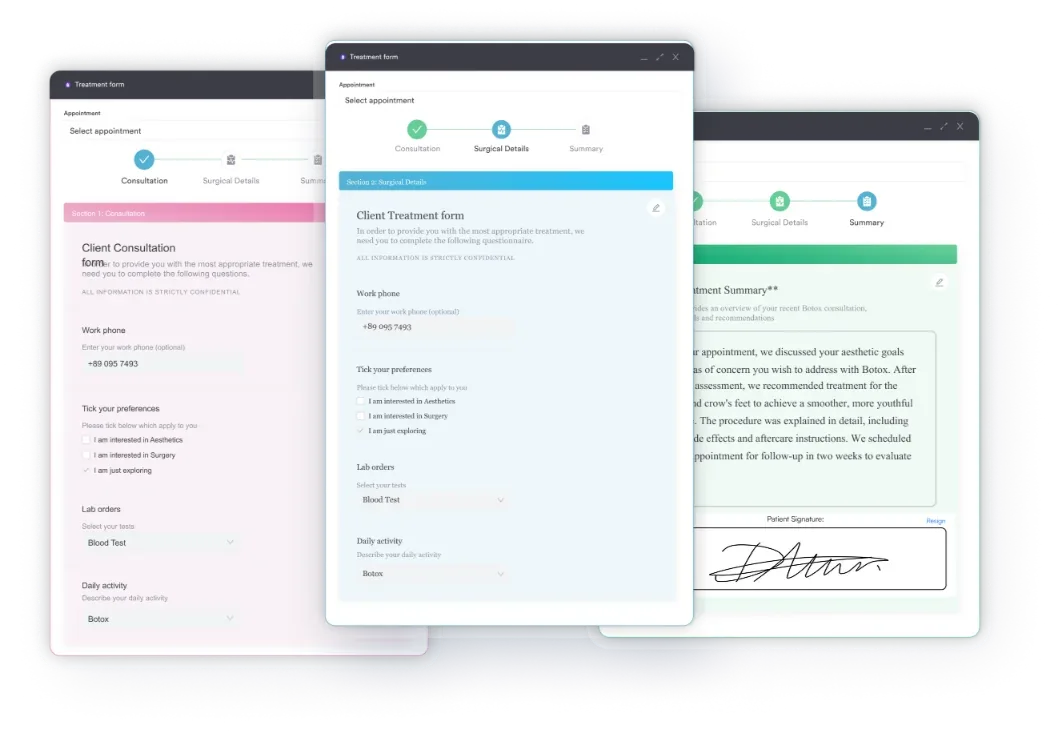
Using digital intake forms that capture counseling topics before the encounter starts saves time and ensures the documented elements are complete. Practices using templated note structures for preventive counseling encounters report fewer claim rejections on codes like 99401 because the required fields are embedded in the workflow rather than left to memory. Maintaining HIPAA-compliant documentation practices is equally critical – counseling notes containing sensitive health behavior data must be stored and transmitted securely.
Choosing the right ICD-10-CM code is critical for 99401 claims. The diagnosis code must support the preventive nature of the encounter. Common pairings include:
Avoid using active disease codes (F, I, E, or M chapter codes) as the primary diagnosis for a 99401 claim. Active disease codes signal a therapeutic rather than preventive encounter, which misrepresents the service and may trigger an audit.

Pabau’s claims management tools help preventive care practices document counseling time accurately, apply modifiers correctly, and track same-day billing rules across payer contracts.

Reimbursement for CPT Code 99401 varies significantly by payer, geographic locality, and plan type. Under traditional Medicare, the code pays approximately $25-$30 based on community reports from physicians billing this code – however, you should always verify the current-year rate using the CMS Physician Fee Schedule lookup tool, as rates are updated annually and vary by Medicare Administrative Contractor (MAC) locality. For the 2026 Relative Value Unit (RVU) data, use the FastRVU 2026 lookup tool to find the work RVU, practice expense RVU, and malpractice RVU components for 99401 in your specific location.
Commercial payer rates for CPT 99401 vary even more widely. Some carriers reimburse at or above Medicare rates; others pay significantly less or deny the code outright for certain plan types. ACA-compliant non-grandfathered health plans must cover preventive services with an A or B rating from the U.S. Preventive Services Task Force (USPSTF) at no patient cost-sharing – meaning if 99401 is tied to a USPSTF-recommended service, it may require Modifier 33 to waive cost-sharing rather than apply the deductible.
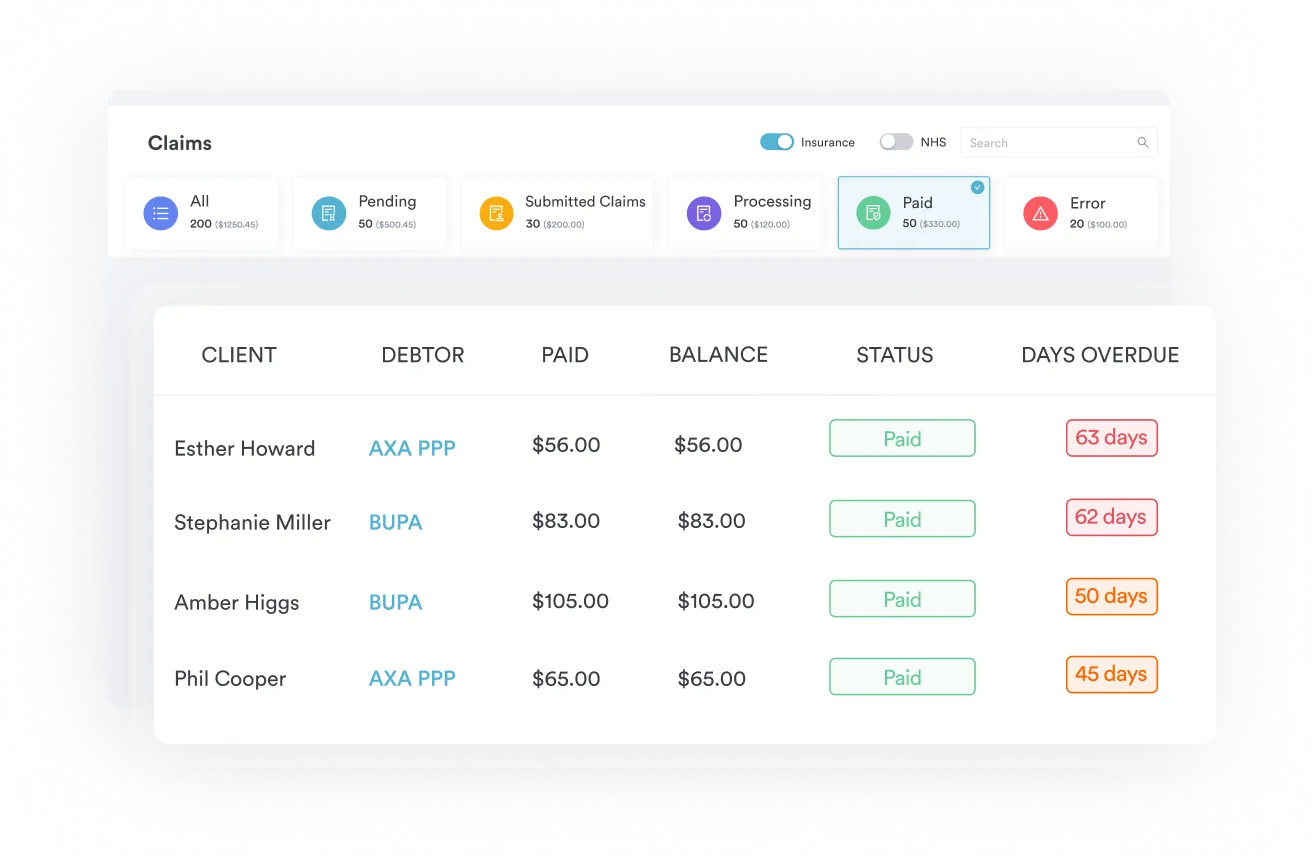
Time-based codes like 99401 require precise documentation at the point of care – not reconstructed after the fact. Practices that rely on manual processes for tracking counseling minutes and applying modifiers consistently miss revenue from undercoded or denied claims. Integrating your billing with a platform that handles claims management workflows directly from the clinical note reduces the gap between service delivery and clean claim submission.
The AAPC Codify platform and similar tools provide useful reference data for verifying code descriptors and modifier rules, but the day-to-day accuracy of 99401 billing depends on your practice’s internal workflow more than any reference tool.
Run a quarterly audit of your 99401 claims: pull the last 90 days of submissions, check that every claim has a documented counseling time of at least 8 minutes in the corresponding note, and review the denial reason codes. Most 99401 denials cluster around one or two fixable documentation gaps.
Getting modifiers right on CPT Code 99401 claims is where many practices stumble. Three modifiers come up most frequently:
Modifier 25 applies when CPT Code 99401 is billed on the same date as a separate, significant, and identifiable E/M service (for example, a sick visit for an acute problem). The Modifier 25 goes on the E/M code, not on 99401, to indicate the E/M was distinct from the preventive counseling. Documentation must clearly distinguish the E/M from the counseling service.
Modifier 33 applies on ACA-compliant non-grandfathered plans when the preventive counseling service qualifies as a zero cost-sharing preventive benefit. This modifier signals the payer to waive patient cost-sharing. Not all commercial payers process Modifier 33 correctly – verify each payer’s specific requirements before applying it consistently to 99401 claims.
Modifier 59 may be required by some payers to unbundle CPT Code 99401 from other same-day services when Modifier 25 does not apply or when a payer’s bundling edits require a distinct procedural service indicator.
A significant payer-specific rule affects CPT Code 99401 billing: many insurers, including Horizon NJ Health, will not reimburse preventive counseling codes (99401-99412) when billed on the same day as a comprehensive preventive medicine visit (CPT 99381-99397). The rationale is that counseling and risk factor reduction are considered part of the comprehensive preventive visit – billing both codes on the same date is treated as unbundling.
This is not a universal rule. Some payers allow same-day billing of 99401 with a preventive visit when documentation clearly shows counseling that extended beyond the scope of the standard preventive service. Always review each payer’s current reimbursement policy for preventive medicine codes. Practices managing multiple payer contracts benefit from automated billing workflows that apply payer-specific bundling rules automatically at claim creation, reducing manual review time and denial rates.
There is no single CPT frequency cap on CPT Code 99401, but individual payers set their own limits, and exceeding them is a common denial reason. Some commercial plans reimburse preventive counseling once per patient per year. Others allow it per distinct risk factor addressed. Each session still has to stand on its own documented medical necessity, so repeating 99401 across visits without a new counseling topic or a changed risk profile invites recoupment.
The rules tighten for Medicare. Because Medicare routes covered counseling to benefit-specific G-codes, each carries its own interval – annual depression screening (G0444) once a year, obesity counseling (G0447) on a defined schedule of covered visits. Track those caps at the payer level, not the code level. A practice billing across several contracts needs to know each plan’s 99401 frequency limit before the claim goes out.
Telehealth coverage for CPT Code 99401 varies by payer and continues to evolve following the end of the COVID-19 Public Health Emergency (PHE). Under traditional Medicare, preventive counseling codes have historically required an in-person encounter. Commercial payers and Medicare Advantage plans may cover 99401 via telehealth – verify your payer’s current telehealth policy and applicable place of service (POS) codes before billing this code for a virtual encounter. Practices offering telehealth services should document the modality (audio-visual, audio-only) and confirm the patient was located in a covered geographic area at the time of service. Batch submissions group many claims into one claim file, and one malformed record can hold up the batch.
CPT Code 99401 is the entry point in a family of individual preventive counseling codes. When a counseling session runs longer than the 22-minute upper boundary for 99401, providers step up to the next code in the series, and time spent well beyond the visit on non-face-to-face work may instead be captured with CPT code 99358 for prolonged service. Group counseling services use separate codes: CPT 99411 (approximately 30 minutes) and 99412 (approximately 60 minutes).
Behavioral change intervention services – addressing tobacco use, alcohol consumption, and other specific risk factors – use a separate set of codes. CPT 99406 and 99407 cover tobacco cessation counseling (3-10 minutes and more than 10 minutes respectively), and CPT 99408 covers alcohol or substance abuse structured screening and brief intervention. These codes have different coverage rules under Medicare than the 99401-99404 family and should not be used interchangeably. For practices tracking multiple preventive counseling code types.
The free 2026 RVU calculator from PCC is a useful tool for comparing the relative value of 99401 versus adjacent codes in your locality – helpful when deciding whether to invest in extending a counseling session to bill 99402 versus closing the encounter at 99401.
Practices using compliance management tools to audit their preventive counseling billing regularly are better positioned to catch code selection errors before they compound into a pattern that triggers a payer review. A primary care EHR that surfaces the 99401-99404 code family in context during note documentation reduces reliance on billers catching errors after the fact.
Most CPT Code 99401 denials are preventable. The code requires at least 8 documented minutes of face-to-face preventive counseling, a supporting Z-code diagnosis, and careful attention to payer-specific same-day bundling restrictions. Getting those three elements right consistently is what separates practices that capture this revenue reliably from those that write it off as “too complicated to bill.”
Pabau’s claims management software helps preventive care practices build the documentation and modifier rules for time-based codes directly into their clinical workflows – so 99401 claims go out clean the first time. To see how Pabau handles preventive counseling billing workflows, book a demo.

Billing a sitz bath with a faucet? Sitz bath billing guide covers E0161 and the mix-up with E0160 that routes claims to the wrong rate.
Billing a commode chair with fixed arms? Commode chair billing guide covers E0163 and the documentation gaps that cause most commode chair claim denials.
Billing a commode chair with detachable arms? Detachable-arm commode chair billing guide covers E0165 and how Local Coverage Determination L33736 ties coverage to the home setup.
CPT Code 99401 is used to report individual preventive medicine counseling of approximately 15 minutes focused on health promotion and risk factor reduction – topics such as diet, exercise, smoking cessation, and injury prevention. It is not used for counseling related to an active or diagnosed condition; those encounters use standard E/M codes instead.
Not always. When billed alone as the only service on the date, 99401 typically does not require a modifier. Add Modifier 25 to a same-day E/M code when you also bill 99401. Add Modifier 33 on ACA-compliant non-grandfathered plans where the preventive service qualifies for zero cost-sharing. Verify each payer’s specific modifier requirements before billing.
Documentation must include the date and provider credentials, the specific counseling topic(s) addressed, the total face-to-face counseling time (minimum 8 minutes), the patient’s response and any agreed behavioral goals, and a supporting ICD-10-CM Z-code diagnosis. Without documented counseling time, the claim is at high risk of denial or downcoding.
Yes, with conditions. When billed on the same day as a problem-focused E/M visit, append Modifier 25 to the E/M code to indicate a separate, significant service. However, many payers will not reimburse 99401 when billed on the same date as a comprehensive preventive medicine visit (CPT 99381-99397), treating it as a bundled service. Review each payer’s preventive medicine policy before same-day billing.
The difference is time. CPT 99401 covers approximately 15 minutes of individual preventive counseling; CPT 99402 covers approximately 30 minutes. The CPT midpoint rule requires at least 8 minutes to report 99401 and at least 23 minutes to report 99402. Both codes cover the same type of service – individual, face-to-face preventive counseling – and use the same documentation and ICD-10 pairing guidelines.
Traditional Medicare does not routinely cover CPT 99401 as a standalone code for all patients. Coverage applies only when the counseling is tied to a specific ACA-mandated preventive benefit. Tobacco cessation counseling, for example, uses separate codes (99406-99408) that are covered under Medicare. Medicare Advantage plans may have broader preventive counseling coverage – check the individual plan’s benefits before billing.



