

CCSD code G5100: Bypass of duodenum billing guide
CCSD code G5100 bills a bypass that leaves the duodenum in place CCSD code G5100...

Last Updated: Oct 16, 2026
J3360 is the HCPCS Level II code for injection, diazepam, up to 5 mg.
Let Pabau's smart automation suggest the right codes, reduce claim denials, and keep your practice compliant—effortlessly.
Automate repetitive tasks and focus on what matters most—your patients.
Reduce coding errors and ensure compliance with the latest regulations.
Clean claims, fewer denials, and faster reimbursements.
Powerful insights and reporting to help your practice thrive.
HIPAA compliant SOC 2 certified GDPR-compliant Trusted by 4,000+ clinics worldwide

HCPCS Code J3360 describes injection of diazepam, up to 5 mg, billed per 5 mg unit under Medicare Part B.
Medicare reimburses J3360 at Average Sales Price plus 6% (ASP+6%). Rates update quarterly via CMS and should be verified before billing.
JW has been mandatory for applicable Medicare drug waste claims since January 1, 2017, and JZ became mandatory on July 1, 2023.
Practice management software like Pabau supports injectable-drug documentation and charge capture, keeping dose, NDC, and diagnosis details together at the point of care.
HCPCS Code J3360 is the billing code for an injection of diazepam, up to 5 mg. A provider gives it in an office, outpatient, or emergency setting. Medicare Part B and commercial payers reimburse it under the Average Sales Price methodology.
Most claim denials for injectable diazepam trace back to one of three errors: the wrong unit count, a missing JW/JZ modifier, or an unsupported diagnosis. This guide covers the code definition, Medicare pricing, and modifier rules. It also covers the NDC crosswalk, covered ICD-10 diagnoses, and the buy-and-bill workflow, so billers and coders have everything in one place.
Diazepam (brand name Valium) is a benzodiazepine used for anxiety management, seizure control, muscle relaxation, and procedural sedation. Because it is a DEA Schedule IV controlled substance, practices must maintain DEA-compliant prescribing and dispensing records in addition to standard claim documentation. The injectable formulation billed under HCPCS Code J3360 is distinct from oral diazepam, which uses a different code series.
According to the Centers for Medicare and Medicaid Services (CMS), HCPCS Level II J-codes cover injectable drugs administered by a provider. They are typically given in an outpatient setting rather than dispensed for self-administration.
Medicare reimburses HCPCS Code J3360 using the Average Sales Price (ASP) methodology. Under this model, the payment rate is typically ASP plus 6%, covering both the drug cost and a handling allowance. Rates update quarterly based on manufacturer-reported ASP data submitted to CMS.
Important note on specific dollar figures: Because ASP rates change every quarter, publishing fixed reimbursement amounts here would quickly become inaccurate. Always verify the current rate directly from the CMS Physician Fee Schedule lookup tool or the quarterly CMS ASP Drug Pricing file before submitting claims.
Practices in lower-cost rural areas may see MAC-adjusted rates that differ from national averages. Check with your regional Medicare Administrative Contractor for any local coverage determinations (LCDs) that apply to diazepam injection claims in your jurisdiction.
Clean claim submission for HCPCS Code J3360 depends on accurate unit reporting, correct place of service coding, and complete documentation of the clinical indication. Missing any one of these elements is enough for a MAC to deny or pend the claim. Practices still filing manually carry this code on the CMS-1500 form, in the service lines.
For practices that administer injectable diazepam regularly. These workflows apply equally to benzodiazepine injections.
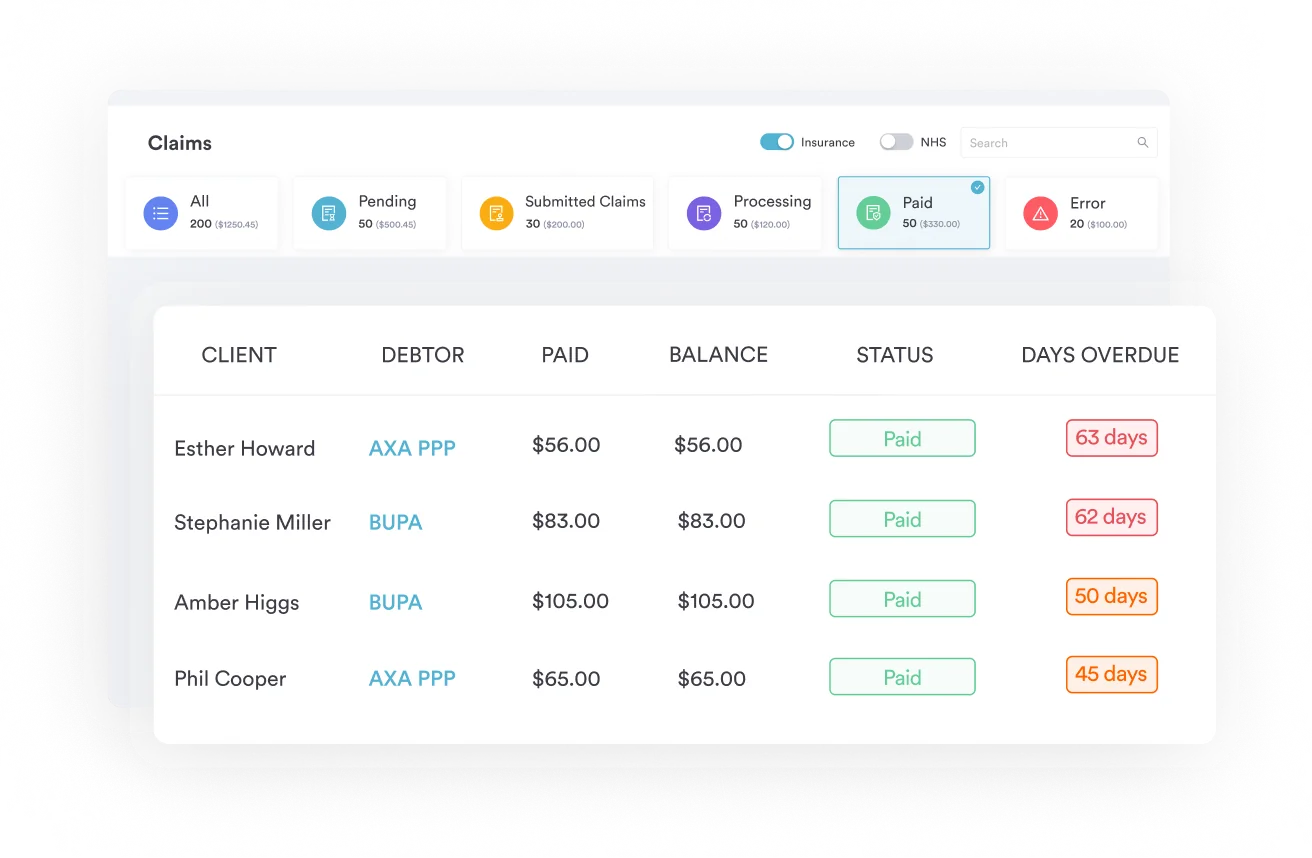
A weight loss clinic platform keeps GLP-1 dosing, stock, and follow-ups aligned across the whole program.
Two modifiers dominate J3360 billing: JW and JZ. Both relate to drug waste reporting, but on different timelines. JW has been mandatory since January 1, 2017, and JZ became mandatory on July 1, 2023. Getting these wrong is one of the most common compliance errors on J-code drug claims.
CMS implemented mandatory JW/JZ modifier reporting to improve visibility into drug waste across provider-administered Medicare Part B drugs. The policy applies to single-dose vials where the administered dose may be less than the full vial.
Failing to append either JW or JZ to an applicable Medicare claim can result in claim rejection or a request for additional documentation. CMS has enforced claim rejections for missing JZ since October 1, 2023, and the JW requirement has applied since 2017, so neither modifier carries a grace period today.
For thorough med spa compliance documentation practices that manage injectable drugs, applying this policy consistently across all J-code claims is a billing priority.
Other applicable modifiers may include GY (item or service statutorily excluded from Medicare coverage) and GZ (expected to be denied as not reasonable and necessary). Site-of-service modifiers may also apply, as required by your MAC. Always verify current modifier requirements with the AAPC HCPCS code reference and your MAC’s local coverage policy.
Medical necessity for diazepam injection must be supported by an appropriate ICD-10 diagnosis code on the claim. The table below lists codes commonly paired with J3360 claims. Verify covered diagnoses against your MAC’s local coverage determination, as coverage policies vary by region.
These codes represent commonly associated diagnoses, not a guarantee of coverage. The MAC makes the final medical necessity determination based on the full clinical record. For seizure presentations. Always verify diagnosis coverage against the applicable LCD before submitting.
Document the specific clinical indication for diazepam injection in the procedure note before generating the claim. Vague notes citing only ‘anxiety’ without clinical context are a common audit flag. Link the administered dose, the diagnosis code, and the NDC on a single charge entry to reduce rework.
Multiple manufacturers produce injectable diazepam, and their products each carry a distinct National Drug Code (NDC). CMS requires NDC reporting on Part B drug claims to track drug spend at the product level. The NDC you report must match the specific product you purchased and administered, not a generic crosswalk.
Accurate NDC tracking is particularly important for practices using the inventory management software to track vial-level drug stock and reconcile administered quantities against purchase orders. Using IV therapy intake forms that capture the product NDC at the point of care reduces the chance of a reporting mismatch at claim time.
Both branded Valium and generic diazepam injection products from various manufacturers map to HCPCS Code J3360. The exact NDC list changes as products enter and exit the market. Confirm current NDC-to-HCPCS crosswalk accuracy using the PGM Billing HCPCS lookup tool or the FDA NDC Directory before submission.
The place of service (POS) code affects both the reimbursement rate and the claim’s compliance profile. Diazepam injection is administered across a range of settings, from office-based procedural sedation to hospital outpatient and emergency department visits.
When the sedation itself has no listed anesthesia code, some payers expect it reported separately under CPT Code 01999. The POS code must match the actual setting where the injection was given.
Practices offering IV infusion or injectable drug services. The correct code depends on their facility registration.
The buy-and-bill model means the practice purchases the drug, administers it, and then bills Medicare for reimbursement. For a controlled substance like diazepam, this workflow has more compliance layers than a standard infusion drug.
Practices using an IV therapy EMR can streamline the documentation chain from drug receipt through claim submission. Here is the standard buy-and-bill sequence for HCPCS Code J3360:
The DEA Schedule IV classification means diazepam must be stored in a locked, substantially constructed cabinet and logged per DEA regulations. These documentation obligations run alongside but are separate from Medicare claim requirements.
Coders working with diazepam injection claims should know the adjacent codes that may apply in different clinical contexts. Some also serve as fallback codes when a specific product code is unavailable.
Never substitute J3490 (unclassified drugs) for J3360 when diazepam is the drug administered. CMS requires the most specific code available, and J3360 is the specific code for diazepam injection. Using J3490 for a drug that has a designated J-code is a billing error that may trigger a refund request on audit.
The same rule applies to injectable atropine sulfate, which has HCPCS Code J0461. Most payers down-code or deny J3490 when a specific code exists.
Injectable drug billing under J-codes often fails at the documentation-to-claim handoff. The clinical record shows the drug was given, but the charge capture is incomplete, the NDC is missing, or the modifier is wrong. Practice management software like Pabau addresses this by keeping clinical documentation, inventory tracking, and charge capture in the same platform.
Specific features relevant to J3360 and similar J-code drug claims include:
These capabilities help practices that administer injectable drugs across multiple locations. They also help practices handling a mix of Medicare Part B and commercial payer claims for the same drug codes. Practices billing multiple J-code drugs.
Run a monthly audit of all J3360 claims to check for missing JW/JZ modifiers and NDC fields. Claims that lack either element are likely to be flagged by your MAC. Catching them before submission takes minutes; chasing a denial takes hours.

Pabau connects clinical documentation, drug inventory, and charge capture in one workflow. NDCs, administered doses, and drug waste are logged at the point of care. Your biller gets accurate charge data instead of reconstructing it after the fact.

Clean J3360 claims come down to documentation discipline. The dose, the NDC, the diagnosis, and the modifier all need to match before the claim goes out. A practice that captures this at the point of care avoids the slower, costlier path of reconstructing it after a denial.
Pabau’s treatment notes and inventory tracking keep clinical documentation and drug records in one place. The details a clean J3360 claim needs are captured as care happens, rather than rebuilt at billing time. To see how it fits your injectable drug workflow, book a demo with the team.

Coding a child’s developmental delay? Developmental delay coding guide covers when R62.50 fits a child missing milestones before a diagnosis is confirmed.
Coding a wasting syndrome diagnosis? Cachexia coding guide explains when R64 fits disease-driven wasting and how it differs from E88.A or R63.4.
Need a code for vague symptoms? General symptoms coding guide covers R68.89 for nonspecific findings that do not fit a more precise diagnostic category.
HCPCS Code J3360 is the billing code for injection of diazepam, up to 5 mg, administered by a provider in an outpatient or clinical setting. It is a Level II HCPCS J-code used to bill Medicare Part B and commercial payers for provider-administered injectable diazepam. Covered indications include acute anxiety, seizure management, muscle spasm, and procedural sedation.
J3360 is the designated J code for diazepam injection. Do not use J3490 (unclassified drugs) for diazepam when J3360 exists as the specific code. CMS requires the most specific code available, and using an unclassified code for a drug that has its own J-code is a billing error.
Each unit of J3360 represents up to 5 mg of diazepam. Bill 1 unit for doses up to 5 mg, 2 units for doses up to 10 mg, and so on. There is no statutory per-claim unit cap under J3360 itself, but the dose must be medically necessary and documented. Excessive units relative to the clinical indication may trigger a medical review request from the MAC.
Use JW when drug from a single-dose vial was discarded after administration. For example, if you administered 7 mg from a 10 mg vial, bill 7 mg as 2 units of J3360 on one line. Bill the wasted 3 mg as 1 unit of J3360 with modifier JW on a separate line. The JW modifier has been mandatory for applicable Medicare claims since January 1, 2017.
JW indicates that drug was wasted and discarded after administration from a single-dose vial. JZ indicates that no drug waste occurred, such as when the entire vial was administered or a multi-dose vial was used with no discard. JW has been mandatory since January 1, 2017, and JZ became mandatory on July 1, 2023, with claim rejections enforced from October 1, 2023. Appending neither modifier to a claim where one applies is a compliance error.
Medicare reimburses J3360 at ASP plus 6% (Average Sales Price plus a 6% handling allowance). Rates update quarterly based on CMS ASP Drug Pricing files. Verify the current quarter’s rate using the CMS Physician Fee Schedule lookup tool or the quarterly ASP file before billing. Publishing a fixed dollar amount here would become outdated within 90 days.
J3360 is primarily a Medicare Part B (outpatient) drug code billed by the administering provider. In inpatient hospital settings, injectable drugs are typically included in the DRG bundled payment and are not separately billable under J-codes. Confirm applicable billing rules with your MAC for any inpatient or facility-based context where separate drug billing is contemplated.



