

CPT Code 98981: RTM Treatment Management Billing Guide
CPT code 98981: Definition and official descriptor CPT code 98981 is an add-on c...

Last Updated: Nov 9, 2026
M5220 is the CCSD code for retropubic suspension of the neck of the bladder, including colposuspension and cystoscopy. It covers the open operation, most often a Burch colposuspension, used to treat stress urinary incontinence.
The code sits in CCSD Chapter 12, in the Bladder section. UK private medical insurers such as Bupa, AXA Health and Aviva use it to identify the surgeon's procedure. Laparoscopic and robotic colposuspension have separate codes, M5222 and M5223.
Let Pabau's smart automation suggest the right codes, reduce claim denials, and keep your practice compliant—effortlessly.
Automate repetitive tasks and focus on what matters most—your patients.
Reduce coding errors and ensure compliance with the latest regulations.
Clean claims, fewer denials, and faster reimbursements.
Powerful insights and reporting to help your practice thrive.
HIPAA compliant SOC 2 certified GDPR-compliant Trusted by 4,000+ clinics worldwide

CCSD Code M5220 covers open retropubic suspension of the bladder neck, including Burch colposuspension and any cystoscopy done in the same operation.
Laparoscopic and robotic colposuspension have their own codes, M5222 and M5223. Bupa grades both as MAJOR 5, two grades above M5220.
UK private medical insurers expect pre-authorisation, an ICD-10 code such as N39.3, and evidence that pelvic floor muscle training failed first.
Pabau, the practice management platform we build, carries the pre-authorisation reference from booking to a Healthcode claim, so the M5220 line is keyed once.
CCSD Code M5220 is the UK private healthcare code for retropubic suspension of the neck of the bladder. Its full descriptor reads “Retropubic suspension of neck of bladder (including colposuspension) (including cystoscopy)”.
The code sits in Chapter 12 of the CCSD schedule, Urinary system and male reproductive organs, in the Bladder section.
CCSD stands for Clinical Coding and Schedule Development. The CCSD Group maintains the schedule of CCSD codes. Specialist associations and the major insurers give clinical input, including Bupa, AXA Health, Aviva and VitalityHealth. Each insurer then attaches its own grade and fee to every code.
Both inclusions in the descriptor matter at the invoice stage. Colposuspension is the main operation the code exists for, so it needs no second code. Any cystoscopy performed to check the bladder during the same operation is also inside M5220 and is not billed separately.
Retropubic bladder neck suspension treats stress urinary incontinence by lifting the bladder neck and holding it in a supported position. The aim is to stop leakage when abdominal pressure rises, for example on coughing or exercise.
Both techniques use the same retropubic approach, and both fall within the M5220 descriptor. They differ only in where the sutures are anchored.
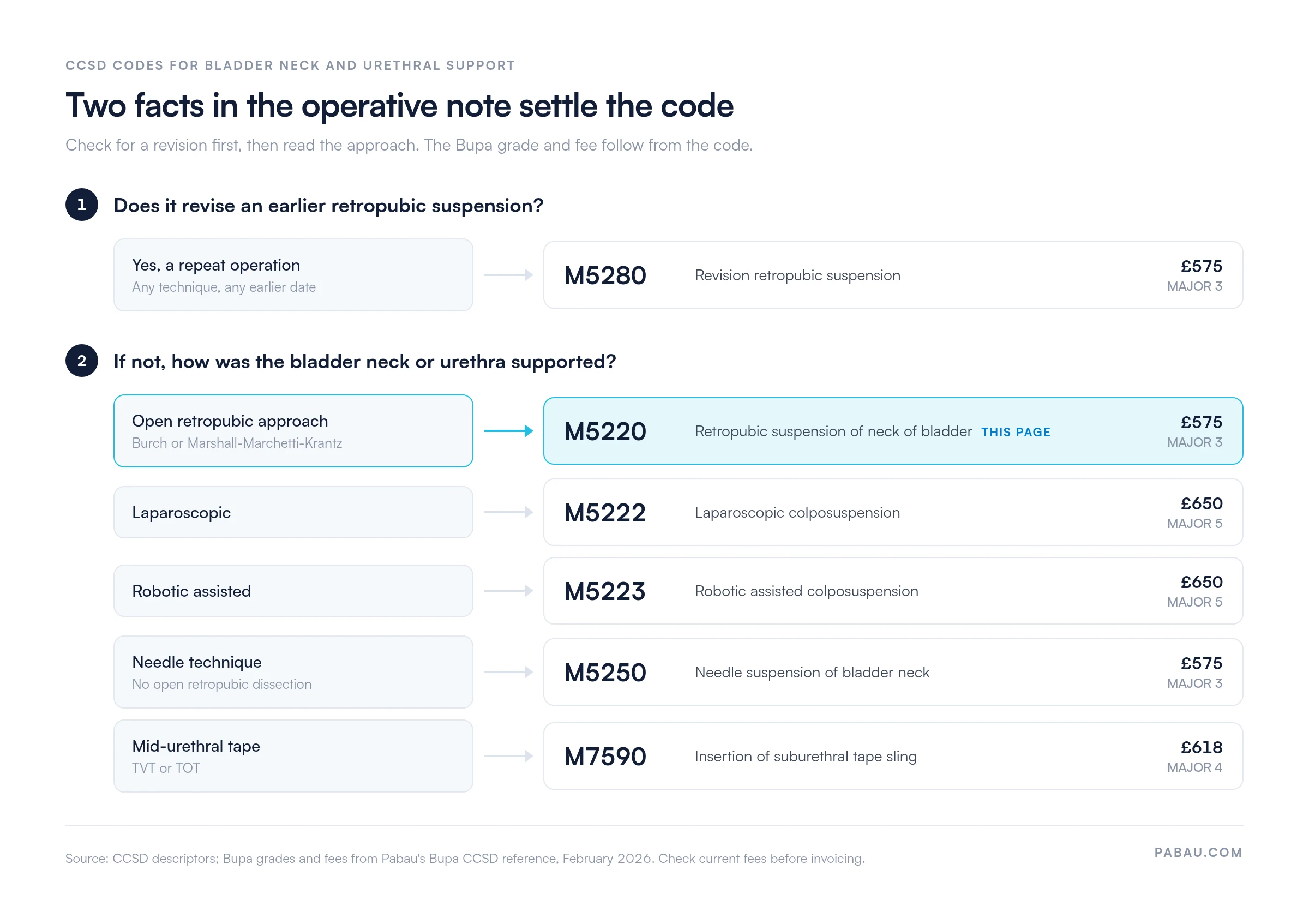
Only the approach changes the code. An open Burch and an open MMK are both M5220. A laparoscopic Burch is M5222, and a robotic-assisted one is M5223. The chart below adds the revision check and the neighbouring codes most often confused with M5220.
Colposuspension is a second-line treatment. NICE guideline NG123 recommends at least 3 months of supervised pelvic floor muscle training first. Surgery comes into the discussion only when that conservative management has failed.
When it has, NG123 lists colposuspension, open or laparoscopic, among the surgical options for stress urinary incontinence. It also recommends that a local multidisciplinary team (MDT) reviews the proposed treatment before any invasive procedure.
A revision of an earlier retropubic suspension is not M5220. It has its own code, M5280, which Bupa also grades as MAJOR 3. A combined abdominal and vaginal operation to support the bladder outlet, including a sling procedure, is billed as CCSD code M5100.
UK insurers expect a WHO ICD-10 diagnosis code on every surgical claim. The code on the invoice should match the indication in the pre-authorisation request and the operative note.
NICE NG123 does not call for urodynamics before primary surgery when stress incontinence is clearly diagnosed on history and examination. Insurers may still ask for them in mixed, unclear or recurrent cases, so check the policy before you book the test.
Several CCSD codes cover operations for the same condition or the same anatomy. The grades and fees below come from Pabau’s Bupa CCSD codes guide and its February 2026 reference file.
Never add a separate cystoscopy code, such as M4510 or M4514, to an M5220 invoice for the same operation. The descriptor already includes it. A pre-operative urodynamic study on a different day is a separate service, coded as CCSD Code M4780 where it includes cystoscopy.
Colposuspension is sometimes done in the same session as an anterior repair, coded P2310 when it is a colporrhaphy. Check the insurer’s rules for multiple procedures before you invoice both codes. Most insurers pay the second procedure at a reduced rate, and some ask for it in the pre-authorisation request.
Insurer clinical reviewers read the operative note against the code on the claim. A thin note is a common reason for a query or a pended payment. Digital forms help practices capture the same fields every time.
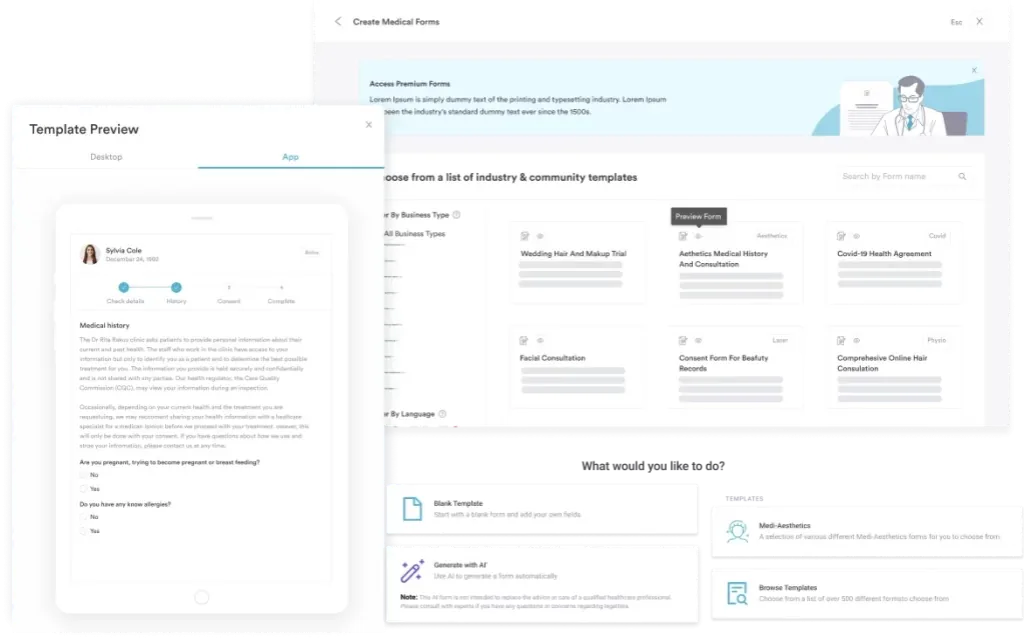
The operative note for M5220 should record each of the following:
Bupa, AXA Health, Aviva and VitalityHealth all expect pre-authorisation before an elective operation such as colposuspension. The patient usually obtains the authorisation number from the insurer. The practice then quotes it on the claim.
Fees and requirements change, so check the current figure in the Bupa code search or the VitalityHealth fee finder before you invoice. If the operation changes from open to laparoscopic, ask the insurer to update the authorisation to M5222 first.
M5220 claims fail for a small set of repeat reasons. The CCSD schedule is the authoritative source for descriptors, and most failures can be caught before submission.
Consultant gynaecologists, urogynaecologists and urologists can all perform colposuspension in UK private practice. Each must hold a licence to practise with the GMC and sit on its specialist register. Insurers then decide separately which consultants they recognise to bill for the procedure.
The hospital or clinic where the operation takes place must be registered with the CQC in England, or the equivalent regulator elsewhere in the UK.
Before the first claim, confirm that the consultant’s insurer recognition covers this specialty. It saves a rejected claim later. Practices billing for several consultants should track insurer recognition for each one.
Many gynaecology and urology practices still build CCSD invoices by hand, then rekey each claim into an insurer portal. In Pabau, each claim opens pre-filled from the invoice. The M5220 line and its ICD-10 code are entered once.
Pabau’s Healthcode-connected claims management sends private medical insurance claims through Healthcode to Bupa, AXA Health, VitalityHealth and other insurers. Pre-authorisations are stored against the patient, and the reference carries through to the claim.
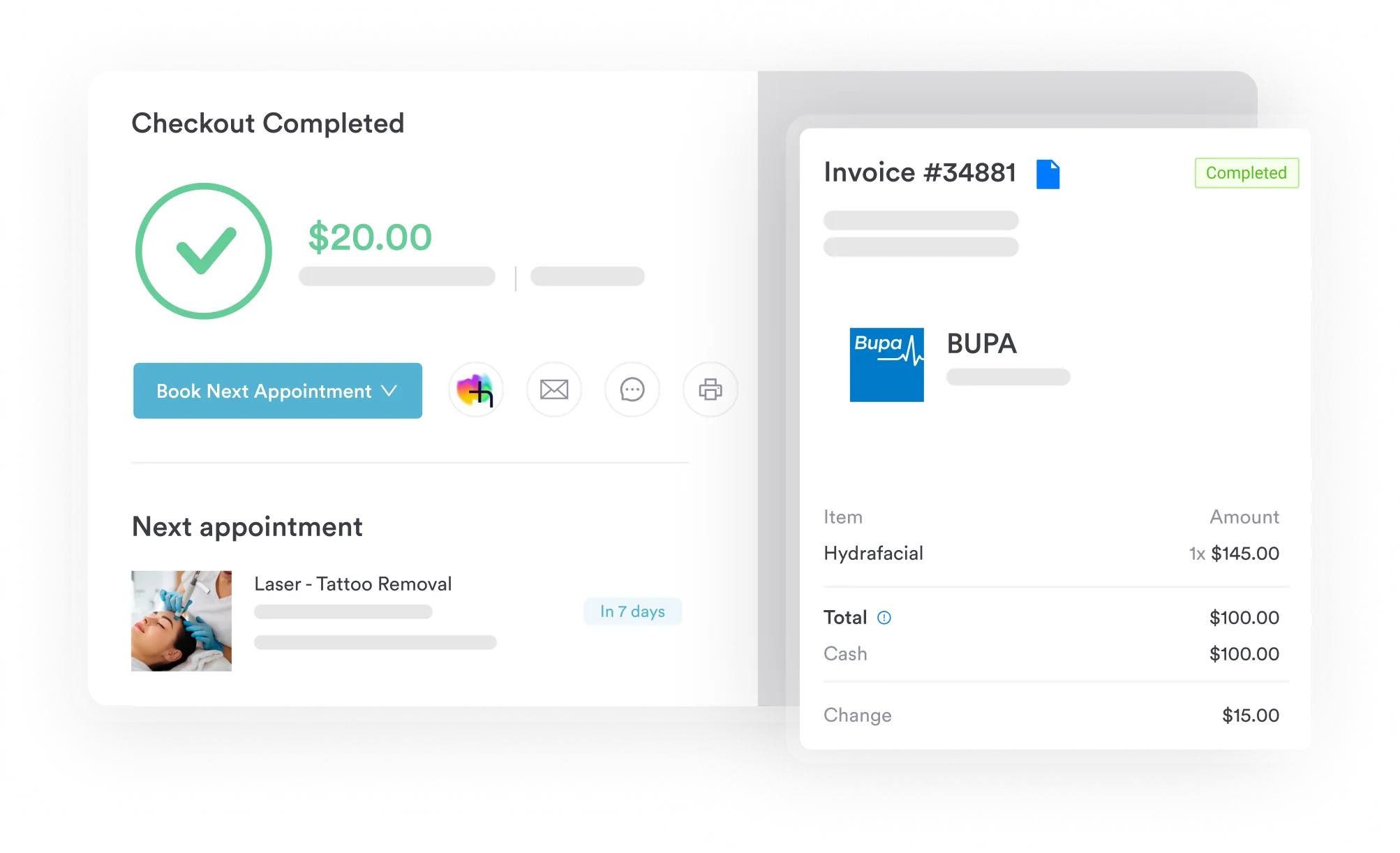
The claims dashboard then tracks each claim from pending to paid, with days overdue on every row. When the insurer pays, the payment is matched to the invoice once, so the surgical fee never sits unreconciled.

Pabau pre-fills each claim from the invoice, carries the pre-authorisation reference through, and sends it to Bupa, AXA Health or VitalityHealth via Healthcode. Your team tracks every claim from pending to paid in one dashboard.

M5220 is the open operation, and that one word decides most of the claim. If the surgeon worked through a laparoscope or a robot, the code is M5222 or M5223, at a higher grade. If the operation revises an earlier suspension, it is M5280.
Settle the code with the consultant before the authorisation is requested, and ask for an operative note that names the approach and the anchor point. The cystoscopy is already paid for inside M5220, so leave it off the invoice.
Book a demo to see how Pabau carries the pre-authorisation reference from booking to a paid insurer claim.

Treating incontinence with an artificial sphincter instead? CCSD Code M5520 walks through billing for sphincter implantation at the bladder neck.
Choosing billing software for a UK practice? Best medical billing software in the UK compares the platforms that handle insurer claims and CCSD invoicing.
CCSD Code M5220 covers open retropubic suspension of the bladder neck, including colposuspension and any cystoscopy in the same operation. It is used mainly to treat stress urinary incontinence in women. Both the Burch and Marshall-Marchetti-Krantz techniques fall under this code.
No. Laparoscopic colposuspension has its own CCSD code, M5222, and robotic-assisted colposuspension is M5223. Bupa grades both as MAJOR 5, compared with MAJOR 3 for M5220. Code the approach recorded in the operative note.
M5220 lifts the bladder neck through an open retropubic approach. Insertion of a suburethral tape sling, such as TVT or TOT, is coded M7590 and supports the mid-urethra instead. The two are different operations and are not substituted for each other.
N39.3, stress incontinence, is the usual primary diagnosis. N39.4 can be added when urge symptoms coexist, and N81.1 when a cystocele is recorded. Avoid R32, unspecified urinary incontinence, because it does not support a surgical indication.
Yes. Bupa, AXA Health, Aviva and VitalityHealth expect pre-authorisation before elective colposuspension. Insurers usually look for the CCSD and ICD-10 codes and evidence that pelvic floor muscle training failed. Urodynamic results may be requested in mixed or recurrent cases.
Both can. The consultant must be on the GMC specialist register and recognised by the patient’s insurer for the procedure. Urogynaecologists should confirm that their recognition covers colposuspension under the specialty they bill in.




