HCPCS code E0198: Water pressure pad billing guide
HCPCS code E0198 is a water pad for a standard mattress HCPCS code E0198 is the ...

Last Updated: Oct 13, 2026

CCSD code 0132B is the diagnostic pathology code for a thallium level blood test, used to investigate suspected exposure to thallium, a toxic heavy metal.
Blood thallium reflects only recent exposure, since the element clears from blood within days, so a normal result on 0132B doesn’t rule out poisoning. A 24-hour urine thallium test is often ordered alongside it.
Reimbursement for CCSD code 0132B is set individually by each UK private insurer, so check the current fee schedule and pre-authorization rules before invoicing rather than assuming a standard rate.
Practice management software like Pabau supports CCSD code entry, electronic submission via Healthcode, and audit-ready documentation for UK private pathology billing.
CCSD code 0132B identifies the thallium level blood test, a diagnostic pathology code within the CCSD Schedule of Diagnostic Tests used across UK private healthcare.
Practitioners typically order it to investigate suspected thallium exposure or poisoning: Unexplained hair loss, peripheral nerve pain, or gastrointestinal symptoms following possible contact with the metal. That’s the exact clinical reasoning UK private insurers expect to see documented before they pay the claim.
Practice management software like Pabau helps UK private practices get these claims right the first time. This guide covers what CCSD code 0132B represents clinically, which UK private insurers recognize it, how to document and submit a compliant claim, and what causes rejections.
CCSD code 0132B is a diagnostic code within the CCSD Schedule of Diagnostic Tests, the coding framework used across UK private healthcare for pathology and laboratory investigations, maintained by the Clinical Coding and Schedule Development (CCSD) Group.
Within the schedule, 0132B is filed under Pathology, the section covering laboratory investigations rather than surgical or consultation procedures. It sits alongside other blood-level tests coded under the same diagnostic framework.
Like other pathology codes in the CCSD schedule, the final letter identifies the specimen type required: B for blood. CCSD code 0132B is a blood test.
The CCSD Group publishes two separate schedules: One for procedural codes and a separate one for diagnostic tests, which is where CCSD code 0132B belongs. Diagnostic codes are not loaded into procedure code tables and should not be billed alongside procedural codes without clear clinical justification.
Because the full CCSD schedule is login-gated at ccsd.org.uk, confirm the exact narrative for CCSD code 0132B through a registered CCSD member login or your practice management system’s integrated code library. The authoritative description always supersedes any third-party summary. When referencing the code in patient records and invoices, use the full format exactly: 0132B, not 0132-B or 132B.
Thallium is a toxic heavy metal, historically used in rodenticides and some industrial processes, and it has no known beneficial role in the human body. Unlike routine chemistry markers, a thallium level test isn’t run to monitor normal physiology. It exists specifically to detect exposure or poisoning, making it a core investigation in occupational health and toxicology workups.
The test measures the concentration of thallium in a blood sample. It’s typically ordered when a patient presents with symptoms consistent with thallium poisoning, or when occupational, environmental, or deliberate exposure is suspected.
Thallium poisoning follows a recognizable pattern over time:
Because the early symptoms are nonspecific, clinicians often only request a thallium level once the later, more distinctive signs appear.
Reference ranges are laboratory-specific, but as a general guide, some laboratories flag a blood thallium concentration above 100 micrograms per liter as toxic, with levels above 300 micrograms per liter indicating severe poisoning, according to ARUP Laboratories’ test directory. Always interpret a result against the reporting laboratory’s own reference range rather than a generic threshold.
This is the detail that matters most for billing CCSD code 0132B correctly: Thallium clears from the bloodstream quickly, with a biological half-life of roughly two to four days, as it redistributes into peripheral tissue.
That means a blood level only reflects recent exposure and can come back normal even in a patient who was significantly poisoned a few weeks earlier.
For that reason, a 24-hour urine thallium collection is generally considered the more reliable test for confirming or excluding poisoning, and clinicians frequently order it alongside, or instead of, the blood level.
CCSD code 0132B bills specifically for the blood specimen. If the practice also runs a urine thallium test, that’s a separate specimen type and, per the CCSD schedule’s specimen-letter convention, should carry its own code rather than being billed under 0132B.
Confirming which specimen was actually tested, and coding accordingly, avoids one of the more specific rejection risks on this particular code.
Every major UK private medical insurer bases its fee schedule on CCSD codes. This standardization means a single code like 0132B is the billing reference across multiple payers, each with its own fee rates and submission rules. Knowing which insurers recognize the code, and the nuances of each, is essential before submitting a claim.
Fee amounts vary between insurers even when the underlying CCSD code is identical. Confirm the current recognized fee for CCSD code 0132B with each insurer before billing. Rates are updated via CCSD bulletins, and an insurer’s published schedule supersedes any previously quoted figure.
Private practices coding with CCSD still need solid practice management behind every invoice and insurer submission.
Documentation is where pathology claims quietly fail. Insurers rarely reject a thallium test because the code is wrong. They reject it because the claim is missing the information that shows the test was clinically warranted and correctly attributed.
For a blood test, that documentation looks different from a surgical procedure. There are no operative notes, but there does need to be a clear clinical indication and a clean trail from request to result to invoice. Given the toxicology context, a documented exposure history matters more here than on a routine chemistry panel.
The minimum documentation for a valid 0132B claim typically includes:
A thallium level ordered to investigate a known or suspected exposure, such as occupational contact, a suspicious ingestion, or symptoms like unexplained alopecia or painful peripheral neuropathy, is easy to justify. A test with no recorded exposure history or presenting symptom is not.
The indication doesn’t need to be lengthy. A short, specific note tying the test to the patient’s exposure history or presentation confirms it was appropriate and heads off a request for further information.
Practices using digital clinical forms can build the exposure history and requesting details into a standard toxicology request template, so nothing is missing when the claim is raised.
For a blood test like this, “authorization” usually means confirming that the patient’s outpatient episode and diagnostic entitlement cover the test, not obtaining a separate approval for the thallium measurement itself.
Some insurers and policies do require an authorization reference for the episode under which diagnostics are claimed, and where one is issued it must appear on the invoice exactly as the insurer provided it.
Recording that reference in the patient’s patient record at the point of approval, rather than retrospectively, is the cleanest way to make sure it’s available at billing time.
Before submitting any claim using CCSD code 0132B, cross-check the code against the current CCSD bulletin. The CCSD Group publishes periodic schedule bulletins that add, amend, or retire codes. A bulletin issued after your practice last updated its code library may have changed the 0132B narrative, its chapter placement, or its permitted combinations.
Electronic submission via Healthcode is the standard route for UK private healthcare claims. Healthcode is the national electronic claims network used by the majority of UK private insurers, and most practice management systems connect directly to it. A correctly constructed claim for CCSD code 0132B includes several required components. For patients whose insurer sits outside that network, a superbill still gives them the receipt they need to claim reimbursement directly.
For practices using claims management software, CCSD codes can be attached directly to appointment records and transmitted electronically without manual re-entry. This reduces transcription errors and creates an auditable link between the clinical record and the submitted claim.
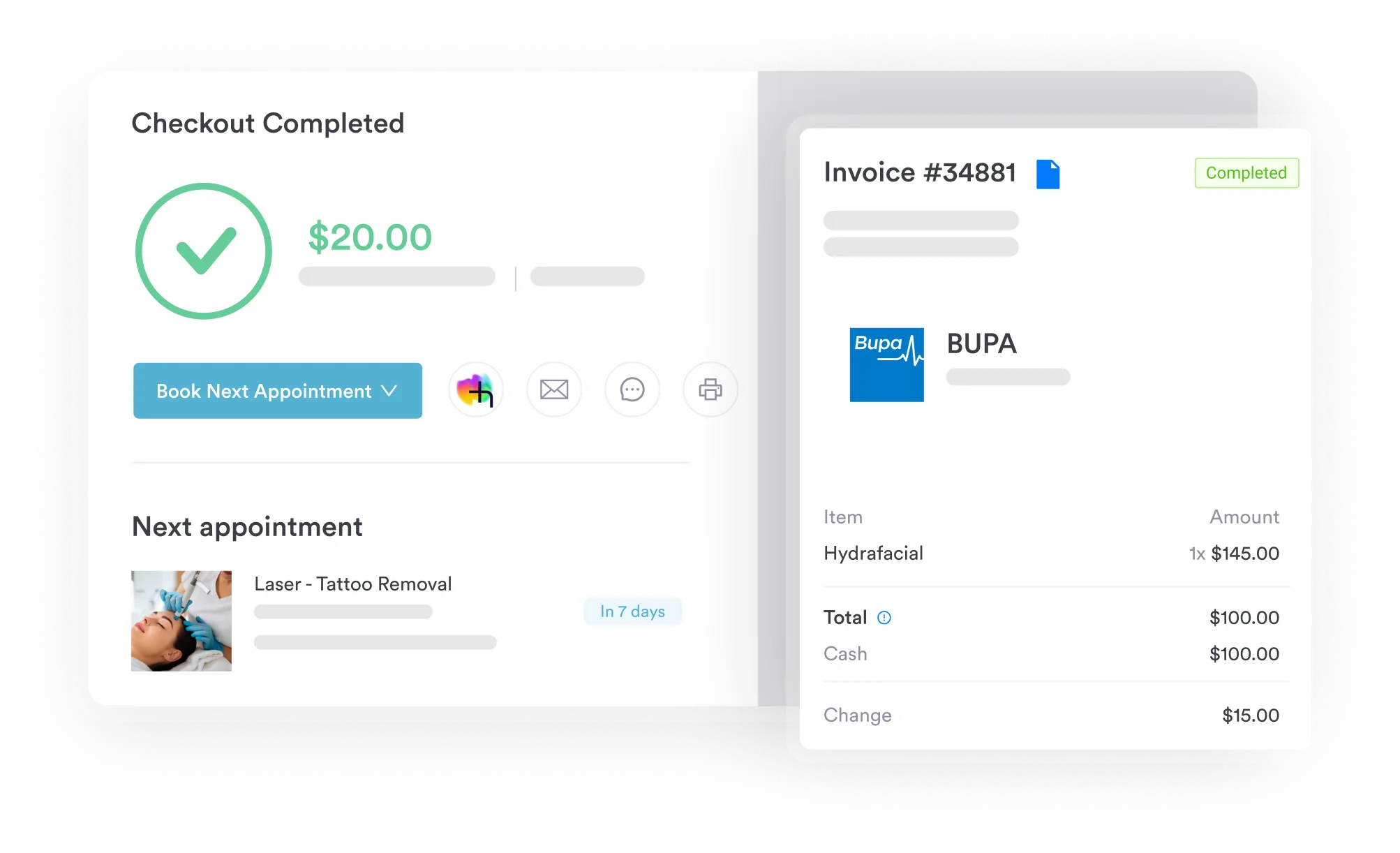

Pabau connects your clinical records to CCSD billing codes and submits claims electronically via Healthcode. Attach codes at point of care, reduce transcription errors, and track claim status without leaving your practice management system.

Rejection patterns for CCSD code submissions tend to cluster around a small number of recurring errors. Practices that audit their rejected claims consistently find the same culprits.
The CCSD schedule is updated via bulletins. If your practice management system’s code library hasn’t been refreshed after a recent bulletin, you may be submitting a superseded version of CCSD code 0132B or using a narrative that no longer matches the insurer’s current schedule. Set a review schedule that aligns with CCSD bulletin releases, typically published several times per year.
Because thallium poisoning is often investigated with both a blood level and a 24-hour urine collection, it’s easy to bill the wrong specimen-specific code, or to bill 0132B twice for what was actually a blood sample plus a urine sample.
Confirm which specimen the laboratory actually tested before entering the code, and use the correct code for each specimen type submitted.
Several UK private insurers require an authorization reference for the outpatient episode a diagnostic test belongs to. If a claim for CCSD code 0132B is submitted without that reference, it will be rejected regardless of clinical appropriateness. Build an authorization check into your booking workflow so the reference is captured before the patient attends.
The date on the claim must match the date the sample was taken, as recorded in the clinical notes. Insurers cross-reference these dates during processing.
A one-day discrepancy, common when claims are prepared in batch the day after the test, is enough to trigger a query or rejection. Use practice management software that pulls the sample date directly from the appointment record to eliminate this error.
When an external laboratory processes the sample, it may bill the insurer directly for the analysis. If the practice also submits 0132B for the same test, the insurer receives two claims for one investigation and rejects or claws back one of them.
Agree in advance who bills for pathology, the lab or the practice, and make sure your workflow reflects that split.
Audit your rejected claims quarterly. Group rejections by reason code. If date-of-service mismatches, missing authorization references, or specimen-type mix-ups appear consistently, the problem is in your workflow, not a one-off error. Fix the upstream step in your booking or coding process rather than correcting claims one by one.
UK private practices managing CCSD billing manually face a growing administrative burden. As insurer schedules become more granular and bulletin frequency increases, the margin for error narrows. Pabau is practice management software built for private practices.
CCSD codes, including diagnostic pathology codes like 0132B, can be stored within Pabau’s procedure code library and attached to appointment records at the point of care. When a clinician orders a test, the corresponding code is linked to the patient record rather than entered separately during billing.
This creates a direct, auditable connection between the clinical record and the invoice. Claims are then submitted electronically via Healthcode integration, bypassing the manual re-entry step that generates most transcription errors.
For practices dealing with UK data compliance obligations alongside billing complexity, Pabau’s claims management software consolidates both within a single system. Claim status, rejection reasons, and payment records are tracked from within the same platform used for scheduling and clinical notes, reducing the need to move between multiple tools.
Practices transitioning from the NHS to private work often find CCSD billing the steepest part of the learning curve.
Pabau’s structured onboarding covers CCSD code setup and Healthcode connection as part of getting the system live, so new private practices can start billing correctly from the first appointment rather than learning through rejected claims. For more on leaving the NHS, the transition guide covers the full compliance and administrative picture.
CCSD code 0132B is a diagnostic pathology code for the thallium level blood test, used to investigate suspected exposure to this toxic heavy metal. Confirm the current narrative through CCSD member access, since the authoritative description always supersedes a third-party summary.
The code is recognized by all major UK private insurers, each of which publishes its own fee schedule and submission requirements. Clean claims depend on a clear exposure history and clinical indication, the correct specimen-type code when a companion urine test is also run, valid authorization references, and date-of-service accuracy.
For practices ready to remove the manual steps from CCSD billing, book a demo with Pabau to see how claims management, electronic Healthcode submission, and CCSD code libraries work together within a single private practice platform.

Need another blood-level pathology code? CCSD code 0049B covers the sodium level blood test, billed under the same diagnostic framework as thallium.
Looking up another heavy-metal or toxicology level test? CCSD code 0416H covers the 6-monoacetylmorphine (6-MAM) level test, another toxicology code recognized under the CCSD schedule.
Billing a related blood chemistry code? CCSD code 1552B covers the haemoglobin F (HbF) level blood test, filed under the same UK private insurer coding framework.
Need the potassium level test code? CCSD code 0048C covers the potassium level test, billed under the same CCSD diagnostic framework.
Coding a genetic or molecular pathology test? CCSD code 0029B covers the MLH1 promoter hypermethylation test, another CCSD diagnostic pathology code.
CCSD code 0132B is the diagnostic pathology code for a thallium level blood test, filed under Pathology in the CCSD Schedule of Diagnostic Tests, maintained by the Clinical Coding and Schedule Development (CCSD) Group. It is a diagnostic code, not a procedural one. The exact clinical narrative must be confirmed via CCSD member access at ccsd.org.uk.
A thallium level test measures the concentration of thallium, a toxic heavy metal, in a blood sample. It’s ordered to investigate suspected thallium exposure or poisoning, often prompted by unexplained hair loss, painful peripheral neuropathy, or gastrointestinal symptoms following possible contact with the metal.
Thallium clears from the blood within days as it redistributes into tissue, so a blood level only reflects recent exposure and can be normal even after significant past poisoning. A 24-hour urine thallium collection is generally considered more reliable for confirming exposure, so clinicians often request both a blood level and a urine test, each billed under its own specimen-specific code.
All major UK private medical insurers base their fee schedules on CCSD codes, including Bupa, AXA Health, Aviva, Allianz Care, Vitality Health, WPA, Healix, and Freedom Health. Each insurer sets its own fee rates and submission requirements independently, so the recognized fee for CCSD code 0132B will vary between payers.
A routine blood test rarely needs its own separate pre-authorization. What matters is that the patient’s outpatient episode and diagnostic entitlement cover the test. Some insurers and policies do require an authorization reference for the episode under which diagnostics are claimed. Where one is issued, record it in the patient record and quote it exactly on the invoice.
UK private healthcare claims are submitted electronically via Healthcode, the national claims network recognized by all major insurers. Most practice management systems connect directly to Healthcode. A valid claim requires your provider number, the patient’s membership number, any required authorization reference, the CCSD code with the correct date of service, and the requesting clinician’s professional registration number.