



HCPCS code E0198: Water pressure pad billing guide
HCPCS code E0198 is a water pad for a standard mattress HCPCS code E0198 is the ...

Last Updated: Oct 13, 2026

CCSD code 0048C identifies a potassium level test in the UK private healthcare billing schedule. It’s the code a lab or provider puts on an invoice to bill an insurer for this blood chemistry check, almost always requested as part of a wider urea and electrolytes (U&E) panel.
It’s a pathology code, not a procedure code with a multi-clinician fee split. A single blood draw for a U&E panel can generate several CCSD line items, and the fee sits with the lab or provider running the test, not with a team of treating clinicians.
Bupa, AXA Health, Aviva, Vitality Health, and WPA all recognise CCSD codes for pathology claims, and Healix processes them too, though Healix is a healthcare trust and claims administrator, not a traditional insurer. Submission runs mainly through Healthcode or the payer’s own portal, and reimbursement and pre-authorisation rules vary case by case.
Practice management software like Pabau helps practices attach the correct CCSD code, referring clinician detail, and provider number to each pathology claim before it reaches Healthcode, so one mismatched field doesn’t hold up an entire panel.
CCSD code 0048C is the code UK private medical insurers use to bill a potassium level test, the blood chemistry check that almost never travels alone. Order “U&Es” and potassium comes back bundled with sodium, urea, and creatinine from the same draw. If a remittance or invoice line shows 0048C, that’s the charge for the potassium result specifically, nothing to do with a surgeon’s or any other clinician’s procedure fee.
This guide covers what 0048C actually pays for, how it sits inside the wider CCSD schedule, the insurer and pre-authorisation quirks specific to pathology claims, and a quick checklist for what needs to be right before a claim goes out.
If you’re new to running a private practice in the UK, pathology billing is one of the areas where the rules genuinely differ from surgical or consultation billing, so it’s worth getting right from the first invoice.
0048C identifies a potassium level test on the CCSD schedule, the number a lab or provider puts on an invoice line to tell an insurer exactly what was checked.
Potassium is one of the core measurements in an electrolyte panel. It’s a marker clinicians watch closely, because levels that run too high or too low affect heart rhythm and muscle function.
In practice, potassium is rarely requested on its own. A GP or consultant ordering “U&Es” gets sodium, potassium, urea, and creatinine back from the same blood draw, and 0048C is the line covering the potassium result specifically within that group.
As a pathology test, it belongs in the CCSD schedule’s Diagnostic Schedule, alongside other diagnostic pathology codes covering everything from toxicology.
That also settles a common point of confusion: a lab test doesn’t carry a “lead clinician plus assistant plus other specialist” fee split the way a surgical episode can. One sample, one laboratory, one set of results. The billing structure has nothing to do with how many clinicians were in the room.
A note on the code itself: CCSD codes pair a numeric family with a trailing letter, and you’ll see claims online about what that letter means. The CCSD schedule’s full narrative sits behind a registered login, and the public sources that do discuss it don’t agree on what a given suffix is supposed to denote.
Rather than guess, this guide sticks to one fact worth standing behind: 0048C identifies a potassium level test, full stop, without asserting what the “C” on its own is supposed to mean.
CCSD’s Technical Guide does document the letter at the front of a code, which is not the trailing letter that 0048C carries. It ties that leading letter to a chapter, and AA588 is one of the codes that breaks the pattern.
That’s the code itself settled. Zooming out to the schedule it sits on explains why UK private billing works so differently from the NHS in the first place.
CCSD stands for Clinical Coding and Schedule Development. It’s both the name of the schedule and the group that governs it. Representatives from Bupa, AXA Health, Aviva, and Vitality Health, alongside several private hospital groups, oversee what codes exist and what they cover, while Grant Thornton UK LLP administers the schedule day to day.
For clinicians moving from the NHS into private practice, this is one of the first practical differences to learn. There’s no equivalent governing body on the NHS side, because NHS activity isn’t billed code-by-code to a payer the way private care is.
The schedule itself splits into a Procedural Schedule and a Diagnostic Schedule, covering everything from surgical procedures to consultations to lab-based diagnostic tests like 0048C. Crucially, the CCSD Group doesn’t set fees.
Bupa, AXA Health, Aviva, and every other insurer that recognises the schedule sets its own reimbursement rate for each code, and a code existing on the schedule is no guarantee that a specific insurer will pay for it under a specific policy. Treat any fee figure you see quoted online as indicative at best, and confirm the number with the insurer directly.
High-cost codes show that most clearly. A0380 covers stereotactic radiotherapy, yet insurers usually refuse a session delivered without written approval.
The NHS doesn’t use CCSD at all. NHS procedure activity is classified using OPCS-4, officially the OPCS Classification of Interventions and Procedures, maintained by NHS England’s Clinical Classifications Service. The acronym itself is a holdover from the system’s original name, the Office of Population Censuses and Surveys Classification of Surgical Operations and Procedures.
Diagnoses use ICD-10 instead. Private billing runs on CCSD, so a clinician working across both settings is, in effect, working in two coding languages: one for what the NHS records for activity and outcomes data, and a different one entirely for what gets invoiced to a private insurer.
Here’s the sequence, from the patient’s arm to the insurer’s remittance:
That’s the mechanical flow. The friction almost never shows up in the first four steps. It shows up at step five, where one blood draw can turn into several CCSD line items rather than one, each of them a separate chance for a query.
This is where pathology billing behaves differently from a surgical claim. A knee replacement generates one obvious procedure code and maybe an assistant fee, and everyone involved knows the roles. A blood panel can quietly generate five separate lines, all reported by one laboratory.
Getting even one of them wrong (the wrong code, a mismatched provider number, a missing referring clinician detail) is enough to get the whole batch queried, even though the rest of the panel was correct.
Pre-authorisation for pathology doesn’t work the way it does for surgery. A knee arthroscopy or a Major-band procedure like A0980 needs sign-off before the patient is anywhere near theatre. A routine U&E panel, by contrast, is usually low-cost and gets folded into the authorisation for the consultation or admission it supports, rather than pre-authorised as its own line item.
That doesn’t mean it goes unchecked: insurers still validate the CCSD code, the requesting clinician’s provider number, and the patient’s policy details when Healthcode processes the claim. It just means the friction sits at the coding and documentation stage, not at a pre-treatment approval call.
Take a concrete example: a renal consultant requests U&Es to monitor a patient recently started on an ACE inhibitor. The lab bills 0048C for potassium, plus the matching codes for sodium, urea, and creatinine, all referencing the same consultant’s provider number and the same date of service.
If one field is out of sync, say the provider number on file for that consultant hasn’t been updated since a recognition renewal, every line in that panel can bounce back as a single rejected batch, not just the one affected line. Fix the data at the point of request. By the time a pathology claim reaches Healthcode, there’s no easy way to tell which of the five lines actually caused the rejection.
A hemolysed sample is a common reason potassium comes back artificially high, and it usually means the lab asks for a repeat draw. Flag the repeat in the patient’s notes so the second 0048C line reads as a retest rather than a duplicate charge when someone reviews the invoice later.
Insurers can ask for the paperwork behind a 0048C claim months after the result was reported, and a thin file is hard to defend at audit even when the invoice itself was correct.
Three things are worth having on record before you bill, not after a query letter shows up.
Turn that documentation habit into a broader pre-submit check, and most of the queries a pathology claim attracts never get the chance to happen. Run through this before the claim goes out, not after a rejection lands:
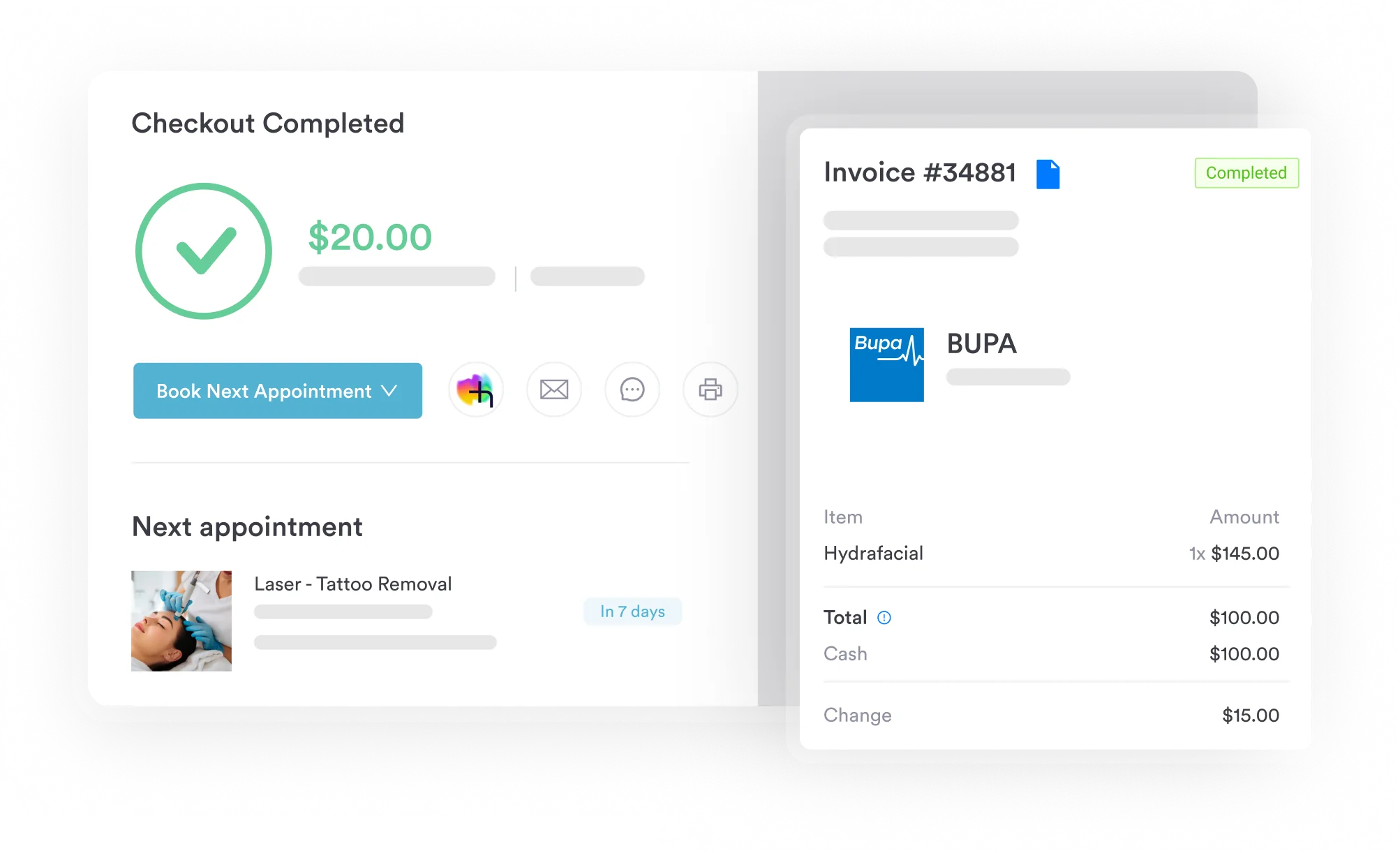
Before billing 0048C, or any pathology code, check whether your lab or biller treats it as a standalone line item or folds it into a bundled panel code. That single check prevents most of the query letters pathology claims generate.
Our guide to managing a practice covers the operational side that sits behind clean CCSD billing.
Bupa, AXA Health, Aviva, Vitality Health, and WPA all recognise CCSD codes, including pathology codes like 0048C, and process the majority of these claims through Healthcode’s clearing service. Healix recognises and processes CCSD-coded claims too, though it works as a healthcare trust and claims administrator rather than a traditional insurer.
Reimbursement rates and pre-authorisation requirements still vary by payer and by policy, so confirm both before you bill rather than assuming last quarter’s answer still holds. For Bupa specifically, the Bupa CCSD codes guide covers how to use its code search portal to confirm a code before an appointment. Box-by-box requirements on the professional claim form change by payer, so one filled sample is not a universal template.
Knowing who pays doesn’t tell you what else is riding on the same invoice, and that’s the next question. Because potassium almost never travels alone, it helps to think of 0048C as one line inside a small family of codes, not a standalone charge.
The other analytes in a standard U&E panel — sodium, urea, and creatinine — each have their own place in the CCSD schedule’s pathology codes. Depending on the lab and the insurer, they may bill as separate line items or fold into a single bundled panel code.
We’re not going to guess at specific code numbers here. The exact codes, and how they bundle, are confirmed in the authenticated CCSD schedule and can differ between insurers’ own fee schedules.
Check the current schedule, or your lab’s billing guidance, rather than assuming a number carries over from a different insurer or a different year. The rule that matters more than any individual code: don’t bill a bundled panel and its component analytes separately unless the CCSD business rules explicitly allow it.
All of that panel logic and insurer variation ultimately funnels into the same handful of avoidable errors, and most of them are about data matching, not clinical judgement.
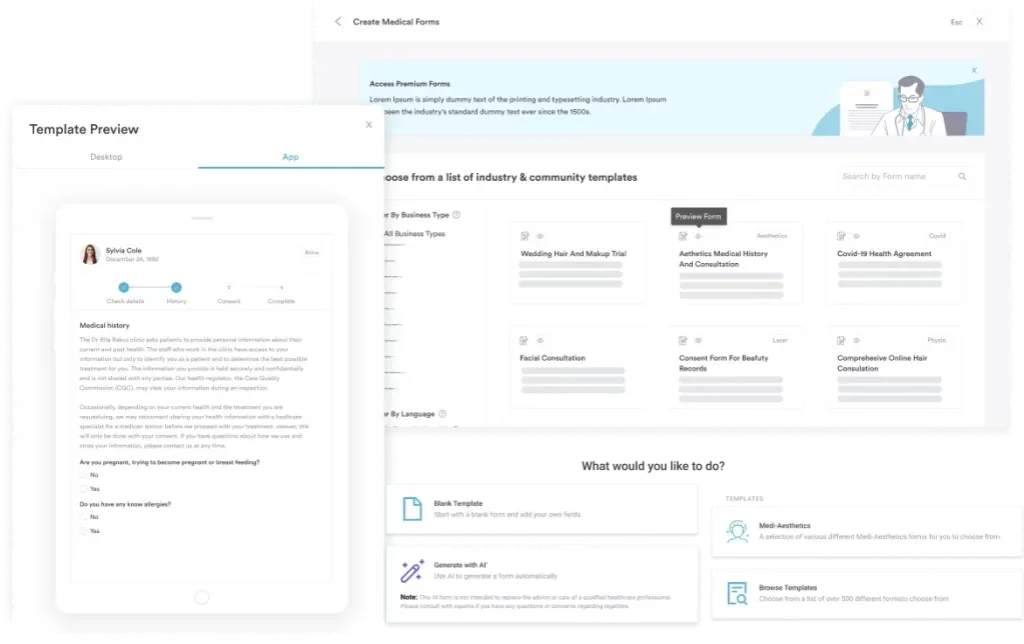
Reconcile pathology invoices against lab reports monthly, not just at the point of submission. An unmatched pathology line, submitted but with no payment and no query, often means it was silently dropped rather than formally rejected, and it’s easy to miss inside a larger panel.
Practices that manage CCSD billing manually, across spreadsheets and separate insurer portals, carry compounding administrative risk. Every manual step is a chance for a mismatched provider number, a missing referring clinician detail, or a panel billed the wrong way.
Practice management software like Pabau helps by keeping the clinical record and the billing record in one system, rather than a separate spreadsheet for codes. Practices can hold CCSD codes like 0048C inside a saved investigation template, so potassium and the rest of the U&E panel get coded the same way every time a panel goes out, instead of re-typed from memory on each invoice.
Less manual entry means fewer mistyped provider numbers, and fewer whole panels bounced back over one mismatched field.

Pabau supports UK private practices with a CCSD code library, Healthcode-compatible claim submission, and structured documentation that ties the clinical indication, provider number, and consent to every pathology claim. See how it works for your practice.

CCSD code 0048C is a straightforward code once the premise is right. It’s how UK private insurers bill for a potassium level test, most often as one line inside a wider U&E panel. Most of the claim problems that come up with it aren’t clinical at all. They’re a mismatched provider number, a component billed alongside a panel that already covers it, or documentation that can’t back up the claim at audit.
The bigger job here is building a pathology billing process that still holds up when the practice is running far more panels than it does today, and the person who understood the original workflow has since moved on. That means provider numbers and clinical indications that don’t depend on one person remembering the rule, and a habit of catching a bounced batch before it turns into a stack of three-month-old unpaid invoices.
Pabau’s claims management software helps UK private practices keep pathology claims like this one moving, from code validation through to Healthcode-compatible submission. To see how it handles multi-line pathology panels end to end, book a demo.

Want another CCSD pathology code walked through end to end? 0037G covers billing and insurer recognition for a different Diagnostic Schedule test.
Billing genetic or molecular pathology tests too? 0040G covers how a related molecular pathology test gets coded and billed to UK insurers.
Need a reference for a different specialist pathology test? 0042G walks through billing for another diagnostic code on the same CCSD schedule.
CCSD code 0048C is the UK private healthcare billing code for a potassium level test, a blood chemistry check almost always requested alongside a wider urea and electrolytes (U&E) panel. It’s a pathology code used to invoice private insurers for the potassium result specifically, not a surgical or procedure code.
CCSD stands for Clinical Coding and Schedule Development. The CCSD Group, made up of representatives from major UK private insurers and hospital groups, governs the CCSD schedule, the standard set of procedure and diagnostic codes used across UK private healthcare billing.
It can be either. Potassium is usually requested as part of a U&E panel alongside sodium, urea, and creatinine from the same blood draw. Depending on the lab and the insurer’s fee schedule, the panel may bill as separate line items, including 0048C for potassium, or fold into a single bundled panel code.
Bupa, AXA Health, Aviva, Vitality Health, and WPA all recognise CCSD codes for pathology billing. Healix recognises and processes them too, though as a healthcare trust and claims administrator rather than a traditional insurer. Claims are processed mainly through Healthcode or the relevant provider portal, and reimbursement rates and any pre-authorisation requirements vary by payer and by policy.
Not usually as its own line item. Low-cost, routine tests like a U&E panel are typically folded into the authorisation for the consultation or admission they support, rather than pre-authorised separately the way a surgical procedure would be. Insurers still validate the code, the requesting clinician’s provider number, and the policy details when the claim is processed.
CCSD codes are used to bill UK private medical insurers. OPCS-4, officially the OPCS Classification of Interventions and Procedures, is the separate system the NHS uses to classify procedure activity, maintained by NHS England’s Clinical Classifications Service (the acronym dates back to the system’s original name under the Office of Population Censuses and Surveys). Diagnoses use ICD-10 alongside it. The NHS doesn’t use CCSD, and private insurers don’t use OPCS-4.



