HCPCS code E0198: Water pressure pad billing guide
HCPCS code E0198 is a water pad for a standard mattress HCPCS code E0198 is the ...

Last Updated: Oct 13, 2026

CCSD code 0416H is the 6-monoacetylmorphine (6-MAM) level test in the CCSD Diagnostic Schedule, Chapter 34 (Pathology), Section 34.1 (Biochemistry).
6-MAM is a metabolite produced only when the body breaks down heroin, so a positive result is treated as definitive confirmation of recent heroin use, not just opioid use in general.
Reimbursement for CCSD code 0416H is set independently by each UK private insurer, and pre-authorization rules vary, so confirm both before invoicing rather than assuming a standard rate.
Practice management software like Pabau supports CCSD code entry, electronic submission via Healthcode, and audit-ready documentation for UK private pathology billing.
CCSD code 0416H identifies the 6-monoacetylmorphine (6-MAM) level test, a diagnostic pathology code filed under Chapter 34 (Pathology), Section 34.1 (Biochemistry), of the CCSD Diagnostic Schedule.
6-MAM is a metabolite the body produces only when it breaks down heroin (diacetylmorphine). Because no other opioid, and nothing in poppy seeds, produces it, a confirmed 6-MAM result is treated as definitive evidence of recent heroin use rather than general opioid exposure — the specific reason UK laboratories and clinicians request it as a confirmatory test, and the clinical detail insurers expect to see documented before they pay the claim.
Practice management software like Pabau helps UK private practices get these claims right the first time. This guide covers what CCSD code 0416H represents clinically, which UK private insurers recognize it, how to document and submit a compliant claim, and what causes rejections.
CCSD code 0416H appears in the CCSD Diagnostic Schedule, under Chapter 34 (Pathology), Section 34.1 (Biochemistry). It identifies a 6-monoacetylmorphine (6-MAM) level test carried out on a blood (serum) sample.
6-MAM is one of three active metabolites of heroin, alongside morphine and the much less significant 3-monoacetylmorphine. It has a short half-life, so a blood or serum sample is only useful for a limited window after use — which is precisely why the result carries so much weight clinically: a positive finding places heroin use recently and specifically, in a way a general opiate screen cannot.
The CCSD (Clinical Coding and Schedule Development) group maintains two schedules: a Procedural Schedule for surgical and interventional work, and a Diagnostic Schedule for pathology, imaging, and other diagnostic investigations. CCSD code 0416H sits in the Diagnostic Schedule, not the Procedural Schedule, and should not be loaded into a practice’s procedure code tables.
Procedure codes use letter prefixes such as G, S, H, or W. Diagnostic and pathology codes instead follow a 4-digit numeric stem plus a trailing specimen-type letter — among them A, B, C, D, F, H, L, M, O, S, T, and U — that identifies the sample type. In 0416H, the trailing H marks it as a blood (serum) specimen test, consistent with the sample type this biochemistry test requires.
Other CCSD biochemistry codes in the same section follow the same pattern.
0416H is a UK CCSD code and should not be confused with similarly formatted codes from other countries’ coding systems. In the US, confirmatory toxicology testing for substances such as 6-MAM is billed under an entirely separate system.
Always cross-reference 0416H against the CCSD Technical Guide (updated October 2025) before submitting a claim. The Technical Guide sets out business rules, coding conventions, and the criteria for code inclusion that govern how every CCSD code should be interpreted and applied. Because the full schedule is login-gated at ccsd.org.uk, confirm the exact current narrative for 0416H through a registered CCSD login or your practice management system’s integrated code library before billing.
6-MAM testing under CCSD code 0416H supports confirmatory toxicology use in UK private practice: substance misuse assessment and treatment monitoring, occupational health and fitness-to-practice evaluations, and medico-legal or safeguarding work where the source of an opiate-positive result needs to be established.
Because 6-MAM comes only from heroin metabolism — not from codeine, morphine, or any other opiate, and not from poppy seeds — practitioners request it specifically when a preliminary opiate screen has come back positive and a definitive result is needed to confirm heroin was the source. Patients with a documented history of opioid dependence.
Substance misuse and addiction services request the test to confirm recent heroin use as part of assessment or treatment monitoring, since self-reported abstinence is unreliable and a general opiate-positive result alone does not distinguish heroin from other opioids. A positive 6-MAM result despite a reported period of abstinence usually triggers a review of the treatment plan.
Occupational health and fitness-to-practice assessments use the same test to establish, beyond a general opiate screen, whether an opiate-positive result specifically reflects heroin use. Medico-legal and safeguarding assessments rely on the same specificity where the clinical or legal question turns on distinguishing heroin from other opioid exposure.
When applying CCSD code 0416H, confirm that:
For GP clinic software users treating patients in the private sector, keeping pathology charges like 0416H separate from procedural codes in the billing system remains fundamental to clean claims. Mixing the two in the wrong code table is one of the most common reasons insurer portals reject claims at submission.
Practices subject to CQC regulation should also note that diagnostic coding accuracy forms part of clinical governance obligations, particularly for a confirmatory toxicology result that may carry safeguarding or fitness-to-practice implications. For more on CQC’s role in healthcare, including how it intersects with billing documentation, that article covers the key compliance touchpoints.
Inadequate documentation is the leading cause of CCSD claim rejections. Every claim for CCSD code 0416H needs a paper trail that supports both the clinical decision and the diagnostic charge applied — this matters more than usual here, given the sensitivity of a confirmed-heroin-use result.
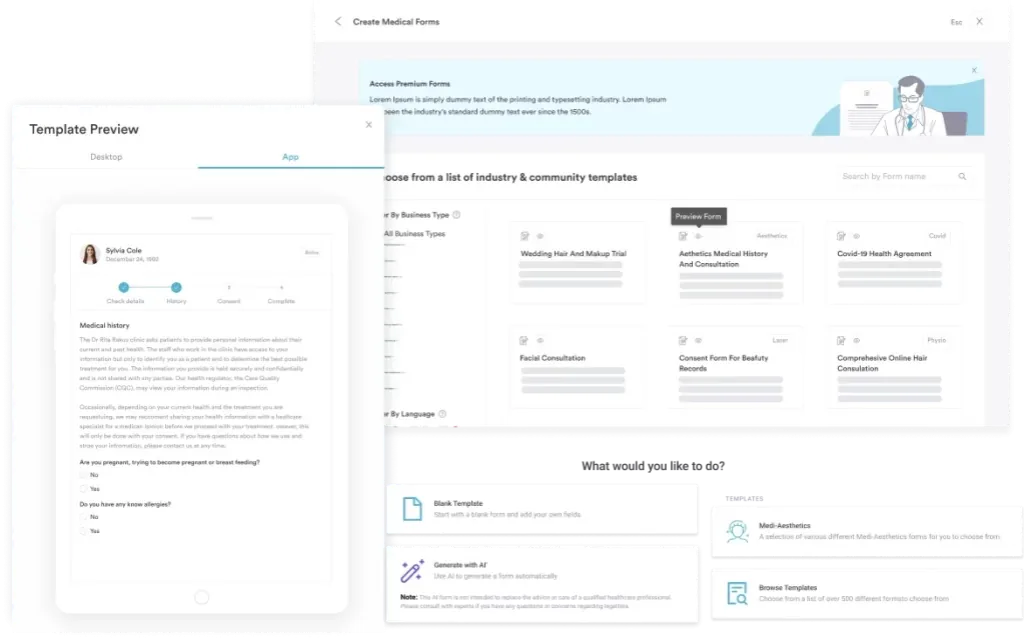
Using digital forms to capture patient insurance details and consent at the point of booking reduces the risk of missing mandatory fields before the appointment. This also creates a time-stamped audit trail, which insurers increasingly request during claims reviews, and which matters even more for a result with safeguarding or occupational implications.
For practices handling patient data under UK GDPR, maintaining documentation securely is both a regulatory and contractual obligation — and a particularly sensitive one for a toxicology result. Follow the UK GDPR compliance checklist to ensure your record-keeping for CCSD code 0416H meets the standards set by the Information Commissioner’s Office.
Before submitting a claim for CCSD code 0416H, run a pre-submission check: confirm the pre-authorization reference is on the invoice, verify the patient’s policy is active for the date of service, and ensure the result is filed securely in the patient record. Catching missing details before submission takes two minutes and saves two weeks of chasing.
Pre-authorization requirements for CCSD code 0416H depend on the patient’s insurer and policy terms. No universal rule applies across all UK private health insurers. Confirming requirements before the diagnostic service is delivered is the safest approach, because retrospective authorization is not guaranteed and is often refused.
Pre-authorization requirements and benefit limits change when insurers update their fee schedules. Always verify current rules directly with the insurer rather than relying on prior guidance.

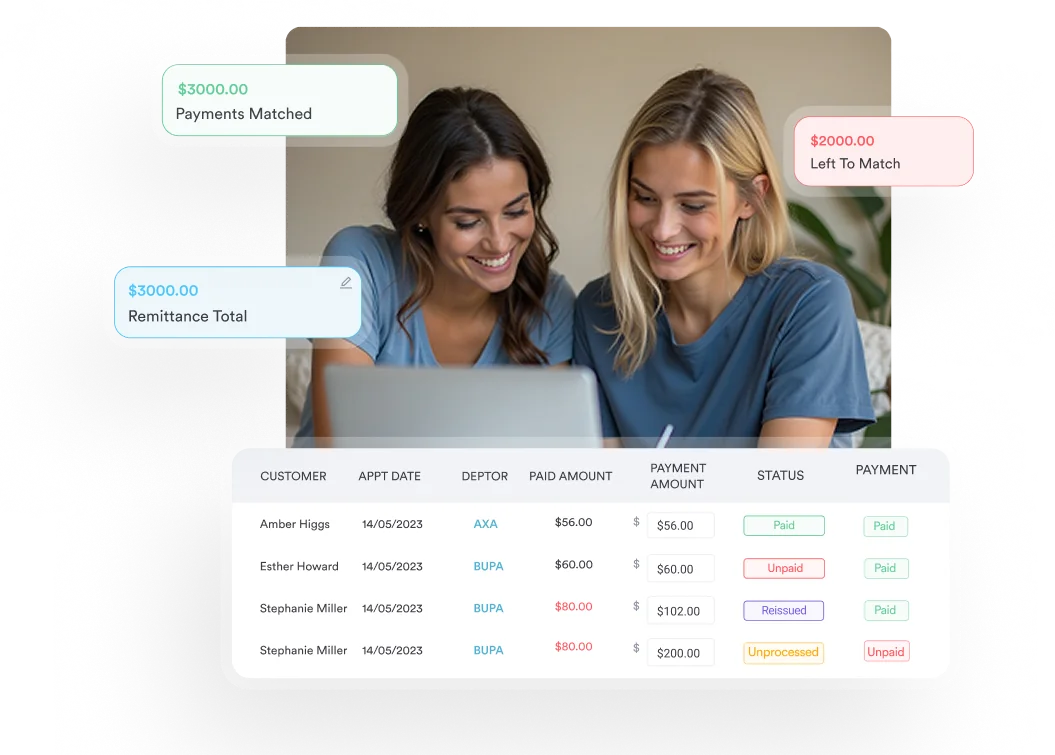
Pabau connects UK private practices directly to insurer submission workflows. Attach CCSD codes, pre-authorization references, and clinical documentation in one place, then submit electronically. Fewer rejected claims, faster payment.

Electronic submission via Healthcode is the standard expected by all major UK private health insurers. Paper invoices are accepted by some insurers but create slower processing times and higher rejection rates because manual keying errors are common. Other payers, such as Medicare, apply their own billing models and claiming rules entirely separate from Healthcode.
Using claims management software that integrates CCSD coding reduces the risk of manual errors at each of these steps. Pabau’s claims management tools let practices attach CCSD codes directly to invoices and track submission status without switching between systems.
Flag CCSD code 0416H in your billing system as a diagnostic (pathology) code, not a procedure code. If your system separates these code types, placing 0416H in the wrong table can cause the claim to fail at the insurer’s validation stage before a human ever reviews it.
Rejection patterns for CCSD code 0416H claims tend to cluster around a small number of recurring errors. Practices that audit their rejected claims consistently find the same culprits.
0416H is a diagnostic code, not a procedural one. Loading it into a procedure code table, or billing it alongside a procedural code without separating the two, is a frequent and avoidable cause of claim failure at the insurer’s validation stage.
Several UK private insurers require an authorization reference for the outpatient episode a diagnostic test belongs to. If a claim for CCSD code 0416H is submitted without that reference, it will be rejected regardless of clinical appropriateness.
A claim that doesn’t record why the test was requested — confirming a positive opiate screen, treatment monitoring, or an occupational or medico-legal assessment — is one of the fastest ways to trigger a query. Given the sensitivity of the result, insurers scrutinize the stated indication closely.
The date on the claim must match the date the sample was taken, as recorded in the clinical notes. Insurers cross-reference these dates during processing, and a one-day discrepancy is enough to trigger a query or rejection.
When an external laboratory processes the sample, it may bill the insurer directly for the analysis. If the practice also submits 0416H for the same test, the insurer receives two claims for one investigation and rejects or claws back one of them. Agree in advance who bills for pathology — the lab or the practice — and make sure your workflow reflects that split.
Audit your rejected claims quarterly. Group rejections by reason. If date-of-service mismatches, missing authorization references, or code-table errors appear consistently, the problem is in your workflow, not a one-off error. Fix the upstream step in your booking or coding process rather than correcting claims one by one.
UK private practices managing CCSD billing manually face a growing administrative burden. As insurer schedules become more granular and bulletin frequency increases, the margin for error narrows. Pabau is practice management software built for private practices, with specific functionality for UK private healthcare billing workflows.
CCSD codes, including diagnostic pathology codes like 0416H, can be stored within Pabau’s procedure code library and attached to appointment records at the point of care. When a clinician orders a test, the corresponding code is linked to the patient record rather than entered separately during billing.
This creates a direct, auditable connection between the clinical record and the invoice. Claims are then submitted electronically via Healthcode integration, bypassing the manual re-entry step that generates most transcription errors — and keeping a clean audit trail for a result that may carry safeguarding or occupational-health implications.
For practices dealing with UK data compliance obligations alongside billing complexity, Pabau’s claims management software consolidates both within a single system. Claim status, rejection reasons, and payment records are tracked from within the same platform used for scheduling and clinical notes, reducing the need to move between multiple tools.
Pabau’s structured onboarding covers CCSD code setup and Healthcode connection as part of getting the system live, so new private practices can start billing correctly from the first appointment rather than learning through rejected claims.
CCSD code 0416H is the diagnostic pathology code for a 6-monoacetylmorphine (6-MAM) level test, filed under Chapter 34 (Pathology), Section 34.1 (Biochemistry), of the CCSD Diagnostic Schedule. Because 6-MAM only comes from heroin metabolism, a confirmed result carries specific clinical, occupational, or legal weight, which is exactly why insurers expect a clear documented indication before they pay the claim.
The code is recognized by all major UK private insurers, each of which publishes its own fee schedule and pre-authorization requirements. Clean claims depend on a clear clinical indication, correct placement in the diagnostic (not procedural) code table, valid authorization references, and date-of-service accuracy.
For practices ready to remove the manual steps from CCSD billing, book a demo with Pabau to see how claims management, electronic Healthcode submission, and CCSD code libraries work together within a single private practice platform.

Need another Section 34.1 biochemistry code? CCSD code 0049B covers the sodium level blood test, billed under the same diagnostic chapter.
Looking up an opioid dependence diagnosis code? ICD-10 code F11.20 covers opioid dependence, uncomplicated, a common clinical context for confirmatory toxicology testing.
Billing US definitive drug testing instead? HCPCS code G0483 covers definitive drug testing for 22 or more drug classes, a separate coding system to the UK’s CCSD schedule.
CCSD code 0416H is the diagnostic pathology code for a 6-monoacetylmorphine (6-MAM) level test, filed under Chapter 34 (Pathology), Section 34.1 (Biochemistry), of the CCSD Diagnostic Schedule, maintained by the Clinical Coding and Schedule Development (CCSD) Group. It is a diagnostic code, not a procedural one, and is carried out on a blood (serum) sample. The exact clinical narrative must be confirmed via CCSD member access at ccsd.org.uk.
A 6-MAM level test measures the concentration of 6-monoacetylmorphine, a metabolite the body produces only when it breaks down heroin, in a blood (serum) sample. Because no other opioid produces 6-MAM, a positive result is considered definitive confirmation of recent heroin use rather than general opioid exposure. It is typically requested to confirm a positive opiate screen, to monitor treatment for opioid dependence, or as part of an occupational, medico-legal, or safeguarding assessment.
All major UK private medical insurers base their fee schedules on CCSD codes, including Bupa, AXA Health, Aviva, Vitality Health, and WPA. Each insurer sets its own fee rates and pre-authorization requirements independently, so the recognized fee and process for CCSD code 0416H will vary between payers.
CCSD procedural codes represent clinical procedures and are loaded into a separate procedure code table. CCSD code 0416H is a diagnostic code — it identifies the 6-monoacetylmorphine level test, in Chapter 34 (Pathology), Section 34.1 (Biochemistry) — and should not be loaded into the same table as procedural codes or billed as if it were one.
Pre-authorization requirements for CCSD code 0416H vary by insurer and policy. Some insurers and policies require an authorization reference for the episode under which diagnostics are claimed — where one is issued, record it in the patient record and quote it exactly on the invoice. Confirm requirements before the test is carried out, since retrospective authorization is often refused.
UK private healthcare claims are submitted electronically via Healthcode, the national claims network recognized by all major insurers. Most practice management systems connect directly to Healthcode. A valid claim requires your provider number, the patient’s membership number, any required authorization reference, the CCSD code with the correct date of service, and the requesting clinician’s professional registration number.