CCSD code F3070: Suture of palate billing guide
CCSD code F3070 covers stitching a wound in the palate CCSD code F3070 is the co...

Last Updated: Oct 12, 2026

CPT Code 97161 covers a low complexity physical therapy evaluation, and only a licensed physical therapist can bill it.
Examination elements set the tier boundary: one or two supports 97161, and three or more moves the claim to 97162.
Modifier GP is required on every Medicare Part B claim for 97161, and leaving it off triggers an automatic denial.
Once combined physical therapy and speech charges pass $2,480 in 2026, modifier KX has to ride alongside GP.
Practice management software like Pabau links the evaluation note to the claim, so every required 97161 component is captured.
CPT Code 97161 is the billing code for a low complexity physical therapy evaluation. It applies when a licensed physical therapist evaluates a patient with a stable, uncomplicated presentation. Around 20 minutes of face-to-face time are typically spent with the patient or family.
The American Medical Association (AMA) descriptor requires all four of the following components:
The code took effect on January 1, 2017, when the AMA replaced the single evaluation code 97001 with a three-tier system. Complexity decides which tier you bill. The length of the appointment does not.
That makes 97161 a documentation exercise more than a coding one. A well-built physical therapy EMR workflow prompts the therapist for each component before the note is signed. That prompt is where most tier disputes are won.
Every 97161 note needs three documented components: history, examination, and clinical decision making. Leave one thin and the claim is exposed to denial or a downcode on review. Each component carries its own low complexity criteria.
For low complexity, the history reflects a patient with no to minimal relevant prior medical history affecting the plan of care. Document the chief complaint, the mechanism of onset, and the current functional limitations. No personal factors or significant comorbidities complicate the presentation.
The examination for 97161 addresses one to two elements from body structures and functions, activity limitations, or participation restrictions. That is a narrower scope than the three-element minimum required for 97162.
Use standardized tests and measures, and record findings clearly enough for another clinician to reproduce them. A single measure such as the knee-to-wall test counts as one element, not two.
Low complexity clinical decision making (CDM) reflects a straightforward presentation. That means an established or readily identifiable diagnosis, a predictable prognosis, and a routine plan of care. A standard program of neck pain exercises for uncomplicated mechanical neck pain fits that description.
The therapist supports that judgment with a standardized assessment instrument or a measurable functional outcome tool. Document the diagnosis, the prognosis rationale, and the initial plan of care with goals.
Structuring your digital documentation forms around the three components makes a missing element visible before the claim goes out. Published physical therapy treatment protocols are a useful check on whether your reasoning is as routine as the tier assumes.
The table below maps each component to the criteria that keep an evaluation at the low complexity tier.
Take a 34-year-old patient six weeks after an uncomplicated arthroscopic meniscectomy. No comorbidities, no red flags, a predictable recovery. Here is what the note contains, in the order a reviewer reads it.
Change one detail and the tier moves. Give the same patient poorly controlled type 2 diabetes and an unrelated shoulder complaint. The history now carries comorbidities that alter the plan. Add a third and fourth examination element.
The reverse direction is the more common exposure. A note billed as 97162 that documents only flexion and strength has no third element to point at. On review, the payer downcodes it to 97161 and recovers the difference, with the rest of that quarter’s evaluations often pulled in behind it.
Count the examination elements you documented: one or two is 97161, three is CPT Code 97162, and four or more is CPT Code 97163. The history and the clinical decision making then have to agree with that count. If they disagree, the lower tier is the defensible one.
Upcoding without matching documentation is the top audit trigger for outpatient physical therapy practices. The table below sets the four evaluation and reevaluation codes side by side, using AMA guidance.
The deciding factor is always what your documentation supports, not how long the appointment ran. A 45-minute session for a straightforward ankle sprain with no complicating factors still belongs under 97161. Bill the tier your notes can defend on audit.
The right software for primary care practices turns immunizations and in-office tests into charted, billable entries automatically.
CPT Code 97164 is the reevaluation code, used when a patient’s condition changes enough to warrant a revised plan of care. A follow-up visit or a progress note does not qualify. It requires a documented change in status and a modified treatment plan with updated goals.
Medicare reimburses CPT Code 97161 at roughly $87 to $102 nationally in 2026, depending on geographic locality adjustments. Treat those figures as estimates. Verify current rates through the CMS Physician Fee Schedule lookup tool for your own practice location.
The 2026 work RVU for 97161 is 1.54, and total payment also reflects the practice expense and malpractice components. If you are benchmarking, physical therapy reimbursement moved with the annual conversion factor between 2025 and 2026. The 97161 descriptor itself has not changed since 2017.
Use the FastRVU 2026 RVU lookup tool to confirm the work, practice expense, and malpractice components for your locality. Do that before you finalize fee schedule negotiations with private payers.
Medicare Part B covers outpatient physical therapy billed under CPT Code 97161, but several rules must be satisfied before the claim pays. One missing modifier or documentation element is enough to trigger a denial. Evaluation notes also carry protected health information.
Only GP is always required, and KX joins it once the annual therapy threshold is passed. Two more modifiers come up in the same workflow but never sit on an evaluation line. GN belongs to speech-language pathology, and CQ marks treatment delivered by an assistant.
Modifier CQ deserves particular care. It goes on treatment codes such as 97110 or 97112. Use it when a physical therapist assistant delivers that service in whole or in substantial part. CQ never belongs on 97161, because a PTA cannot perform the evaluation.
Here is how GP and KX stack across a single Medicare patient’s calendar year, using the 2026 threshold published by APTA.
KX is an attestation. Appending it tells Medicare the record already justifies continued treatment. If the note does not carry that justification, the modifier turns a payment question into an overpayment finding.
Modifier rules also vary by Medicare Administrative Contractor (MAC). Verify current requirements with your own MAC before you finalize the billing workflow. Noridian Healthcare Solutions, for example, covers the JF Part B jurisdiction.
Only a licensed physical therapist can perform and bill CPT Code 97161. Medicare and most state practice acts reserve physical therapy evaluations for the therapist. That holds across all three tiers, 97161 through 97163.
Physical therapist assistants (PTAs) do deliver treatment under the therapist’s plan of care. When a PTA provides an intervention such as 97110, that line carries modifier CQ. The rule applies whenever the assistant delivers the service in whole or in substantial part.
Medicare then pays 85% of the standard rate for that treatment line. The differential comes from the Bipartisan Budget Act of 2018, and CMS implemented it on January 1, 2022. None of it touches 97161, which the therapist bills at the full rate.
Staffing and scope matter whether you are opening a PT practice or running an established one. Your state’s physical therapy clinic requirements set the supervision rules for PTA-delivered treatment.
Physical therapy evaluation coding produces a predictable set of claim errors, and a pre-submission review catches almost all of them. Tier selection and modifier omission cost the most rebilling time. Both are easy to trap in physical therapy practice software before the claim goes out.
Pull 10 random 97161 claims each month and check the matching notes against all three low complexity criteria. If more than two need a tier adjustment, redesign your evaluation template before the next payer audit.
The initial evaluation is frequently billed on the same date as therapeutic intervention codes. Three appear most often alongside it: therapeutic exercise, therapeutic activities, and neuromuscular reeducation.
PT evaluation codes are untimed, while the intervention codes billed beside them are timed. That difference is where same-day claims go wrong. Picking the right procedure code for a shared date comes down to NCCI edits and the 8-minute rule. The same bundling logic applies to coaching CPT codes.
The 8-minute rule governs the timed codes billed alongside 97161. Each unit needs at least 8 minutes of direct patient contact, counted separately from evaluation time. Confirm current pairs against the CMS NCCI edits before billing any evaluation and intervention combination.
Capturing all three documentation components on every evaluation is where practices lose time and money. Practice management software like Pabau keeps the note and the claim in one workflow. The evidence supporting a 97161 line never sits in a separate system. Pabau’s claims management software reads directly from the clinical record. Tracking which plans carry an authorization requirement for a service saves the appeal later.
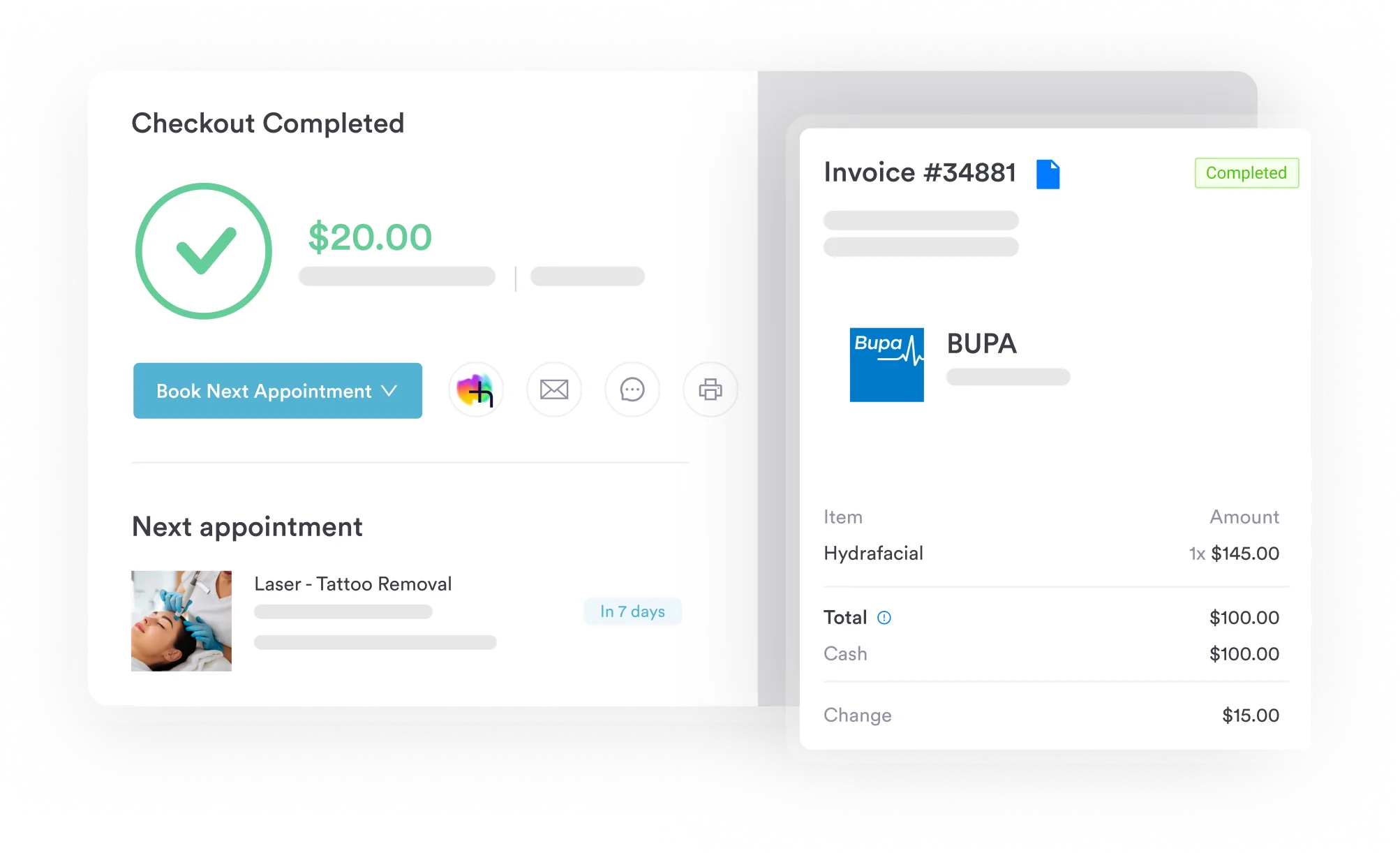
Practices using Pabau’s patient records can build evaluation templates around history, examination, and clinical decision making. Each field prompts the therapist for what the chosen tier needs before the note is finalized. Reporting then tracks acceptance and denial reasons by CPT code, so a rising 97161 denial rate shows up early.

For practices running physical therapy alongside other specialties, billing sits in the same system as scheduling, intake forms, and patient communications. That removes the context-switching a separate PT EMR and billing platform force on the front desk.

Pabau links clinical documentation, modifier tracking, and claims management in one platform. Physical therapy practices capture every required 97161 component and submit cleaner claims first time.

CPT Code 97161 denials are almost always a documentation problem rather than a coding one. Once the three components are captured at the right complexity level, tier selection stops being a judgment call. The exposure sits in the distance between what the therapist wrote and what the billed tier requires on audit.
The practical move is to fix the template rather than the claim. A form that prompts for each element, plus a monthly sample audit, catches tier drift while it is still cheap to correct.
Pabau’s configurable evaluation templates and integrated claims management keep documentation and billing in one workflow. Book a demo to see how that works for your physical therapy practice.

Billing an ostomy supply? Ostomy faceplate billing covers HCPCS code A4361 and the unit-counting rules Medicare Part B applies to each faceplate billed.
Billing an ostomy skin barrier? Solid skin barrier billing covers HCPCS code A4362 for a 4 x 4 solid skin barrier under Medicare LCD L33828.
Billing an ostomy belt? Ostomy belt billing covers HCPCS code A4367 and the documentation, diagnosis, and quantity mistakes that most often cause denials.
Billing an ostomy filter? Ostomy filter billing covers HCPCS code A4368 under Medicare’s Prosthetic Device benefit, including coverage criteria and qualifying diagnosis codes.
Billing an ostomy ring? Ostomy ring billing covers HCPCS code A4404 under the prosthetic device benefit, with a usual monthly maximum of ten rings.
CPT Code 97161 is a physical therapy evaluation code for a low complexity clinical presentation. It requires a history with no to minimal relevant prior medical history. The examination covers one to two body structure or function elements, with clinical decision making of low complexity. The AMA introduced it effective January 1, 2017, replacing the single-tier code 97001. It typically involves 20 minutes of face-to-face time.
The three codes represent tiered complexity levels. 97161 is low complexity, with one to two examination elements, no significant comorbidities, and a routine plan of care. 97162 is moderate complexity, with three or more elements and an evolving presentation. 97163 is high complexity, with four or more elements, significant comorbidities, and an unstable presentation. All three documentation components must support the tier you bill.
Modifier GP is required on all Medicare Part B physical therapy claims, including 97161. It indicates the service was delivered under a physical therapy plan of care. Omitting GP causes an automatic claim denial. Modifier KX is added once combined therapy charges pass the annual threshold, which is $2,480 in 2026.
Medicare reimburses approximately $87 to $102 for CPT 97161 nationally in 2026, depending on geographic locality. Treat those as estimated figures drawn from fee schedule data. Verify the current rate for your location using the CMS Physician Fee Schedule lookup tool. Private payer rates are typically higher and vary by contract.
Yes, CPT 97161 and 97110 can generally be billed on the same date of service. The 8-minute rule applies to timed codes like 97110, so each unit needs at least 8 minutes of direct patient contact. Treatment time must be documented separately from evaluation time. Confirm current NCCI edits before billing any evaluation and intervention combination.
Only a licensed physical therapist can perform and bill CPT Code 97161. Medicare and most state practice acts reserve physical therapy evaluations for the therapist. A physical therapist assistant cannot conduct or bill 97161, 97162, or 97163. PTAs do deliver treatment under the plan of care, and those lines carry modifier CQ at 85% of the standard rate.
GP applies to every Medicare Part B claim for 97161. KX is added once combined physical therapy and speech charges pass the annual threshold. That threshold is $2,480 for 2026. GN belongs to speech-language pathology claims only. CQ never appears on 97161, because it marks PTA-delivered treatment codes rather than evaluations. Commercial payers can set their own modifier rules, so check each contract.
Yes. Medicare adjusts the national amount using geographic practice cost indices, so payment varies by locality rather than strictly by state. The national range sits around $87 to $102 in 2026. Commercial and workers’ compensation contracts vary far more widely than Medicare does. Check the CMS Physician Fee Schedule lookup for your own locality before setting a fee schedule.