ICD-10 Code S42.444P: Medial epicondyle fracture, right humerus
ICD-10 Code S42.444P: full descriptor and code validity ICD-10 Code S42.444P car...

Last Updated: Oct 13, 2026
Billable Code Specific Code
K12.2 is the billable ICD-10-CM code for cellulitis and abscess of mouth.
A cellulitis or abscess on the floor of the mouth can escalate from a swollen, painful jaw to a life-threatening airway emergency within hours. How that infection is documented and coded shapes everything that follows, from the claim to the clinical record.
That's where ICD-10 code K12.2 comes in, the ICD-10-CM diagnosis for cellulitis and abscess of mouth. It sits alongside a cluster of dental- and gland-origin codes, and its Excludes1 and Excludes2 notes decide which of them you can report with it. That distinction is easy to blur and expensive to get wrong.
Let Pabau's smart automation suggest the right codes, reduce claim denials, and keep your practice compliant—effortlessly.
Automate repetitive tasks and focus on what matters most—your patients.
Reduce coding errors and ensure compliance with the latest regulations.
Clean claims, fewer denials, and faster reimbursements.
Powerful insights and reporting to help your practice thrive.
HIPAA compliant SOC 2 certified GDPR-compliant Trusted by 4,000+ clinics worldwide

ICD-10 code K12.2 (Cellulitis and abscess of mouth) is a billable ICD-10-CM diagnosis code valid for all HIPAA-covered transactions in FY2026.
The Tabular List lists two official Applicable To terms under K12.2: cellulitis of mouth (floor) and submandibular abscess.
K12.2’s true Excludes1 list (inherited from parent category K12) has five terms mapping to three codes – cancrum oris, gangrenous stomatitis, and noma (all A69.0), cheilitis (K13.0), and herpesviral gingivostomatitis (B00.2) – that can never be reported with K12.2. Its separate Excludes2 list covers six codes (K11.3, K14.0, K04.6, K04.7, K05.21, J36) that describe distinct-but-related infections and CAN be reported alongside K12.2 when both conditions are documented.
Pabau’s claims management software and digital clinical forms support accurate ICD-10-CM code capture and HIPAA-compliant claim submission for oral and maxillofacial conditions.
ICD-10 code K12.2 is a billable, specific ICD-10-CM diagnosis code for cellulitis and abscess of mouth. It covers diffuse soft-tissue infections of the floor of the mouth and submandibular space, including Ludwig’s angina, and is distinct from tooth-root or gum-origin infections coded under K04.x or K05.21.
ICD-10 code K12.2 is valid for reimbursement across all HIPAA-covered transaction requirements. The FY2026 edition became effective October 1, 2025, with no changes from its prior-year structure. Coders working across code sets often keep a medical coding cheat sheet on hand for CPT, HCPCS, and E/M references.
The table below summarizes the key administrative details for ICD-10 code K12.2 as published in the CDC/NCHS ICD-10-CM web tool for FY2026.
The Applicable To section defines the specific conditions that map to ICD-10 code K12.2 in the CDC/NCHS Tabular List. Two conditions are listed officially, both involving diffuse soft-tissue infection of the mouth rather than a discrete abscess tied to a tooth or gum.
Ludwig’s angina is a rapidly spreading, typically bilateral cellulitis of the submandibular, sublingual, and submental spaces. It is not itself one of these two official Tabular List terms. Instead, it maps to K12.2 as an approximate synonym in the ICD-10-CM Alphabetic Index, which directs coders to this code for that presentation.
That index-mapping status doesn’t lessen the condition’s clinical weight: Ludwig’s angina still carries the same coding and documentation requirements as a named inclusion term.
Ludwig’s angina is a medical emergency. Coders should be aware of its severity because documentation requirements are correspondingly detailed. The condition presents bilaterally, involves multiple fascial spaces, and frequently requires hospital admission with airway monitoring or surgical drainage.
Because the swelling can compromise both the airway and the ability to swallow, care teams often pair clinical documentation with a dysphagia care plan to track feeding and airway status throughout admission.
For coding purposes, what matters is the infection’s origin: submandibular soft tissue, not periapical or periodontal disease. If the treating clinician documents the infection as Ludwig’s angina, ICD-10 code K12.2 is the correct capture, reached via its Alphabetic Index synonym mapping.
Any associated systemic condition, such as sepsis or septic shock, is reported with its own additional code under standard ICD-10-CM sequencing conventions. K12.2 doesn’t carry a code-specific “Code Also” instruction; coding guidelines simply require capturing every clinically significant condition documented at the encounter.
A functional medicine platform connects each GI diagnosis to the nutrition and supplement plan addressing it.
Excludes1 means mutually exclusive: a condition listed here represents a different diagnosis coded elsewhere, and it cannot be reported together with K12.2 at the same encounter. This is K12.2’s “hard stop” list, inherited from the parent category K12 (Stomatitis and related lesions) rather than specific to K12.2 alone.
The CMS ICD-10 coding guidelines confirm that Excludes1 notes represent conditions that cannot occur simultaneously with the code above the note.
Note that these five terms map to only three underlying codes, because cancrum oris, gangrenous stomatitis, and noma are all names for the same condition (A69.0). If a physician’s note describes any of these five presentations, do not assign K12.2 – assign A69.0, K13.0, or B00.2 as applicable instead.
Excludes2 has a different meaning from Excludes1, and the distinction matters for clean claims. An Excludes2 note means the excluded condition is not part of K12.2, but a patient may have both conditions at the same time. It is acceptable to report both codes together when the documentation supports two separately identifiable diagnoses.
There is no automatic claim denial for pairing K12.2 with an Excludes2 code. Payer edits target genuine coding errors, not this kind of dual-documented comorbidity.
Because K04.6, K04.7, K05.21, K11.3, K14.0. Both may be reported when the record documents two genuinely distinct conditions.
Coders should still confirm the note describes two separate processes rather than a single infection that has spread from one site to another, since only one code should capture a single expanding infection.
If the record mentions both a periapical abscess and spreading floor-of-mouth cellulitis at the same encounter, query the clinician to determine whether this is one process or two before assigning codes.
The most common coding error with ICD-10 code K12.2 is applying it to tooth-root or gum-origin infections that belong under K04.x or K05.21.
The table below adds a “clinical trigger” column that competitors’ reference pages omit, giving coders a decision point grounded in the clinician’s documentation rather than just the code description.
The key differentiator is origin, not spread. A periapical abscess (K04.7) that has expanded into surrounding soft tissue still codes as K04.7, provided the infection originated at the tooth root. Accurate clinical documentation should reflect the primary pathological process, not where the infection has spread secondarily.
Remember that K04.x, K05.21, K11.3, K14.0, and J36 are Excludes2, not Excludes1, notes for K12.2. If the documentation supports two genuinely separate, coexisting infections rather than one that has spread, both codes may be reported together.
Use K04.6 or K04.7 when documentation identifies the tooth root as the origin and describes a periapical lesion on imaging. Use K12.2 when the documentation describes spreading soft-tissue infection of the floor of the mouth with no specific tooth identified as the source, or when the clinician explicitly diagnoses Ludwig’s angina.
K05.21 maps to infections originating in the gingival sulcus or periodontal pocket, typically alongside documentation of periodontal disease. If the clinician notes a gum-margin abscess with periodontal involvement, the K05.21 family is correct. K05.21 itself is a non-billable category code, so the claim must carry a sixth-character subcode selected by documented severity: K05.211 (slight), K05.212 (moderate), or K05.213 (severe), or K05.219 when severity is not specified. An appeal filed after the timely filing window is denied on timeliness alone, whatever the coding showed.
K12.2 applies when the infection has spread diffusely across the mouth floor, independent of a specific gum pocket or root apex. Because K05.21 is an Excludes2 note for K12.2, a patient can have both a documented periodontal abscess and a separate episode of floor-of-mouth cellulitis, with both codes reported if the record supports two distinct diagnoses.
The following terms are ICD-10-CM Alphabetic Index approximate synonyms that map to ICD-10 code K12.2 for documentation-matching and clinical data integrity (CDI) purposes. They are not official Tabular List inclusion terms, which are limited to the two entries covered above: cellulitis of mouth (floor) and submandibular abscess.
Coders should still recognize these phrases in physician notes and route them to K12.2:
These synonyms matter for CDI query workflows. If a discharge summary describes “bilateral submandibular cellulitis” without explicitly naming K12.2, the coder should confirm the diagnosis with the treating clinician before assigning the code.
When reviewing a record for possible K12.2, check whether the clinician’s note specifies a tooth, root, or gum margin as the source. If a specific dental structure is named, the code likely belongs under K04.x or K05.21, not K12.2. No named source and diffuse spread points to K12.2. If the note describes two separate infections rather than one spreading process, both K12.2 and the tooth/gland/tonsil-origin code may be needed, since those are Excludes2, not Excludes1, notes.
ICD-10 code K12.2 does not carry a code-specific “Code Also” instruction in the FY2026 Tabular List. What the parent category K12 does carry is a “Use additional code” note directing coders to also capture, when documented:
These apply only when the clinical picture and documentation support them. They are not required on every K12.2 claim.
Clean K12.2 claim submission depends on the clinician’s note containing specific elements. A vague entry like “mouth infection” is insufficient for code assignment. The record should include:
Using digital clinical forms that prompt clinicians to specify infection site, origin, and associated systemic conditions at the point of care reduces the need for retrospective queries and supports faster, cleaner claim submission.
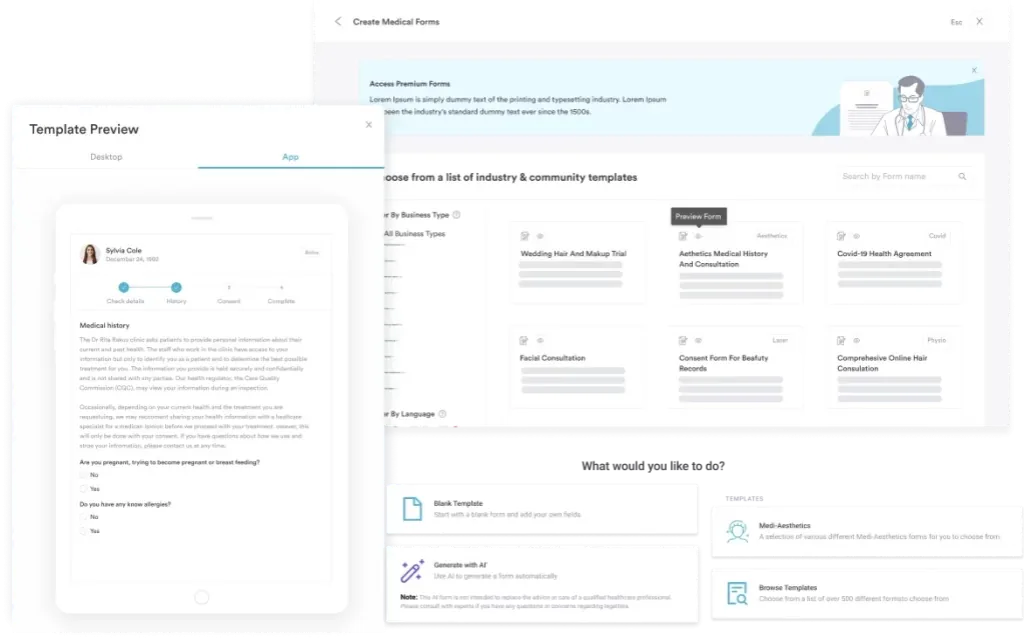
ICD-10 code K12.2 is a billable diagnosis code valid for submission on CMS-1500 and UB-04 claim forms, and in electronic 837 transactions.
It supports medical necessity for procedures including incision and drainage (I&D), surgical debridement, hospital admission, and airway management in Ludwig’s angina cases.
Payer policies vary on which procedures require prior authorization when K12.2 is the primary diagnosis. Emergency presentations involving Ludwig’s angina are typically exempt from prior-auth requirements, but elective I&D in an outpatient setting may not be.
Per the AAPC ICD-10-CM lookup, K12.2 is housed in Chapter XI and cross-references the digestive system disease grouping for DRG assignment purposes in inpatient claims.
For outpatient and urgent care settings, K12.2 pairs commonly with evaluation and management (E/M) codes when the primary reason for the visit is assessment and antibiotic initiation for oral cellulitis. This includes general practices that see these infections before a dental or oral surgery referral. Practices using claims management software can automate code-pairing validation, catching mismatches between K12.2 and incompatible procedure codes before submission.
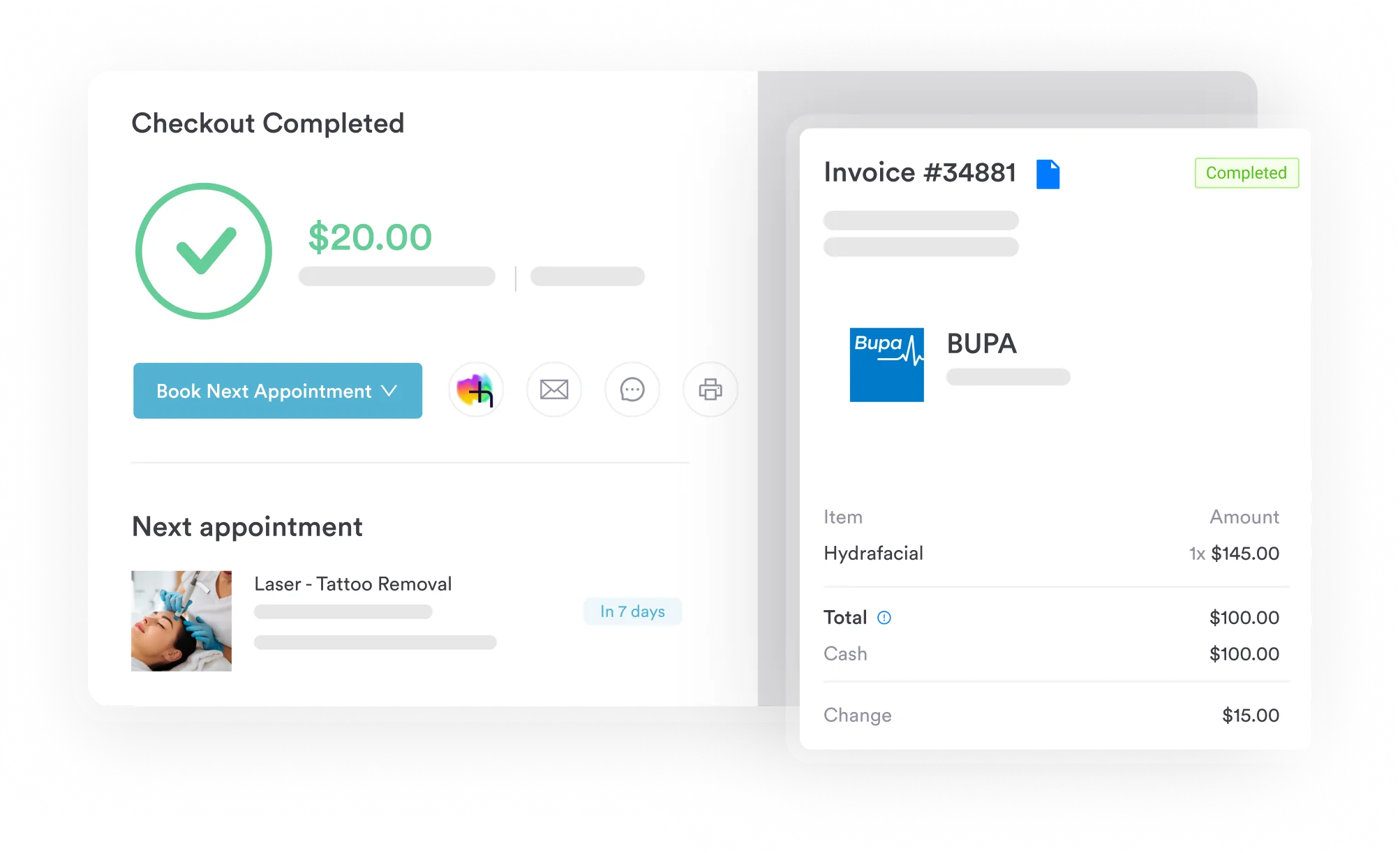
Accurate EHR integration workflows that link diagnosis codes to procedure codes at the point of documentation reduce manual coding effort and lower denial rates for K12.2 claims.
When the EHR prompts the clinician to select the ICD-10 code at the time of note completion, the code reaches the billing queue with the clinical context intact, rather than requiring a coder to interpret ambiguous free-text documentation after the fact.
Maintaining HIPAA-compliant documentation practices is especially important for Ludwig’s angina cases, which often involve inpatient stays, specialist consultations.
Each additional code reported alongside K12.2, whether for a genuinely separate Excludes2 condition, a systemic complication, or a category-level “use additional code” note, requires its own supporting documentation in the record.

Pabau helps oral health and dental practices capture accurate ICD-10 codes at the point of care, automate claim pairing validation, and submit clean claims faster. See how it works for your practice.

K12.2 has been part of the ICD-10-CM classification since the system’s adoption in the United States. The table below summarizes the known code history as published by the WHO ICD-10 browser and CDC/NCHS update files.
No revisions or code splits have affected K12.2 since its introduction. Coders transitioning from legacy systems or reviewing older claims should confirm they are referencing the current FY2026 edition, not a prior-year printout.
Set a calendar reminder each October 1 to verify that K12.2 and its Excludes1 and Excludes2 codes remain unchanged in the new fiscal year ICD-10-CM tables. The CDC/NCHS publishes the updated tabular list each summer before the October effective date, giving practices time to update superbills and EHR code sets before go-live.
Practices dealing with oral infection coding face a specific challenge: the clinical notes arrive from dental or oral surgery providers. That ambiguity lands on the coder or billing team, who then spend time on retrospective queries.
Pabau’s patient record management tools allow clinicians to complete structured SOAP notes with site-specific fields at the point of care, reducing the missing documentation details that cause K12.2 coding errors.
When a note includes a structured diagnosis field that prompts “infection site” and “origin,” the coder receives the information needed to select between K12.2 and the differential codes (K04.x, K05.21, K11.3, K14.0) without a query cycle.
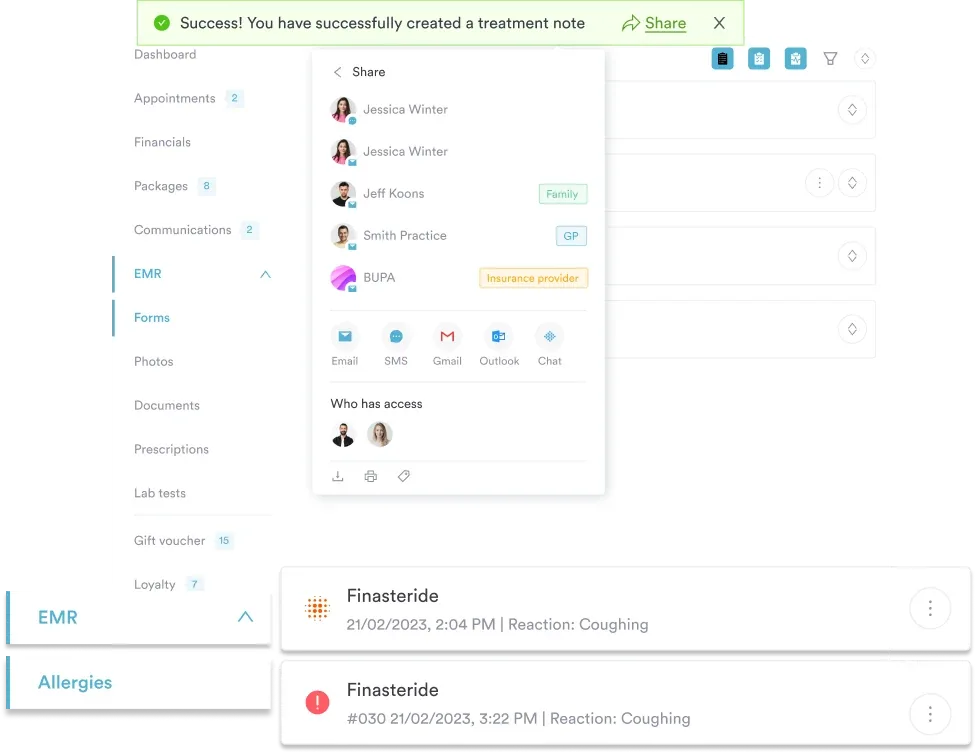
Combined with a practice management platform that integrates clinical documentation directly into the billing workflow, practices can reduce coding lag and submit K12.2 claims in the same billing cycle as the encounter, rather than waiting for a documentation correction round.
Oral soft-tissue infections generate coding errors when the origin of the infection is unclear in the documentation, or when Excludes1 and Excludes2 notes get confused with each other.
ICD-10 code K12.2 (cellulitis and abscess of mouth) applies to cellulitis of mouth (floor) and submandibular abscess, including the severe Ludwig’s angina presentation. It does not apply to tooth-root, gum-pocket, salivary-gland, tongue, or tonsillar infections, which belong under K04.x, K05.21, K11.3, K14.0, or J36 and, when genuinely separate from the K12.2 diagnosis, may be reported alongside it.
Getting that distinction right at the documentation stage prevents claim denials, retrospective queries, and audit exposure.
Pabau’s structured clinical documentation and claims management tools help practices capture K12.2 and its associated codes accurately at the point of care, so the billing queue receives clean, complete claims. To see how Pabau fits into your coding and documentation workflow, book a demo.

Documenting rheumatoid arthritis with ACPA? ICD-10 Code M05.A guide explains the code first sequencing rule for rheumatoid factor and ACPA claims.
Coding a rheumatoid-adjacent diagnosis? Adult-onset Still’s disease coding guide distinguishes M06.1 from the more familiar rheumatoid arthritis codes nearby in the M06 family.
Coding another head-and-neck condition? Our H90.8 guide covers mixed hearing loss coding and documentation requirements.
ICD-10 code K12.2 is a billable ICD-10-CM diagnosis code for cellulitis and abscess of mouth, covering two official Tabular List conditions: cellulitis of mouth (floor) and submandibular abscess. Ludwig’s angina, a serious bilateral submandibular infection, also maps to K12.2 as an Alphabetic Index synonym. The code is valid for all HIPAA-covered claim submissions in the FY2026 edition, effective October 1, 2025.
Yes. K12.2 is a specific, billable ICD-10-CM code valid for reimbursement on CMS-1500 and UB-04 claim forms and in electronic 837 transactions. It is not a header or non-billable parent code.
K04.7 (periapical abscess without sinus) applies when the infection originates at the root apex of a specific tooth. K12.2 applies when the infection involves the broader soft tissue of the floor of the mouth with no specific tooth identified as the source, or when the clinician documents Ludwig’s angina or diffuse oral cellulitis. K04.7 is an Excludes2 – not Excludes1 – note for K12.2, so both may be reported together when the documentation supports two separate, coexisting infections rather than one that has spread from a single origin.
Yes, though not as one of the two official Tabular List inclusion terms (cellulitis of mouth (floor) and submandibular abscess). Ludwig’s angina maps to K12.2 as an approximate synonym in the ICD-10-CM Alphabetic Index. It is a bilateral submandibular cellulitis that can compromise the airway; it is clinically distinct from periapical or periodontal abscess and is coded to K12.2.
Submandibular abscess is one of K12.2’s two official Applicable To inclusion terms in the Tabular List, alongside cellulitis of mouth (floor). It should not be confused with abscess of salivary gland (K11.3), which is a separate Excludes2 code for a different anatomical structure – the gland tissue itself rather than the surrounding submandibular soft-tissue space.
K12.2’s Excludes1 notes are inherited from parent category K12 and list five terms mapping to three codes: cancrum oris, gangrenous stomatitis, and noma (all A69.0), cheilitis (K13.0), and herpesviral [herpes simplex] gingivostomatitis (B00.2). These represent different diagnoses coded elsewhere and can never be reported together with K12.2 at the same encounter.
Yes, when the documentation supports two separately identifiable conditions. These six codes are Excludes2 notes for K12.2, meaning the excluded condition is not part of K12.2 but a patient may have both at the same time. It is acceptable, and does not trigger an automatic denial, to report K12.2 alongside any of them when both diagnoses are clinically documented – unlike a true Excludes1 pairing, which is never permitted.
K12.2 was first added to the ICD-10-CM tabular list effective October 1, 2015 (FY2016). It has remained unchanged since then. The FY2026 edition, effective October 1, 2025, confirms the code and its description are still valid with no revisions.
The correct ICD-10 code for cellulitis of the floor of the mouth is K12.2. Cellulitis of mouth (floor) is listed as an Applicable To inclusion term under K12.2, making it the appropriate code for any documented floor-of-mouth cellulitis that does not originate from a tooth root or periodontal pocket.