

ICD-10 Code S42.444P: Medial epicondyle fracture, right humerus
ICD-10 Code S42.444P: full descriptor and code validity ICD-10 Code S42.444P car...

Last Updated: Oct 13, 2026
Billable Code Specific Code
S63.004S is the billable ICD-10-CM code for unspecified dislocation of right wrist and hand, sequela.
Coverage and reimbursement eligibility still depend on payer policy. Confirm that your payer accepts sequela codes for the services billed before you submit the claim. The CDC ICD-10-CM tool will tell you whether the code is still current for the billing cycle you are working in.
Let Pabau's smart automation suggest the right codes, reduce claim denials, and keep your practice compliant—effortlessly.
Automate repetitive tasks and focus on what matters most—your patients.
Reduce coding errors and ensure compliance with the latest regulations.
Clean claims, fewer denials, and faster reimbursements.
Powerful insights and reporting to help your practice thrive.
HIPAA compliant SOC 2 certified GDPR-compliant Trusted by 4,000+ clinics worldwide

S63.004S is a billable ICD-10-CM code for unspecified dislocation of right wrist and hand, sequela, valid for FY2026.
The 7th character “S” designates sequela, meaning a residual condition left behind by an earlier wrist dislocation. It is not an active injury.
Use S63.004S only after active treatment is complete. S63.004D is correct while the patient is still receiving care for the original injury.
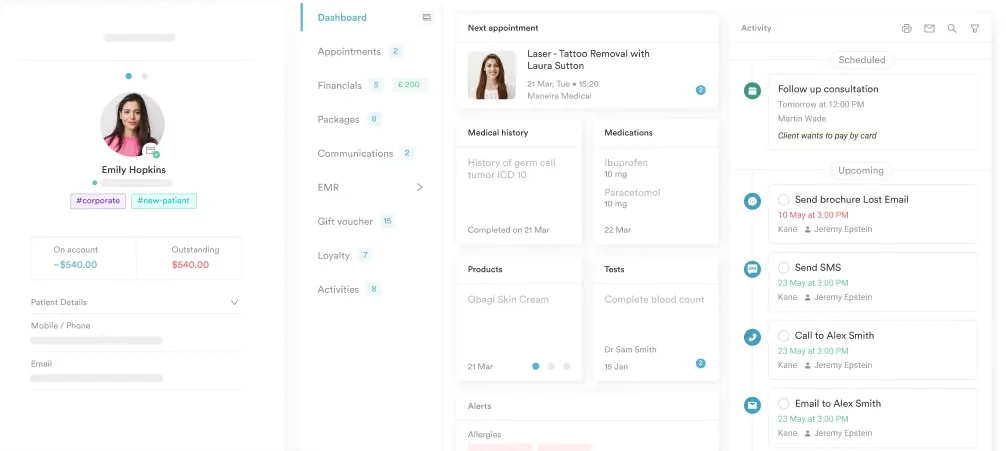
Pabau records laterality, prior injury history, and encounter type in the client record, so the right ICD-10 code is easy to justify.
The 7th character in ICD-10-CM injury codes specifies the type of encounter. Three variants exist for S63.004, and choosing the wrong one is the most common reason these claims face denial or audit. Sequela coding applies only once a residual condition remains after the acute phase of treatment has ended.
The same threshold governs drug-related sequelae. T45.626S is reported only once the acute underdosing episode has resolved.
What sequela means: A sequela is a late effect. It is a condition that results from a prior disease or injury and appears after active treatment for that original problem is complete. In wrist dislocation cases, the usual sequelae are chronic joint instability, post-traumatic arthritis, reduced range of motion, or pain that outlasts the dislocation itself.
The three 7th-character variants for unspecified right wrist and hand dislocation cover every encounter stage. Picking the correct one means knowing where the patient sits in their treatment timeline.
The phrase “subsequent encounter” describes treatment that is still in progress, not the number of visits so far. A patient seen for the 10th time at physical therapy is still in a subsequent encounter if healing is ongoing. The WHO ICD-10 browser and the ICD-10-CM Official Guidelines, Section I.C.19.a, both make this point. Clinicians at sports medicine practices handling post-dislocation rehab should build the distinction into their documentation protocol. Electronic claims leave the practice as an 837 file, so a coding error becomes a rejection at the clearinghouse. Practices that bill a narrow set of services keep a coding guide covering that set rather than the whole schedule.
Document the transition point explicitly in the clinical note. When a patient moves from active treatment to residual-condition management, write: “Active treatment for wrist dislocation is complete. Patient presents today with [residual condition]. Encounter coded as sequela.” That note entry is what auditors look for when they review S63.004S claims.
S63.004S sits within a structured code tree. Reading the hierarchy shows why the parent code alone is not billable. It also shows how the wider code family is organized under S63, which covers dislocation and sprain of wrist and hand joints.
S63.004 without a 7th character is a non-billable header code, and a claim carrying it will be rejected. All three billable variants need that 7th character to be valid. The AAPC Codify lookup confirms the full hierarchy and related codes for the S63 category before billing. Sibling codes under S63.0 cover left-side and bilateral presentations separately.
The same seventh-character rule reaches external cause codes. An audio device lodged in a natural orifice, for example, takes W44.G1XS at a late-effect visit.
S63.004S will not survive audit unless the record supports all four elements the code encodes: laterality, joint, dislocation type, and the sequela relationship. Miss any one of them and the claim is open to denial or downcoding.
What the clinical record must contain:
Procedures performed at a sequela visit are documented and coded separately from the diagnosis. An ultrasound-guided wrist aspiration billed under 20606 carries its own note requirements, and that note still has to name the right side.
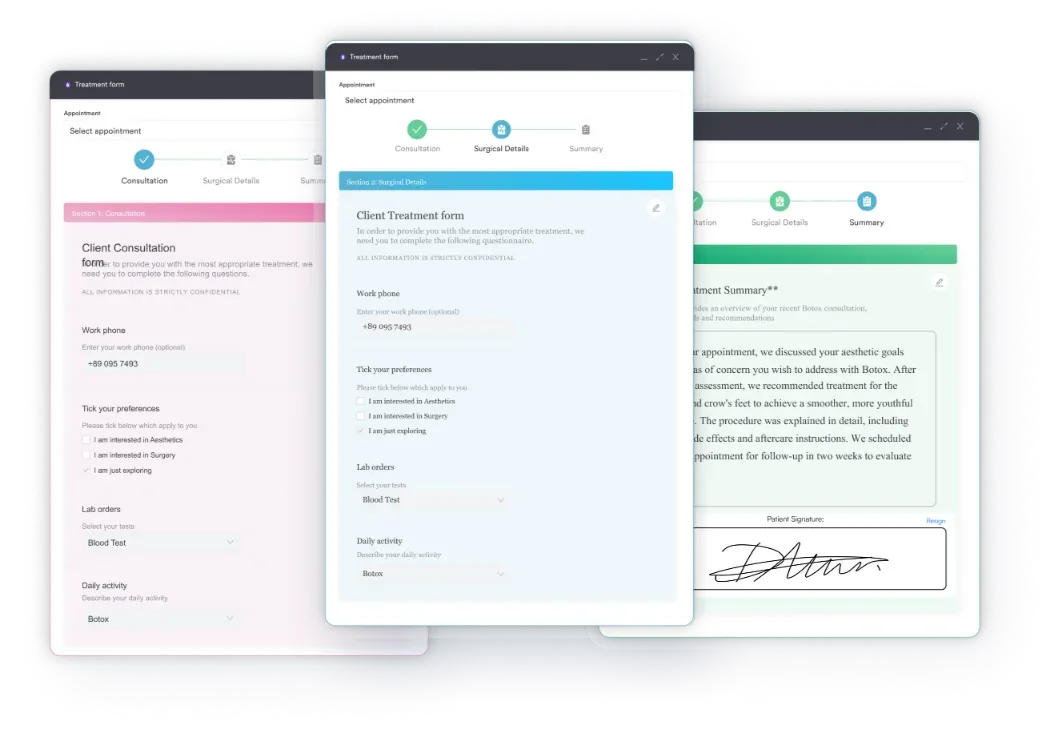
Practices working from structured client records with injury history fields and encounter-type tracking produce this documentation far more consistently. The alternative is a free-text note that leaves the coder guessing which encounter stage the visit belongs to.
“Unspecified” is appropriate only when the record names a right wrist or hand dislocation without naming the joint. ICD-10-CM guidelines require the most specific code the documentation supports, so unspecified is never a safe default.
When “unspecified” is appropriate: The documentation identifies a dislocation of the right wrist or hand but stops short of the exact joint subtype. Radiocarpal, midcarpal, and carpometacarpal are all unnamed. In that case S63.004S is correct, because the code reflects what the record says.
When a more specific code applies: The documentation identifies the joint, so a more specific S63 code exists for it. A documented radiocarpal dislocation, for example, has its own code inside the S63.0 subcategory. Reaching for S63.004S anyway is undercoding.
Querying the provider before assigning “unspecified” is standard coding practice. The American Academy of Orthopaedic Surgeons recommends that clinical notes for wrist injuries name the joint involved. Exam findings recorded at the time often supply it. Where no clarification is possible and the joint is genuinely absent from the record, S63.004S remains the correct choice.
The same sequela logic runs through the rest of the upper limb. S56.114S applies once a tendon strain has stopped receiving active treatment. Reading the three side by side is a quick way to test your own encounter-type habits.
ICD-10-CM indexes this code under several alternate descriptions. Knowing the indexed terms lets coders reach S63.004S through the Alphabetical Index rather than the Tabular List alone.
These synonyms earn their keep during chart review and when you are working through an encoder. The CDC tool supports both keyword and code-range searches. That makes it quick to confirm whether an indexed entry belongs to S63.004S or to an adjacent code. Practices that see post-injury wrist cases regularly should re-read the indexed term list each year, when the code set updates.
Getting S63.004S right depends on documentation captured long before the claim reaches a coder. Two failures repeat across wrist dislocation sequela claims. The first is missing laterality in the assessment field. The second is no stated link between the residual condition and the date of the original injury.
Practice management software like Pabau closes both at the workflow level. The client record then holds the full encounter history, so a coder can trace the original dislocation and confirm that active treatment has ended.
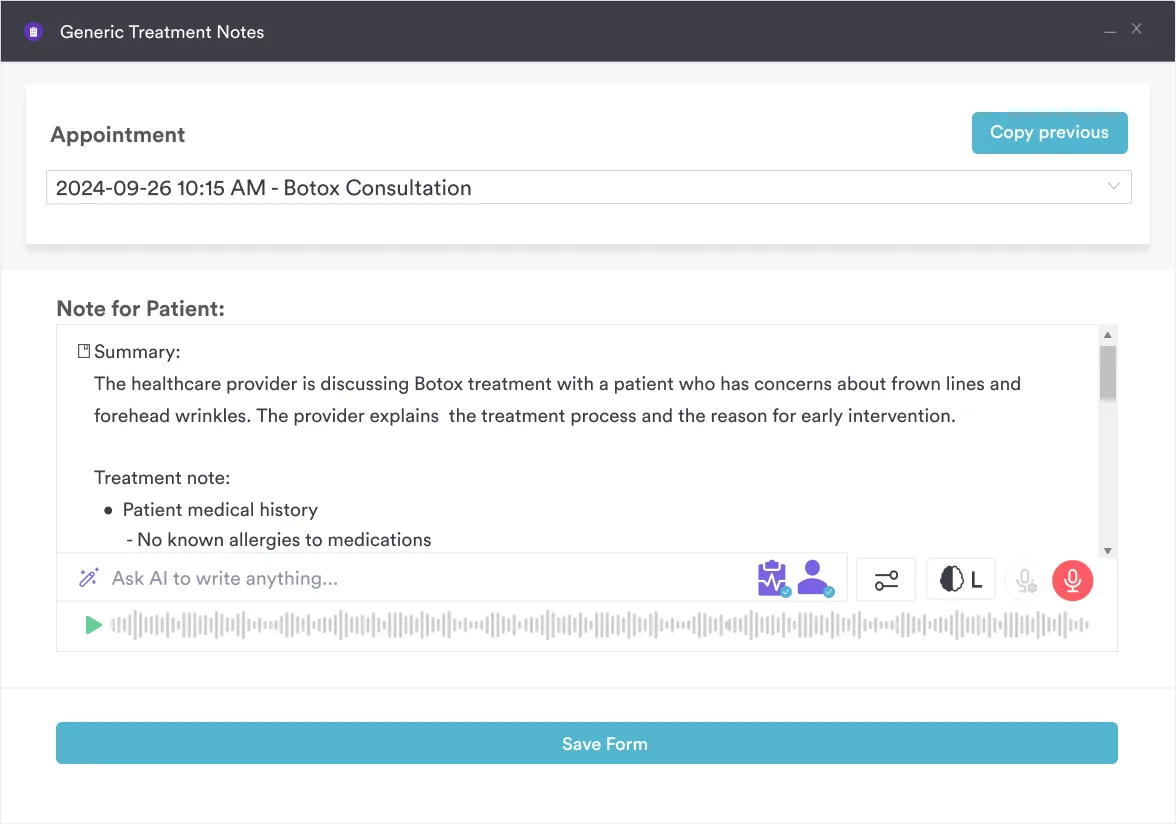
Pabau Scribe, our AI scribe, transcribes and structures the note from the consultation itself. That takes the pressure off manual typing, which is usually where the specific sequela wording auditors want goes missing.
For a high volume of musculoskeletal post-injury cases. The compliance features track documentation requirements by encounter type and flag records missing a required field.
The result for physical therapy practices is fewer sequela claims sent back for a detail the clinician already knew. The laterality and the injury date were captured at the point of care, not reconstructed weeks later.
Run a quarterly audit of every S63.004S claim from the past 90 days. Pull five records at random. Each one should show “right” in the assessment and a prior injury reference with an approximate date. It also needs a line confirming active treatment has ended, plus a named residual condition. The exercise takes 15 minutes and catches systemic documentation failures before payers do.

Pabau helps musculoskeletal and physical therapy practices capture the laterality, injury history, and encounter details that support correct code selection. See how it works for your practice.

Sequela coding is where wrist dislocation billing goes wrong most often. One character separates S63.004D from S63.004S, but the clinical situation behind each is entirely different. One says treatment is active, the other says it has finished.
So the fix is not really a coding fix. Build the discharge-from-active-treatment line into your note template and the 7th character stops being a judgment call at claim time. The trade-off is a few seconds at the end of a consultation, against a denial you would otherwise appeal months later.
To see how Pabau handles clinical documentation for musculoskeletal and physical therapy practices, book a demo.

Coding a lateral canthopexy procedure instead? Lateral canthopexy billing guide covers CPT code 21282, the 2026 RVUs, modifier 50 rules, and accepted ICD-10 pairings.
Coding a tendon injury after treatment ends? S56.114S applies the same sequela rules further down the upper limb.
Not sure when the D character still applies? S60.931D shows how a subsequent encounter is documented for a hand injury.
Dealing with a fracture that healed badly? S62.163P covers malunion coding for a displaced carpal fracture.
Billing a wrist procedure at the same visit? CPT code 20606 sets out what an ultrasound-guided joint aspiration has to record.
ICD-10 code S63.004S is a billable ICD-10-CM diagnosis code for unspecified dislocation of right wrist and hand, sequela. Use it when a patient presents with a residual condition caused by a prior right wrist dislocation. Chronic instability and post-traumatic arthritis are typical examples. Active treatment for the original injury must already have ended. The code is valid for FY2026, effective October 1, 2025.
The “S” is the 7th character and designates sequela, meaning a late effect or residual condition arising from a previous injury. For S63.004S it indicates that the patient’s current condition follows a prior right wrist dislocation. The injury itself is no longer under active treatment.
S63.004A is for the initial encounter, when the patient first receives active treatment for the dislocation. S63.004D is for subsequent encounters while active treatment continues, such as follow-up physical therapy or cast management. S63.004S applies only after active treatment is complete and the patient presents with a residual condition caused by the original dislocation.
Use the sequela code, the S suffix, once active treatment for the original injury has ended. The visit is then for a residual condition that developed as a result of that injury. Use the subsequent encounter code, the D suffix, while the patient is still receiving active care. The number of visits so far makes no difference to that choice.
Yes. S63.004S is a billable and specific ICD-10-CM code valid for FY2026, and it can be submitted directly on a claim. The parent code S63.004 is not billable, and a claim carrying it without the A, D, or S suffix will be rejected.
CPT codes billed alongside S63.004S usually cover evaluation and management (99202-99215) and therapy procedures such as 97010, 97110, and 97530. Physical therapy evaluations use the tiered codes 97161, 97162, and 97163 for low, moderate, and high complexity. For a plain wrist radiograph, use 73100 for two views or 73110 for three or more views. The right CPT code depends on the services rendered at the sequela encounter, not on the diagnosis code. Always confirm medical necessity requirements with the payer before billing.
The parent code is S63.004, unspecified dislocation of right wrist and hand, without a 7th character. S63.004 itself is not billable. It belongs to the S63.0 subcategory, which covers subluxation and dislocation of wrist and hand joints. That subcategory sits inside the S63 category for dislocation and sprain of joints and ligaments of wrist and hand.




