

HCPCS code E0198: Water pressure pad billing guide
HCPCS code E0198 is a water pad for a standard mattress HCPCS code E0198 is the ...

Last Updated: Oct 13, 2026
Billable Code Specific Code
S56.114S is the billable ICD-10-CM code for strain of flexor muscle, fascia and tendon of left middle finger at forearm level, sequela.
The 7th character 'S' sets a condition on payment. The code is valid for reimbursement only when the documentation establishes a causal link between the current complaint and the earlier flexor tendon strain. Absent that link, the claim will not stand up to payer review.
Let Pabau's smart automation suggest the right codes, reduce claim denials, and keep your practice compliant—effortlessly.
Automate repetitive tasks and focus on what matters most—your patients.
Reduce coding errors and ensure compliance with the latest regulations.
Clean claims, fewer denials, and faster reimbursements.
Powerful insights and reporting to help your practice thrive.
HIPAA compliant SOC 2 certified GDPR-compliant Trusted by 4,000+ clinics worldwide

ICD-10 code S56.114S describes a strain of the flexor muscle, fascia, and tendon of the left middle finger at forearm level. It is coded as a sequela of the original injury.
S56.114S is a billable, specific ICD-10-CM code valid for reimbursement under the 2026 edition, effective October 1, 2025.
The ‘S’ 7th character indicates sequela. The current condition is a late effect of a prior injury, not an initial (A) or subsequent (D) encounter.
The sixth character of the S56.11- series identifies the digit, so S56.114 is the left middle finger and S56.112 is the left index finger.
Practice management software like Pabau helps practices document sequela coding accurately and reduce claim denials for codes such as S56.114S.
The 7th character in ICD-10-CM injury codes defines the encounter type. Choosing correctly between A, D, and S is the most common source of claim errors in musculoskeletal coding. Per the CDC/NCHS ICD-10-CM official guidelines, the ‘S’ suffix designates a sequela. That means a late effect or complication arising as a direct consequence of a previously treated injury.
Sequela is not a follow-up visit for the original injury. It is a distinct, subsequent condition caused by that injury. The distinction matters for billing. Submitting S56.114A or S56.114D for a patient presenting with a sequela creates a medical necessity mismatch, and the claim will likely be denied.
All three variants share the base code S56.114. Each describes a strain of the flexor muscle, fascia, and tendon of the left middle finger at forearm level. The 7th character is what separates them clinically and on the claim. Hand and wrist codes follow the same pattern, from S60.931D for a subsequent encounter to S63.004S for a sequela.
When the original injury is documented as healed but the patient presents with a new complaint directly caused by it, sequela (S) is correct. If treatment for the original injury is still ongoing, use subsequent encounter (D) instead. Document the causal chain explicitly in the note.
The flexor digitorum superficialis and flexor digitorum profundus are the primary flexor tendons of the middle finger. Both run through the forearm before inserting into the finger. That is why the injury site is documented as “at forearm level” even when the deficit presents in the hand. A strain at this level involves overstretching or partial tearing of the muscle, its surrounding fascia, or the tendon itself, without complete rupture. A retroactive authorization is rarely granted, so the check belongs before the appointment. The 1500 claim form and its electronic equivalent ask for the same data in a different layout.
Practices running a physical therapy EMR should record laterality at the point of care. Coders cannot assume the side from a generic description. Approximate clinical synonyms that may appear in provider notes and map to this code include:
These synonyms are drawn from ICD-10-CM alphabetical index references and common clinical documentation patterns. When reviewing provider notes for coding, look for language describing the complaint as a “consequence of,” “resulting from,” or “following” a prior tendon injury.
S56.114S sits within a well-defined parent structure in the ICD-10-CM tabular list. Understanding the hierarchy helps coders locate laterality-specific alternatives quickly and confirms the code’s chapter placement for payer edits. The WHO ICD-10 framework forms the structural basis for these injury chapter classifications.
Knowing the sibling and related codes helps coders choose correctly when laterality, injury type, or encounter type differs from S56.114S. Neighboring forearm and wrist codes such as S52.591S and S62.163P follow the same 7th-character logic. Practices handling a high volume of upper extremity injuries benefit from keeping the full S56.1 matrix visible during coding.
When documentation specifies the right middle finger rather than the left, S56.113S is the correct code. The index finger has its own pair of codes. Use S56.111S on the right and S56.112S on the left, and never swap one finger for the other. Avoid the unspecified-finger code S56.119S whenever the note names the digit, because payers may query the missing specificity during an audit.
The sixth character of S56.11- names the digit and the side, and it is the single most common place coders slip. Reading S56.114 as an index finger code is the classic error. The map below settles it at a glance.
The thumb is not in this series at all. Thumb flexor injuries at forearm level fall under S56.0-, so a thumb strain never takes an S56.11- code. Move off the forearm and the sixth character stops naming a digit. In S09.11XS, the sequela code for a head muscle and tendon strain, that position holds an X placeholder.
Our roundup of alternatives to Jane App looks at platforms that pair injury coding with rehab treatment plans.
Sequela claims are among the most frequently questioned during payer audits. Unlike initial or subsequent encounter codes, billing S56.114S requires three specific elements in the medical record. Missing any one of them puts the claim at risk.
Per ICD-10-CM Official Coding Guidelines Section I.B.10, the sequela code is sequenced after the code for the nature of the sequela when both are reported. The sequela diagnosis code S56.114S typically follows the code describing the current condition, such as a contracture or chronic tendinopathy code.
Check the medical record for a note referencing the ‘original injury date’ or ‘prior treatment.’ If neither appears and the provider only documents a new complaint, query the provider before assigning S56.114S. Assigning sequela without documented causal history is the leading cause of audit reversals for S56-category codes.
S56.114S is billable, but payment depends on how the sequela is sequenced and supported on the claim. Payers scrutinize these claims because the original injury has already resolved. Five points decide most outcomes.
Denials on sequela claims are usually documentation problems rather than coding problems. When the note names the original injury, its approximate date, and the current deficit, the claim generally holds. Capturing those three details at the point of care costs far less staff time than reworking a denial.
Sequela coding errors usually start at the documentation stage. When the note fails to establish the causal link between the original injury and the current condition, the coder is left with an incomplete chart. That means a high-risk claim.
Practice management software like Pabau tackles this upstream, before the note reaches coding. Pabau’s claims management software pairs with structured note templates. Those templates prompt providers to record encounter type, injury history, and laterality at the point of care.
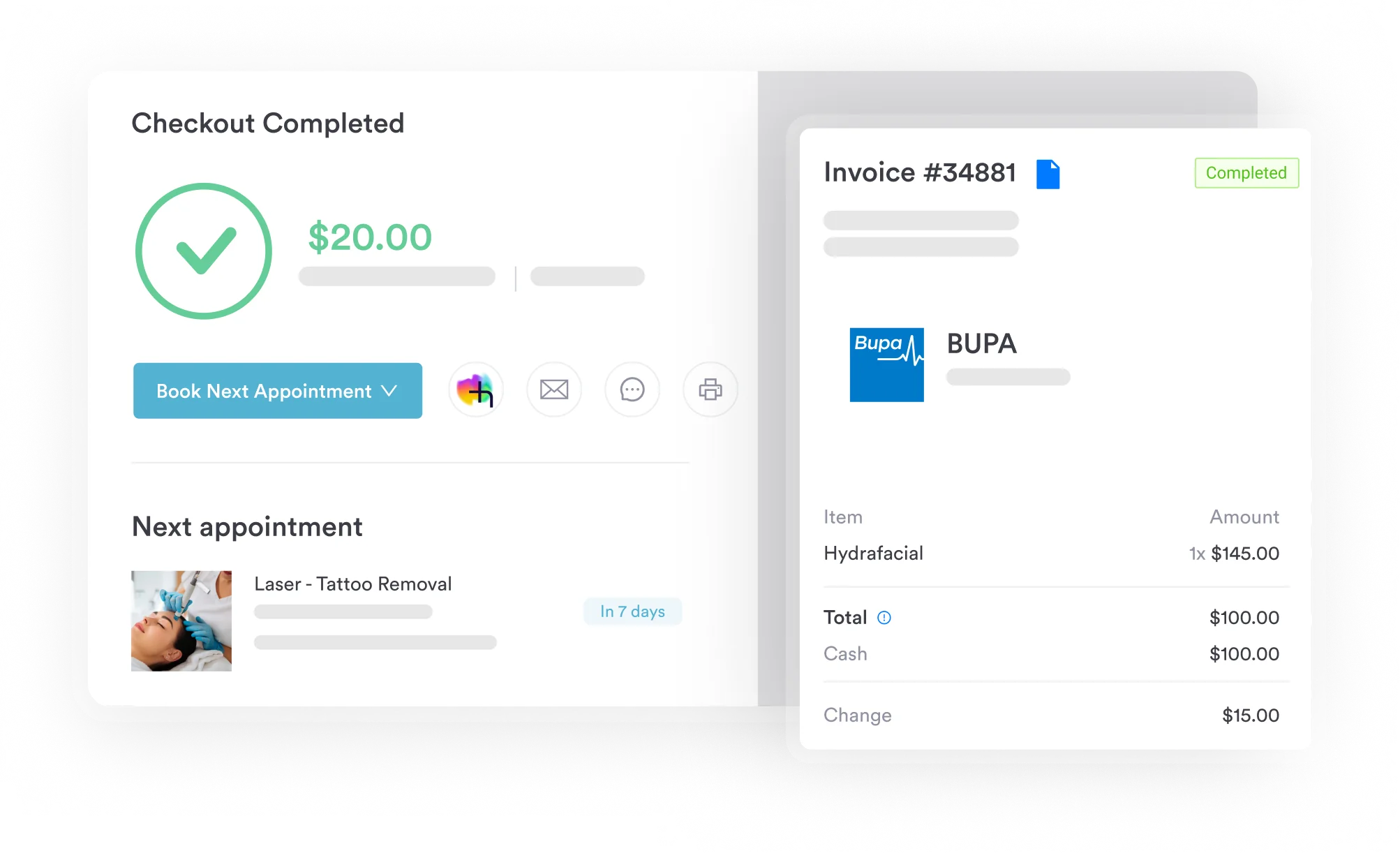
Pabau’s client record links historical encounters to current notes. Coders can trace the original injury and confirm the causal relationship without hunting through separate systems.
That cuts the unspecified-laterality codes that trigger payer edits. For practices with heavy musculoskeletal volume.
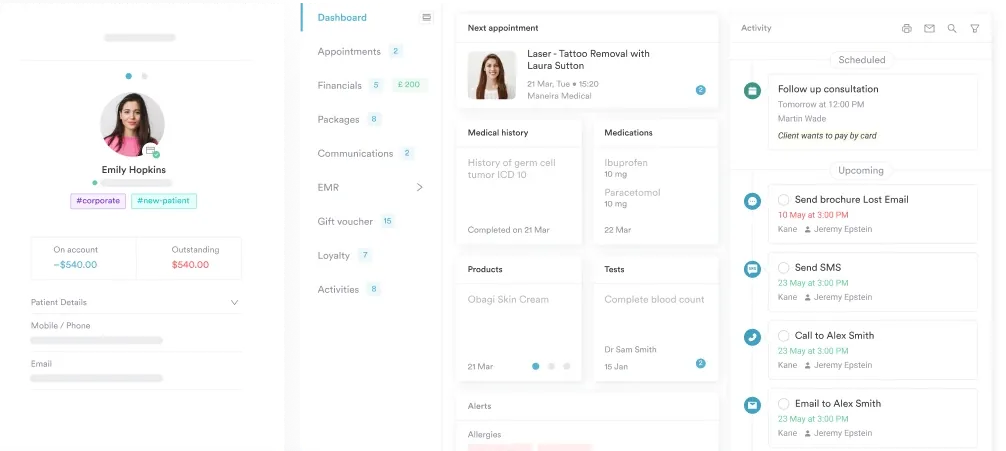

Pabau’s integrated EHR and claims tools help your team document sequela requirements at the point of care. Claims like S56.114S then submit right the first time.

S56.114S is a precise, billable code for one narrow clinical situation. The patient presents with a late effect of a prior flexor tendon strain in the left middle finger. Two habits protect these claims. Confirm the digit and side against the sixth character before you assign the code. Then make sure the note establishes the causal link back to the original injury.
Get those two right and the encounter type follows naturally. The trade-off is a few extra seconds in the note against a denial that costs an hour to rework. Book a demo to see how Pabau keeps injury history, laterality, and encounter type in one record.

Coding another forearm injury? S52.271A walks through the initial-encounter rules for a Monteggia fracture of the right ulna.
Need a seventh character other than S? S52.356R covers malunion coding after an open radius fracture, including the documentation payers look for.
Coding a larger vascular lesion destruction? Larger vascular lesion billing guide covers CPT 17107 rates, modifiers, and global-period rules for a 10 to 50 square centimeter lesion.
Coding destruction of a malignant skin lesion? Malignant lesion destruction billing guide covers CPT 17264 for a 3.1 to 4.0 centimeter lesion on the trunk, arms, or legs.
ICD-10 code S56.114S covers a strain of the flexor muscle, fascia, and tendon of the left middle finger at forearm level. It is coded as a sequela, the late effect of a previously treated injury. The sixth character 4 identifies the left middle finger, not the index finger. The code is billable and valid for reimbursement when the record establishes a causal link to the prior strain.
Yes, S56.114S is a billable and specific ICD-10-CM code valid for reimbursement in the 2026 edition, effective October 1, 2025. It can be used to indicate a diagnosis on an insurance claim. The documentation must support the sequela designation and establish the causal relationship to the original injury. Payer-specific medical necessity requirements still apply.
S56.114A is the initial encounter code used when the patient is actively receiving treatment for the flexor tendon strain. S56.114D is the subsequent encounter code used during the healing and recovery phase. S56.114S is the sequela code, used once the original injury has healed. It applies when a late effect persists as a direct consequence of that injury. Chronic tendon pain, grip weakness, and scar tissue restriction are typical examples.
The ‘S’ 7th character in ICD-10-CM designates a sequela. The condition being coded is a late effect or complication of a previously treated injury. Under the ICD-10-CM Official Guidelines, Section I.B.10, sequela coding requires a documented causal link between the original injury and the current condition. The sequela code is then sequenced after the code describing the nature of the sequela.
The closest sibling is S56.113S, the same strain and sequela on the right middle finger. S56.114A and S56.114D cover the same left middle finger injury at the initial and subsequent encounter stages. S56.112S is a separate code for the left index finger, and it is the one most often confused with S56.114S. Use S56.119S only when the note does not identify the finger.
To support S56.114S, the medical record must document three elements. First, the causal relationship between the current complaint and the prior flexor tendon strain. Language such as “resulting from” or “secondary to” does that job. Second, identification of the original injury in the record. Third, the specific nature of the late effect, such as chronic pain, tendon adhesion, or grip deficit. Missing any of these elements places the claim at audit risk. Query the provider if the note does not explicitly establish the causal link.



