

ICD-10 Code S42.444P: Medial epicondyle fracture, right humerus
ICD-10 Code S42.444P: full descriptor and code validity ICD-10 Code S42.444P car...

Last Updated: Oct 13, 2026
Billable Code Specific Code
I81 is the billable ICD-10-CM code for portal vein thrombosis.
Let Pabau's smart automation suggest the right codes, reduce claim denials, and keep your practice compliant—effortlessly.
Automate repetitive tasks and focus on what matters most—your patients.
Reduce coding errors and ensure compliance with the latest regulations.
Clean claims, fewer denials, and faster reimbursements.
Powerful insights and reporting to help your practice thrive.
HIPAA compliant SOC 2 certified GDPR-compliant Trusted by 4,000+ clinics worldwide

ICD-10 Code I81 is a billable ICD-10-CM diagnosis code for portal vein thrombosis (PVT), effective October 1, 2025 for the 2026 fiscal year.
Applicable To includes portal (vein) obstruction; hepatic vein thrombosis (I82.0) and K75.1 are Excludes2 notes for I81, meaning they are distinct conditions that may be coded alongside I81 when both are documented.
The most common coding error is confusing I81 with K75.1 (Phlebitis of portal vein, classified under liver diseases) – they are not interchangeable.
Practice management software like Pabau helps practices assign I81 accurately at the point of care using claims management tools and AI-assisted clinical documentation, reducing coding errors and claim rejections.
ICD-10 Code I81 is a valid, billable ICD-10-CM code for the 2026 fiscal year. It became effective on October 1, 2025 and. The table below gives the at-a-glance reference coders need most.
Portal vein thrombosis is a condition in which a blood clot forms in the portal vein, the large vessel that carries blood from the gastrointestinal tract, spleen, and pancreas to the liver.
When flow is obstructed, pressure builds in the portal venous system. Portal hypertension is among the most clinically significant complications, and it is well documented in hepatology literature from the National Library of Medicine.
PVT can be acute or chronic. Acute PVT typically presents with abdominal pain and may be associated with fever or bowel ischemia. Chronic PVT often develops silently, only becoming apparent when portal hypertension causes variceal bleeding or splenomegaly.
Both presentations require accurate ICD-10 coding to support the treatment record and payer reimbursement.
Common underlying causes include liver cirrhosis, pancreatitis, abdominal sepsis, hypercoagulable states, and myeloproliferative disorders. When any of these are also documented and confirmed, they should be coded additionally alongside ICD-10 Code I81.
The Applicable To and Excludes notes for ICD-10 Code I81 are where most coders run into difficulty. Understanding what the code includes versus what it explicitly cannot be assigned alongside is critical to avoiding claim denials.
The ICD-10-CM tabular list includes the following under I81:
Excludes2 means the listed conditions are not part of I81 and are classified elsewhere – but unlike an Excludes1 note, the excluded condition and I81 are not mutually exclusive. A patient can have both, and it is correct to report both codes on the same claim when each is separately documented.
Conditions confirmed as Excludes2 for I81 in the CMS ICD-10-CM tabular list include:
The practical implication: if imaging confirms both hepatic vein thrombosis and portal vein thrombosis, coders should assign both I82.0 (for the hepatic component) and I81 (for the portal component). The Excludes2 relationship means the two conditions are distinct but can coexist, so dual-coding is appropriate – and expected – when both are separately documented. It will not trigger a claim edit.
With integrated lab management tools, each result behind an I-code links to its order and reviewing clinician.
ICD-10 Code I81 sits within chapter I80-I89, which covers diseases of veins, lymphatic vessels, and lymph nodes not elsewhere classified. Understanding where I81 sits in this hierarchy helps coders navigate adjacent codes correctly. The table below maps the block structure.
The key takeaway from this hierarchy: I82 (not I81) is where hepatic vein conditions live. I81 is specific to the portal vein – the inflow tract. Mixing up I81 and I82.0 is the single most common anatomy-based coding error in this category.
Portal vein thrombosis rarely presents in isolation. Coders working with I81 will frequently need to assign additional codes for underlying causes, complications, or anatomically related conditions.
The table below covers the most clinically relevant adjacent codes. When mesenteric ischemia requires surgical exploration, the encounter may also generate a procedure code such as 43659 for an unlisted laparoscopic stomach procedure.
When portal hypertension (K76.6) is a confirmed complication of PVT, both I81 and K76.6 may be reported. The sequencing depends on which condition was chiefly responsible for the encounter. Per the CDC/NCHS ICD-10-CM tool, the principal diagnosis is the condition established after study to be chiefly responsible for the admission.
When liver cirrhosis is the confirmed underlying cause of ICD-10 Code I81, assign the appropriate K74 cirrhosis code additionally. ICD-10-CM coding guidelines instruct coders to report the etiology alongside the manifestation. Missing the etiology code is an error auditors routinely flag.
For inpatient hospital stays, ICD-10 Code I81 maps to Diagnostic Related Group (DRG) assignments under the Medicare Severity DRG (MS-DRG) system. DRG groupings determine the base payment rate for an inpatient episode, so accurate code assignment directly affects reimbursement calculations. Medicare coverage for a service can depend on frequency limits rather than medical necessity alone.
DRG assignments are subject to annual CMS Inpatient Prospective Payment System (IPPS) updates. The MS-DRG version in effect at the time of discharge governs payment.
Under the CMS MS-DRG Definitions Manual (version 43.0), ICD-10 Code I81, when reported as the principal diagnosis, groups to MDC 07 (diseases and disorders of the hepatobiliary system and pancreas) – not the peripheral vascular disorders group its “vein thrombosis” name might suggest.
Verify current MS-DRG assignments against the CMS IPPS tables for the applicable fiscal year before billing. DRG groupings change with each annual update, and the figures above reflect the MDC 07 hepatobiliary/pancreas grouping under MS-DRG version 43.0. Actual assignment depends on the full claim, including all secondary diagnoses.
Physicians must provide documentation that is clear, specific, and imaging-confirmed before a coder can confidently assign ICD-10 Code I81. Vague documentation like “portal vein findings” or “possible thrombosis” is not sufficient. The structured clinical records coders rely on need to answer several specific questions.
Below is a documentation checklist covering the items that most often lead to ICD-10 Code I81 denials.
These are the items auditors look for first.
According to CMS ICD-10-CM coding guidelines, when the diagnosis is listed as “probable” or “suspected,” outpatient coders should report the presenting signs and symptoms rather than the unconfirmed diagnosis.
In the inpatient setting, probable or suspected conditions that are worked up during admission may be coded as confirmed per the UHDDS definition.

Pabau helps practices document diagnoses accurately at the point of care, connecting clinical notes directly to billing workflows so ICD-10 Code I81 and associated diagnoses reach the claim correctly the first time.

Most ICD-10 Code I81 errors fall into three categories: anatomical confusion with I82.0, missed Excludes2 cross-coding when both portal and hepatic thrombosis are documented, and incomplete additional coding for etiologies and complications.
Knowing how procedure codes like 36471 pair with the correct ICD-10 diagnosis is the fastest way to build a cleaner coding workflow.
This is the error that generates the most coding queries. Both I81 and K75.1 reference “phlebitis of portal vein,” but they come from different ICD-10 chapters and carry different clinical contexts. The table below clarifies when each applies.
Consulting the ICD List code lookup alongside the official CMS tabular list helps verify current Excludes notes before finalising a claim. Online tools do not replace the official guidebook, but they are useful for real-time cross-reference during coding.
Most ICD-10 Code I81 denials originate in the handoff between clinical documentation and billing, rather than the code itself. The physician documents the diagnosis. The coder works from incomplete notes. The claim goes out missing the etiology code or the complication code. That claim is submitted to the payer as an 837 file, the standard transaction format that carries ICD-10 diagnosis and procedure codes together.
Fixing that takes a workflow.
Practices comparing platforms built for this kind of clinical-to-billing handoff can review our guide to the best medical billing software in the US.
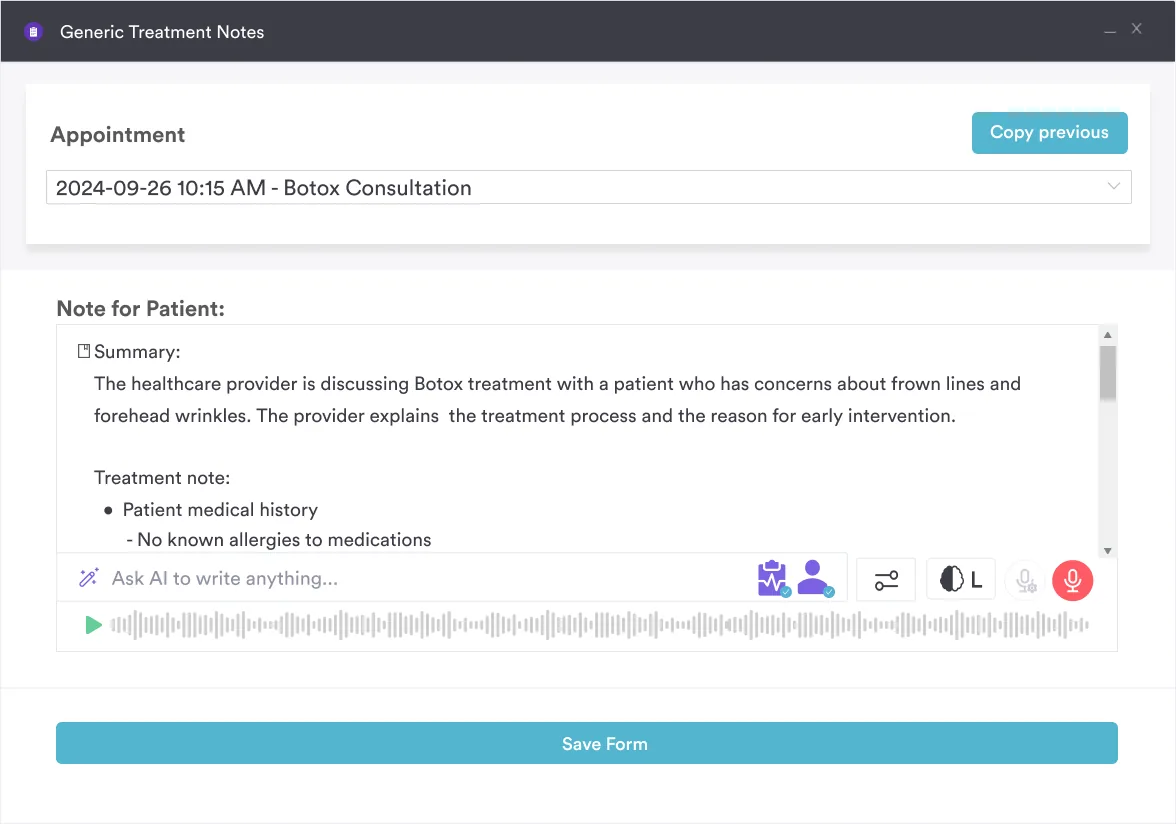
Pabau connects clinical documentation directly to the billing workflow through its claims management tools, so diagnosis codes assigned during the encounter flow through to the claim without manual re-entry. For practices managing patients with complex diagnoses like PVT alongside cirrhosis or hypercoagulable states, this reduces the chance of a secondary code being dropped during the billing step.
Combined with digital intake forms that prompt for relevant clinical history, the documentation arriving at the coding stage is more complete and more consistent.
For GP practices managing PVT alongside other vascular or hepatic diagnoses, having a single platform that connects the clinical record to billing eliminates the context-switching that makes secondary code assignment easy to miss. Learn more about how Pabau supports HIPAA-compliant clinical documentation across specialties.
ICD-10 Code I81 is a straightforward billable code – but the conditions around it are not. The I81 vs K75.1 confusion, the Excludes2 relationship with I82.0, and the requirement to code underlying etiologies and complications are where practices consistently lose clean claims.
Pabau’s integrated documentation and claims management tools connect the clinical note directly to the claim, so diagnoses like portal vein thrombosis reach the payer with the full coding picture. To see how Pabau handles ICD-10 coding workflows in practice, book a demo.

Need a billing reference for a lab test code? 0087B is a CCSD code for the serine level test, with billing guidance and documentation requirements.
Looking for another anesthesia billing example? 00190 is the CPT code for anesthesia covering facial bones and skull, including modifiers and reimbursement guidance.
Need a reference for specialty injection billing? J9332 is the HCPCS code for efgartigimod alfa-fcab injections, including dosage-based billing units.
ICD-10 Code I81 is a billable ICD-10-CM diagnosis code for portal vein thrombosis (PVT), the formation of a blood clot in the portal vein. It is valid for the 2026 fiscal year, effective October 1, 2025, and covers portal (vein) obstruction under its Applicable To note. The code sits in category I80-I89 (diseases of veins, lymphatic vessels, and lymph nodes, not elsewhere classified).
Yes, I81 is a billable and specific ICD-10-CM code, valid for claim submission in the 2026 fiscal year. It is not a parent or header code requiring additional specificity. It can be submitted as a standalone principal or secondary diagnosis once the clinical criteria are met.
I81 classifies portal vein thrombosis under Chapter IX (diseases of the circulatory system), while K75.1 classifies phlebitis of portal vein under Chapter XI (diseases of the digestive system). They describe related but distinct conditions in different clinical contexts. K75.1 is Excludes2 relative to I81, so both codes may be reported together on the same claim when each is separately documented.
ICD-10 Code I81 has an Excludes2 note for hepatic vein thrombosis (I82.0), which includes Budd-Chiari syndrome, and for K75.1 (phlebitis of portal vein). Excludes2 means these are conditions distinct from I81, not part of it – but unlike an Excludes1 note, they are not mutually exclusive. A patient can have both, and it is correct to report I81 alongside I82.0 or K75.1 on the same claim when each is separately documented.
The ICD-10 code for portal vein thrombosis is I81. PVT is the standard clinical abbreviation for portal vein thrombosis, so I81, “portal vein thrombosis,” and “PVT ICD-10 code” all refer to the same diagnosis code. When documentation uses abbreviations, coders should confirm the physician intended portal vein thrombosis before assigning I81.
Assigning I81 requires an explicit physician diagnosis of portal vein thrombosis, supported by imaging confirmation (Doppler ultrasound, CT angiography, or MRI showing portal vein occlusion or filling defect). The diagnosis must appear in the clinical note or discharge summary, not only in the radiology report. When an underlying etiology (cirrhosis, thrombophilia) is identified, it must also be documented and coded additionally.
As a principal diagnosis, ICD-10 Code I81 groups to MDC 07 (diseases and disorders of the hepatobiliary system and pancreas) under MS-DRG 441, 442, or 443 (disorders of liver except malignancy, cirrhosis, or alcoholic hepatitis, with MCC / with CC / without CC or MCC, under MS-DRG version 43.0). The specific DRG assigned depends on the presence of major complications or comorbidities (MCC) or complications and comorbidities (CC). Verify current DRG assignments against CMS IPPS tables for the applicable fiscal year, as groupings are updated annually.




