

HCPCS code E0198: Water pressure pad billing guide
HCPCS code E0198 is a water pad for a standard mattress HCPCS code E0198 is the ...

Last Updated: Oct 13, 2026
J9332 is the HCPCS Level II code for injection, efgartigimod alfa-fcab, 2mg.
Let Pabau's smart automation suggest the right codes, reduce claim denials, and keep your practice compliant—effortlessly.
Automate repetitive tasks and focus on what matters most—your patients.
Reduce coding errors and ensure compliance with the latest regulations.
Clean claims, fewer denials, and faster reimbursements.
Powerful insights and reporting to help your practice thrive.
HIPAA compliant SOC 2 certified GDPR-compliant Trusted by 4,000+ clinics worldwide

HCPCS Code J9332 describes injection of efgartigimod alfa-fcab, 2 mg (brand name Vyvgart), an FDA-approved IV treatment for generalized myasthenia gravis (gMG).
Medicare Part B reimburses J9332 at ASP plus 6%, updated quarterly by CMS. Rates vary by billing setting (hospital outpatient vs physician office).
Use modifier JW to report discarded drug waste and modifier JZ when there is zero waste. Conflating J9332 with J9334 (Vyvgart Hytrulo, subcutaneous) is a critical billing error.
Pabau’s claims management software supports accurate HCPCS J-code tracking, modifier documentation, and billing workflow automation for infusion practices.
The table below shows the canonical code data for J9332, drawn from the CMS HCPCS Level II coding system. Billers should confirm effective dates annually, as CMS updates the HCPCS code file each January.
Efgartigimod alfa-fcab is a human IgG1 antibody fragment developed by argenx to treat generalized myasthenia gravis (gMG). The FDA approved Vyvgart in December 2021, making it the first approved FcRn blocker for gMG. It works by reducing circulating IgG antibodies, including the pathogenic acetylcholine receptor antibodies responsible for the muscle weakness characteristic of gMG.
Billing teams encounter two distinct products from argenx, each with its own HCPCS code. J9332 covers the original IV formulation (Vyvgart), administered as a one-hour infusion. J9334 covers Vyvgart Hytrulo, the subcutaneous formulation that combines efgartigimod alfa with hyaluronidase-qvfc.
These are not interchangeable codes. Submitting J9332 for a subcutaneous administration, or J9334 for an IV infusion, constitutes a billing error and typically results in a denial.
Medicare Part B covers J9332 as a separately payable drug benefit under the ASP (Average Sales Price) methodology. CMS updates ASP-based payment rates every quarter, so the figures in the table below are representative and should always be confirmed against the current CMS Physician Fee Schedule lookup tool or the quarterly ASP Drug Pricing File before billing.
The standard Medicare payment formula is ASP plus 6%. The 6% add-on covers the cost of acquiring and storing the drug. This formula applies in both the physician office and hospital outpatient settings, though the base ASP figure and cost-sharing structures differ between settings.
Where a patient receives their infusion matters for reimbursement. Hospital outpatient departments (HOPDs) bill under the Outpatient Prospective Payment System (OPPS), which incorporates different fee schedule rates and cost-sharing rules compared to the physician office setting. The table below outlines the key differences.
Practices using claims management software that integrates fee schedule data can reduce the manual burden of tracking quarterly ASP updates. Reconciling rates against the quarterly CMS file is the most reliable way to avoid underbilling or overbilling on J9332 claims.
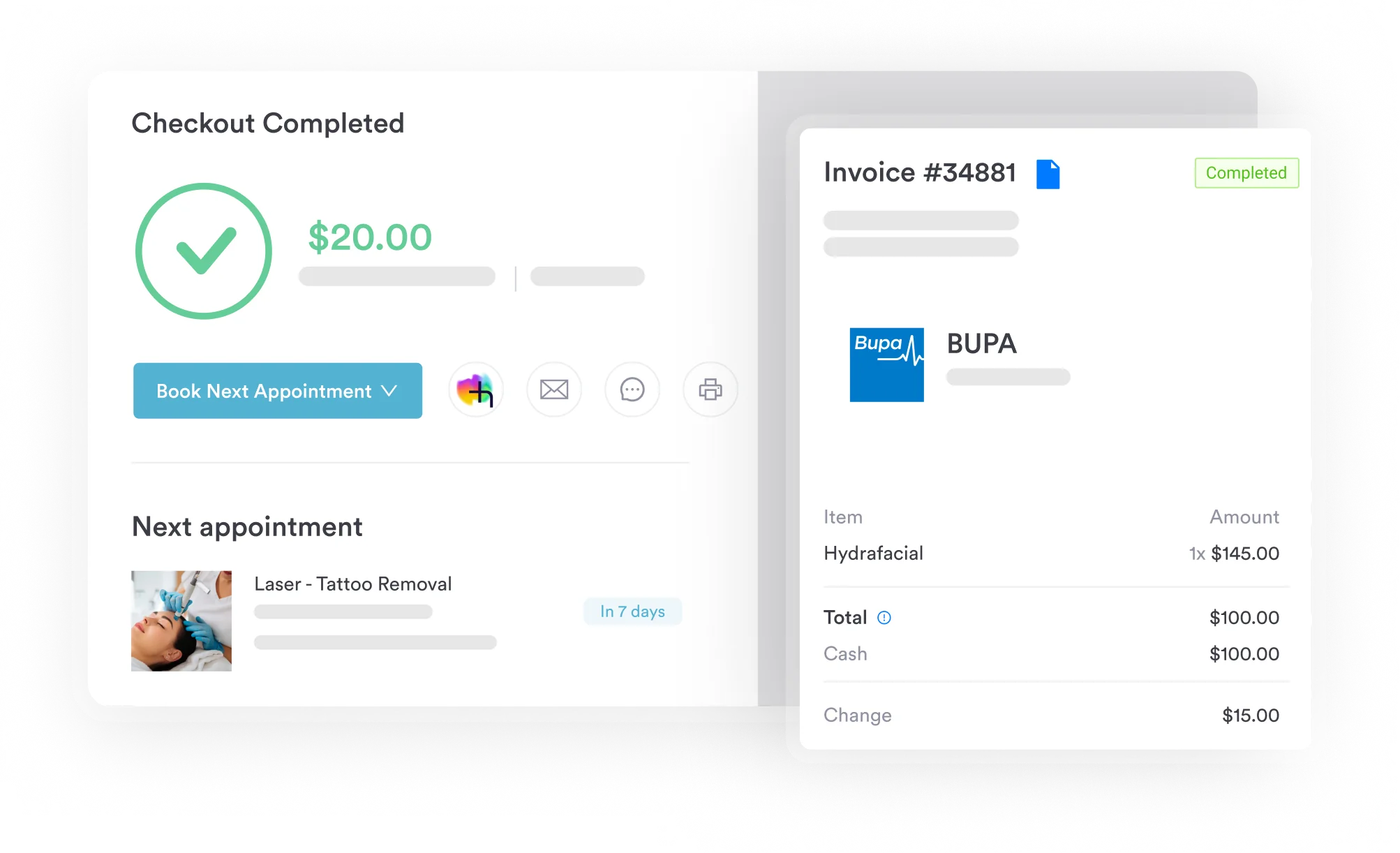
A weight loss clinic platform keeps GLP-1 dosing, stock, and follow-ups aligned across the whole program.
Two modifiers are central to accurate J9332 billing: JW and JZ. CMS policy requires one of these on every single-dose vial drug claim. Omitting them entirely creates an edit that many Medicare Administrative Contractors (MACs) will reject.
CMS introduced JZ modifier reporting on single-dose vial drugs as optional starting January 1, 2023, then made it mandatory from July 1, 2023. MACs began editing and rejecting claims that omitted the JW or JZ modifier from October 1, 2023 onward. The policy applies to J9332 because Vyvgart is supplied as a single-dose vial.
Verify the current requirements against the AAPC HCPCS code lookup or the applicable MAC’s LCD for the most current guidance, as modifier policy can update independently of the annual HCPCS code file.
Beyond JW and JZ, commercial payers may require additional modifiers (such as modifier 59 for distinct procedural services, or payer-specific modifiers). Always check individual payer policies before submitting. Good EHR integration for billing workflows can flag modifier requirements automatically based on payer rules stored in the system.
Track every J9332 infusion with a two-line billing setup: line 1 for units administered, line 2 (JW) for units wasted. Document the actual mg administered and the mg wasted directly in the patient chart at the time of service. This creates the audit trail CMS requires without needing to reconstruct it later.
Linking J9332 to the correct ICD-10 diagnosis code is a medical necessity requirement. Medicare and most commercial payers will deny the claim if the diagnosis code submitted does not support the use of efgartigimod alfa-fcab.
The two primary codes are both myasthenia gravis codes within the G70 category, and the distinction between them matters. Neurologists coding other cranial nerve conditions alongside gMG may also reference G53 on our diagnostic code reference pages.
For J9332 claims, the treating neurologist’s documentation should clearly state whether an exacerbation is present, the same specificity payers expect for other muscle disorder diagnoses. Payers may audit this distinction closely, particularly for high-cost biologics where medical necessity review is common.
Some payer Local Coverage Determinations (LCDs) may specify additional diagnosis codes required for coverage. Always check the applicable MAC’s LCD for gMG biologics before submitting, and verify coverage against the individual patient’s plan when billing commercial payers or Medicare Advantage.
Accurate J9332 billing requires matching the number of units billed to the exact dose administered. Because the code is defined per 2 mg, a standard 10 mg/kg infusion will generate multiple units depending on patient weight.
Document the prescribed dose, the actual dose administered, and any waste in the patient record before submitting the claim. Good medical forms and documentation workflows reduce the risk of unit calculation errors at the time of billing.
J9332 is billed per 2 mg. To calculate the number of units, divide the total milligrams administered by 2. Round up to the nearest whole unit for any partial unit administered.
For example, a 70 kg patient receiving a 10 mg/kg dose receives 700 mg total. That is 350 units of J9332 (700 mg divided by 2 mg per unit). Wasted drug is reported on a separate claim line with modifier JW.
Many payers require prior authorization for J9332 before the first infusion. Requirements differ significantly across payers and plan years. Medicare fee-for-service generally does not require prior authorization for separately payable Part B drugs, but Medicare Advantage plans and commercial payers often do. Revenue cycle compliance requirements for high-cost biologics typically include:
Use digital intake and prior authorization forms to capture and store the required documentation at the point of care. Keeping authorization numbers, expiration dates, and supporting clinical notes in a structured record reduces claim delays. Review documentation compliance requirements for medical offices to ensure your authorization workflow meets HIPAA standards for record retention.
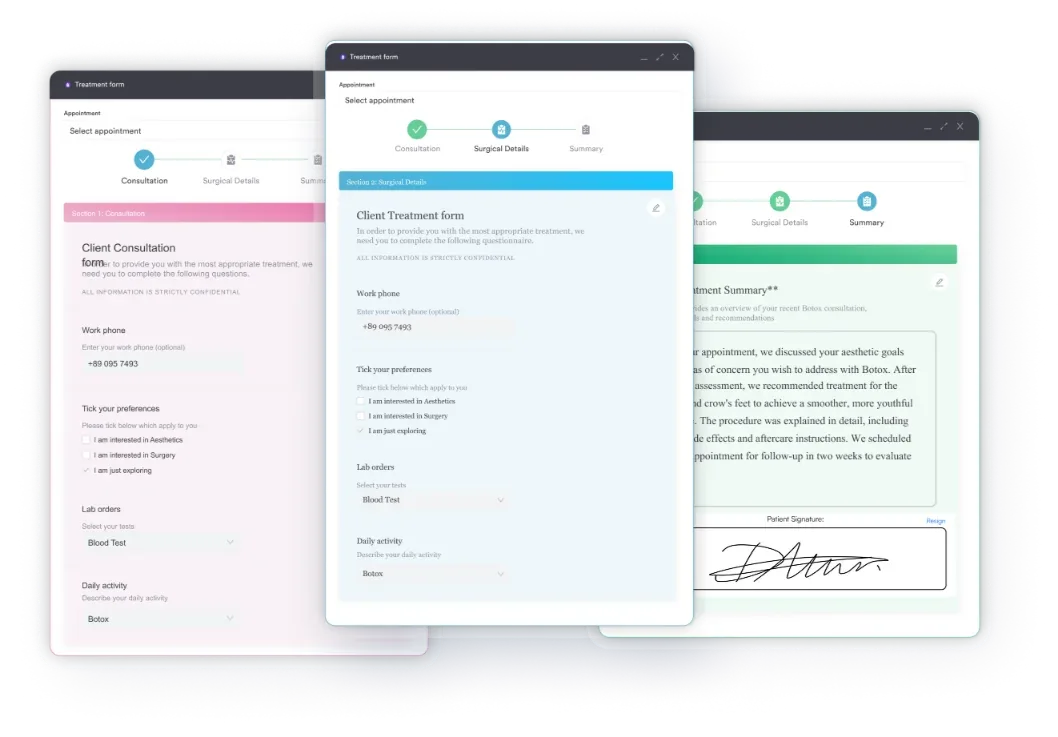

Pabau’s claims management software helps infusion and specialty practices track J-code billing, apply modifiers correctly, and reconcile Medicare fee schedule changes quarterly.

Billers working with efgartigimod products or similar neurology biologics should be familiar with the related codes below. The J9332/J9334 distinction is the most critical, but other chemotherapy J-codes in the J9000-J9999 range follow similar billing logic. Billing teams handling other neurology infusion biologics may also reference J2323, which follows a similar reimbursement structure.
For reference, you can search the full HCPCS Level II code range using the PGM Billing HCPCS lookup tool or the NLM Clinical Table Search API for programmatic lookups in billing systems.
Practices building out their injectable drug procedure codes reference library will find both resources useful for bulk code verification.
Run a quarterly reconciliation against the CMS ASP Drug Pricing File every time new quarterly rates are published (typically six weeks before the quarter start). Flag any J9332 claims already submitted where the fee schedule has shifted by more than 5%. These are candidates for corrected claims or adjustments depending on your payer contracts.
Infusion practices billing J9332, including those running specialized IV therapy EMR software, regularly run into the same friction points: quarterly ASP reconciliation, JW modifier documentation, and prior authorization tracking across multiple payers. Each requires consistent protocols rather than ad hoc processes. A clear denial management process helps these practices catch and appeal J9332 claim rejections before they affect cash flow.
Practices that integrate their practice management software with their billing workflows can automate several of these touchpoints. Automated fee schedule syncing, modifier rule sets by payer, and structured prior authorization checklists reduce claim error rates without requiring billing staff to manually track every policy update.
For practices billing other specialty biologics.
HCPCS Code J9332 is a high-stakes code. The drug cost per cycle is significant, and payer scrutiny on biologic claims is high. The distinction between J9332 (IV) and J9334 (subcutaneous) catches billing teams off guard more often than it should.
Accurate billing comes down to three things:
Pabau’s claims management software helps specialty and infusion practices. To see how it works in practice, book a demo with the team.

Billing a related neurology infusion biologic? J2323 covers Natalizumab infusions, reimbursed under the same ASP-based methodology and JW/JZ modifier rules as J9332.
Administering other J-code injectables? J3300 walks through billing a common preservative-free steroid injection.
Billing another biosimilar infusion drug? Q5114 covers billing Trastuzumab-dkst (Ogivri), reimbursed the same way as other Part B specialty biologics.
HCPCS Code J9332 is used to report injection of efgartigimod alfa-fcab, 2 mg (Vyvgart), an intravenous biologic treatment for generalized myasthenia gravis (gMG) in adult patients. Following the FDA’s May 2026 label expansion, Vyvgart is approved across all gMG antibody serotypes, including AChR-positive, MuSK-positive, LRP4-positive, and seronegative patients. It is classified under the HCPCS J9000-J9999 chemotherapy drug range and reimbursed under Medicare Part B.
J9332 covers the intravenous formulation of efgartigimod alfa-fcab (Vyvgart IV), while J9334 covers the subcutaneous formulation (Vyvgart Hytrulo, efgartigimod alfa and hyaluronidase-qvfc). These are separate drug products with different routes of administration and distinct HCPCS codes. Submitting J9332 for a subcutaneous infusion is a billing error that will typically result in a denial.
J9332 is billed per 2 mg of efgartigimod alfa-fcab administered. To calculate units, divide the total milligrams administered by 2. A 700 mg dose equals 350 units. Any wasted drug from a single-dose vial is reported on a separate claim line using modifier JW.
The two primary ICD-10 codes used with J9332 are G70.01 (myasthenia gravis with acute exacerbation) and G70.00 (myasthenia gravis without acute exacerbation). G70.01 applies when the patient presents with active symptoms at time of infusion; G70.00 applies during maintenance therapy cycles. Verify coverage against the applicable MAC’s LCD and individual payer policies before submitting.
Modifier JW applies when a portion of the Vyvgart vial was discarded and not administered to the patient. Modifier JZ applies when the full vial content was administered with zero waste. CMS made JZ reporting optional on single-dose vial drug claims starting January 1, 2023, then mandatory from July 1, 2023, and MACs began editing and rejecting claims missing the JW or JZ modifier from October 1, 2023. Report the administered units on the primary claim line and discarded units on a separate JW line.
Medicare Part B reimburses Vyvgart (J9332) at ASP (Average Sales Price) plus 6%. CMS updates ASP-based payment rates quarterly via the ASP Drug Pricing File. Rates differ between the physician office setting (billed on a CMS-1500 under MPFS) and the hospital outpatient department (billed on a UB-04 under OPPS). Always confirm the current quarterly rate before billing.
Medicare fee-for-service generally does not require prior authorization for separately payable Part B drugs, but Medicare Advantage plans and commercial payers typically do. Prior authorization for J9332 usually requires documentation of a confirmed gMG diagnosis, specialist ordering, and evidence of prior treatment trials — a positive AChR antibody test is no longer required, since Vyvgart’s approval now covers all gMG antibody serotypes. Requirements vary by payer and plan year, so verify with each payer before initiating treatment.
The current ASP-based payment rate for J9332 is published in CMS’s quarterly ASP Drug Pricing File, available on the CMS website. You can also search the fee schedule using the CMS Physician Fee Schedule lookup tool at cms.gov. Rates update every January, April, July, and October, so quarterly verification is necessary for accurate billing.



